The home of architecture and design in the Asia-Pacific
Get the latest design news direct to your inbox!

Get the latest design news direct to your inbox!
Genome Architects (GA) explore precast concrete systems as a way of engaging buildability in their own terms.

Niches at Kwong Wai Siew Peck San Theng columbarium
November 21st, 2018
How can small architecture practices engage with current issues of buildable design and productivity, or amass a portfolio of labour efficient buildings, when smaller projects typically have little opportunity to necessitate these processes?
Wu Yen Yen, Principal Architect at four-person firm Genome Architects (GA), has been contemplating how small firms like hers can engage with larger construction trends and concerns.
“How can we develop expertise in labour and efficient buildable architecture, and contribute on a bigger playing field? How can we think big and stay relevant in an area that typically only applies to and is required of larger jobs?” she asks. “Does working on smaller, private projects mean that smaller firms cannot engage with larger concerns about construction resources in Singapore today?”
Wu has used the opportunity of several small projects to experiment with building productivity through the use of prefabricated components, as well as the application of Green Mark principles. “We started using small projects to think about and define our own design productivity targets, modular construction and Green Mark design,” she elaborates.
She adds, “Increasingly, a small studio cannot ignore these to stay relevant to global concerns about construction resources and to engage with a larger national push towards productivity and labour efficiency. These need to be made part of small firm design considerations too. We’ve been looking for ways to avoid sitting out that discussion. I take these upon myself – and I’m up front about it with my clients.”
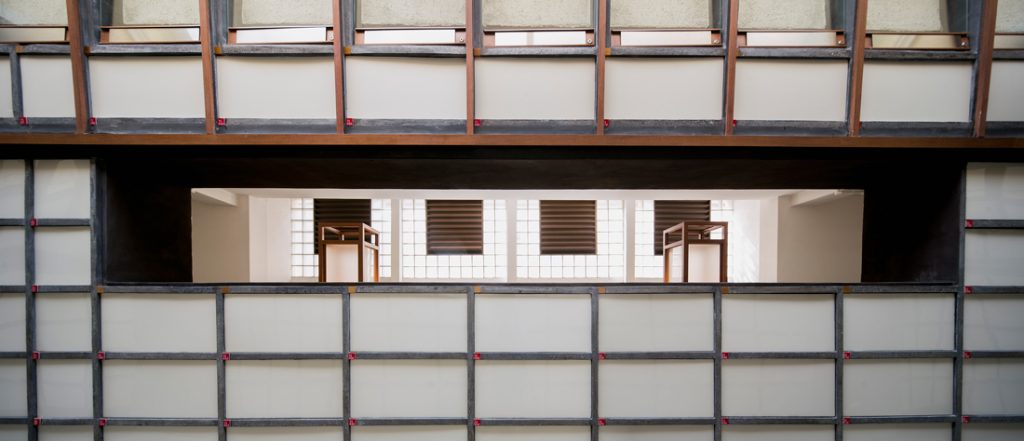
“You always need to look for the appropriate technology for each design,” says Wu, and in the case of GA’s installation of niches at the Kwong Wai Siew Peck San Theng columbarium in Bishan, coloured precast concrete panels were a suitable choice.
“This was my epiphany with precast!” says Wu. GA developed a system of dowel-and-bracket joined precast shelving that was prefabricated in Johor Bahru and delivered to site ‘flat packed’.
“Due to the nature of the site and its ongoing use by visitors, we needed to work fast and off-site,” explains Wu. The precast concrete shelves were speedily installed and hand polished to bring out the textured chips that make concrete terrazzo.
“There are several concrete precast companies in Malaysia,” says Wu. “In Singapore, HDB of course builds with prefabrication on a massive scale, but smaller contractors can’t do it for small projects here. And many small architecture firms’ projects may not have the economy of scale to explore working with prefab at all.”

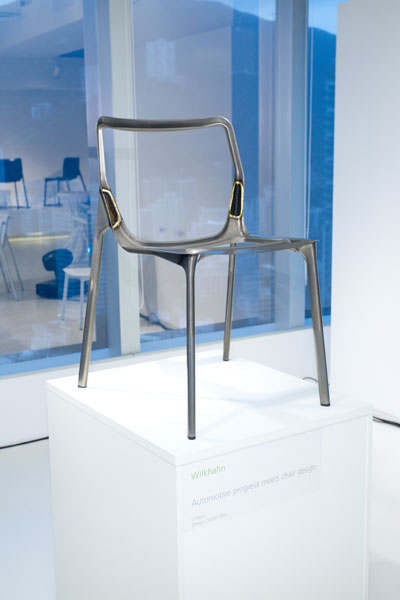
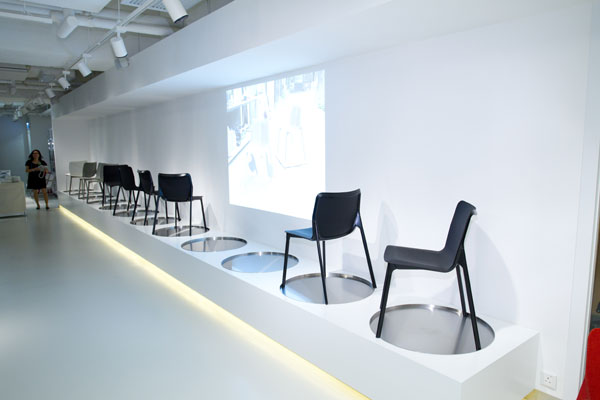



















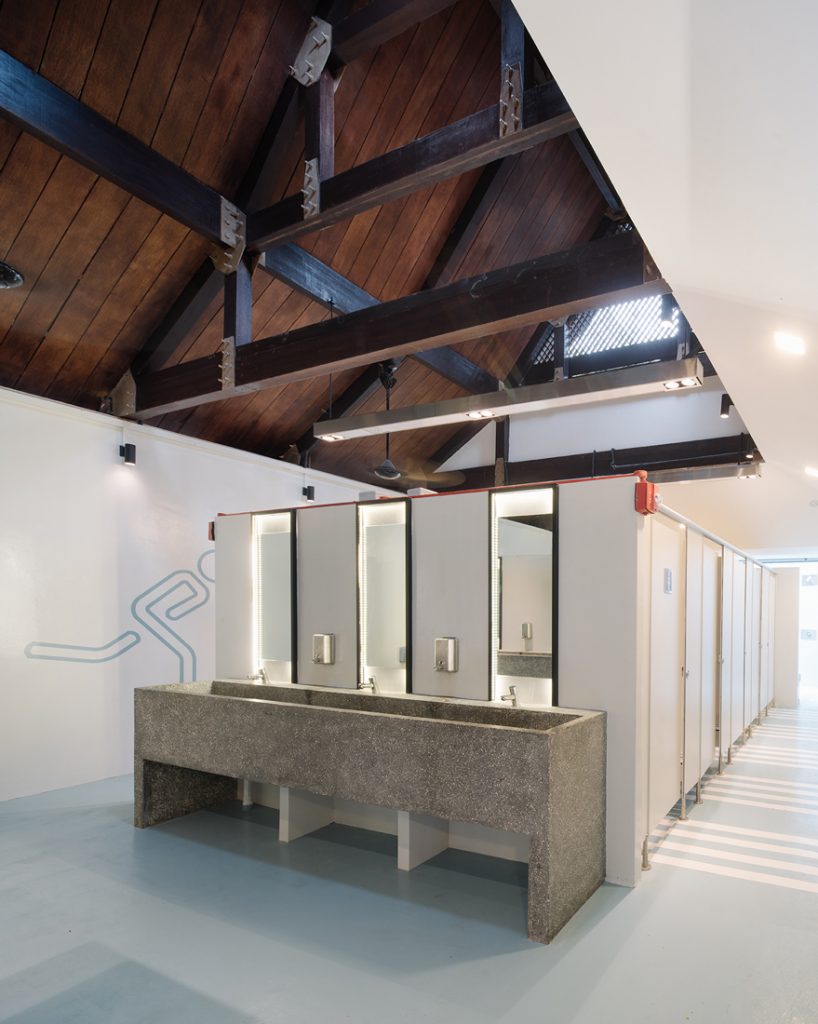
The refurbishment of three restroom blocks on Sentosa was another ideal opportunity for Wu to experiment with prefab concrete components. Seeing that there will be many repeated restroom cubicles for the services needed, GA developed prefabricated concrete wall modules with a single fixed-size that can cater to different situations: toilets, urinals and showers.
“We designed a customised mould, with a trench cast in for the pipes. One advantage of this system is that if there are any leaks in future, you’ll know where to look. It was also really easy to construct and install due to its repetitive nature.”
And with no tiles applied, these concrete wall panels do not need further work except a waterproofing, coloured epoxy coating. Also, maintenance will be easy. “If there is need to re-do services, just re-coat the epoxy coating afterwards,” says Wu.
GA treated the painted epoxy coating as a finish, playing with graphic symbols such as beach-towel stripes, thrones (for female toilets) and fire hydrants (for male toilets). Terrazzo sinks were cast on site.































GA is now applying precast concrete construction to a semi-detached house in a continuation of Wu’s self-directed efforts to demonstrate construction productivity and best practices.
“Our voluntary effort to work with precast and prefab, is way of opting into a larger conversation about buildability, productivity and ultimately, architectural design. Small firms can think big too. The size of a practice should not limit the contribution it can bring to the table.”
INDESIGN is on instagram
Follow @indesignlive
A searchable and comprehensive guide for specifying leading products and their suppliers
Keep up to date with the latest and greatest from our industry BFF's!
The internet never sleeps! Here's the stuff you might have missed