There was a succinct client brief for The Great Madras hotel in Singapore’s Little India area. “The client gave us a pretty open brief. We were tasked simply to design a stylish yet affordable boutique hotel,” recalls the team at FARM. “However, when we saw the handsome art deco building and the location, we knew we had an opportunity to create something rather special. It got us feeling all romantic about hotels and travel,” they add.
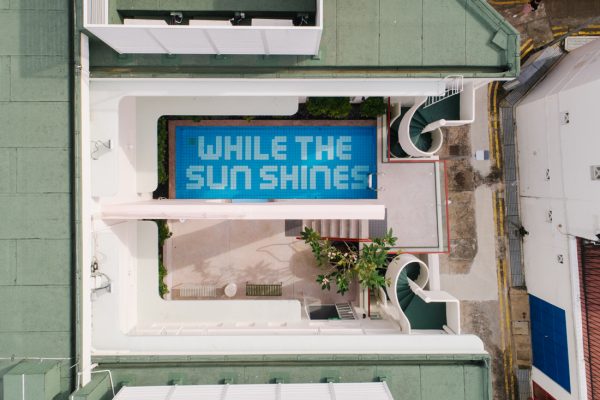
FARM looks upon Little India as one of Singapore’s most exciting and authentic neighbourhoods – “not quite a melting pot, but a mishmash of different influences,” they observe. They saw this project as a rare chance to to make something more characterful than what is encountered across many areas of the clean and modern city of Singapore. The team set about crafting a layered response to a seemingly cacophonous neighbourhood – something that would reflect the character of the area.
“We wanted to create Singapore’s coolest little hotel. We imagined the project as not merely a pleasant stay but one which would add to the vibrancy to the neighbourhood and also as a memorable persona where stories and anecdotes could collect on over time.” – FARM.
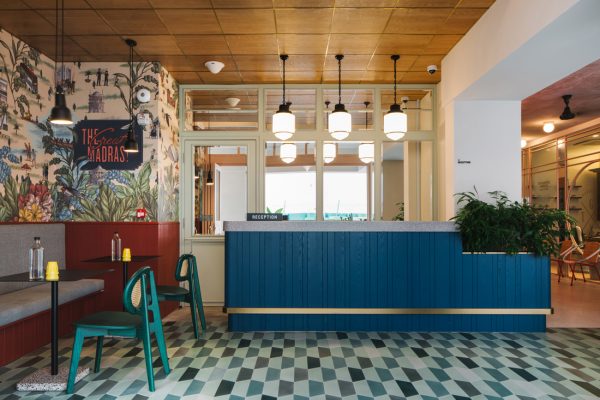
The design of the 35-room hotel and its branding work in unison to encourage a sense of time and place. FARM’s approach to the conservation architecture was not to reduce things down to some idealised statement of the past, but rather to layer up narratives and build on the existing character of the building. While the exterior was largely untouched, FARM brought new life to the intreiors with layers of colours, shapes and materials.
An open and porous frontage allows the interior to spill out onto the pavement such that the lobby blurs the indoor-outdoor boundray and becomes a broader public-private sphere. “The lobby, completely opened to the street, was envisioned as a living room for the neighbourhood,” says FARM. “Both guests and neighbours are invited to linger and mingle.”
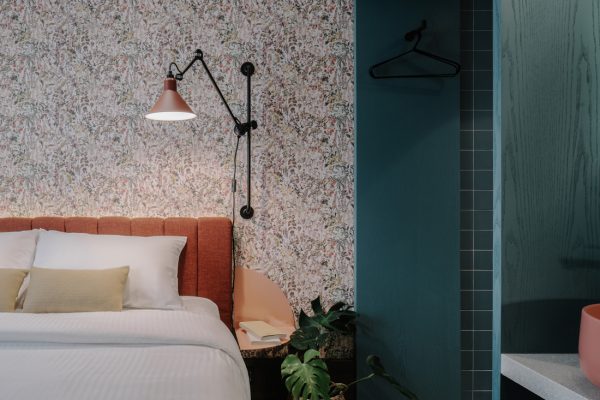
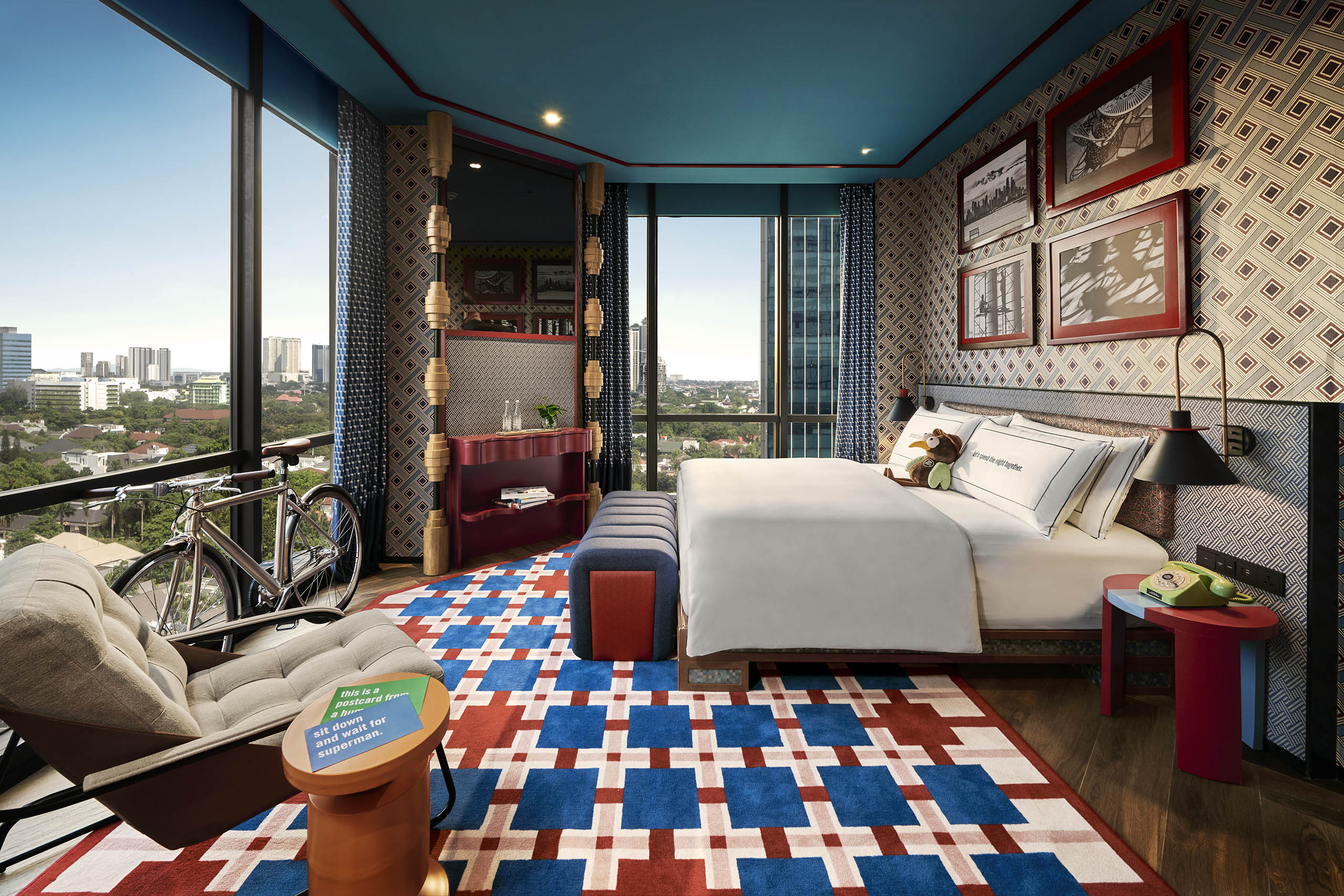
The communal spirit extends to the all-female and mixed hostels on the ground floor. All other rooms are on the upper floors. Colour has been used to define different areas and functions within each room, with botanical-inspired wallpapers adding vintage charm. Back in the lobby, specially commissioned wallpaper features images of stories and narratives that revolve around people, objects and buildings in the neighborhood.
Says FARM: “There is so much we love about The Great Madras. It ranges from small design elements such as the hand bent wire room numbers, quirky name cards, intentionally ghosted directional signage, enamel cups, vintage telephones and other accessories, to more intangible elements such as the buzz and hum of the communal spaces, to the way it brings life to the street.”
The team adds: “We sought to create a great little hotel, with heart and personality, not just something which looks good.”
The Great Madras has been shortlisted in The Social Space category of the INDE.Awards 2018. Will it win? Find out at the INDE.Awards 2018 Gala on 22 June, here in Singapore!
Photography by Studio Periphery.