The home of architecture and design in the Asia-Pacific
Get the latest design news direct to your inbox!

Get the latest design news direct to your inbox!
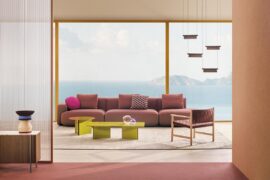
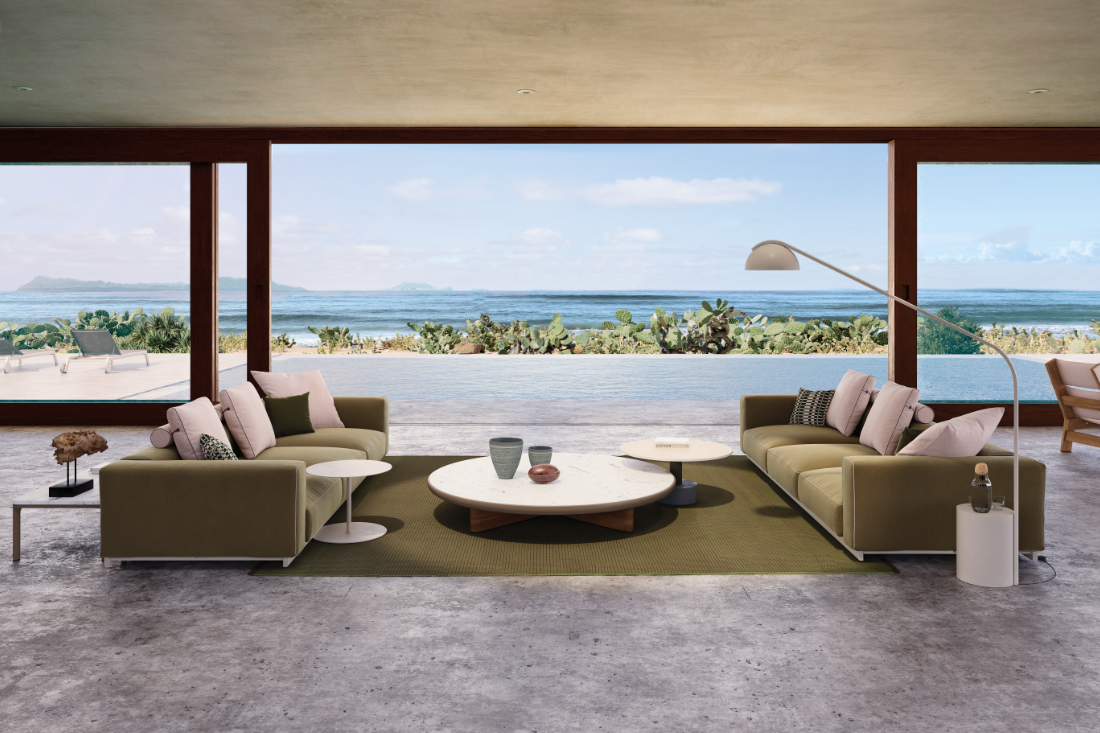
Bigger is better when it comes to seating. The release of Kettal’s new Molo XL modular sofa designed by Rodolfo Dordoni is proof.
June 2nd, 2021
Milan-based architect and designer Rodolfo Dordoni designs furniture and objects that are simple in shape and timeless in aesthetics. His play on geometry is apparent in all of his designs and the Molo modular sofa for Kettal is no exception.
At first glance, Molo appears to be like any other sofa. But in actual fact, its unassuming orthogonal geometry belies its complex reticular modular design. Conceived as the zeitgeist of a modular sofa in its purest form, each module of the sofa – be it a two-seater, three-seater, chaise longue, corner seat, etc – can be taken apart and reorganised to suit any situation or space. This creates new uses and configurations, including curves thanks to the 60-degree corner module.
These desirable features – both aesthetically and functionally – have also been given to Kettal’s new Molo XL sofa. As its name suggests, it’s a larger variant of the existing Molo collection with deeper and wider seats for the ultimate lounge factor.
Available as a two-seater and three-seater sofa as well as a daybed and chaise longue, the intentionally oversized pieces of the Molo XL would look good in any setting, particularly in large, open spaces as understated anchor pieces. Fittingly, Dordoni eschews decorative elements. Instead, emphasis was placed on the various combination of fabrics, colours and carefully selected details. These include optional edged seat and backrest cushions. For greater versatility, the leg system comes in teak, concrete and a new low aluminium base to choose from.
Whether it be used in a residential or commercial setting, Molo XL, as Dordoni puts it, “offers a place of relaxation and reconnection.” And it could not be described any better. After all, this is the fundamental purpose of a sofa – a modular one too.
In Singapore, Kettal is available at XTRA.
INDESIGN is on instagram
Follow @indesignlive
A searchable and comprehensive guide for specifying leading products and their suppliers
Keep up to date with the latest and greatest from our industry BFF's!
The internet never sleeps! Here's the stuff you might have missed