The home of architecture and design in the Asia-Pacific
Get the latest design news direct to your inbox!

Get the latest design news direct to your inbox!
The National University of Singapore and SUNTORY have joined forces to explore opportunities for soil-less vertical greening systems in a tropical context.

November 1st, 2011
For several years now, the School of Design and Environment at NUS has been studying the Urban Heat Island (UHI) phenomenon on Singapore’s environment and exploring measures to minimise its impact.
This has resulted in a number of initiatives – supported by various government agencies – aimed at understanding the thermal benefits of urban greenery, including that of rooftop and vertical gardens.
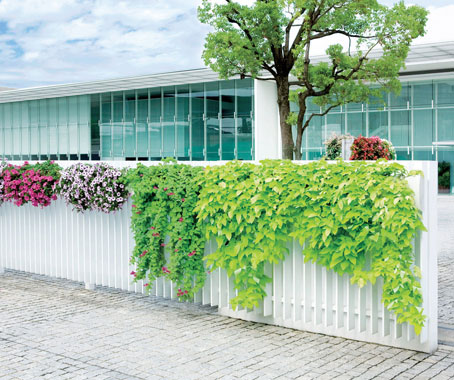
Its latest collaboration is with Japanese company SUNTORY; both have just signed a Memorandum of Understanding (MOU) to collaborate on the research and development of unique technologies and expertise in the area of vertical greening systems.
Their investigations will centre on Pafcal, the first soil-less medium for plants developed by Suntory Midorie Limited – a greening business launched by SUNTORY in 2008.
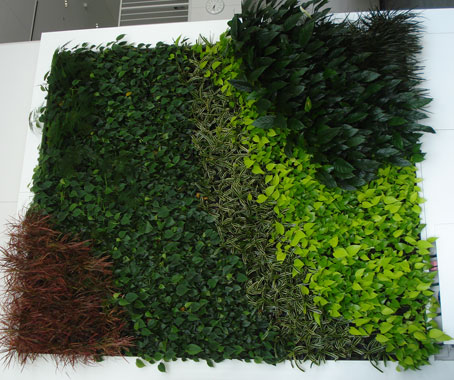
Pafcal is a new urethane-based spongy gardening material that serves as a soil substitute for growing plants. The system “Hana no Kabe” with Pafcal is already in commercial use in Japan, and has begun small business-based employment in Shanghai, Hong Kong and Taiwan.

In Singapore, the studies will focus on the viability and performance of the system in a tropical context.
“Research issues will include thermal performance monitoring of the greenery system, water absorption and retention ability of Pafcal, chemical leaching of Pafcal, suitability and choice of plants for the system, and maintenance issues of the system,” says Professor Heng Chye Kiang, Dean at the School of Design and Environment, NUS.
“We have been working on vertical greenery for quite some time. This is yet another opportunity to study a new system within the context of our tropical climate.
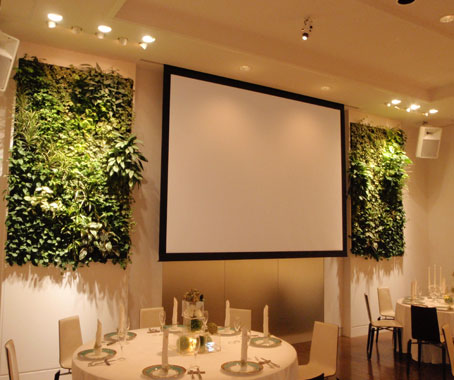
“One of the main problems with vertical greenery is always one of maintenance and water consumption. If we have a system that is more water efficient, and delivery of nutrients and water as well as maintenance is simpler, I think we would probably make it more viable, [and encourage] more buy-in from the public and building owners.
“I think a lot of residential estates as well as commercial projects have now implemented rooftop greenery as well as vertical greenery. Not to mention the efforts by pioneering agencies like HDB [Housing Development Board]. So I think we will just see more and more of these buildings, whether it’s commercial or residential, going green,” says Professor Heng.

The green wall system with Pafcal is set up at NUS at the Greenery Technology Laboratory (GTL) of the Department of Building, School of Design and Environment.
INDESIGN is on instagram
Follow @indesignlive
A searchable and comprehensive guide for specifying leading products and their suppliers
Keep up to date with the latest and greatest from our industry BFF's!
Discover the latest styles from Italy with Living Tiles. The Living Tiles Rozelle showroom will host an evening of Nuova Italia on Thursday 2 June. What: Nuova Italia 2011 Product LaunchWhere: 133 Victoria Road RozelleWhen: 2 June 2011, 6-9pm Living Tileslivingtiles.com.au
The internet never sleeps! Here's the stuff you might have missed