The home of architecture and design in Asia-Pacific
Get the latest design news direct to your inbox!

Get the latest design news direct to your inbox!
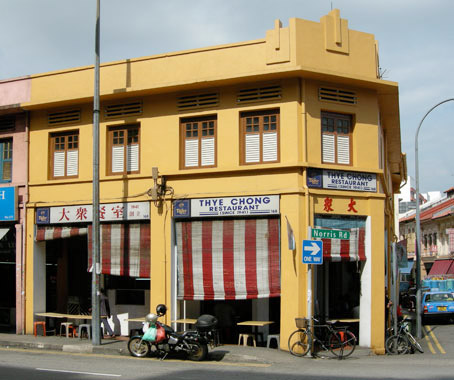
A broad range of Art Deco styles in Singapore are examined in this exhibition, currently on at The URA Centre.
August 7th, 2013
A little gem of an exhibition is currently being held at The URA Centre that while modest in size, offers an enlightening look into the Art Deco movement in Singapore. Its curator, Julian Davison, tells us more.
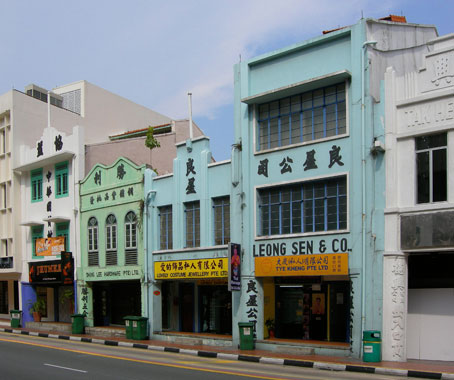
Row of Art Deco shophouses on South Bridge Road
How did you come to work on this exhibition?
The idea of holding an exhibition on Art Deco in Singapore originated with the National Heritage Board (NHB) as part of their presentation for this year’s Singapore Heritage Festival.
I have been researching the architecture of Singapore during the Colonial era for more than ten years now and have published two books on the subject, which is probably how NHB came to know about me and my work.
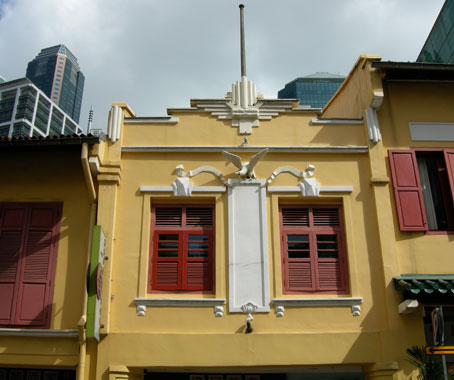
No 24 China Street
How is the exhibition arranged to give the visitor an understanding of Art Deco and Art Deco in Singapore?
Since Art Deco is a rather heterogeneous ‘hotchpotch’ of different styles and creative impulses, I thought it was important examine the different influences and inputs that went into the making of Art Deco as a distinctive style of architecture and design. I also thought it was important to show where these different influences were coming from – the social and historical background that gave rise to Art Deco – what I have called “the spirit of an age”. I like to think that the exhibition will help those who are interested in Singapore’s architectural history to get a better understanding of the period, not only in terms of the buildings but also the historical and cultural climate which gave rise to them.
This takes up the first part of the exhibition and then in the second half, I try to show how these different aspects of Art Deco are represented in Singapore’s architectural record.
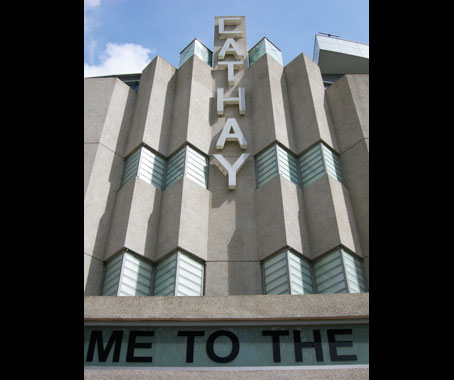
Cathay cinema facade
This involves highlighting good examples of the various styles that went into making of the Art Deco canon, but I have also included buildings that reflect the “spirit of an age” theme that I referred to above.
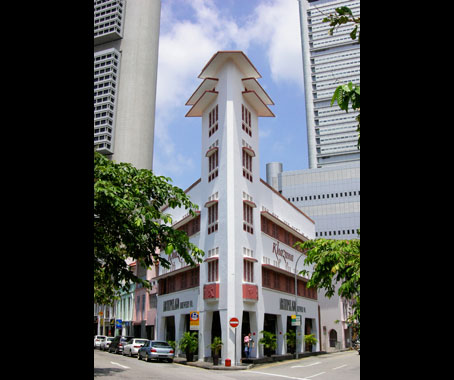
What Davison refers to as the ’Fin’ building, at the junction of Circular Road and Lorong Telok
They include corporate blockbusters like the Hong Kong & Shanghai Bank and the Union Building on Collyer Quay, as well the OCBC building on Chulia Street, all of which reflect the newfound affluence of Singapore at the end of the First World War. Kallang Airport, Clifford Pier and the Railway Station represent the golden age of travel, while the Malayan Motors building on Orchard Road and the Ford Factory at Bukit Timah reflect the coming of age of the motorcar as a universal means of transport in the interwar years. Modernist villas and designer shophouses demonstrate how up-to-the-minute Singaporeans were in terms of contemporary architectural fashions and designer chic for the same period. And so on.

Scaled model of Old Kallang Airport. Photo courtesy of URA
What do you ultimately hope this exhibition will achieve?
I hope that it will draw attention to a somewhat neglected, or overlooked, aspect of Singapore’s architectural heritage, and in doing so, help to preserve some of the fine buildings that still survive from this era for the appreciation and enjoyment of future generations — both Singaporeans and visitors from overseas.
Julian Davison has a BA in anthropology from the University of Durham, and a PhD from the School of Oriental and African Studies in London. He grew up in both Singapore and Malaysia.
Lost Horizons: Art Deco Architecture of Singapore is on from now till 31 August (closed on Sundays) at The URA Centre, 1st level.
Top image: Junction of Serangoon and Norris Road
All photographs by Julian Davison unless otherwise stated
A searchable and comprehensive guide for specifying leading products and their suppliers
Keep up to date with the latest and greatest from our industry BFF's!
The internet never sleeps! Here's the stuff you might have missed