The home of architecture and design in the Asia-Pacific
Get the latest design news direct to your inbox!

Get the latest design news direct to your inbox!
DQ business writer Mike Hanley looks at how design businesses can protect themselves against creditors who can’t (or won’t) pay.
May 13th, 2009
This article, by Mike Hanley, appears in the current issue #33 of Design Quarterly Magazine.
When Auckland-based design retailer Eon went into receivership last November, thousands of small designers were left in the lurch. The upmarket store went broke owing many of its suppliers thousands of dollars for goods provided on order or consignment.
David Trubridge, a lighting and furniture designer, was owed tens of thousands of dollars by Eon, for lights that were sold by the shop but hadn’t been paid for.
“Many of the other suppliers tried to reclaim stock that was still on the shop floor when the company went into receivership,” says Trubridge. “But we couldn’t do that because our products had already been sold.”
With the global financial crisis still roiling through markets, it is likely that Eon-style financial collapses will be increasingly common in the design world. Trubridge and others in the industry are asking how they can protect themselves against events like this that can have a real impact on their own viability.
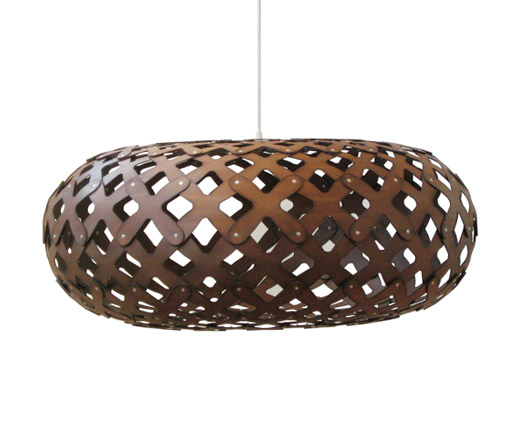
’Kina’ by David Trubridge, one of the many products lost in the Eon collapse
“The Eon experience has made us really wary of how we deal with sales outlets,” says Trubridge. “The problem is that there is a real power imbalance between larger retail outlets and their small suppliers: many will only buy on their own terms, much to the detriment of the designers. But we have been guilty of letting them do this.”
It is simply sensible business practice for companies to protect themselves as much as possible against creditors who can’t or won’t pay. The good news is that there are some simple measures designers can take to protect themselves. The bad news is that even the best run businesses can still be exposed if their customers are experiencing financial difficulties.
“There are a couple of things companies can do to minimise the risk their creditors pose to them,” says Simon Cathro, a partner who specialises in insolvency at accountancy firm Ernst & Young. “The first is to do a health check on your customers to see how likely they are to experience financial difficulties. The second is to impose stringent payment terms and seek to protect your rights as much as you can. ”
Basic due diligence is easy to undertake. All companies must lodge their most recent accounts with the Australian Securities and Investments Commission (ASIC), and by doing a search, you can check whether your customer has a history of profits or not. You can make calls to other suppliers to check whether they are good payers or not, and whether this has changed in the recent past. Check with others whether the company has been increasing or decreasing its order sizes. You can also do a media search to see if the company has any mentions in the press, good or bad.
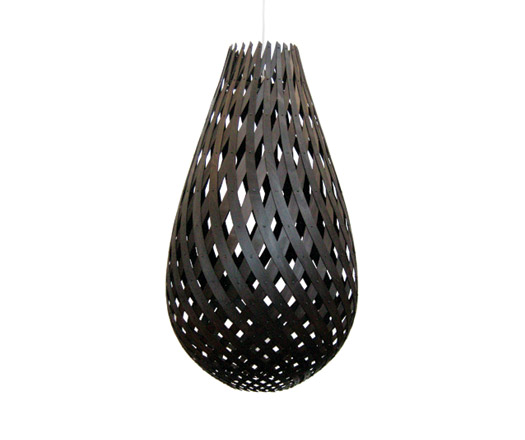
’Koura Black’ by David Trubridge
“It is the nature of difficult times that companies are so concerned with getting the business that they ignore the quality of the business,” says Rob Dalton, a partner at Ernst & Young in its strategic growth markets practice. “Its better not to get the job at all if you are going to do it and not get paid.
”Having determined that you want to do business with a company, you can then seek to protect yourself against an Eon-type situation in two ways. If you are supplying the company with goods such as furniture or lighting, you can maintain title to those goods by stipulating it in your supply contract.
Retaining title to the goods means that if the retailer or the builder becomes insolvent in between supply of the goods and payment, you are legally entitled to reclaim those goods.
Importantly, you cannot reclaim goods that you have not formally retained title to, even if you haven’t been paid for them.
You can also seek personal guarantees from the owners of the business. In the event the customer goes out of business, you can then pursue them personally for the money they owed you. Unsurprisingly, many business owners are unwilling to sign personal guarantees.
“There’s always a balance between protecting yourself to make sure you get paid, and making a nuisance of yourself, so you’ll never get business from that company again,” says Dalton. “Companies are structured to protect the assets of their owners, so asking them to personally guarantee things can be seen as pretty aggressive.”
Most importantly, the accountants say now is the best time to check on the health of your own business. You need to understand when and where cashflow pressure might arise, and doing some simple forecasting and planning can help you stay alive in difficult times.
“If you are doing cost cutting, make sure you are getting value out of your accountant at least,” says Dalton. “Now is not the time to be making savings on planning and budgeting.”
For David Trubridge, however, it is all a bit late. Nonetheless, he says from now on, the company will be dealing very differently with its suppliers: “We’re trying to tilt the balance back a bit more in our favour.”
Tips for tough times:
Want to know how to grow your business in tough times? Download this pdf presentation by Corporate Edge.
INDESIGN is on instagram
Follow @indesignlive
A searchable and comprehensive guide for specifying leading products and their suppliers
Keep up to date with the latest and greatest from our industry BFF's!
The internet never sleeps! Here's the stuff you might have missed