Most designers view old samples, broken prototypes and leftover fragments as little more than waste destined for the bin. For Bangalore-based studio Multitude of Sins (MOS), however, these discarded materials are the foundation of something entirely new.
With its project Requiem of Ruins, also known as Material Lab, MOS has reused, recycled and rejuvenated a multitude of waste materials to create an adjunct to its studio that demonstrates how renewal on a grand scale can be achieved.
The design visionary behind this deeply sustainable project is Smita Thomas, an avant-garde designer who approaches design differently from most. Establishing her practice in 2019, Thomas has crafted a portfolio of interiors that are expertly resolved yet always carry a touch of whimsy. For Material Lab, created within her own studio, she pushes the creative envelope wide open, conceiving something that speaks volumes about her talent and design prowess.
Material Lab is constructed from an extraordinary 95 per cent discarded product across its 140-square-metre footprint — almost anything rejected from a past project has been utilised. Repurposing these materials has become both a spatial experiment and a philosophical statement. As an extension of the practice and blurring the line between workspace and art gallery, Material Lab is built entirely from salvaged material, resulting in a functional workplace that rethinks ideas of beauty and perfection.
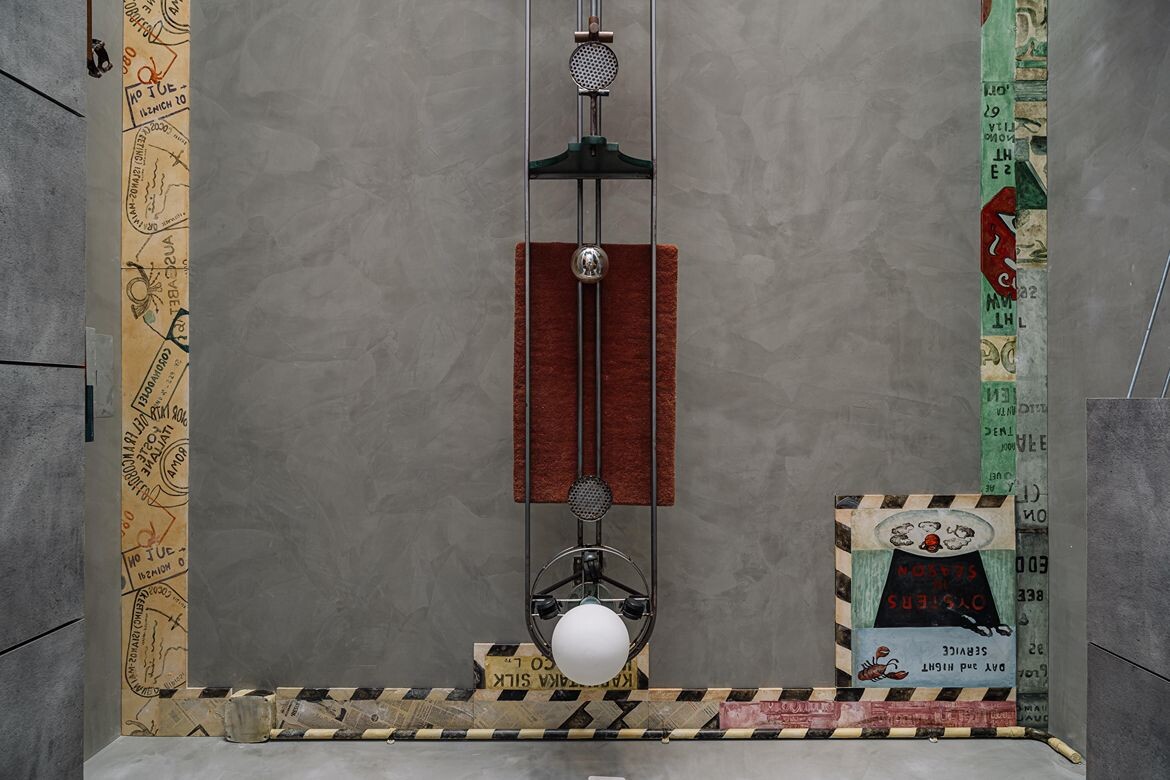
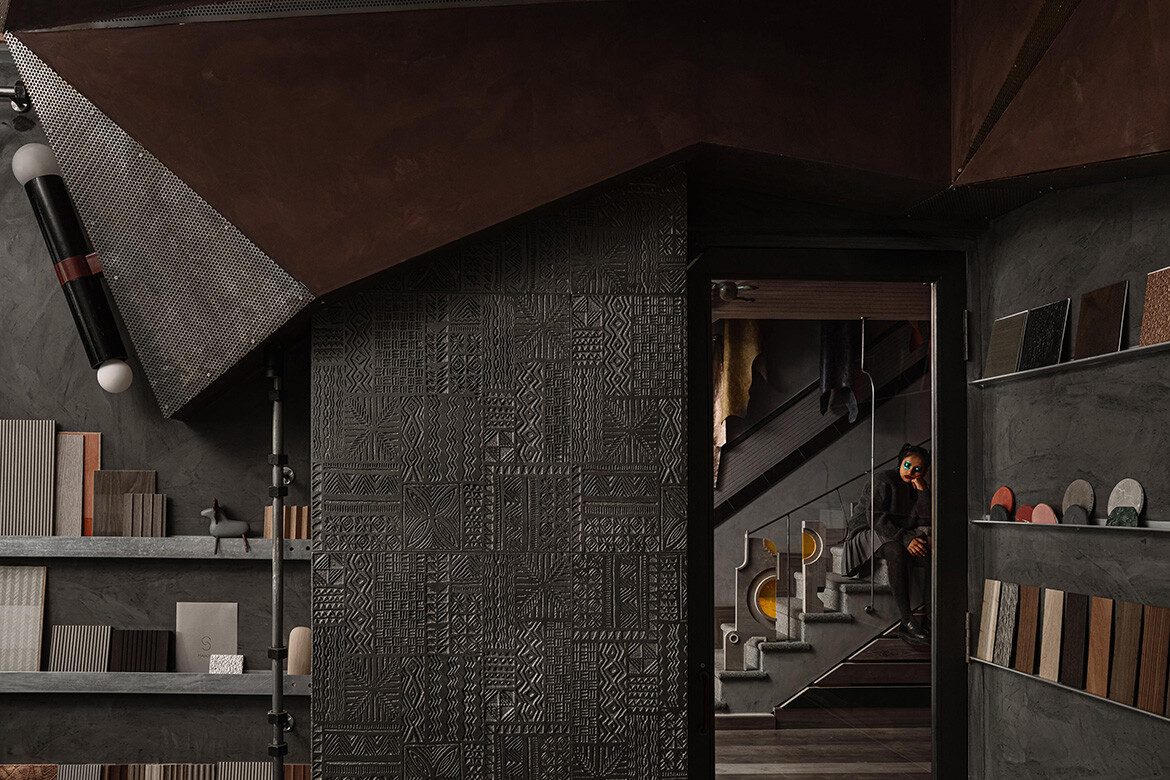
Over a two-year period, discarded materials were collected, logged across two intensive weeks, and then transformed. Artisans recrafted items into new forms — such as the sculptural entrance panel featuring coils of wire and orb-like pendant lights.
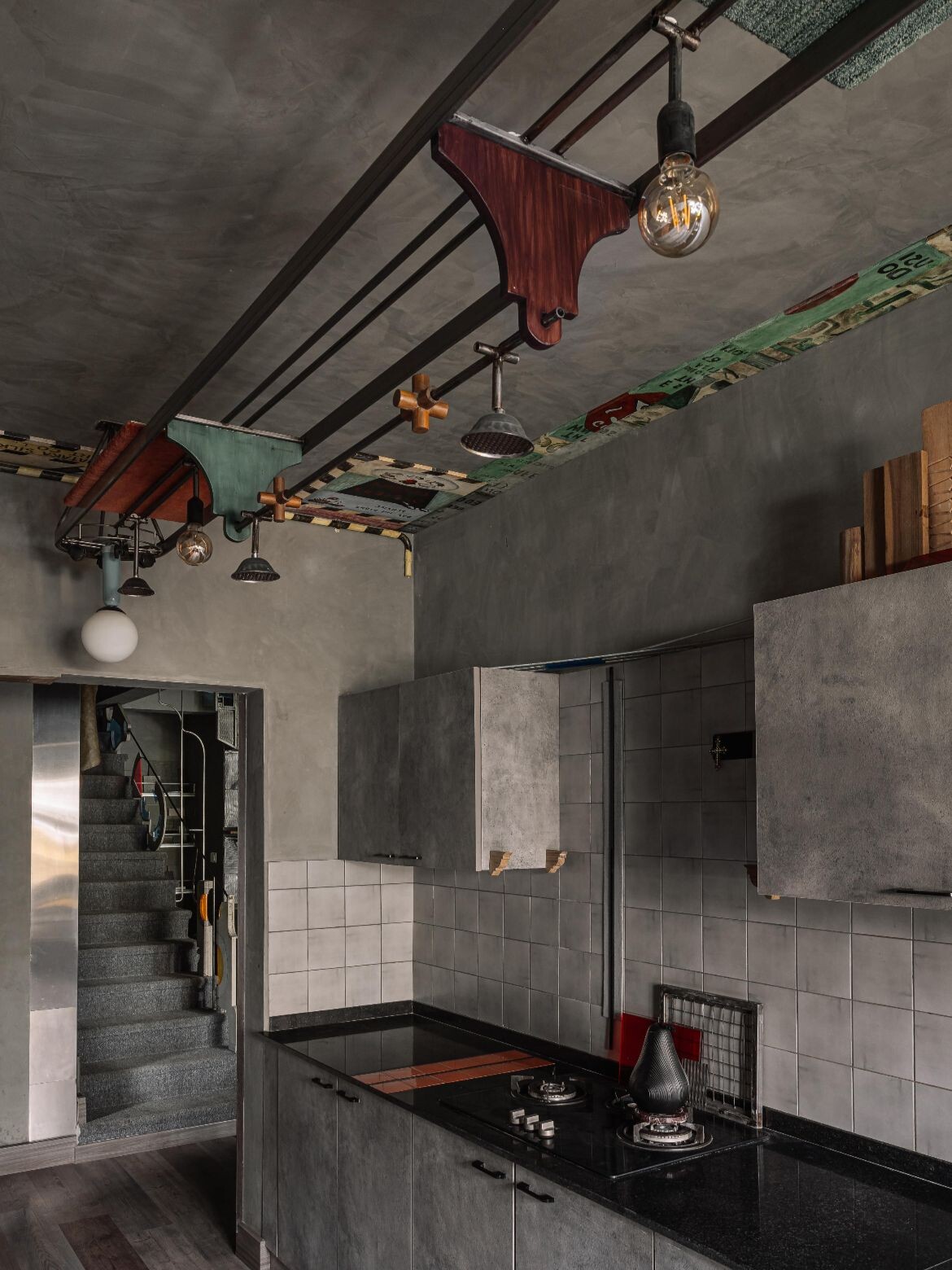
Inside, a backlit steel panel anchors the studio, with neon signage spelling LAB and a sculptural form bearing the word MATERIAL. Overhead, exposed metal conduits and bulbs present as a lighting installation.
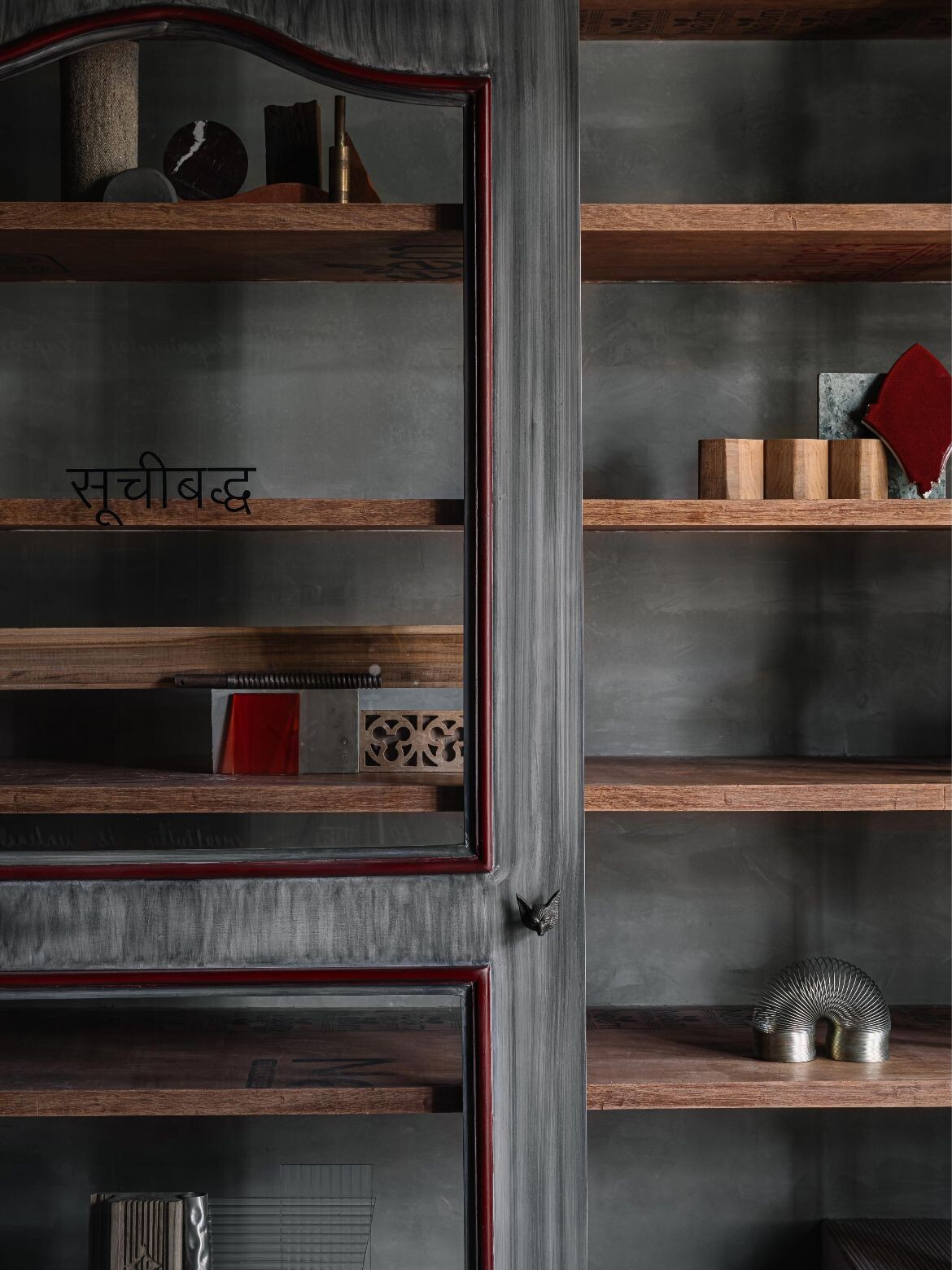
A cabinet of curiosities displays fragments, drafts and prototypes, while a glass loft above extends this sense of display, showcasing tiny textural objects like a miniature museum.
Related: Dinding Design Office captures the art of watchmaking
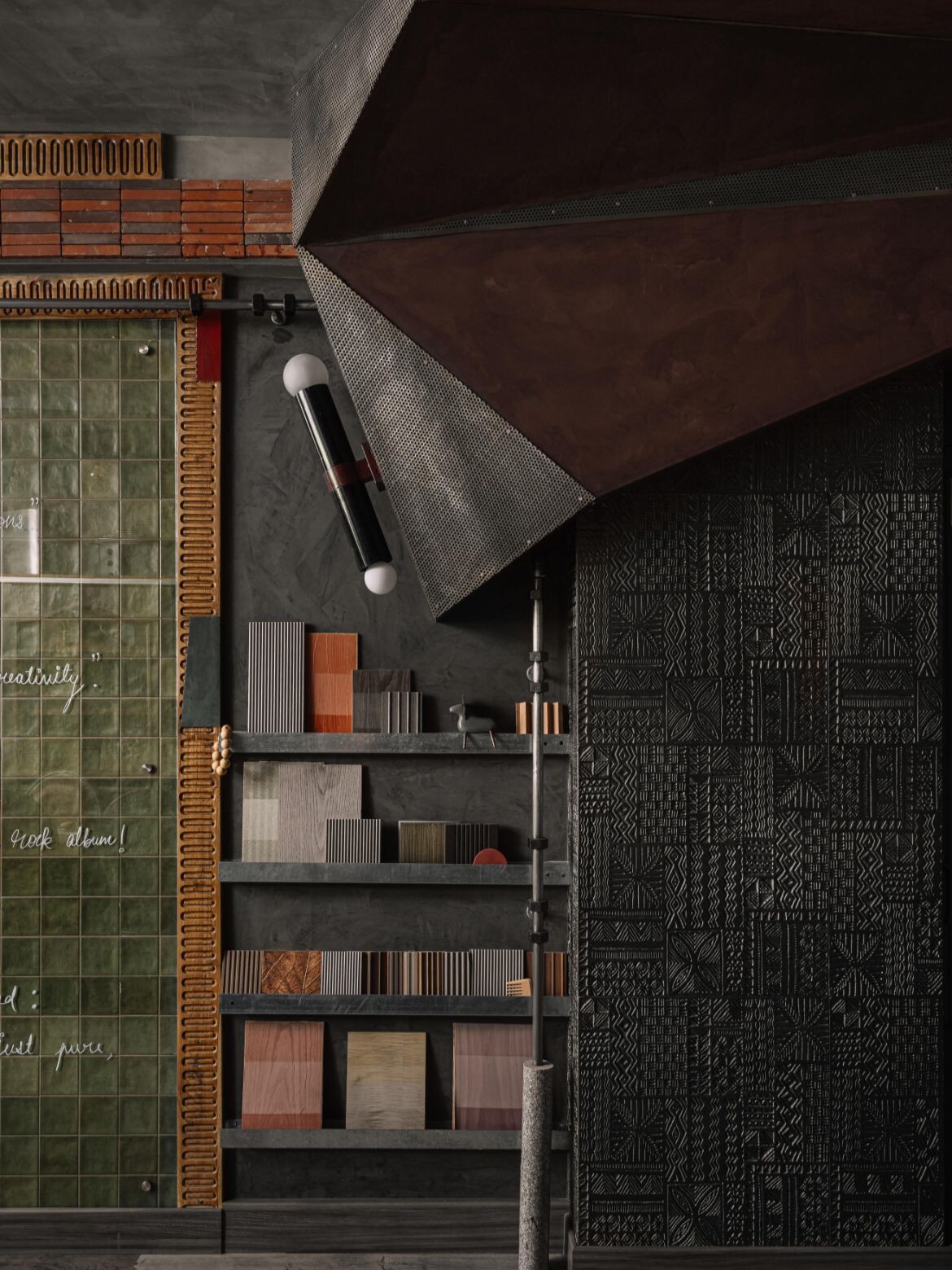
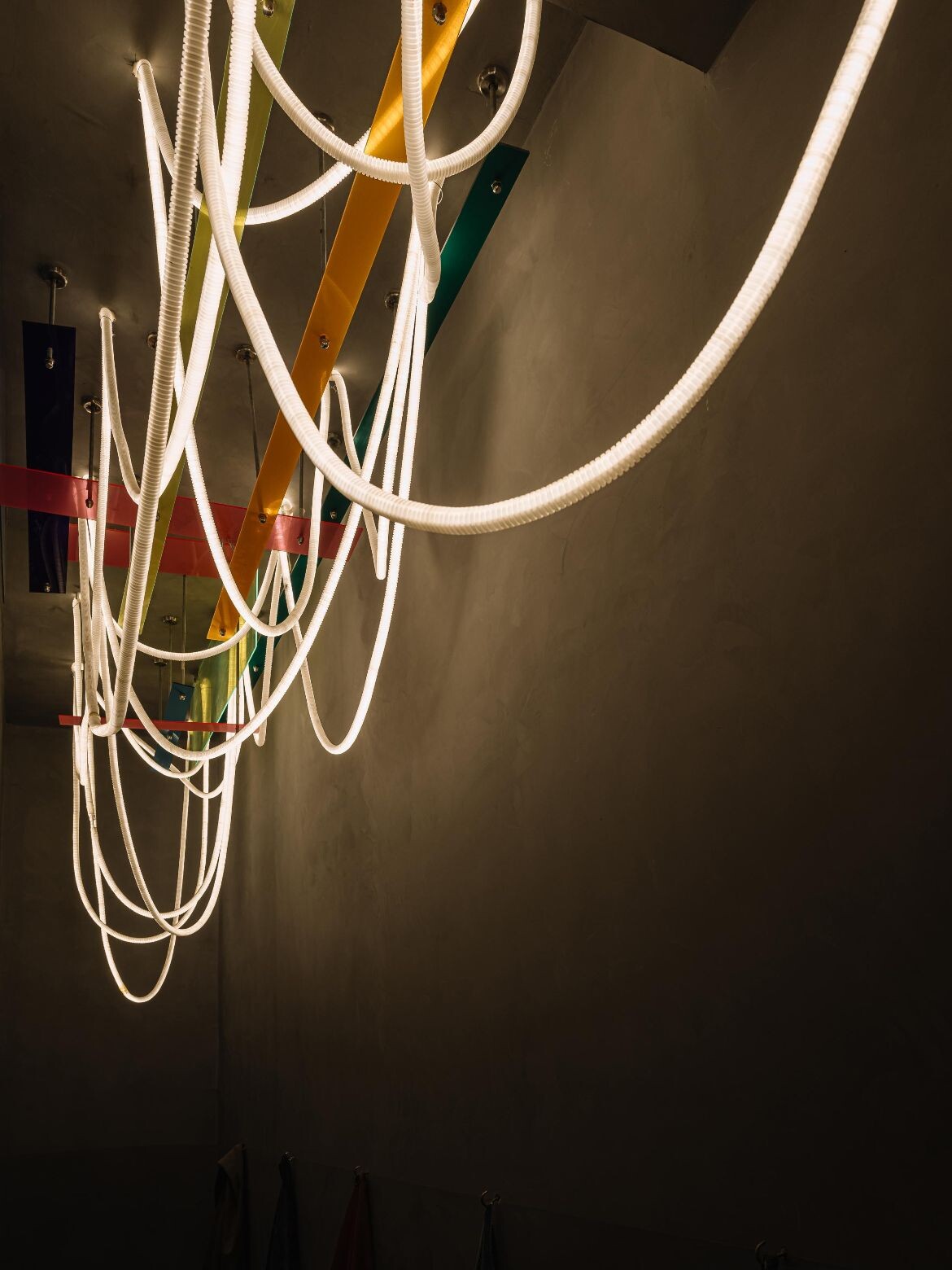
In the Director’s Lounge, a vivid red industrial hook and charcoal sofa sit before backlit acrylic fins. A staircase with chipped timber beading, salvaged wallpaper scraps and used tiles leads upward, where hooks display old fabric and leather samples and a chandelier of coloured acrylic bands glows brightly.
Beneath the landing, L-shaped metal shelves hold stone and metal samples, while a nearby bevelled wall combines textured paint and mirror. Deep maroon repurposed curtain rods hang suspended in mid-air.
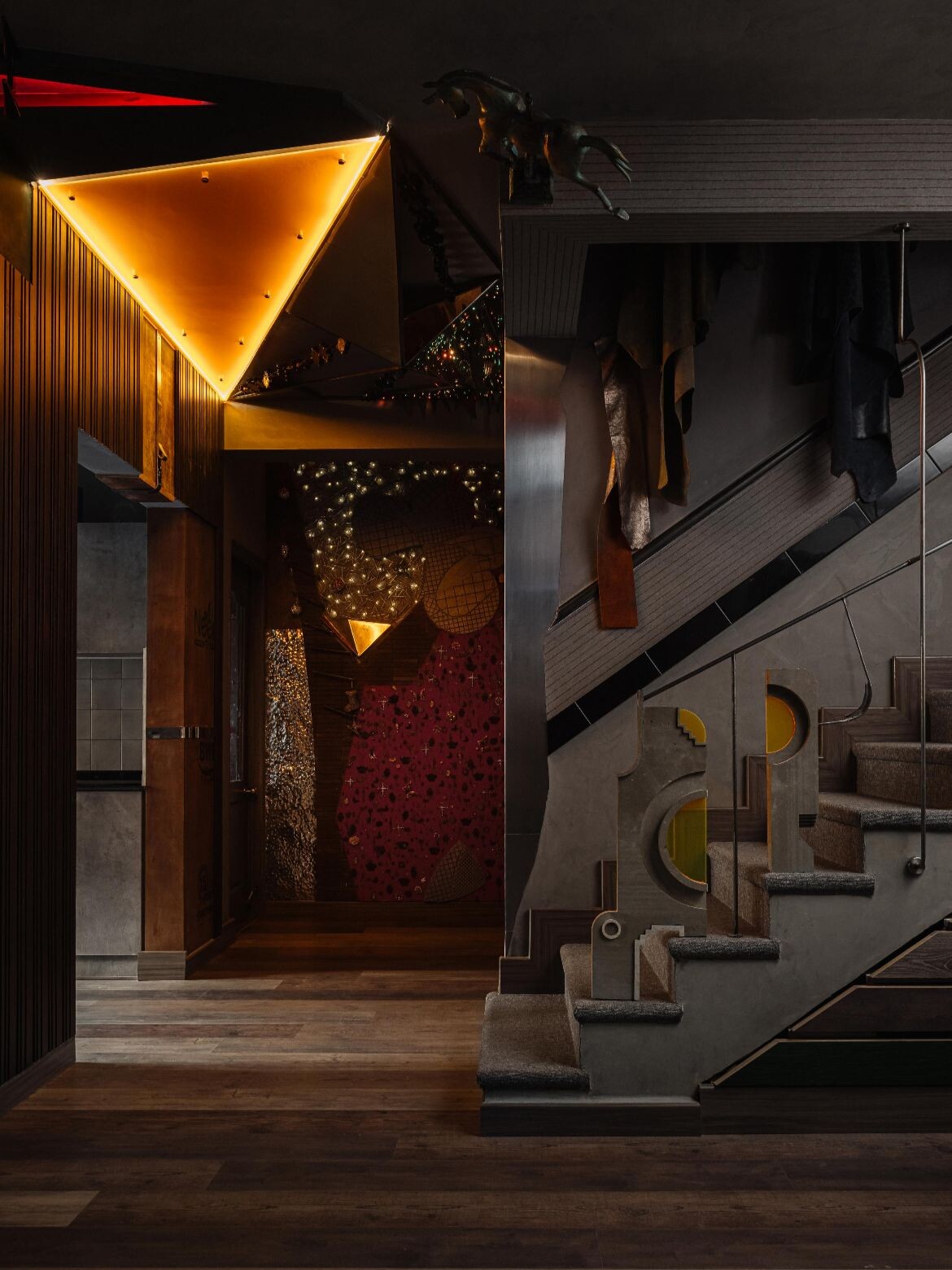
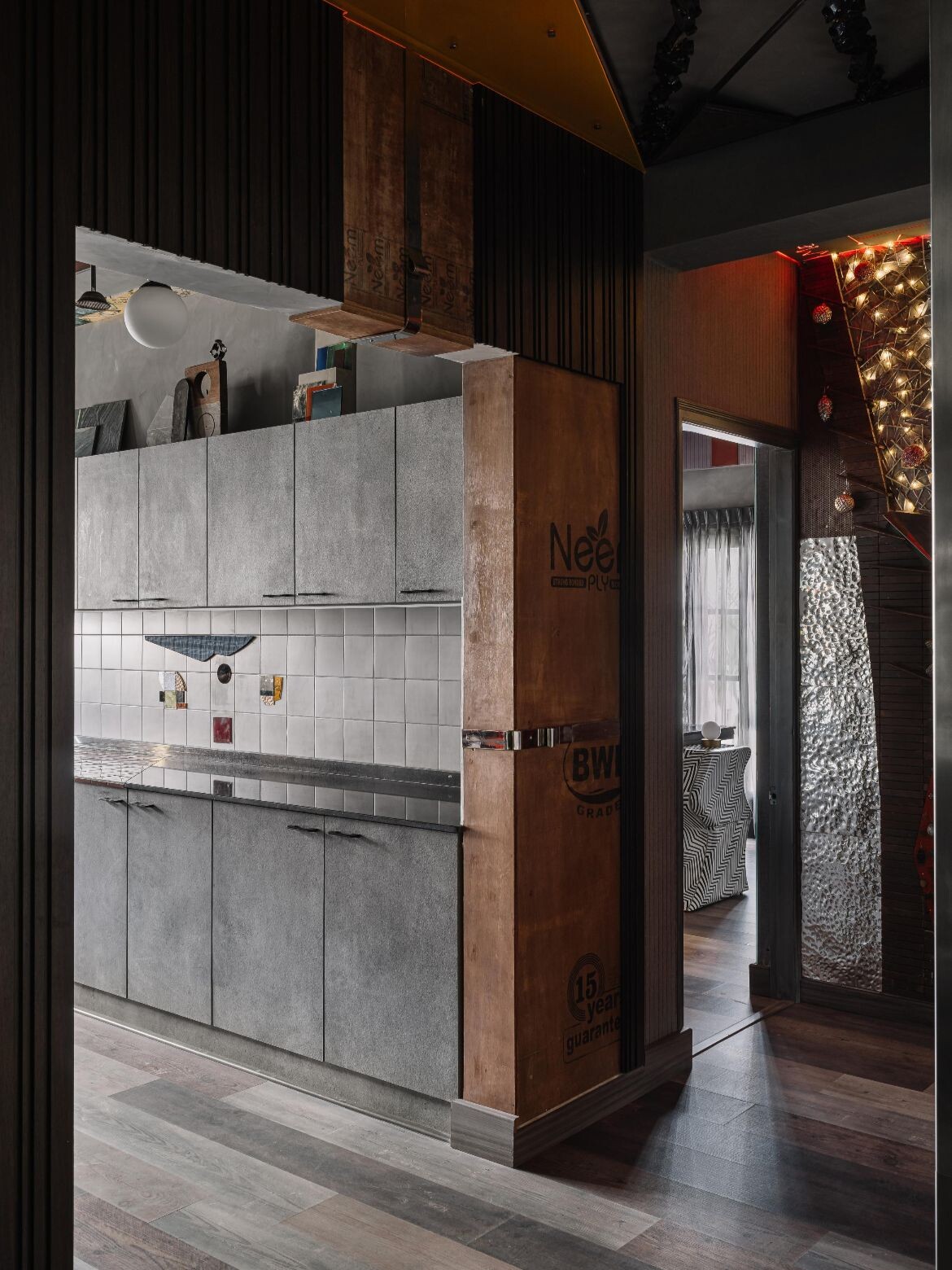
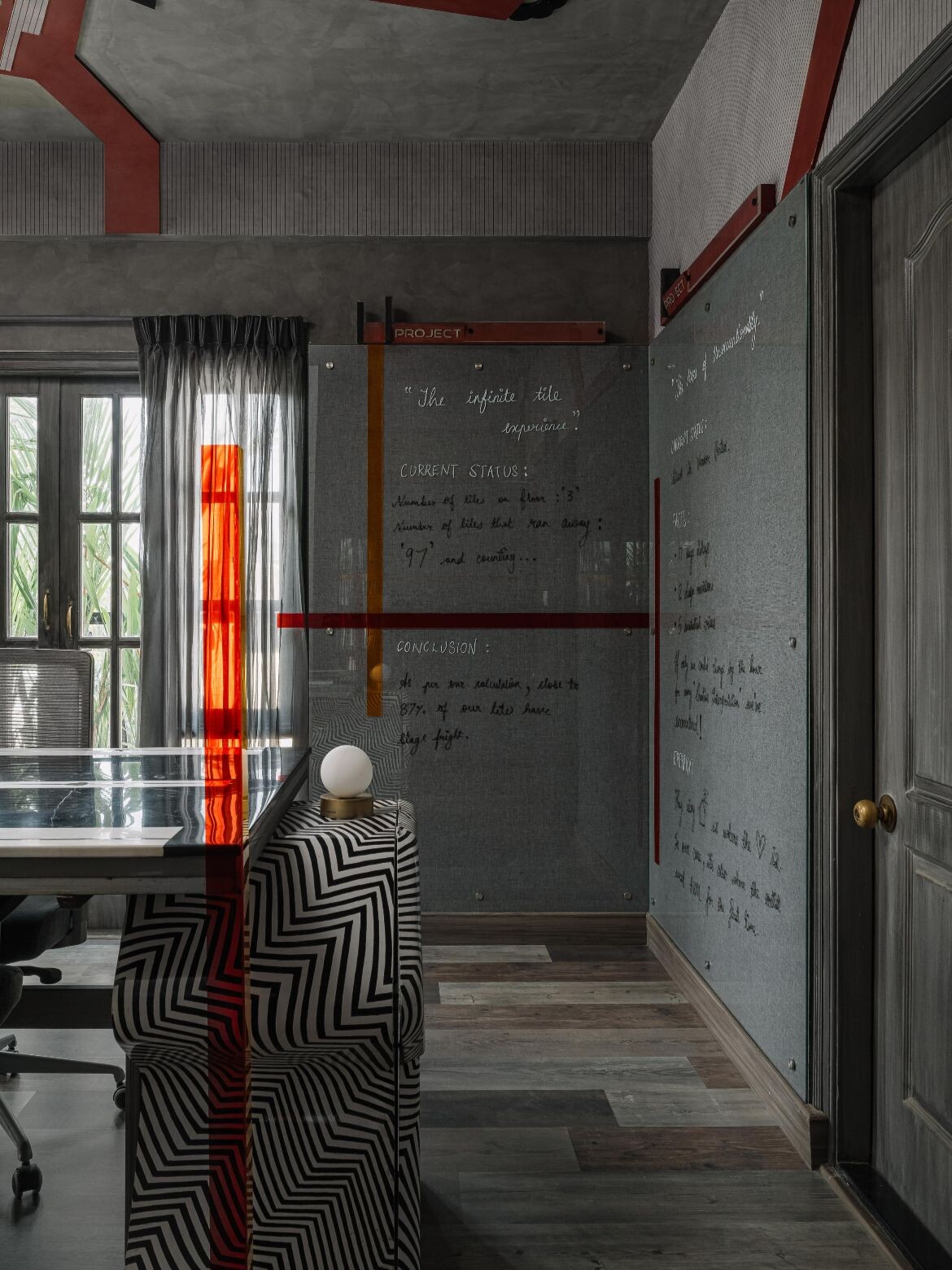
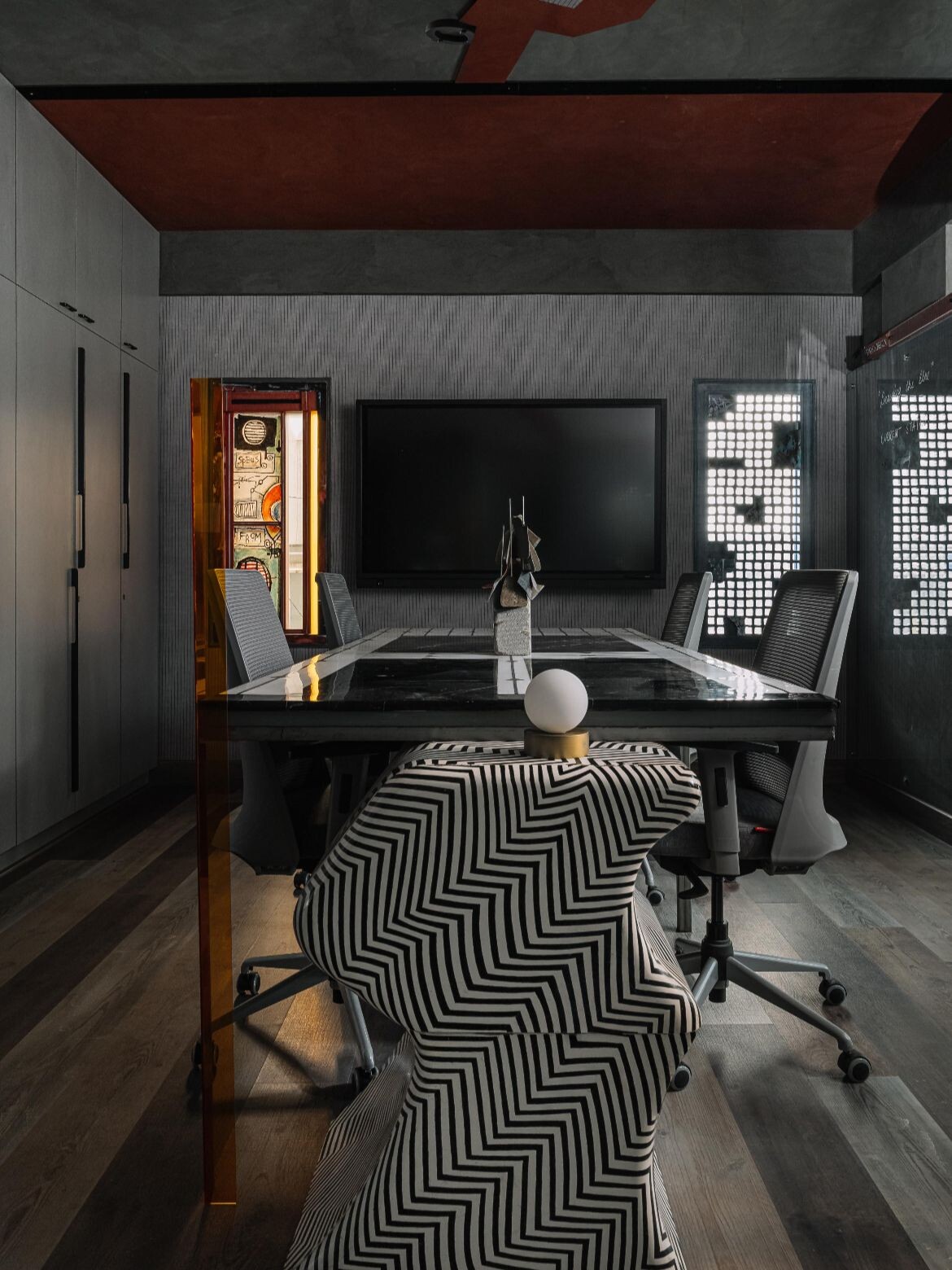
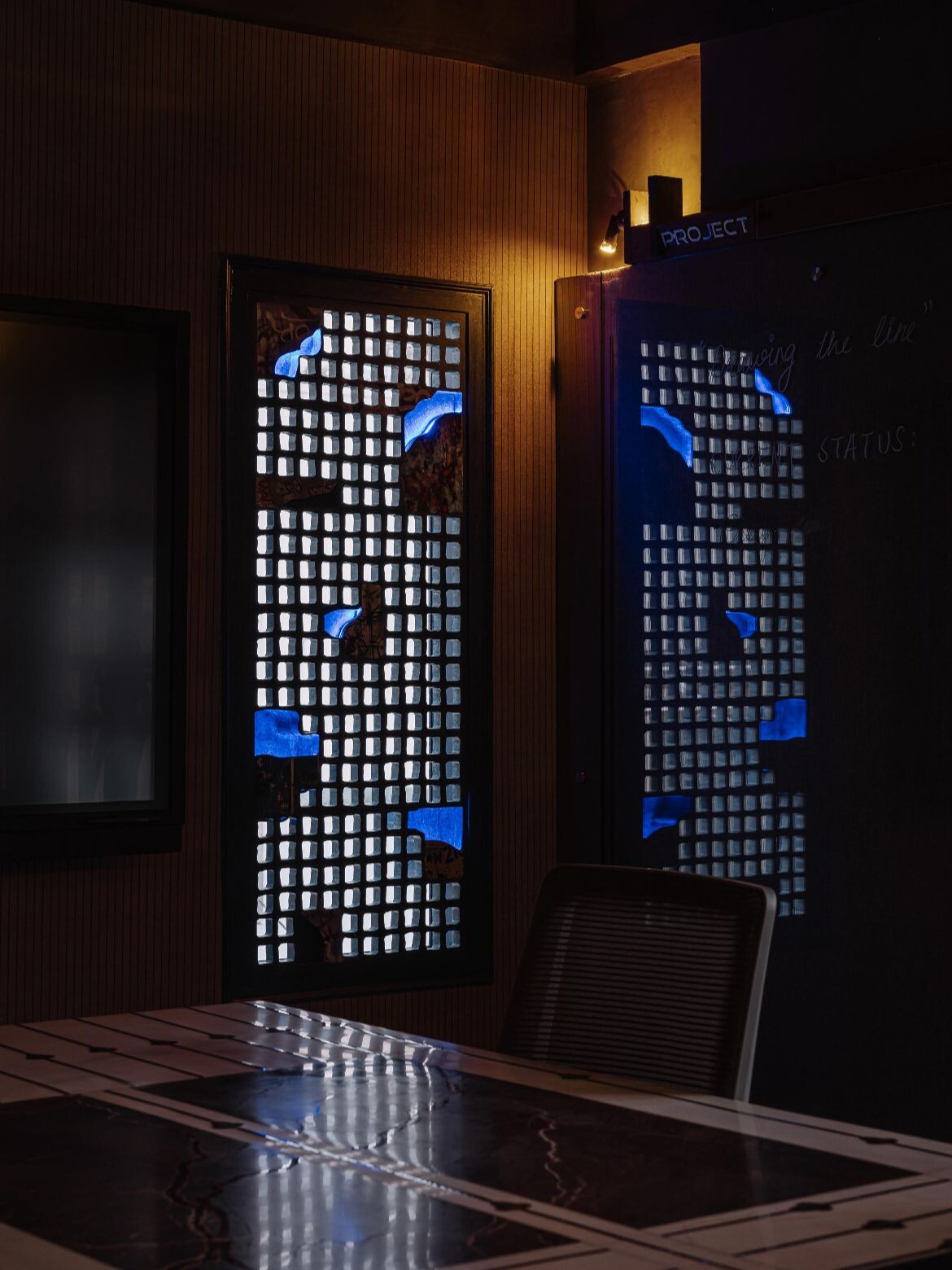
A passageway leads to the heart of the studio — the informal Sample Library and Director’s Lounge. At its centre sits a 3.7-metre Director’s Table, a patchwork of perforated mesh, plywood offcuts and marble pieces. Surrounding shelves and a floating plywood plank suspended from the ceiling by repurposed metal belts complete the space. A repurposed pegboard made from an old staircase railing holds more than 300 metal samples, becoming an artwork among others made from leftover MDF, acrylics, timbers and mosaics.
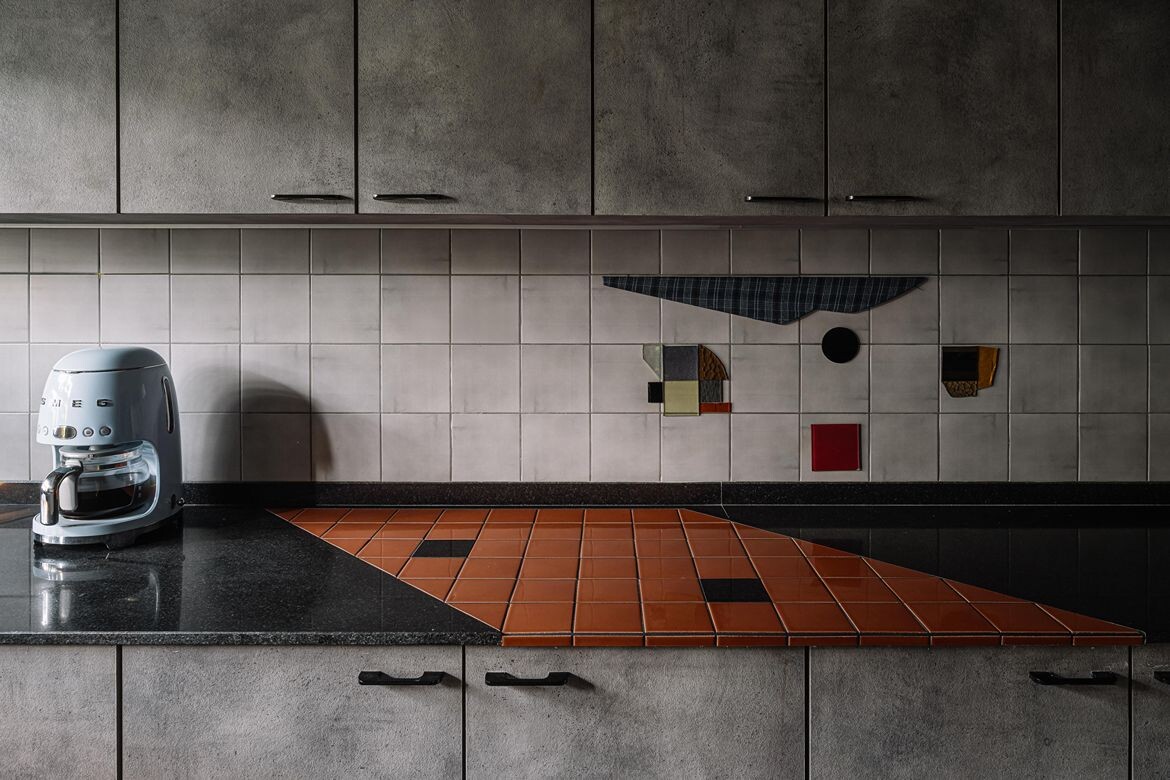
Further along lies The Crimson Den — originally a bedroom and now Guffa, the vendor meeting room. Clad in maroon fabric, it features a sculpted ceiling made from waste ply, MDF and blockboard. Carved stone tiles cluster at one end, delicate samples sit on metal shelves, and prototype sconces flank a projection wall. A kitchen and pantry complete the Material Lab.
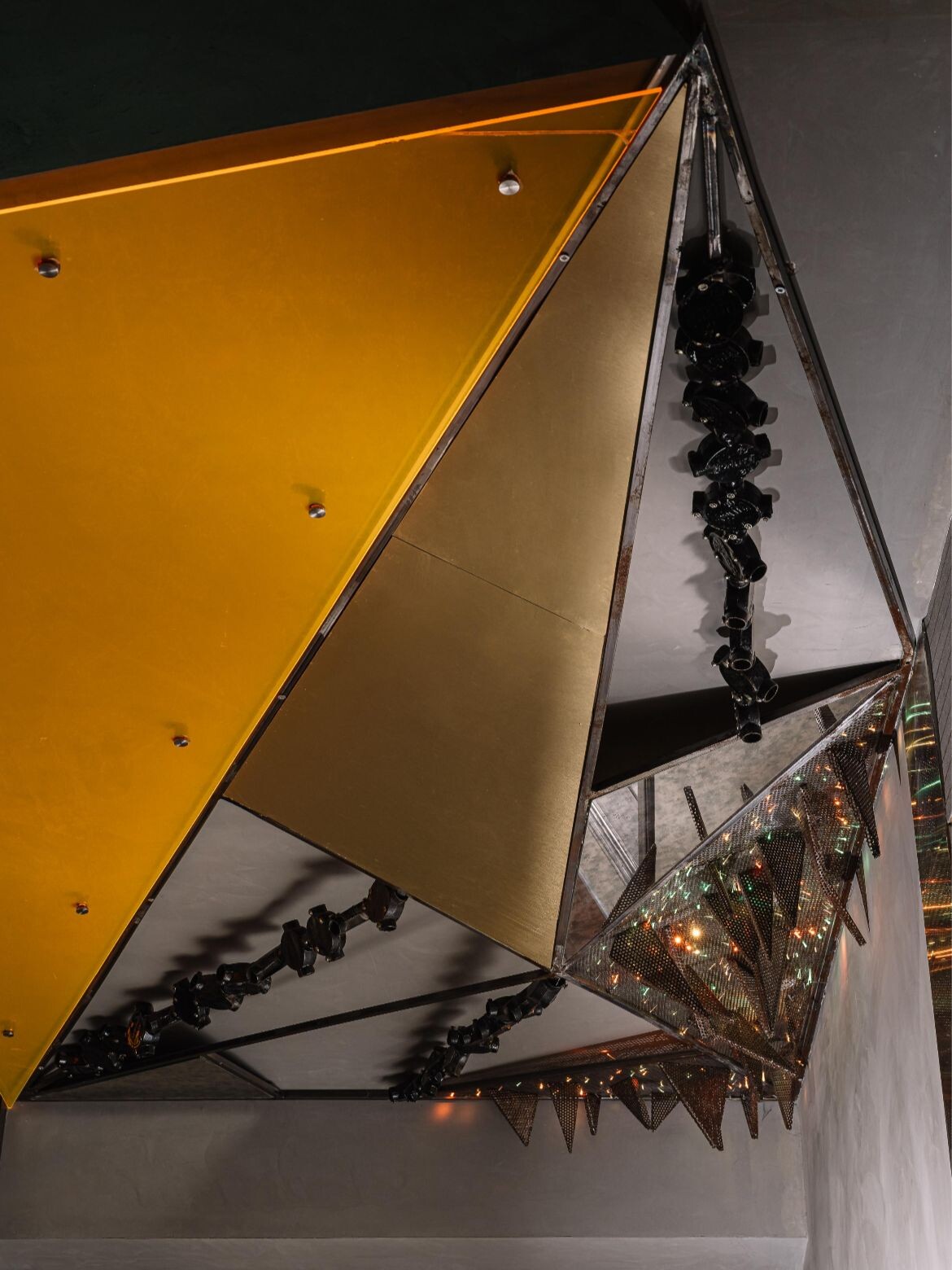
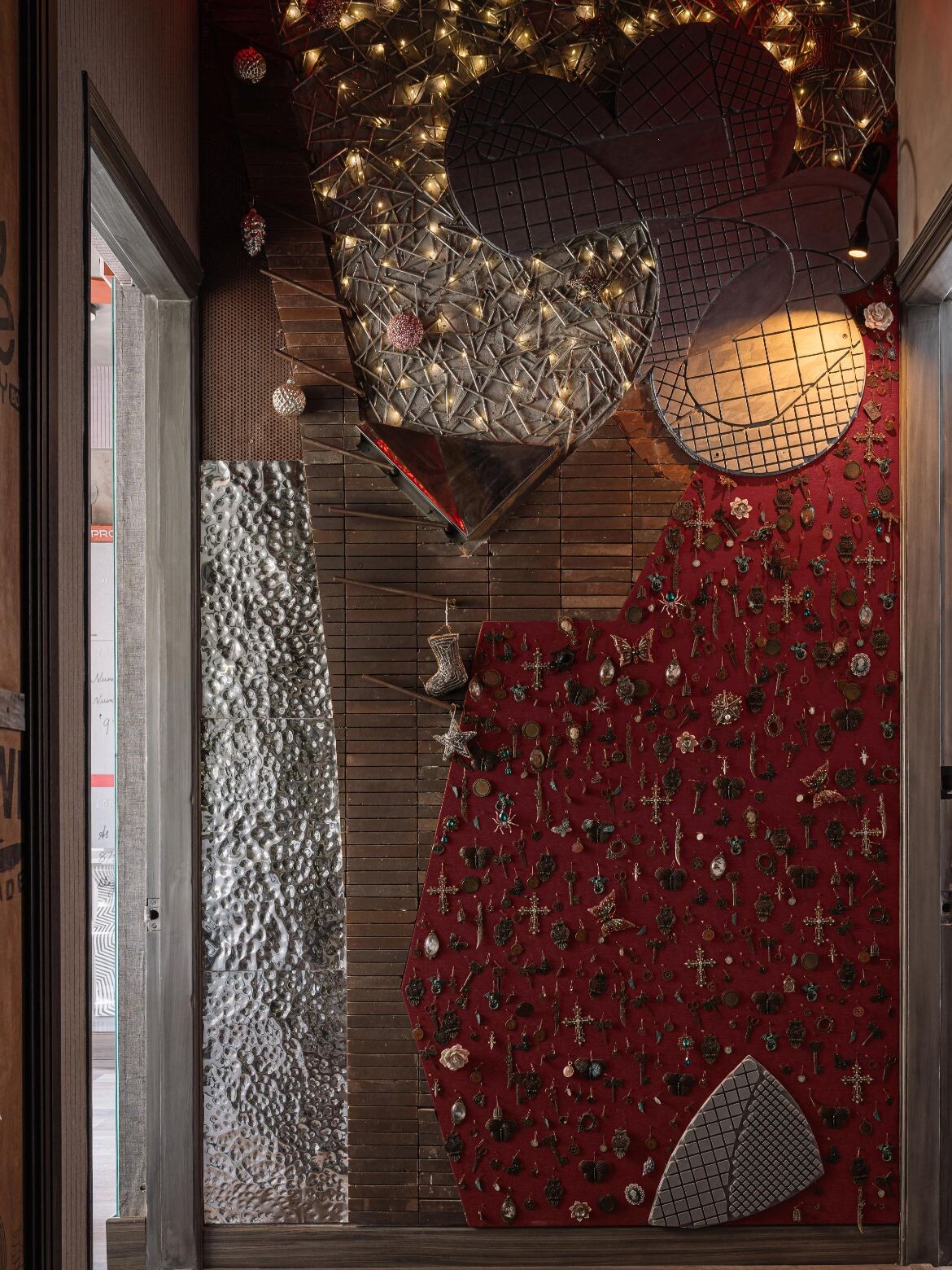
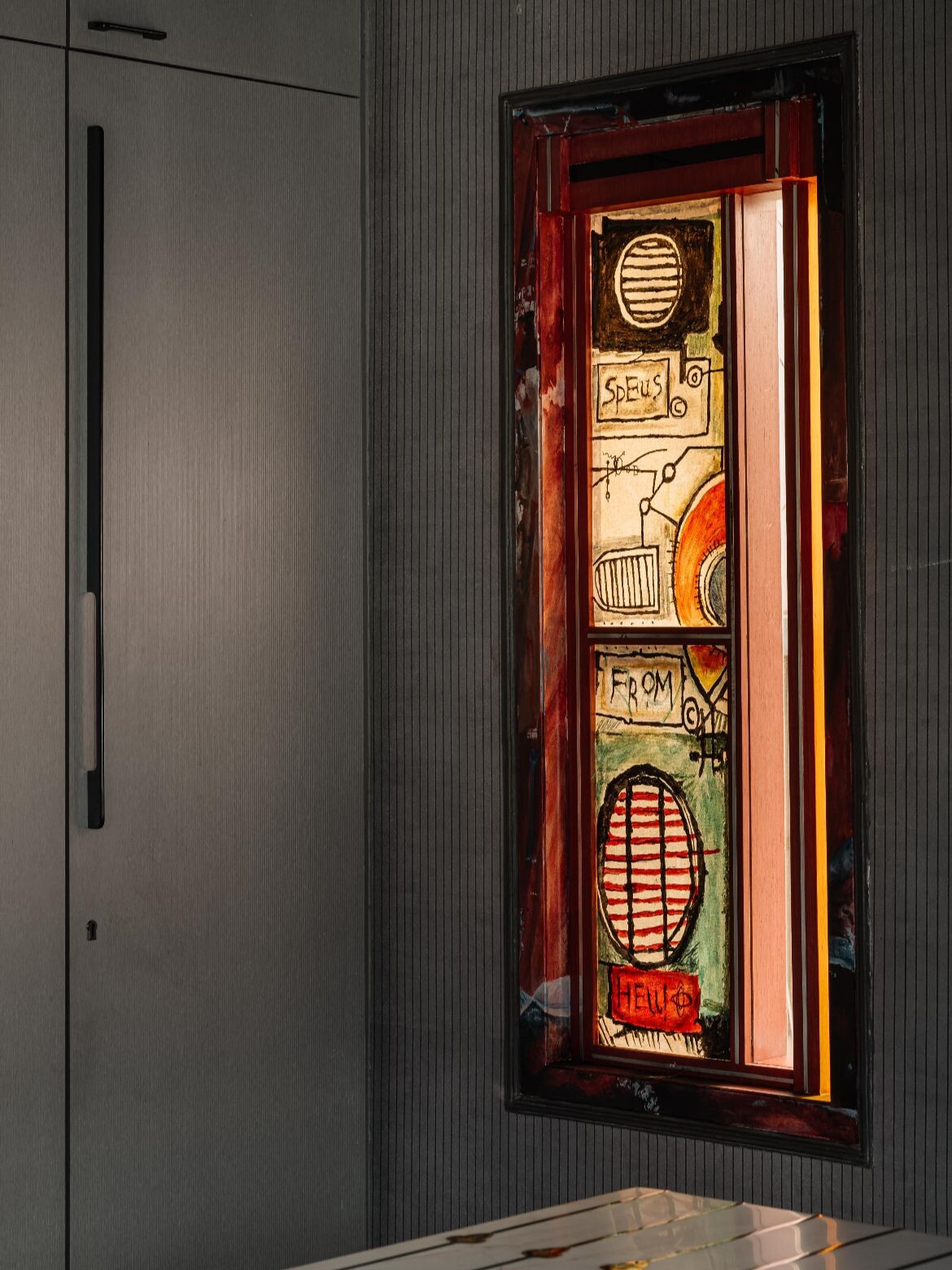
Importantly, the project is not built from surplus but true leftovers — each material carrying its own backstory. Together, they form a narrative that celebrates the beauty of reuse, the value of imperfection and the stories embedded within.
As Thomas says, “I create stories you can step inside of.” With Requiem of Ruins, there are thousands of stories to discover.
This project takes reuse to another level, showing what can be designed with curiosity, conviction and creative talent. Requiem of Ruins — or Material Lab — is not a usual project, but then Smita Thomas is not a usual designer. With sustainability at its core and a refusal to accept the conventional, she points toward a future where the discarded is no longer dismissed — it is designed.
Multitude of Sins
multitudeofsins.in
Photography
Ishita Sitwala