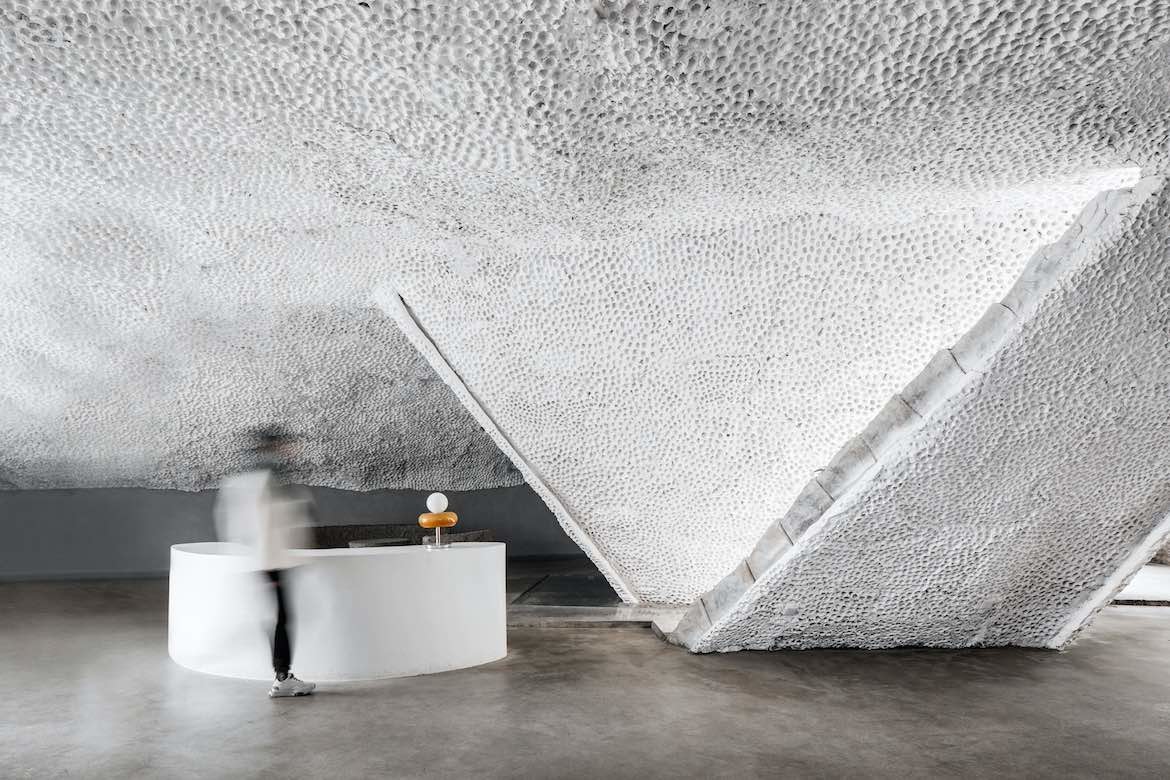
The surreptitious exterior gives little away about Shangen Blossom Pavilion’s cavernous and undulating, sculptural interior.
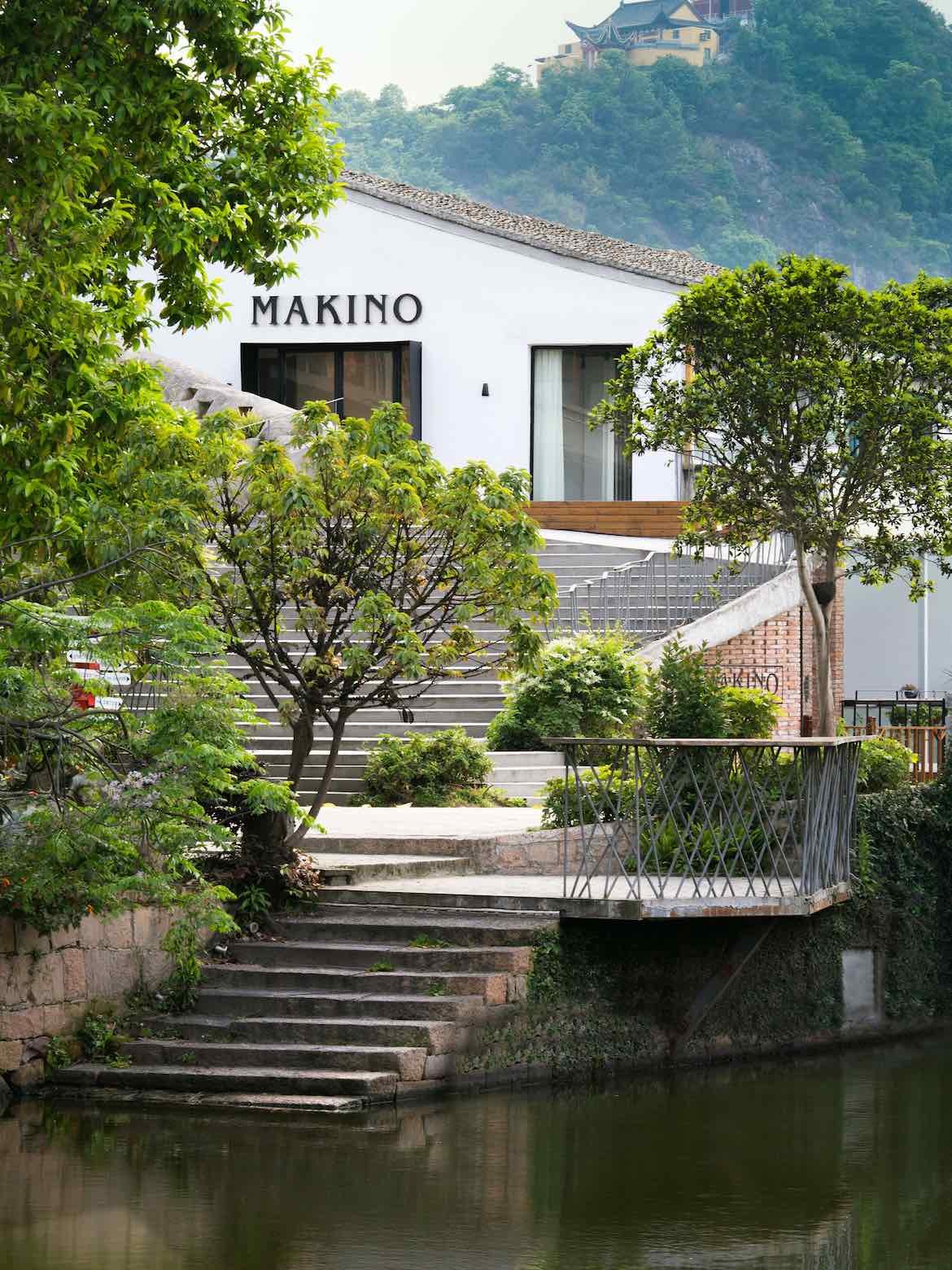
From the outside, the pavilion is understated, blending into its surroundings. Simple grey concrete steps lead up to its entrance, melding simply with the surrounding grey pavement and cobblestones. The building’s roof tiled in a grey shingle, matching the local vernacular. Nearby, a small and understated bridge crosses the river that passes through the town.
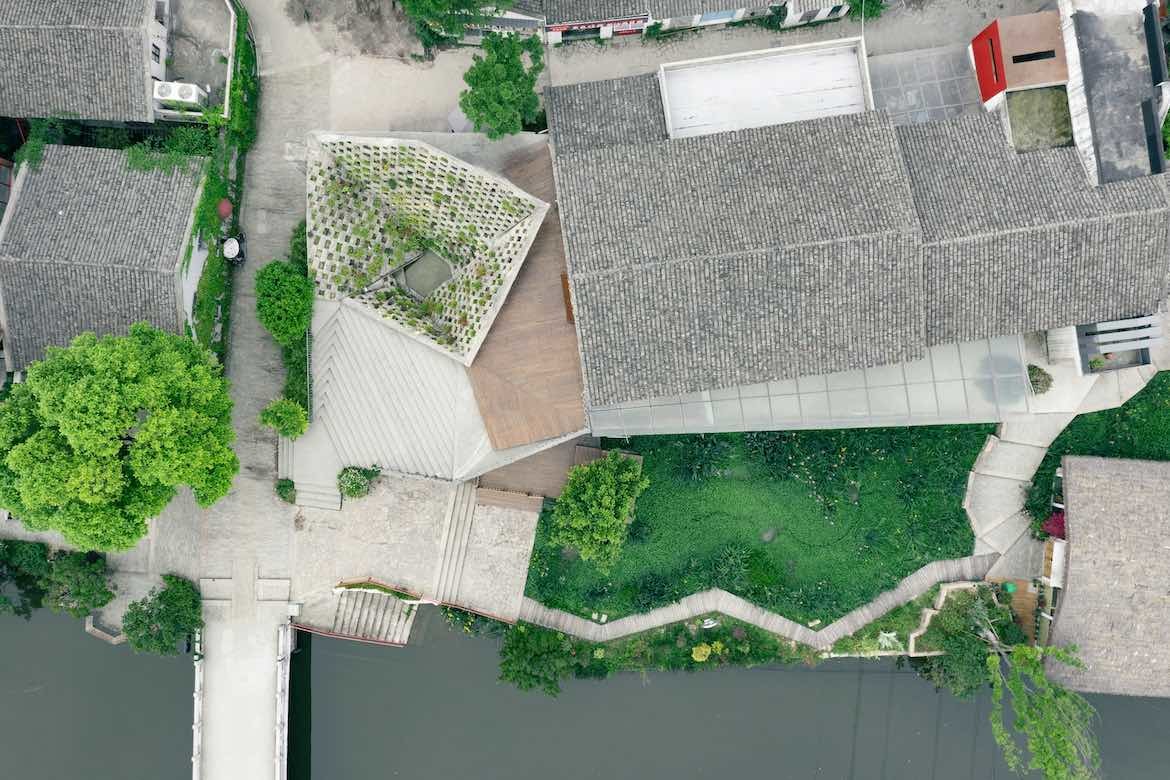
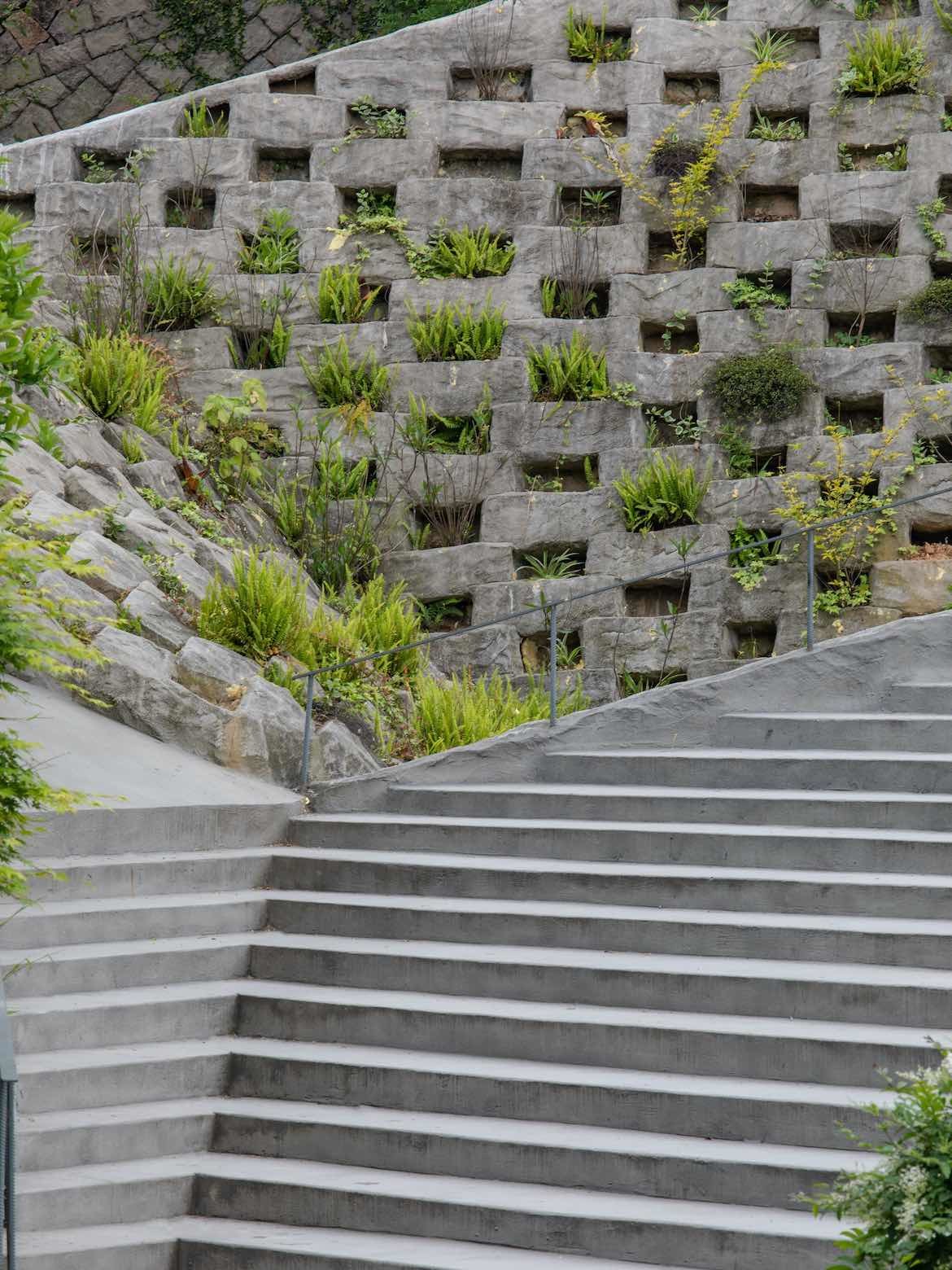
But, on closer inspection, Shangen Blossom Pavilion is anything but simple. An aerial view of the building reveals a geometric swirling display of concrete and greenery, only visible to visitors once they have ascended the stairs.
The plants in the cone constantly grow, continuously adding a natural dimension to the man-made structure. The structure seamlessly integrates with it’s surroundings; once an empty plot of land, it now beckons people to gather beside the bridge, and climb its stairs to appreciate the surrounding view.
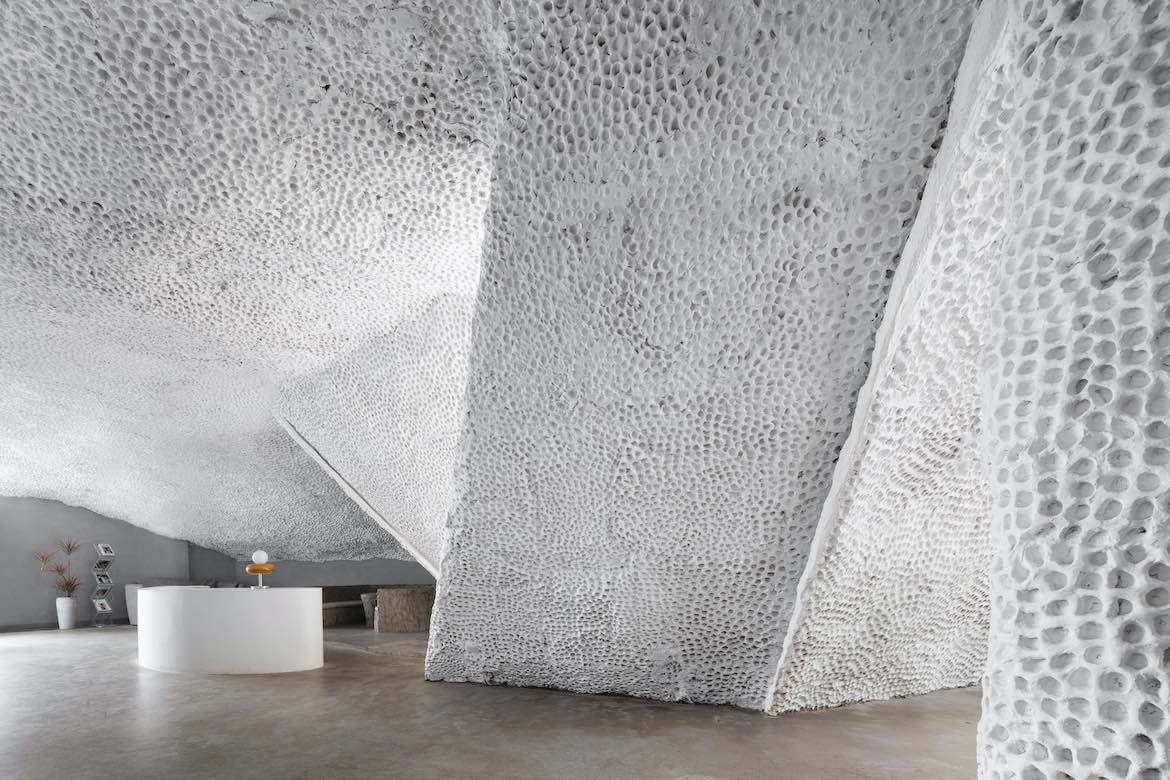
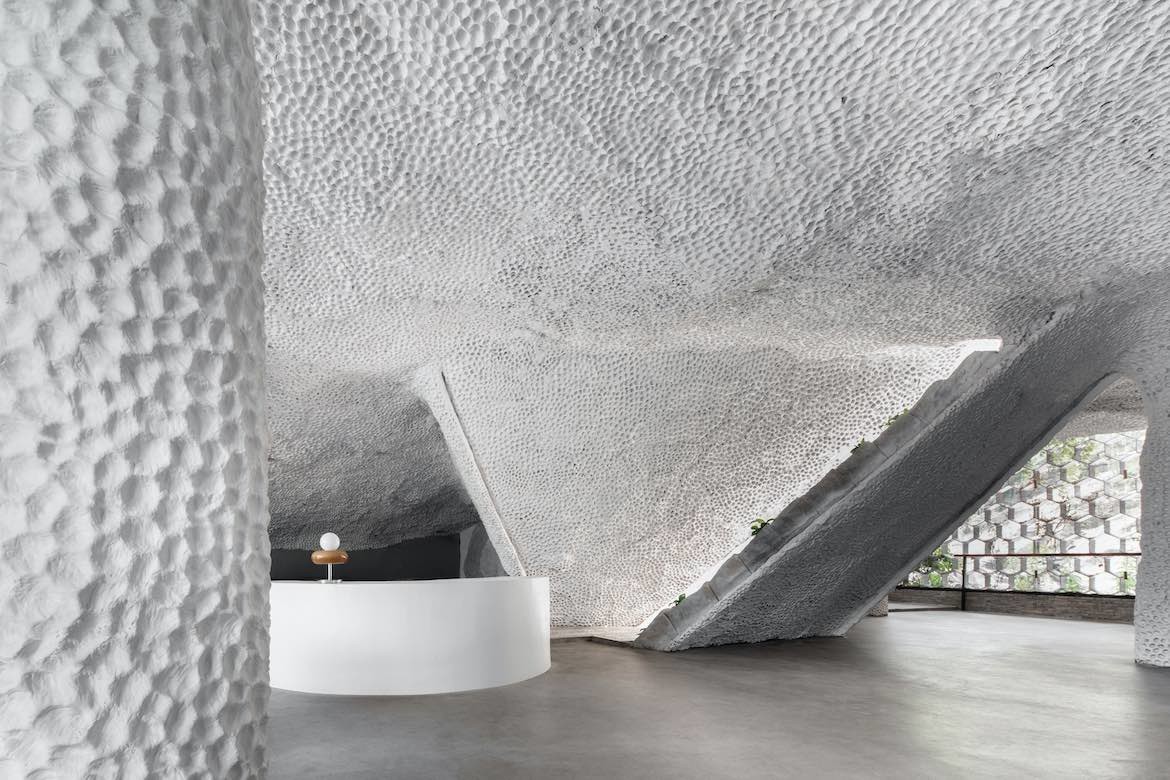
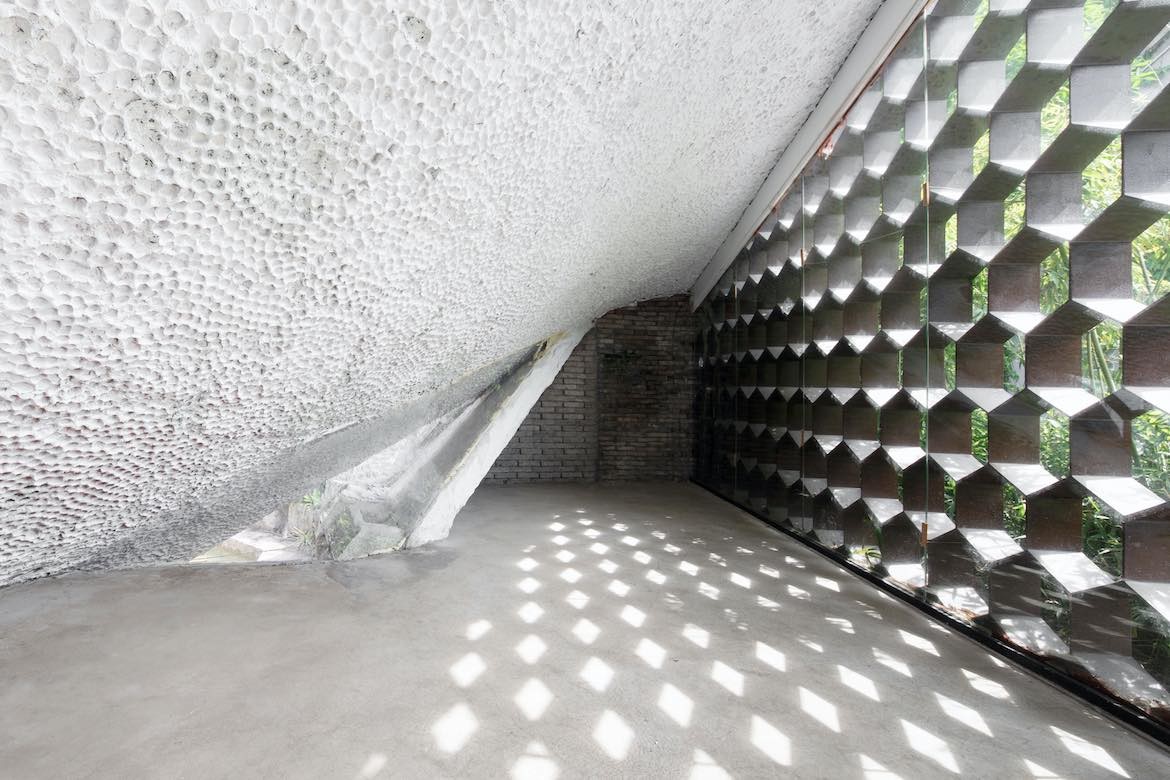
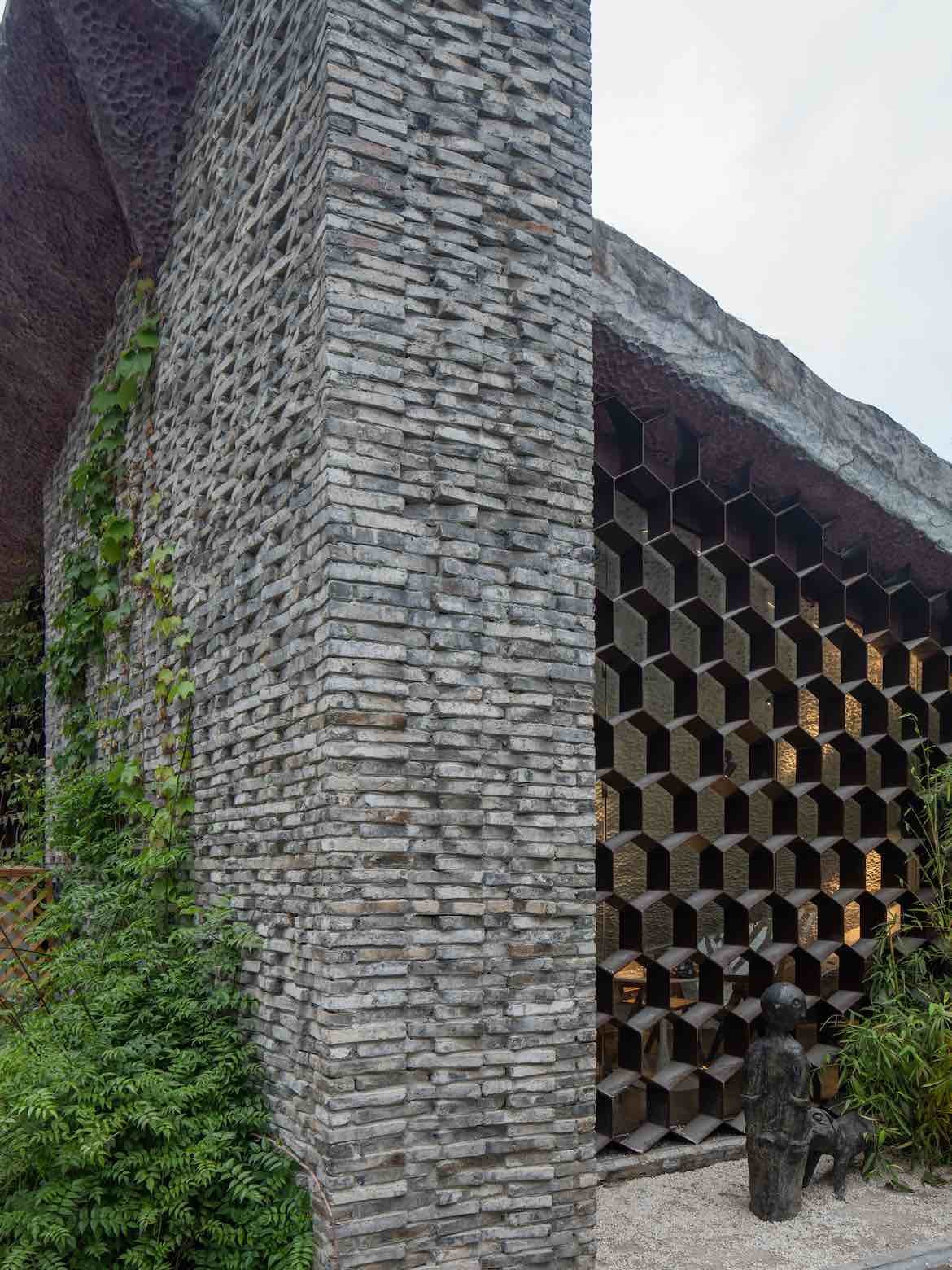
Inside, the walls, which slant diagonally to become the roof, are dotted and marked with the indentations of a traditional oyster shell clay rendering, forming an uneven and animate surface. On one side, the undulating white surface slants up to meet a glass wall, on the outside of which a honey-comb pattern restricts the light, creating fluctuating diamond-like shapes on the floor and walls throughout the day.
Hints of the organic undulating walls make their way outside, where the same pattern covers the external eaves, a taste of the interior that lies beyond.
Designed by SpActrum, Shangen Blossom Pavilion was commissioned by Zhejiang Yunjian Tourism Investment Ltd as part of a larger renovation project of Shangen Village, Wenzhou. The project is transforming a once traditional village into a tourist destination, but according to the architects, “the village has been hugely cleaned up since then but has lost some of its ancient ambience. The once charming chaos has turned into the blankness of purposeful building activity”.
Acting as a “brutal” reaction to the “overly tidied-up, renovated village”, Shangen Blossom Pavilion contrasts with the village’s traditional aesthetic yet leans into its traditions.
The materiality, for example, is devised from easily accessed local materials – much like the village’s original buildings.
“The project dispels the existing definitions of the man-made environment. It responds to people’s behaviour and requirements within the specific site conditions,” say the architects.
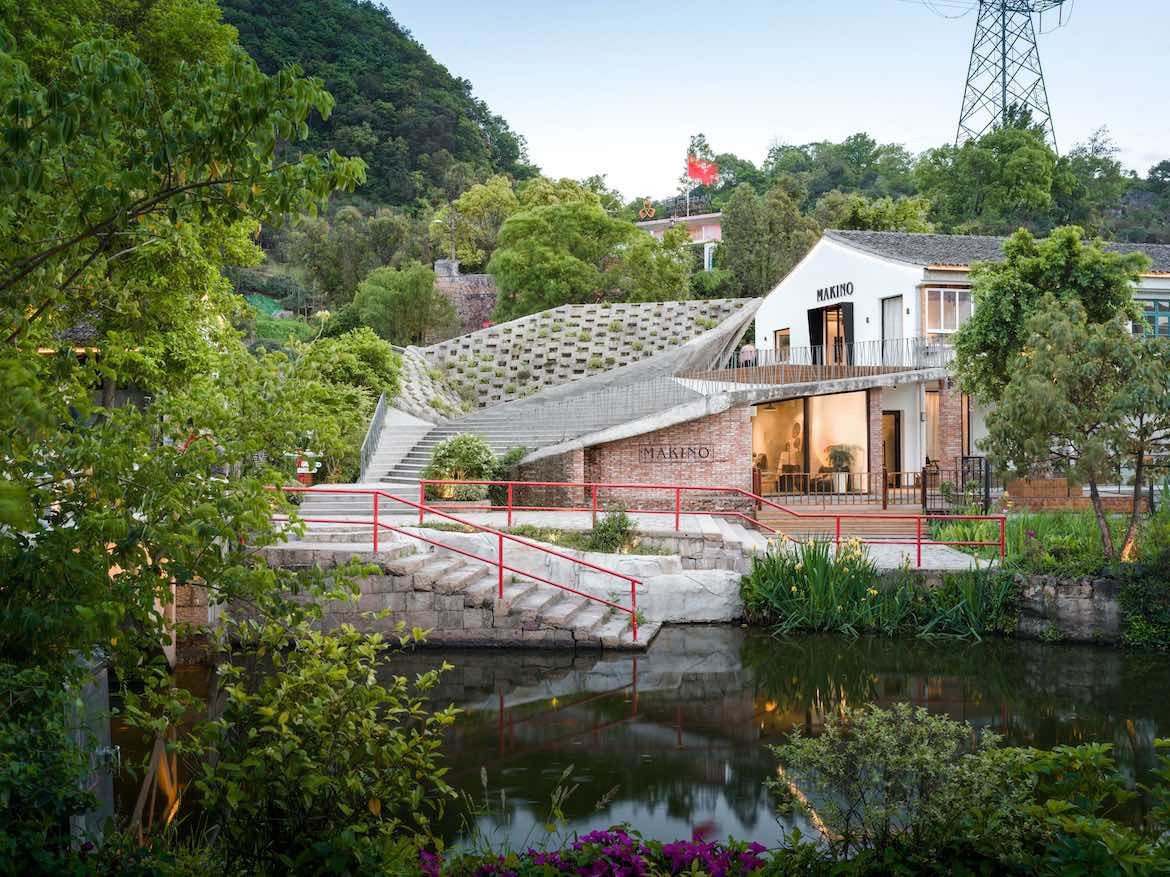
“The performance of such a construction enriches people’s experience in the village; it highlights the central bridge, provides tiered seats for resting with a view, provides a shelter in a rough climate, and gradually becomes an alternative landmark, a landmark filled with people, a landmark that reconnects to nature and the built environment.”
SpActrum
spactrum.com/zh
Photography
Di Zu and SpActrum
We think you might like this article on the spectacular castle-like ShuiFa Information Town Industrial Exhibition Center in China.