The design of learning environments plays a significant role in student success. By improving learning environments schools can potentially raise student achievement and lower teacher turnover. Christopher Elliott Design has updated Marlton House, the inaugural school building at St Michael’s Grammar School that dates back to circa 1895, to provide classrooms and student spaces that offer a more positive learning environment. “St Michael’s Grammar School had a problem. It had an ageing facility and a group of youthful, vibrant students. You can see the paradox,” says Christopher Elliott.
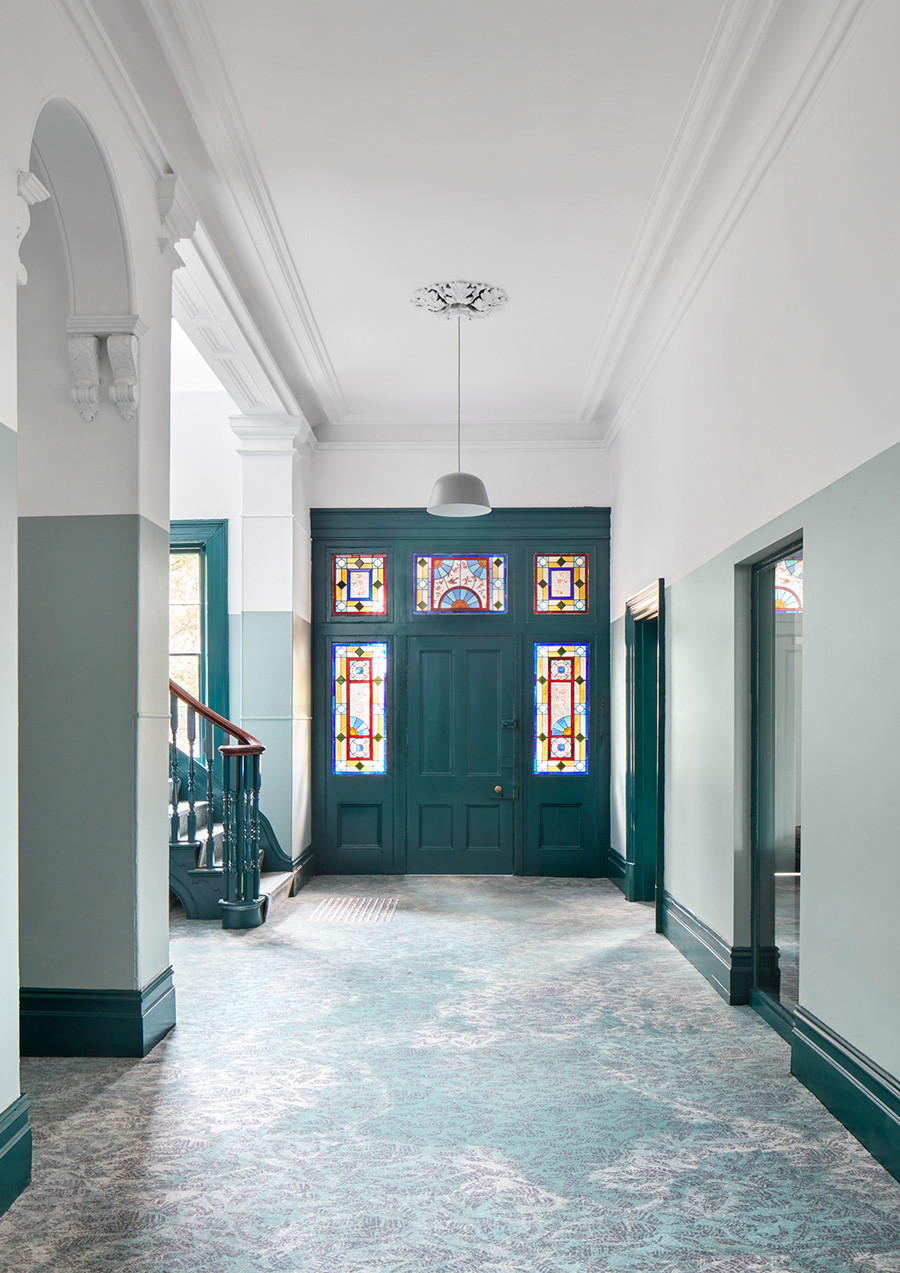
To resolve this paradox, the design team took a similar approach to Marlton House as they did to Hewison House, (the main administration building at St Michael’s), highlighting the heritage characteristics, paying acute attention to detail and inserting functional, modern joinery.
.
“We included whimsical, random elements.” – Christopher Elliott
.
But while Hewison House had a subdued colour palette and luxurious feel, suitable for staff offices, Marlton House has a vibrant palette and playful feel, in keeping with the youthful environment. “Rooms felt drab, uninspiring and full of unnecessary visual clutter,” says Christopher. “Overall the approach was to create a cohesive design to meet the needs of a progressive learning institution.”
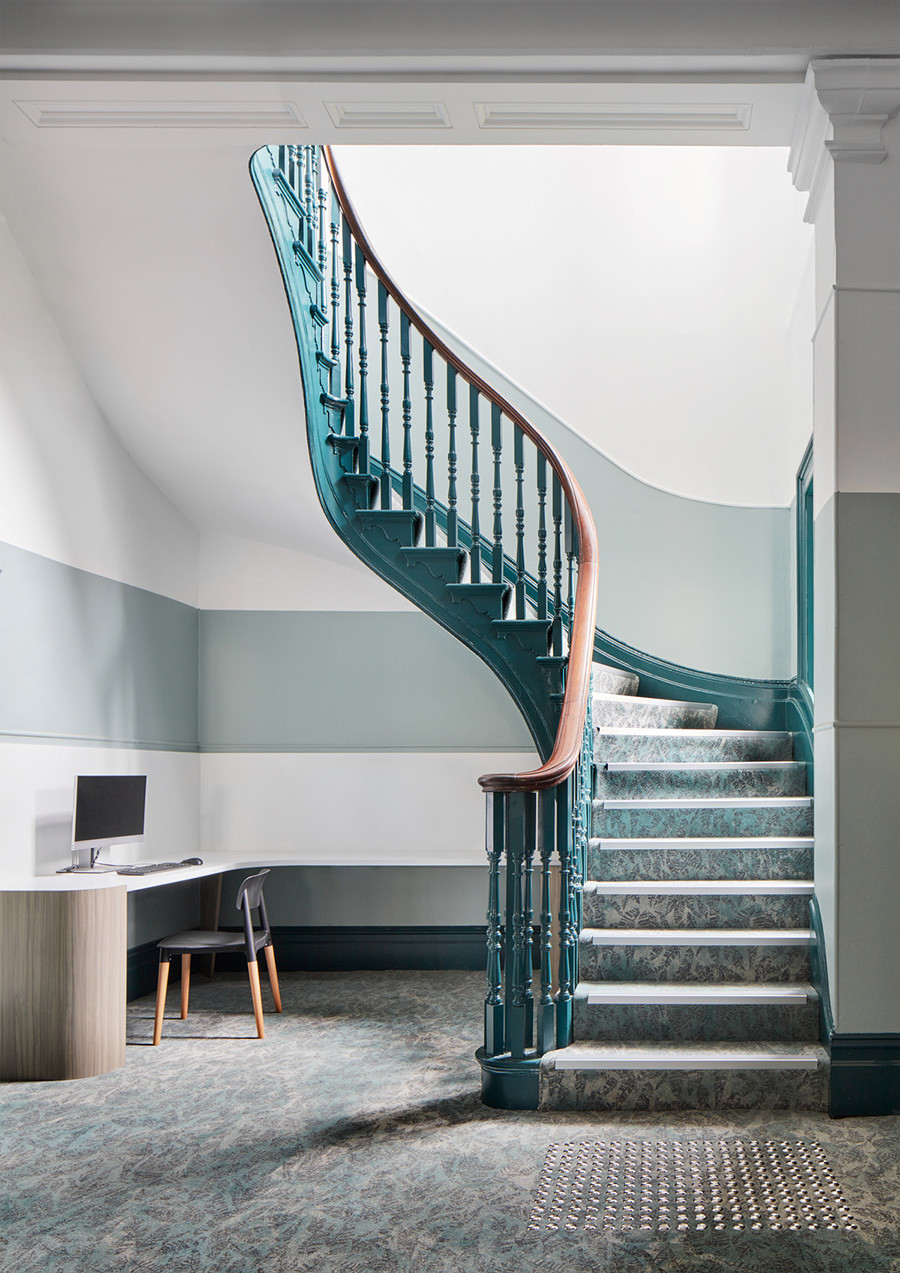
The design team consulted with teachers and students to identify the key objectives. Teachers wanted adaptable spaces. Students wanted inspiring spaces and to feel more connected to the outdoors – a challenge when faced with typically small openings of the heritage building.
.
“Ultimately that’s what our work is about – transforming spaces to transform people’s lives.” – Christopher Elliott
.
Christopher looked to nature’s palette in order to improve the interior-exterior connection, coated the walls in silvery-green, referencing the colour of eucalyptus trees. “The colour gives life to the spaces and is calming and settled,” Christopher explains. A custom-designed carpet motif is inspired by leaf debris in the forest, and Klein blue pops amidst the sea of green. “We included whimsical, random elements of a bold cobalt-blue arch, symbolic of the school’s embracive attitude for individuality. A standout feature, suggesting it’s okay to be different,” says Christopher.

The joinery design meets the functional need for more storage and the aesthetic desire for a dramatic element to ground spaces. Joinery with curved, art-deco-style elements is playful and minimises the visual clutter of messy classrooms. Storage is placed at an accessible height for students and the feature colour finishes part way up the wall to provide a more relatable sense of scale for the children. “This enables students to feel more comfortable with the proportions of the rooms,” Christopher explains.
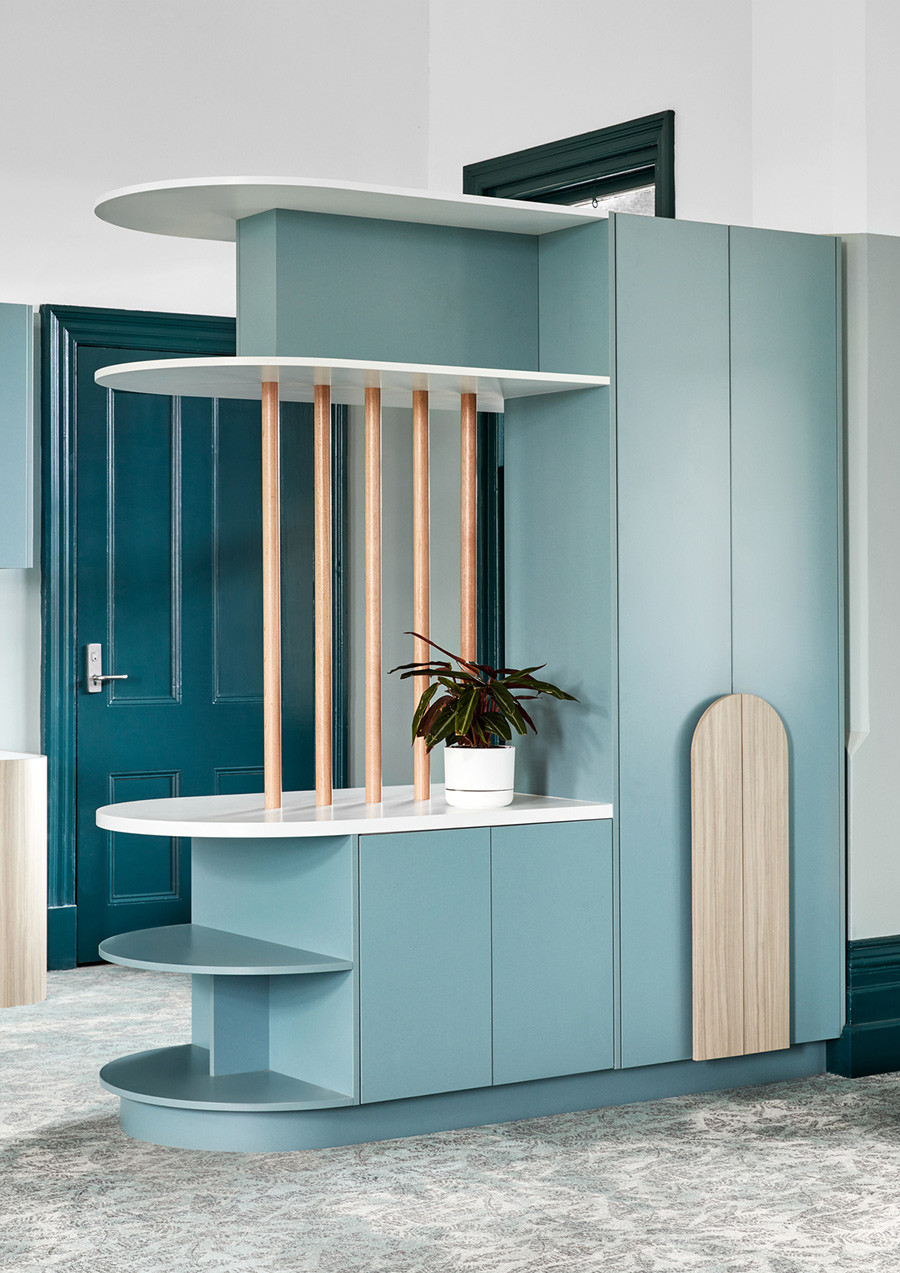
The feedback from teachers and students about the improved learning environments has been overwhelmingly positive. “The most rewarding aspect of this project has been witnessing the difference our design has on the lives of the students and teachers who use the building, and ultimately that’s what our work is about – transforming spaces to transform people’s lives,” says Christopher.
Photography by Jack Lovel.
–
See another outstanding project by Christopher Elliott at the same school. And get a weekly design dose, join our mailing list.