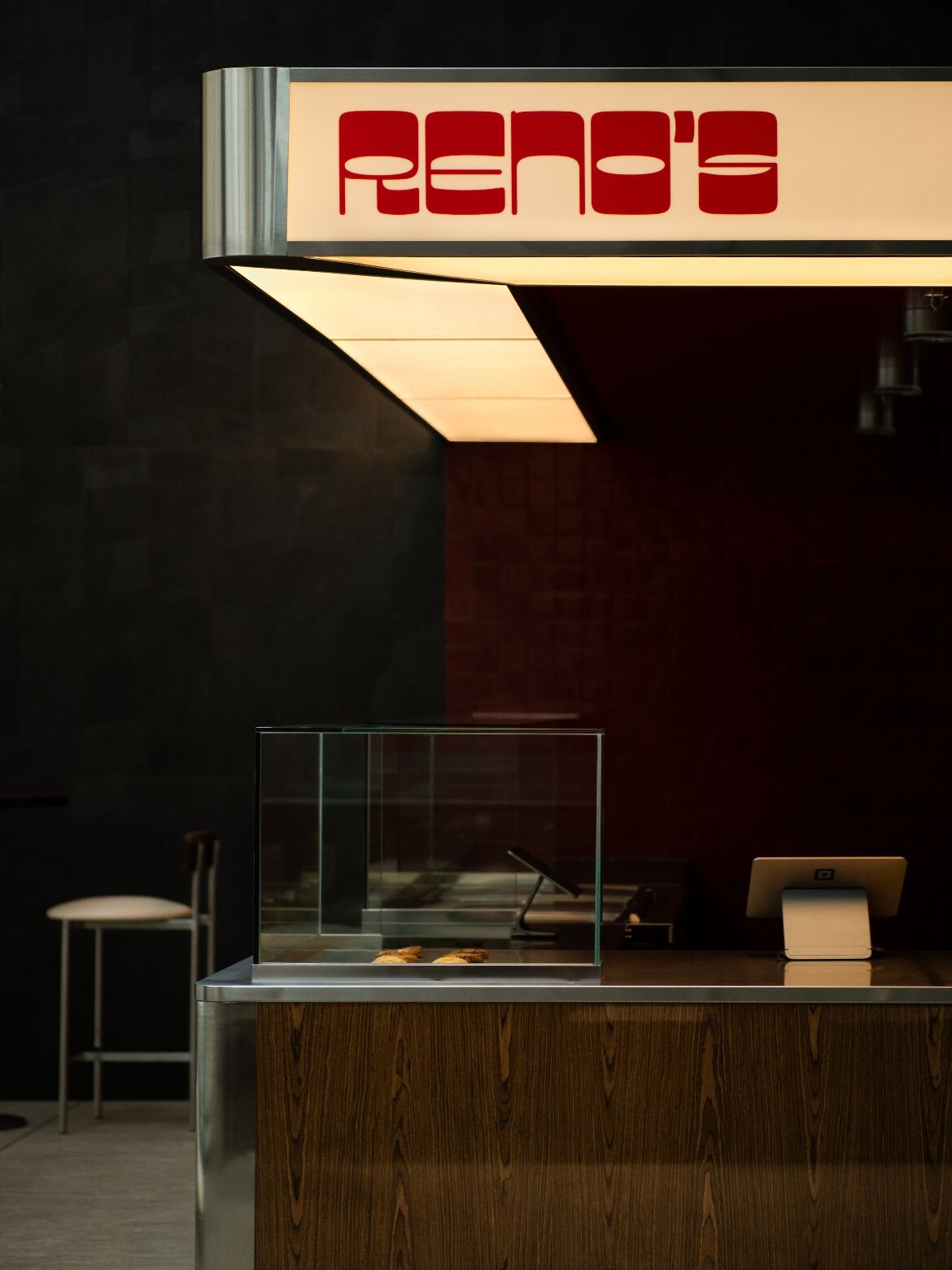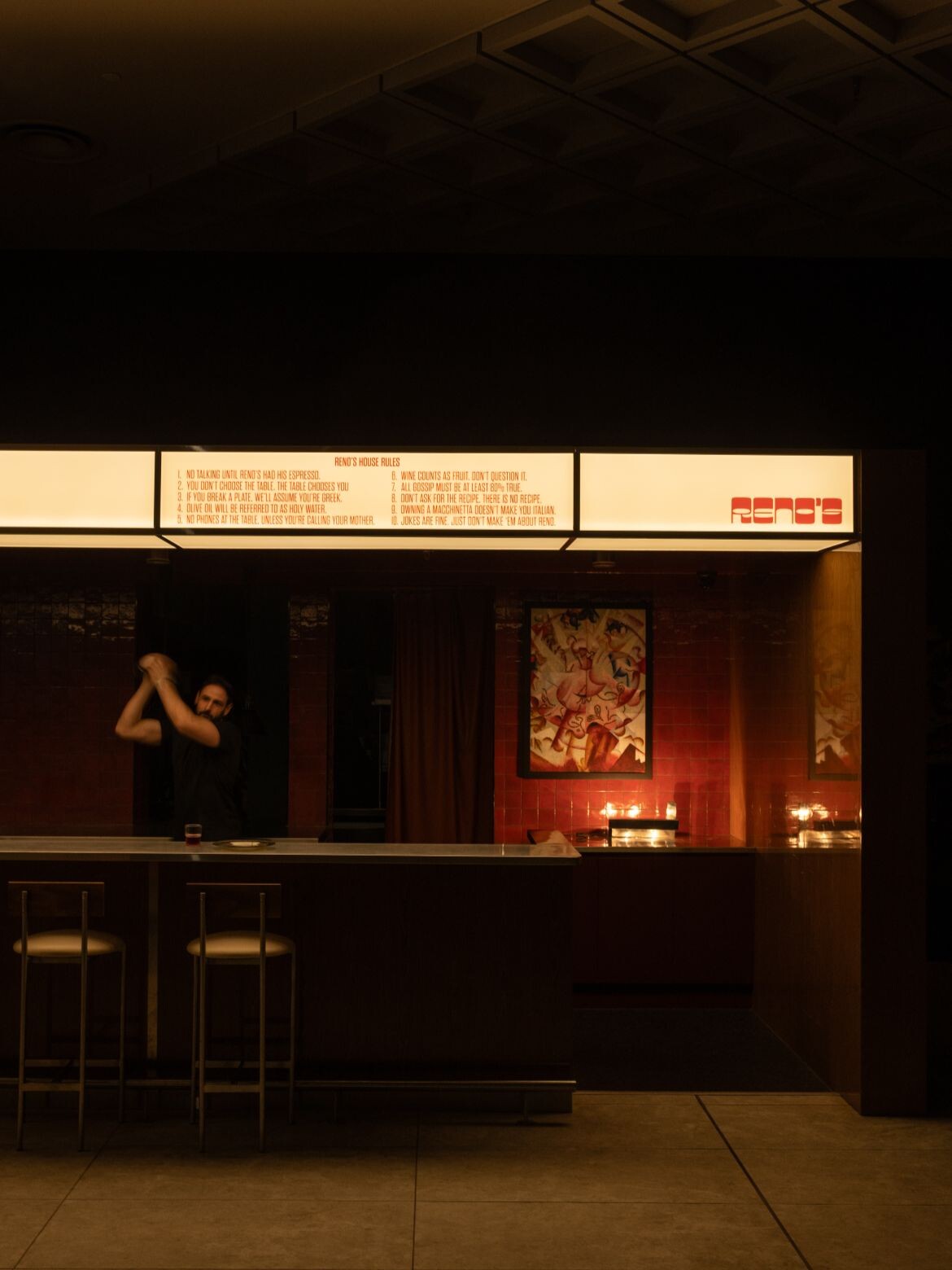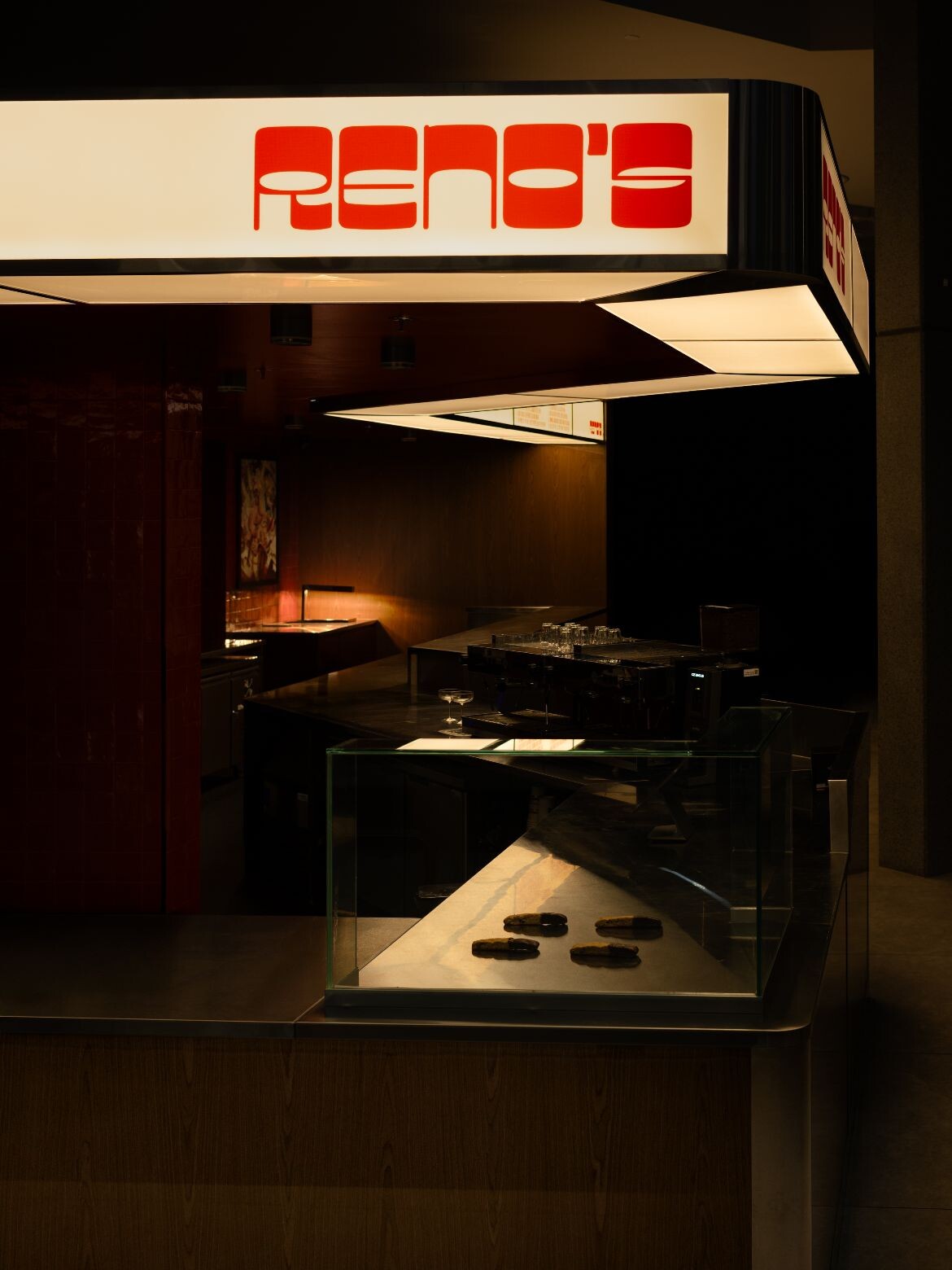
For RADS director Chris Rowlands, the focus began with the consideration of thresholds – how people enter, pause, transition and return. “We were working with two very distinct currents,” he says. “There’s the street-facing espresso rush, where everything moves quickly, and then there’s the internal rhythm of the lobby – slower, quieter, more observational. The design needed to hold and accommodate both without compromising either.”
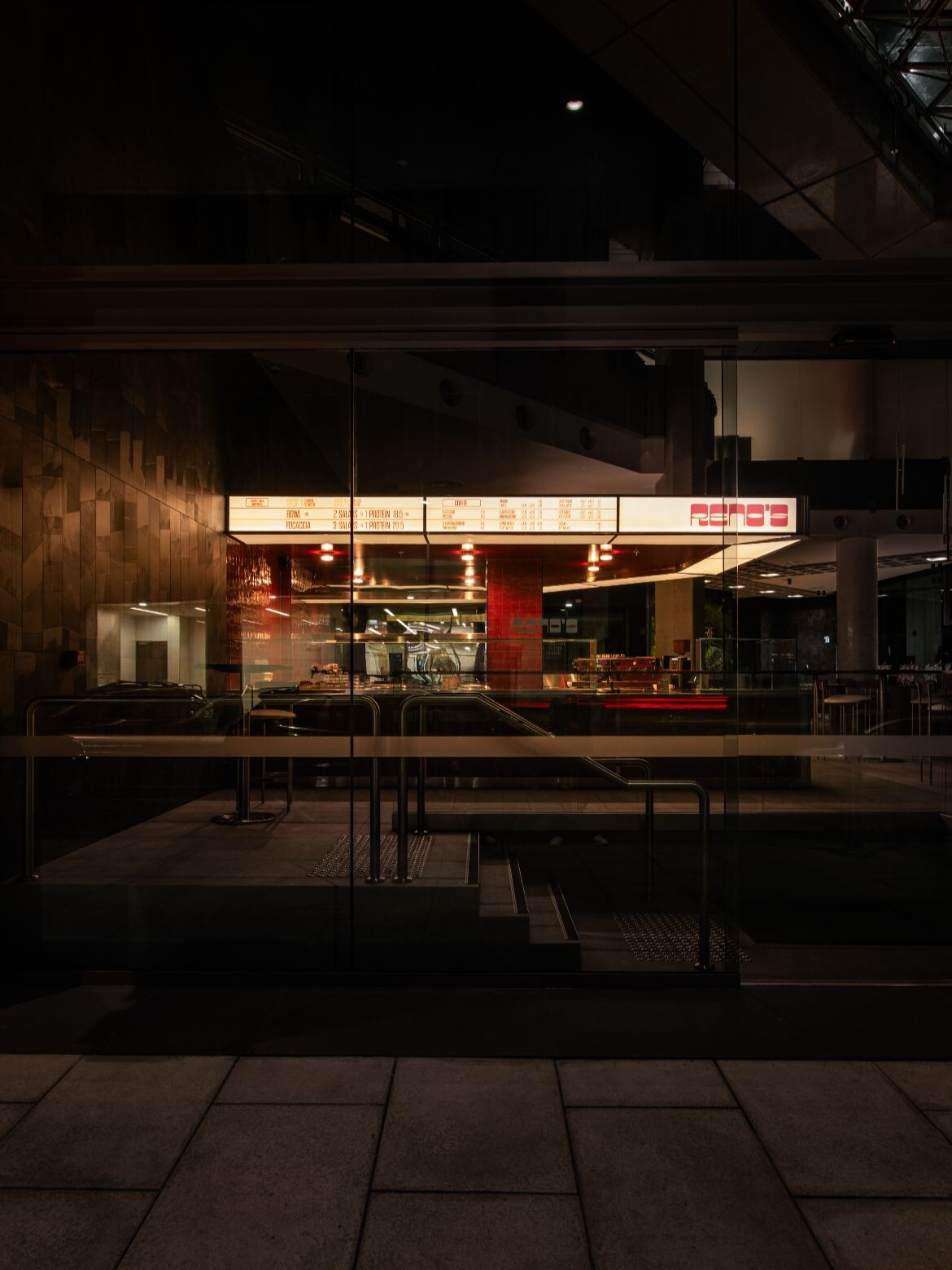
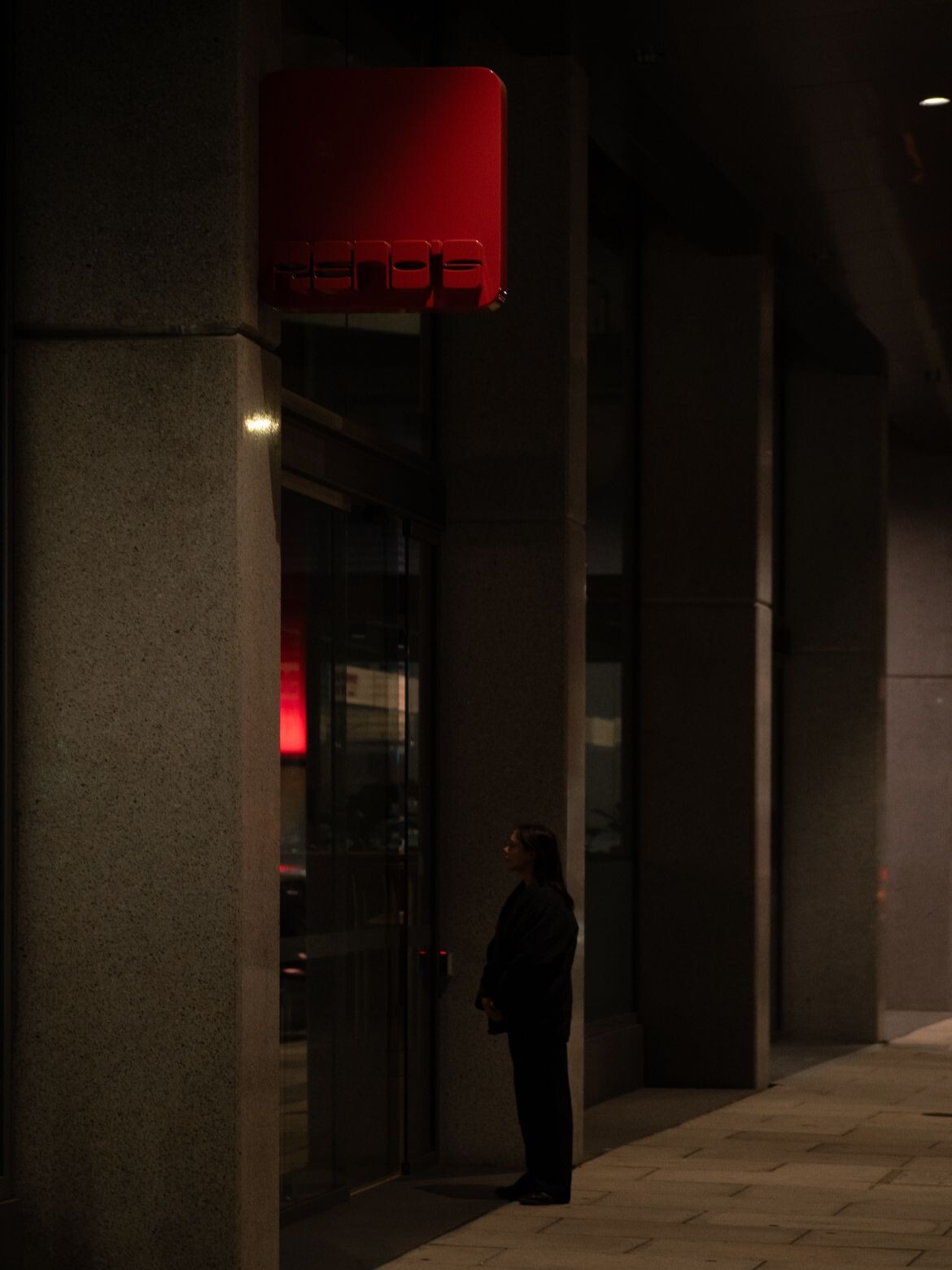
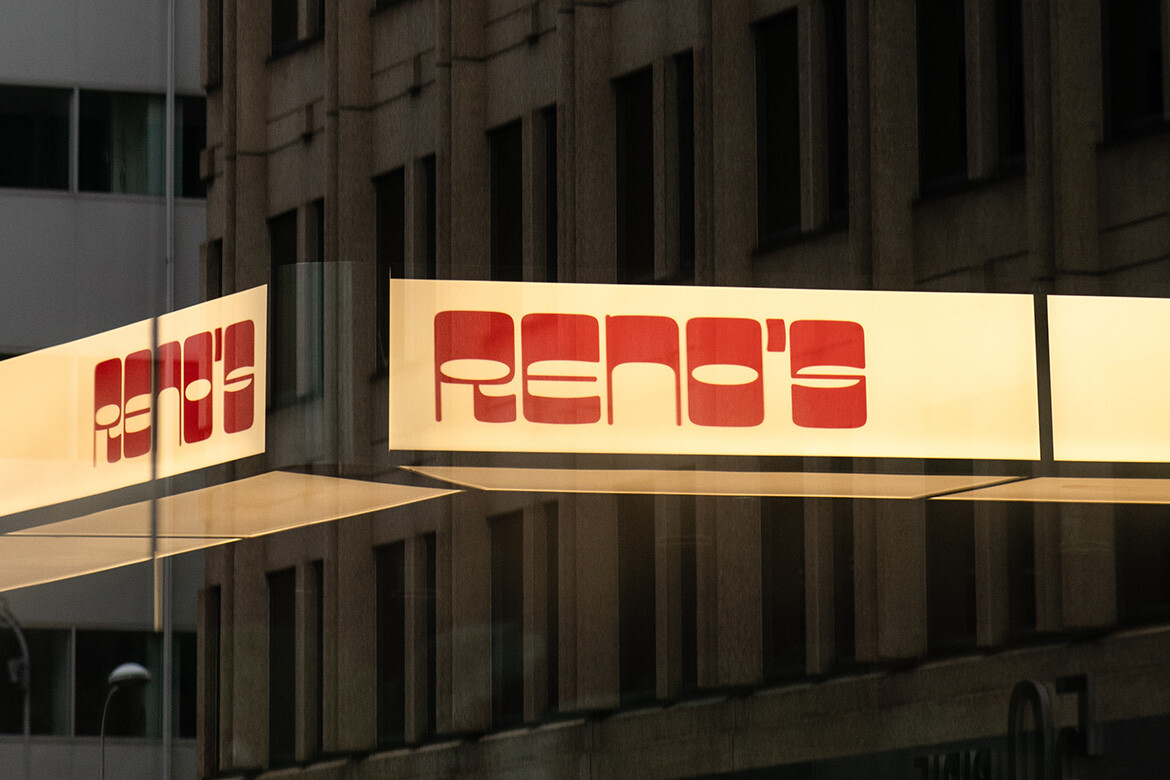
From the street, Reno’s Bistro presents as a deliberate interruption to the commercial façade: polished steel, sculptural lines and a warm glow that signals activity from mornings until late in the evening. The bar itself sits directly on the threshold between the street and the building, operating as its own attractor. “It was important that the café didn’t feel hidden within the tower,” Rowlands notes. “The grab-and-go bar is positioned to encourage pedestrians to be drawn inward – even if their destination isn’t the offices upstairs. There is a balance between being seen, while also being subtle enough.”
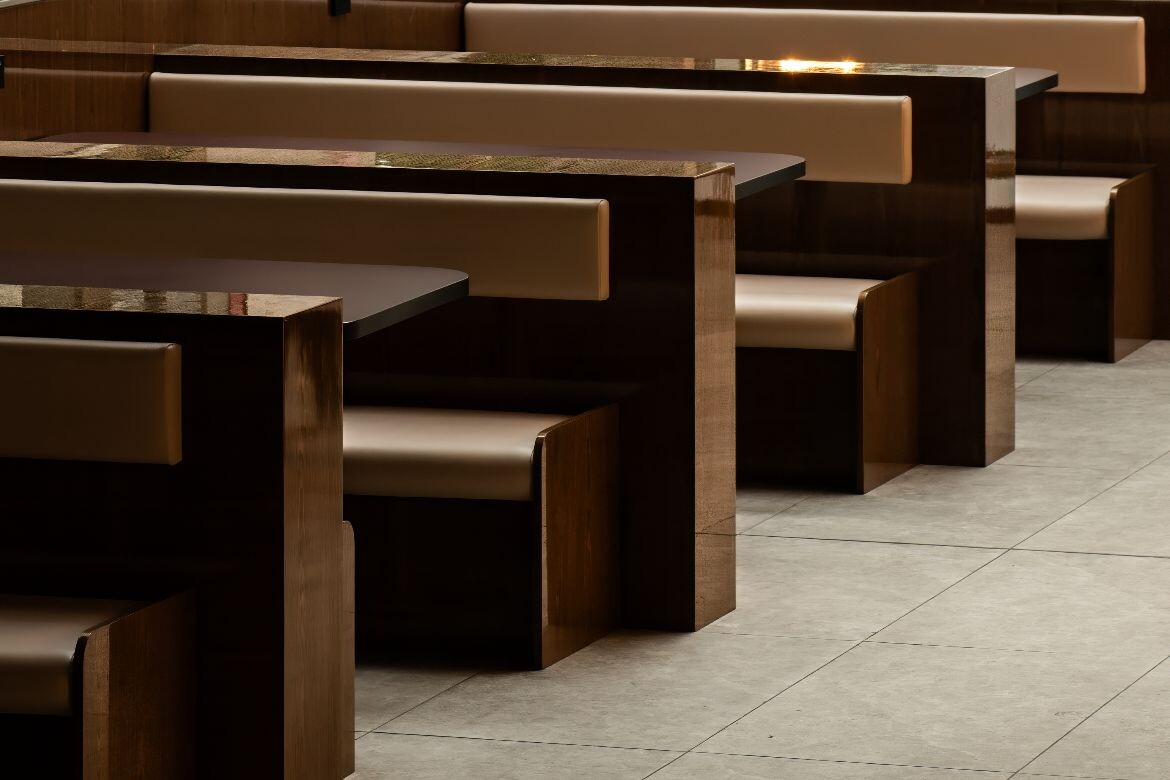
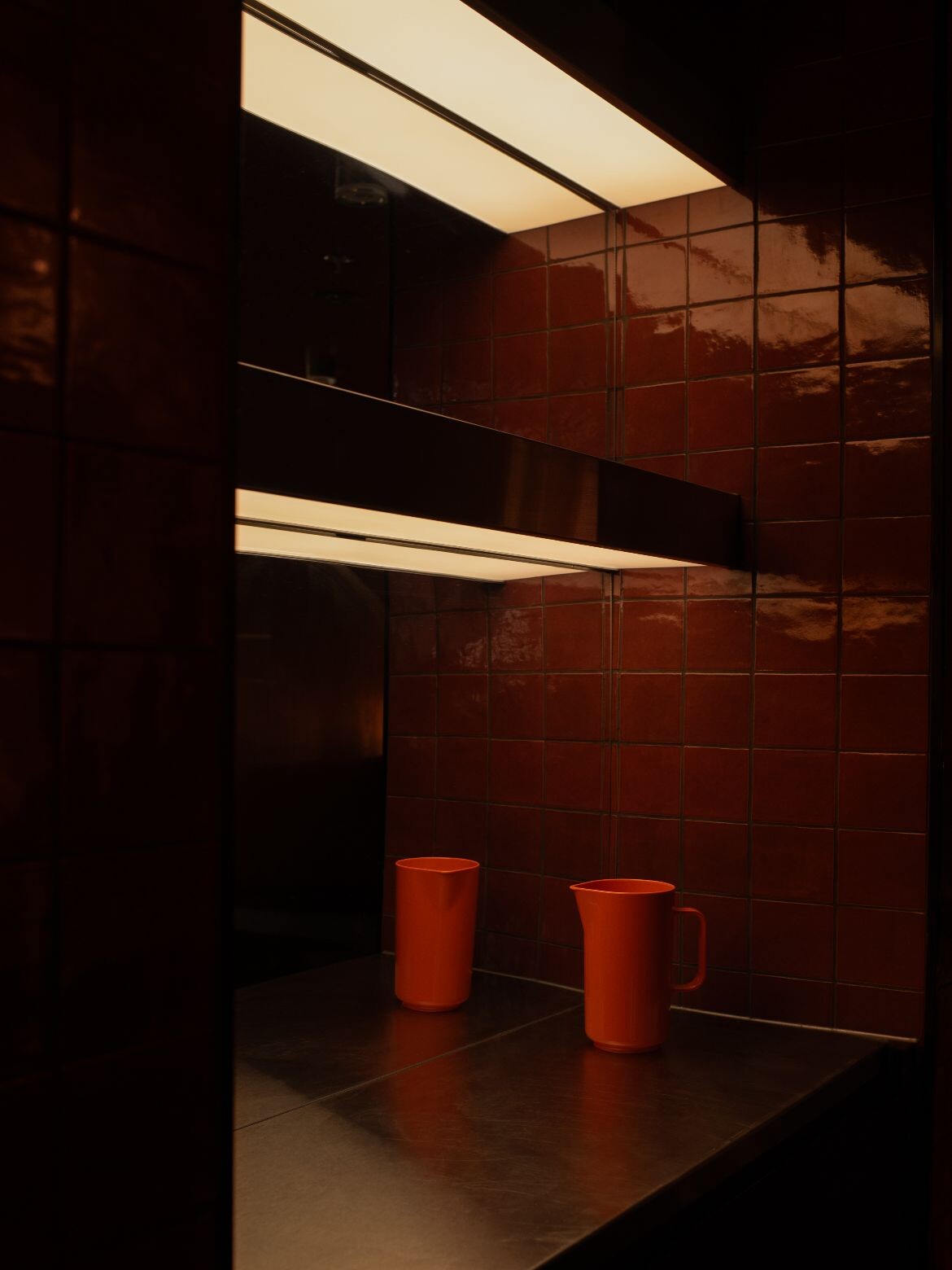
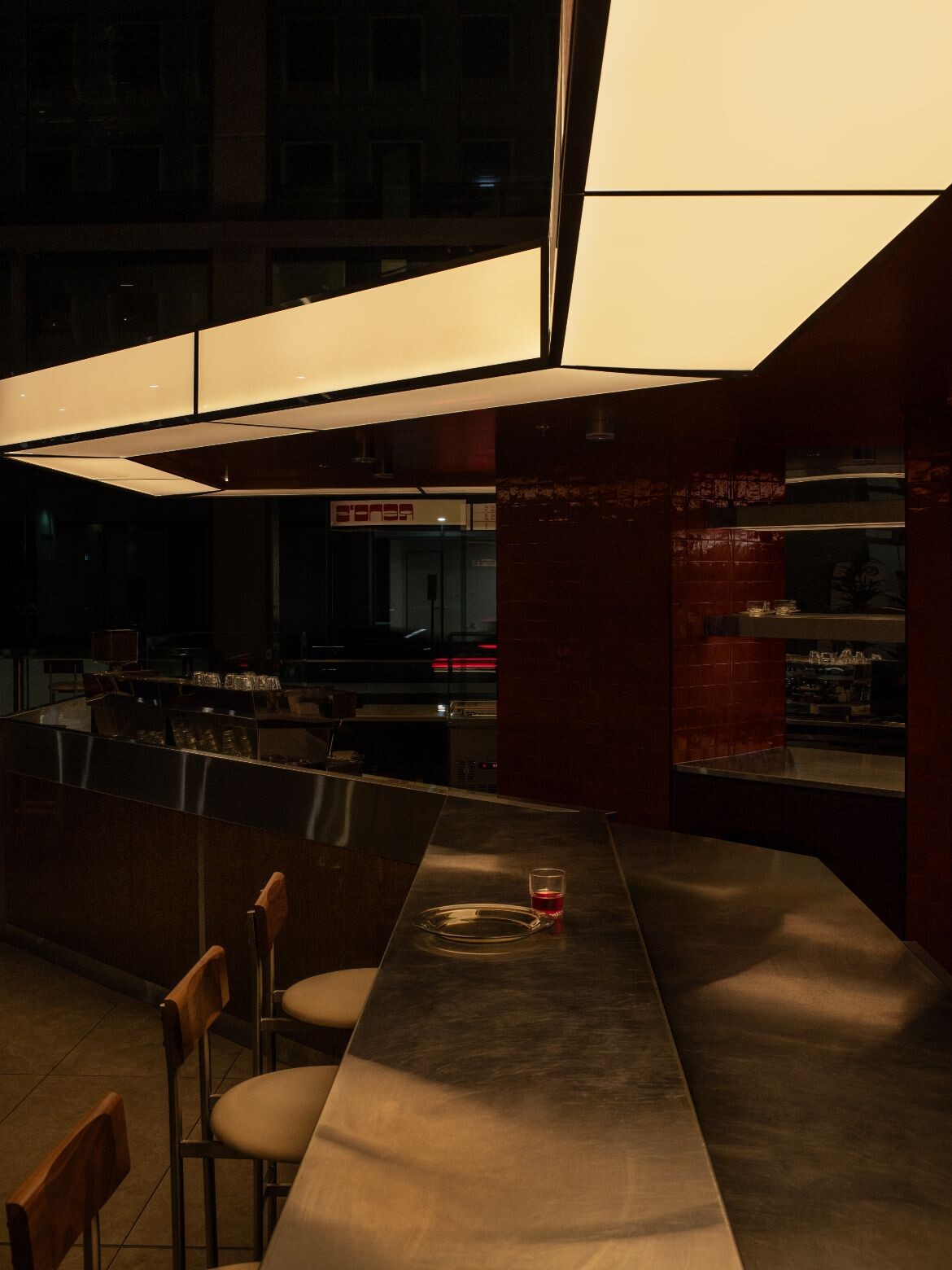
Inside, the tone shifts from the street – and away from the remainder of the re-invigorated building, designed by Studio Nine. A combination of heightened gloss timber, polished stainless steel and chrome details and the ripples in the tiled walls help to set the scene of Italian-inflected nostalgia. As a subtle transition from corporate lobby to hospitality venue, the material palette forms its own boundary and cocoons the space without the need for encasing walls. “We wanted people to feel the shift immediately [once inside],” Rowlands explains. “While still remaining part of the building at large, Reno’s Bistro has its own register, its own temperature.”
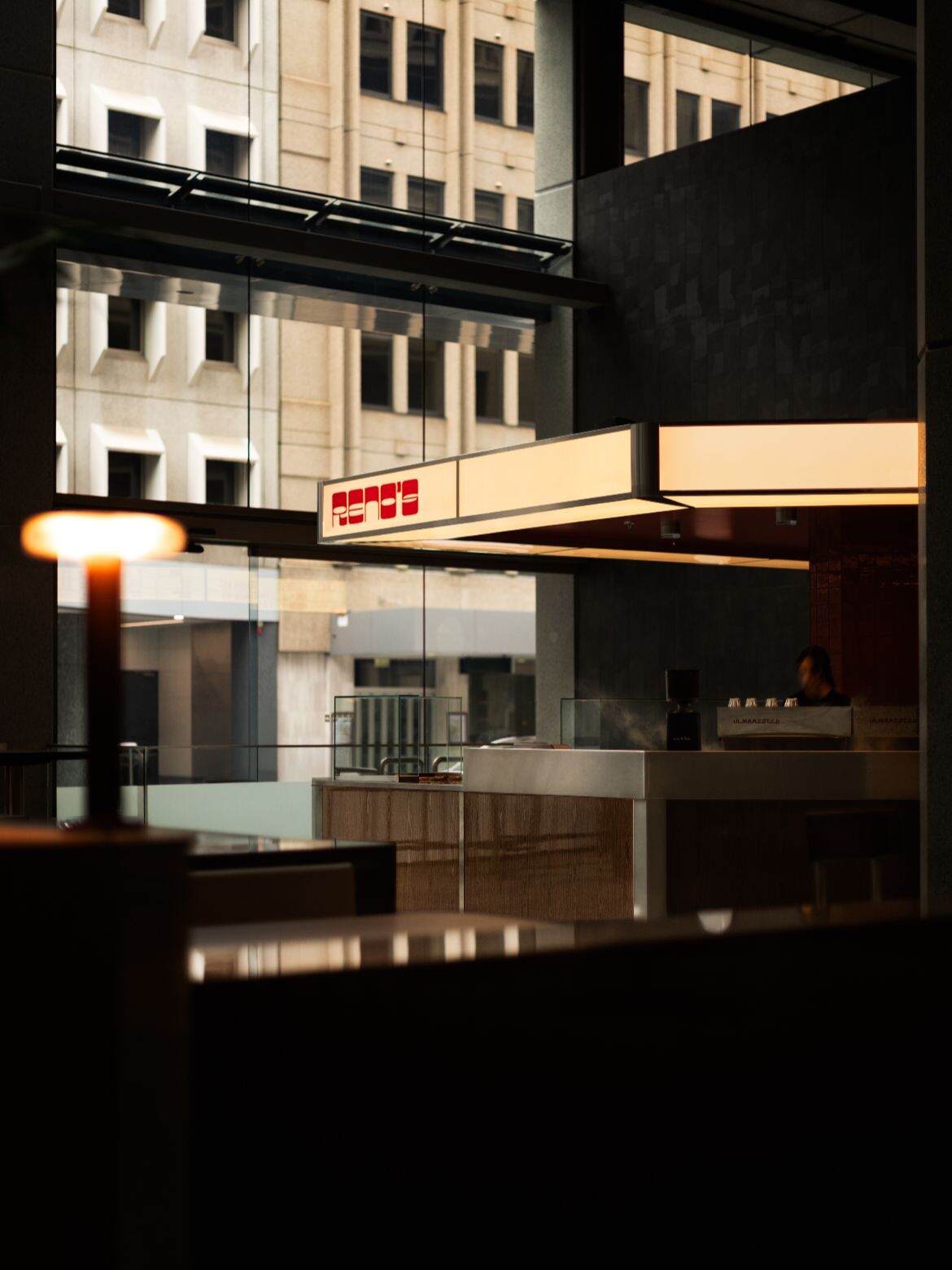
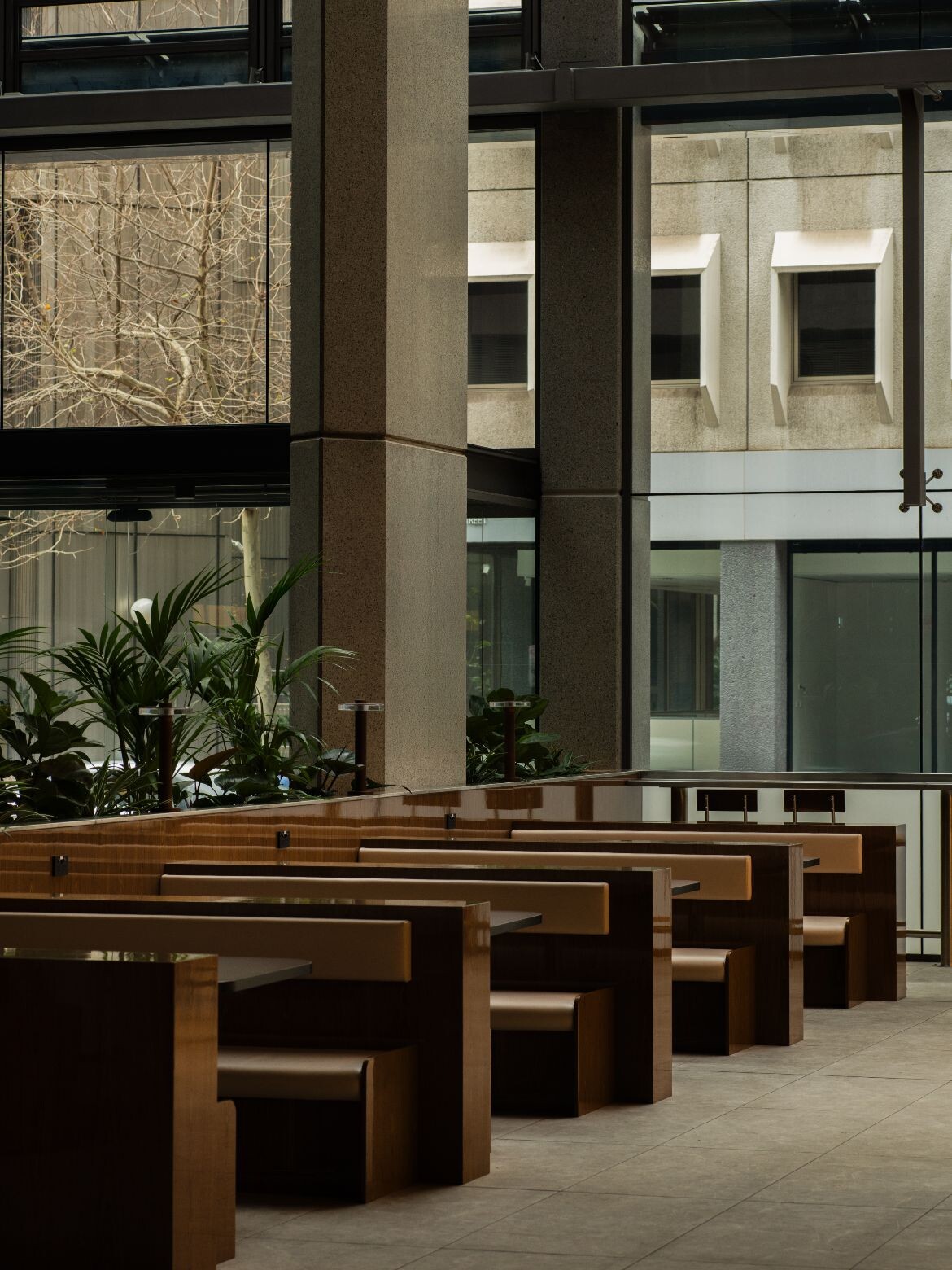
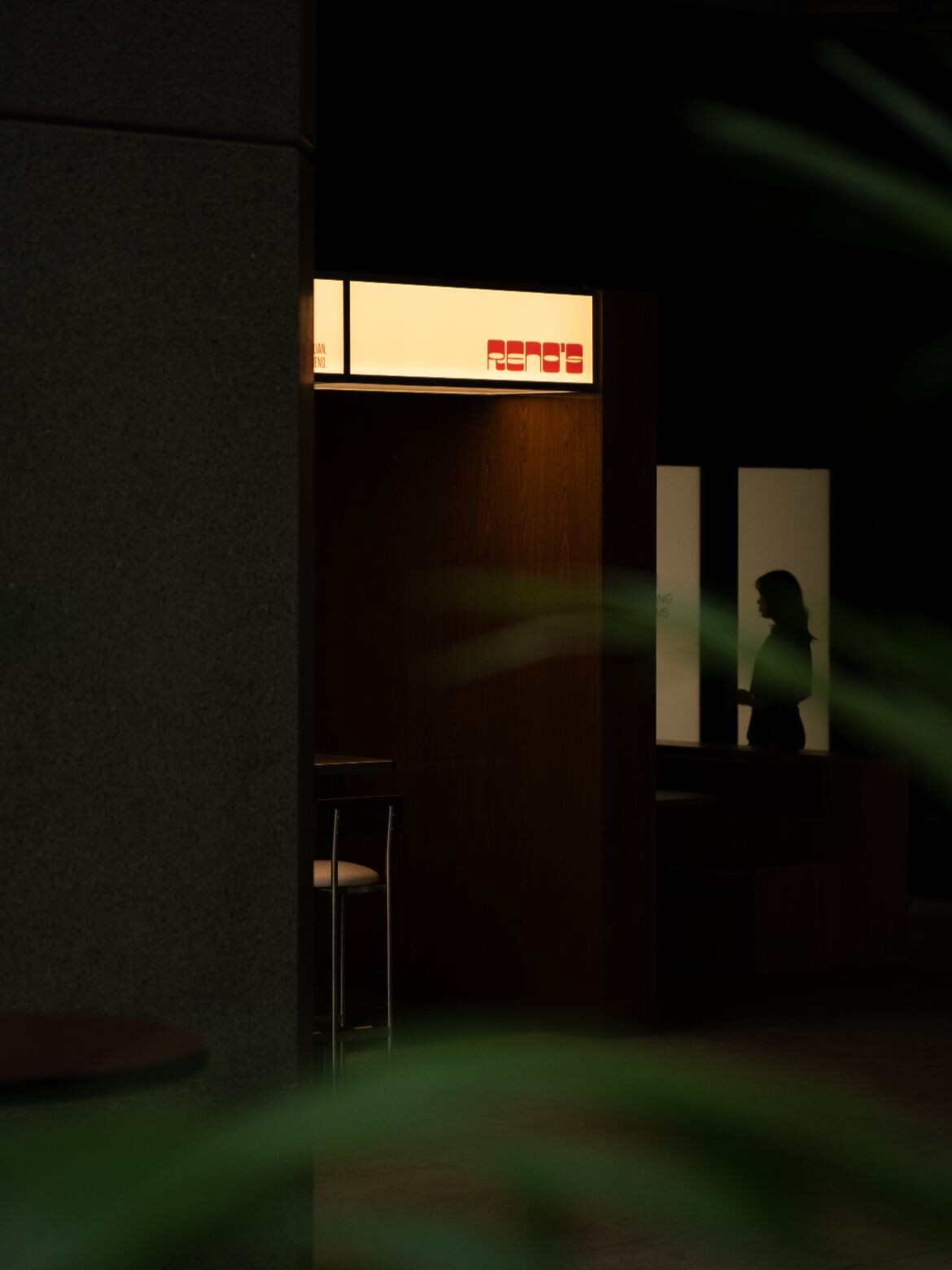
The lobby then becomes a mediating device. A combination of generous volumes are compressed near the floating light box, reducing the scale of the lobby and creating a feeling of separation and seclusion from the front-of-house and broader circulation paths. Smaller pockets of banquette booth seating facilitate everything from informal meetings to quiet retreats, with generous proportions to stay and linger, and not feel rushed. “The design was about creating places where you can choose to be visible or to remain discreet,” Rowlands says. “That duality is central to how the space works.”
By operating across these threshold layers and acknowledging them in the approach to the design – street to bar, bar to lobby, lobby to tower – Reno’s Bistro also expands its role beyond servicing commuters and instead becomes an anchor for the building – as the place to arrive before work, reset between meetings, or return to at day’s end. In a city recalibrating its relationship with office life (post-pandemic), Reno’s Bistro demonstrates how hospitality can reshape the identity of a workplace – not as an add-on, but as a cultural offering in its own right.
Photography
Simon Cecere