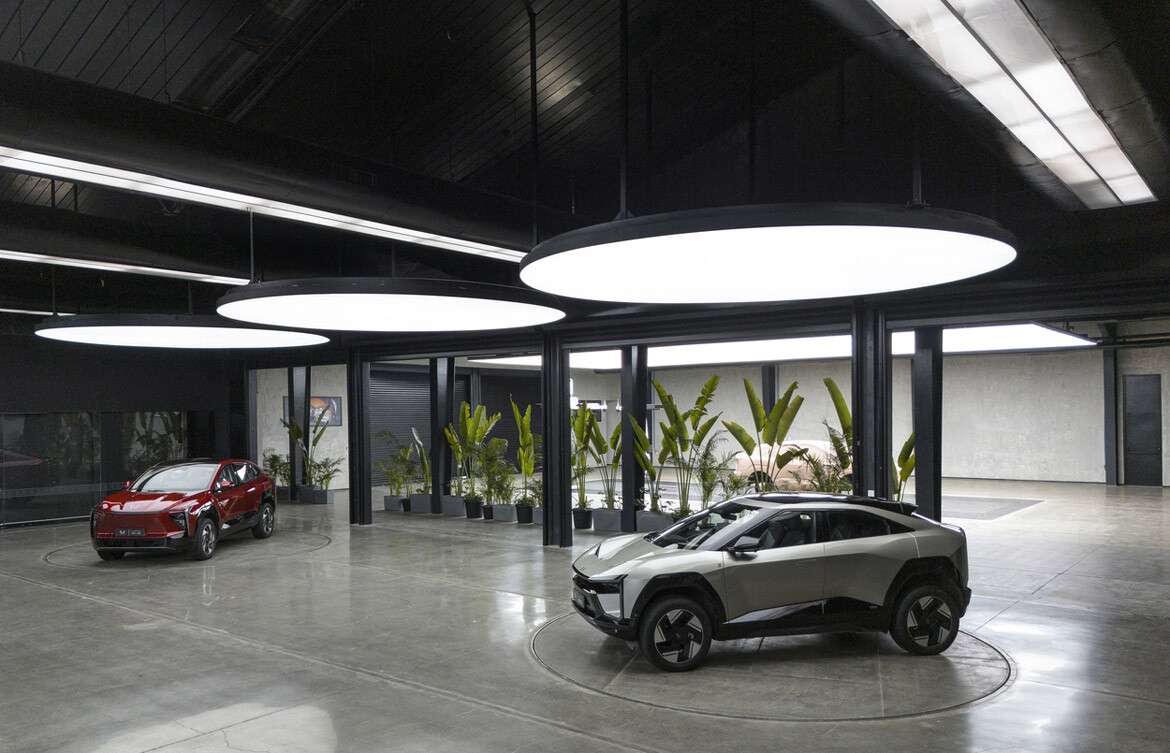
Twelve years after designing the original workplace of Mahindra & Mahindra’s Automobile Design Studio in Mumbai, India, SJK Architects has completed an extension that delivers a highly advanced facility while speaking to the past, present and future.
As the automobile industry sits at the forefront of technological innovation, the new workplace celebrates the day-to-day process of car design while preparing the studio for the decades ahead.
In 2013, SJK Architects conceived the original design studio within the 64-acre factory campus in Kandivali, Mumbai. The project fostered creativity and offered a refuge from the mechanical rhythm of factory life. With hand-finished grey plaster walls, concrete floors and abundant natural light, the space felt more atelier than industrial shed.
By 2025, both the company and the industry had evolved significantly, prompting the need for an extension that could reflect this shift. The brief was straightforward: to create a highly technical environment for full-scale automobile prototyping, including a German robotic arm — the first of its kind in India. The challenge, however, lay in integrating this advanced facility with the original studio’s more artistic sensibility, all within a tight timeline and budget.
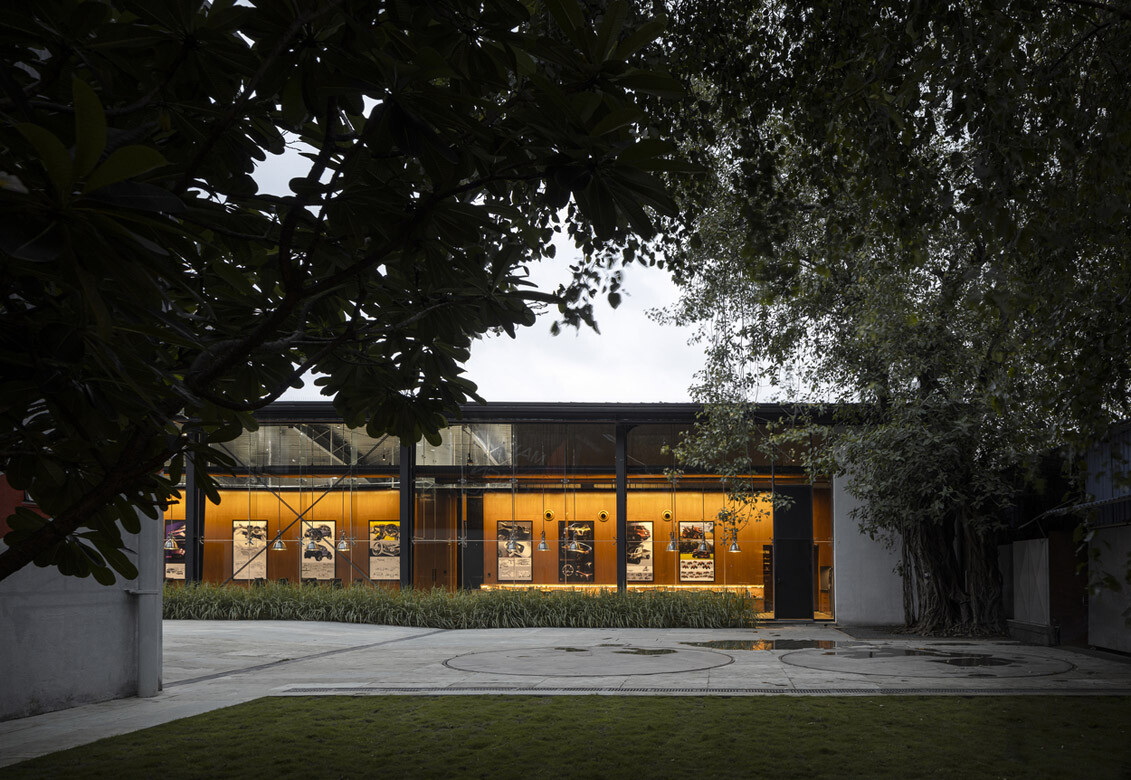
SJK Architects’ response was to design a building that honours the past through material and spatial continuity, serves the present with technical precision and anticipates the future through adaptability.
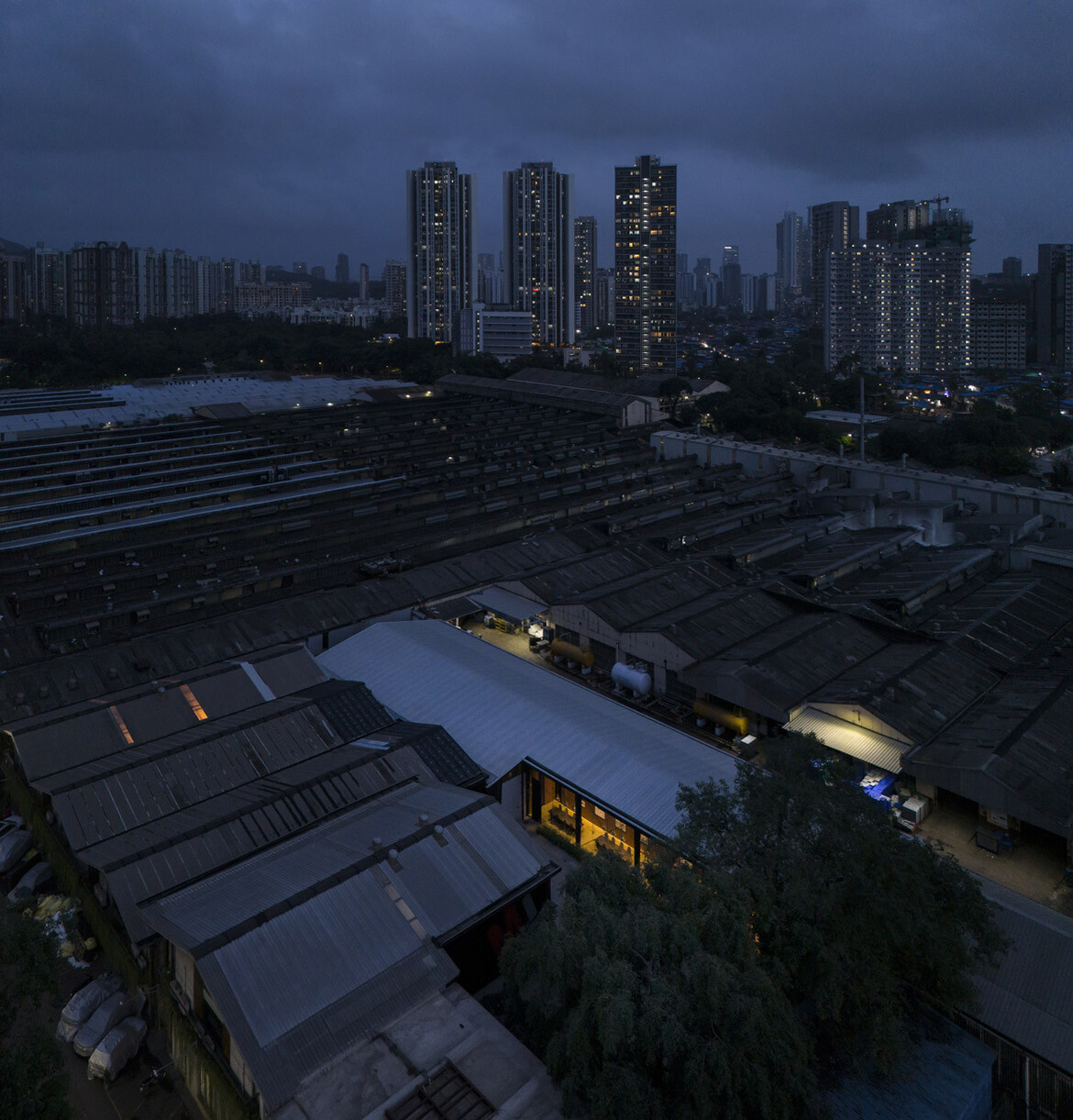
The new 21-metre by 67-metre structure sits along the southern edge of the existing facility, extending the original courtyard, which has been retained and widened into a landscaped social space.
Related: Wellbeing at its best
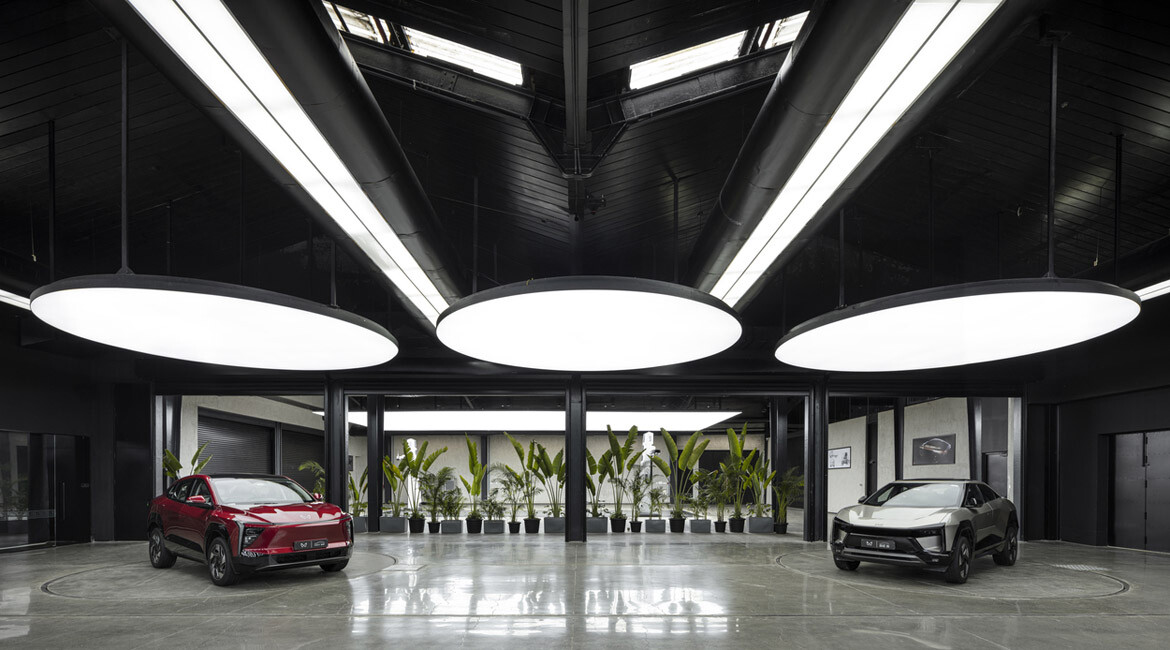
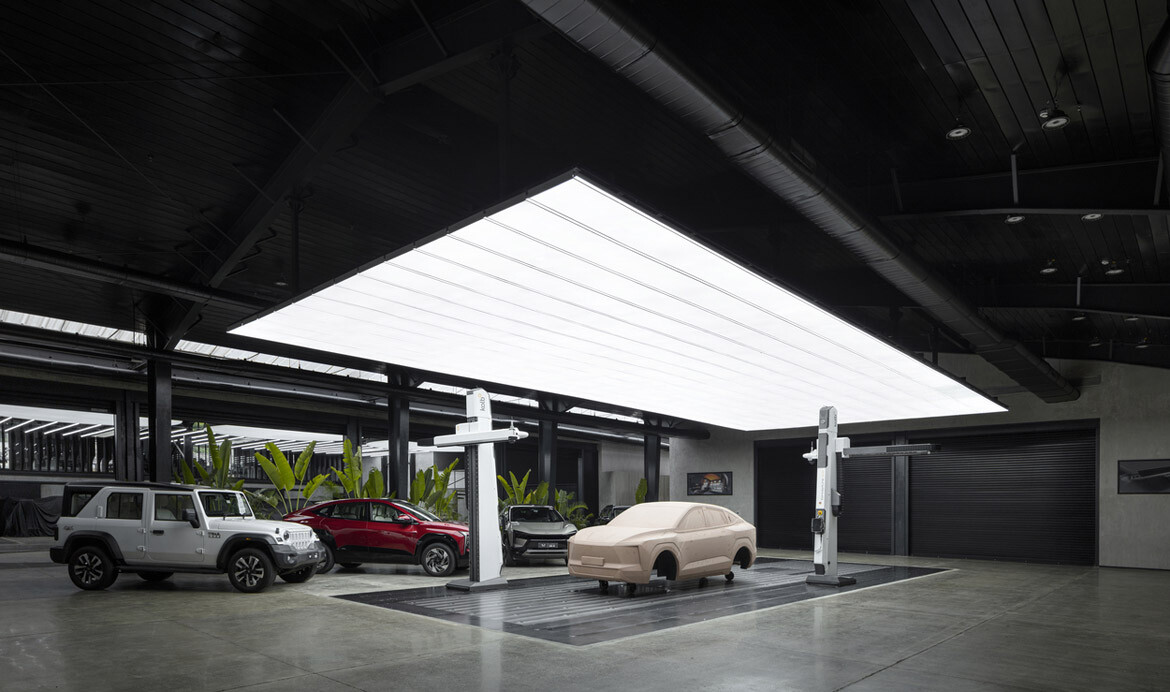
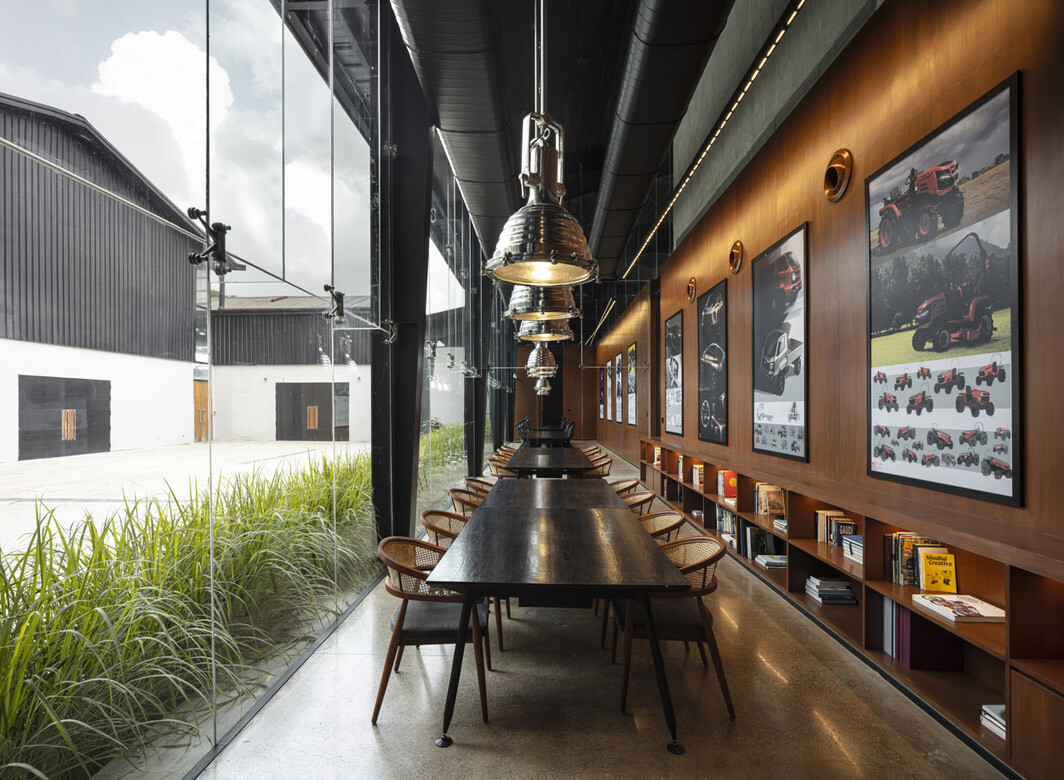
At its centre is the Clay Bay — an 8-metre by 17-metre clay contouring area for full-scale vehicle modelling. Enclosed and controlled environments, including the paint booth, paint kitchen and hard modelling areas, are positioned to the west, while service zones sit to the east. Along the courtyard edge, the pantry, library and model-makers’ workspaces introduce a more human-scaled layer to the program.
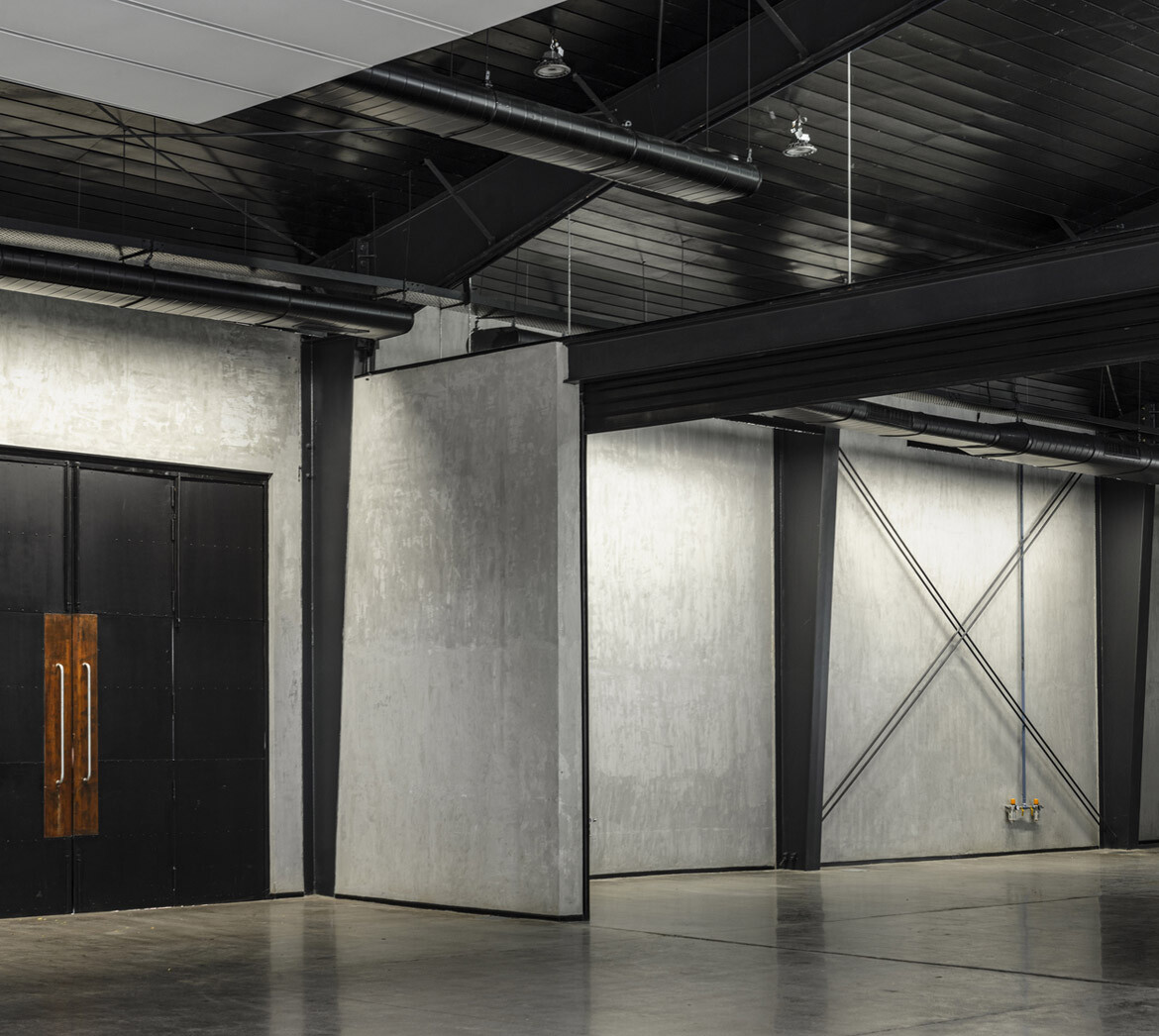
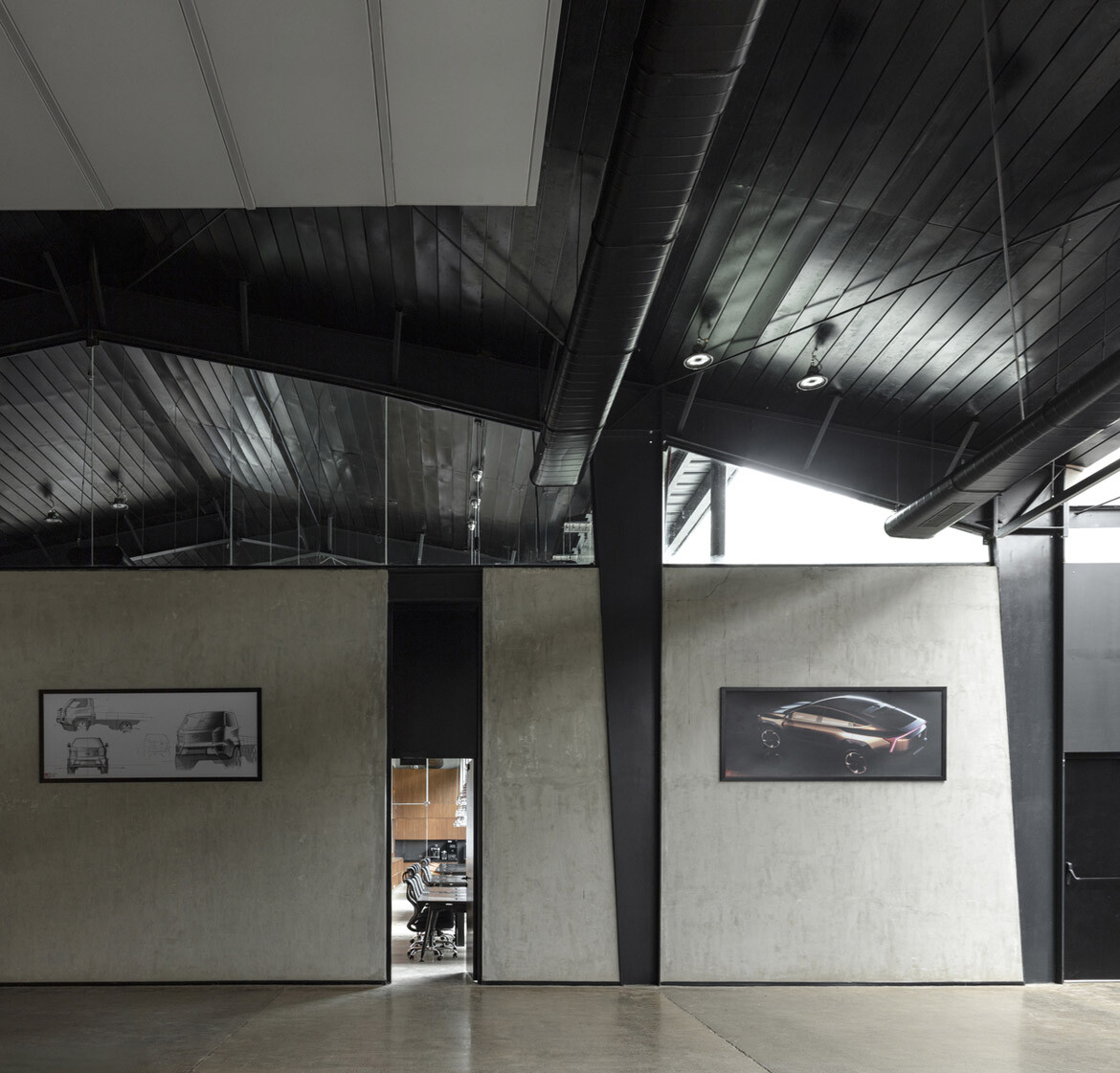
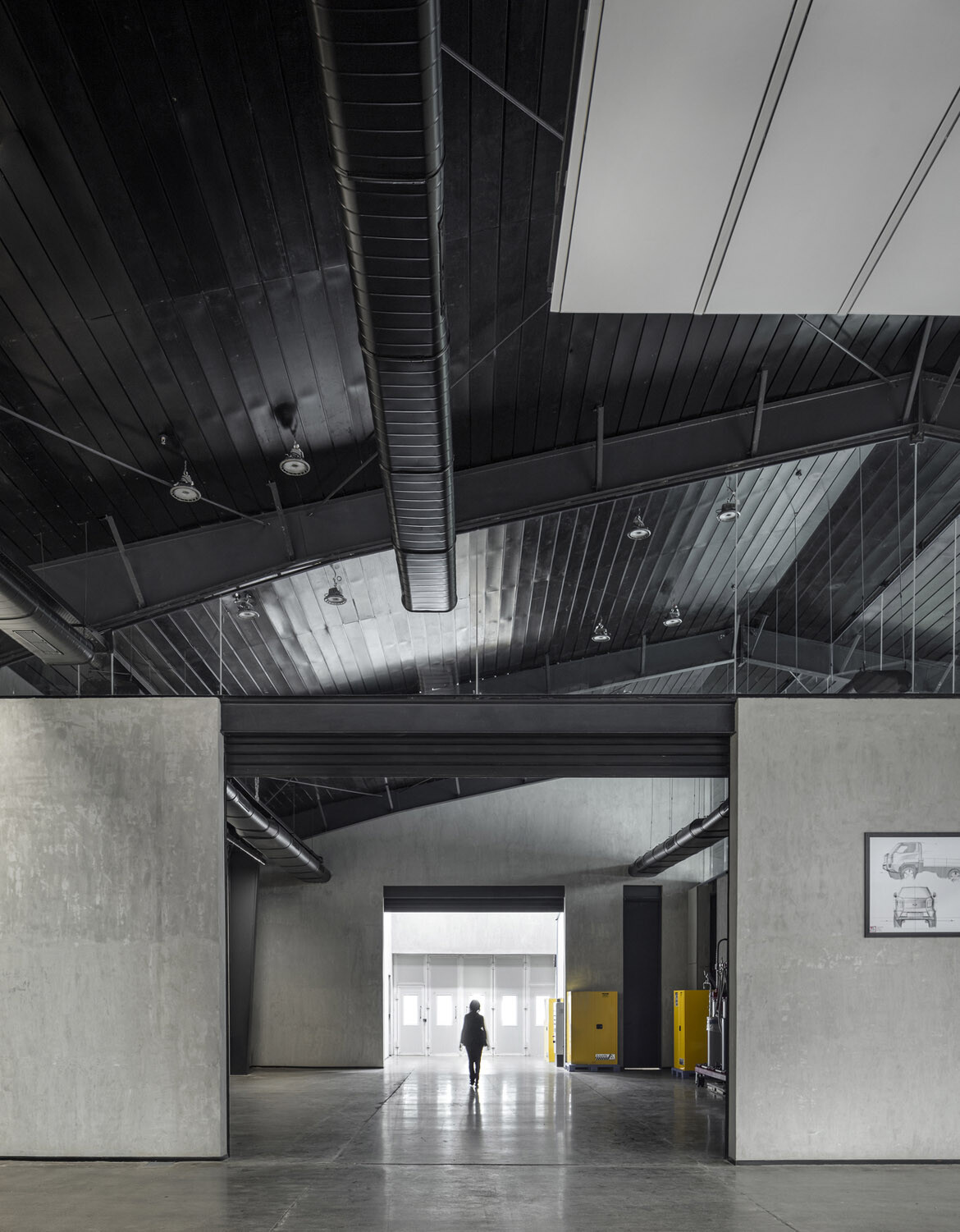
A black steel framework establishes both the visual and structural backbone of the project. Exposed throughout, each element is carefully proportioned to balance strength and visual lightness. The original palette — black steel, grey cement plaster and concrete — continues into the extension, reinforcing continuity between old and new.
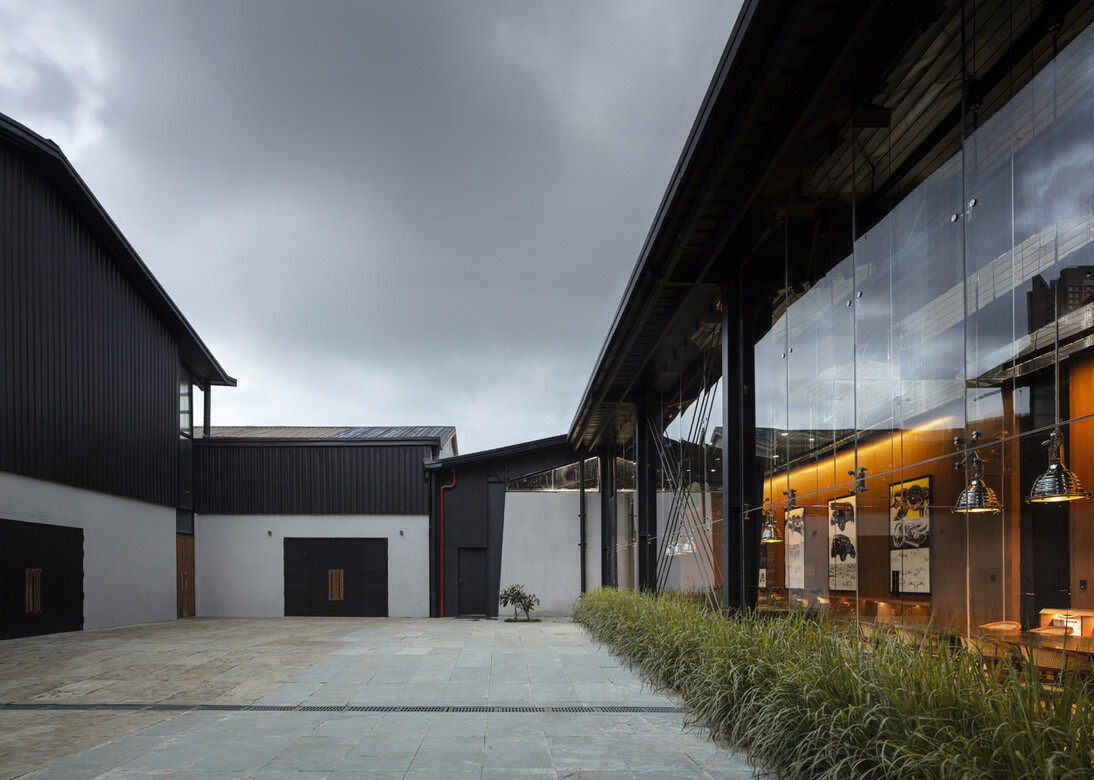
The structure was pre-engineered off-site with millimetre precision, with each frame profiled to carry only the loads required — thicker where forces concentrate, slimmer where they do not. Partition walls are set at 4.3 metres, rather than the full 7.5-metre height, allowing the black-painted roof to read as a continuous canopy across both buildings.
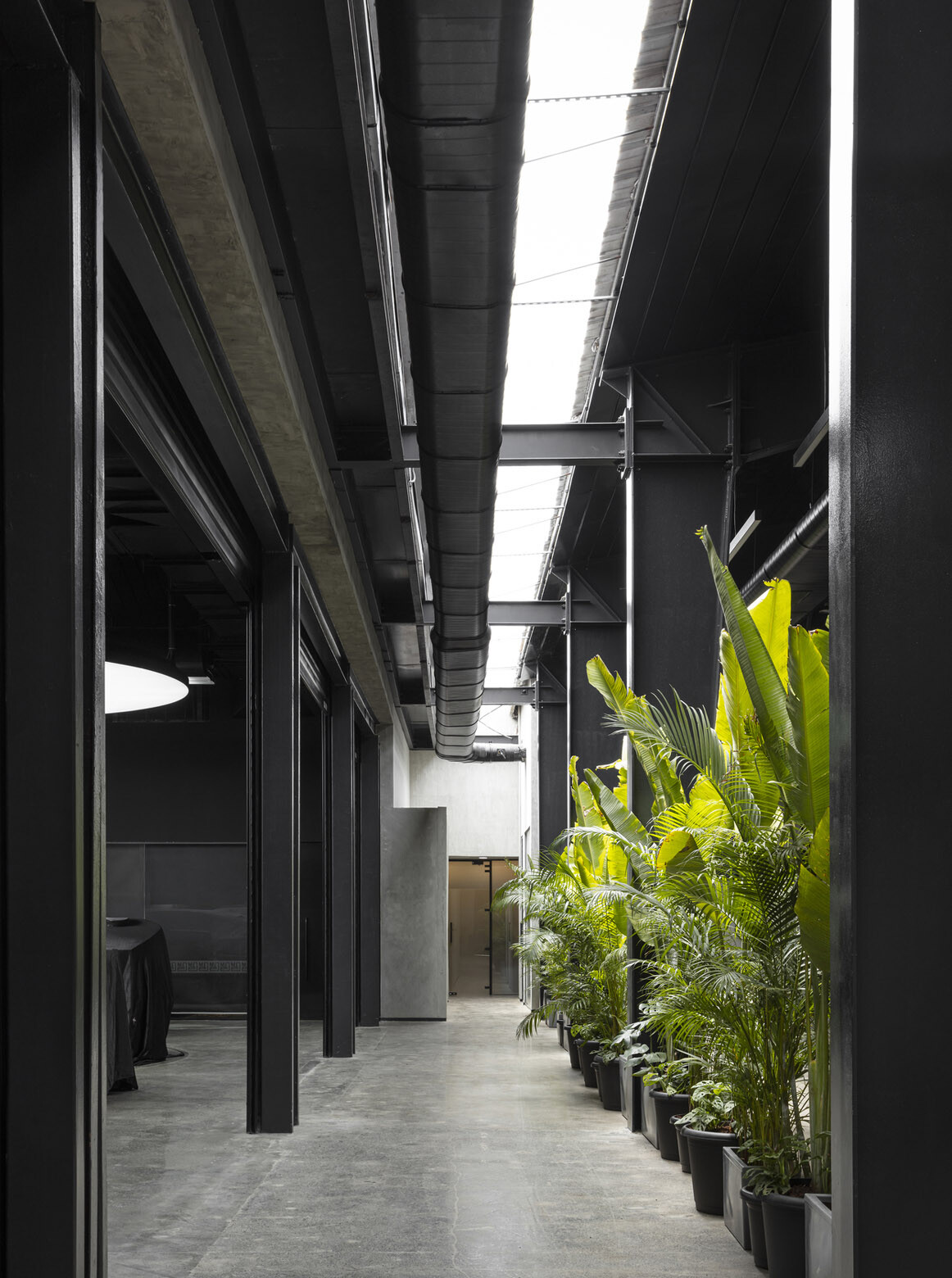
Working within the constraints of an industrial shed, two key spatial moves help stitch the projects together. The retained courtyard becomes a communal centre, offering respite for staff, while a narrow 2.5-metre ‘street’ carved between the two structures is topped with a continuous skylight and lined with planting — a light-filled passage within an otherwise sealed environment.
To accommodate full-scale modelling of large vehicles, the design achieves an 18-metre column-free span with a 7.5-metre height — the maximum possible within site and budget constraints. At its centre, the Clay Bay allows for seamless vehicle movement within a six-metre clearance zone.
The integration of the German robotic arm presented one of the project’s most complex challenges. Global standards require a sealed black box with lighting calibrated to 6500K and temperatures maintained between 18 and 20 degrees Celsius. These conditions ensure both the accuracy of surface readings in high-performance clay and the material’s stability.
Rather than concealing these requirements, SJK Architects transform them into spatial drama. A suspended steel frame supports precisely calibrated linear lighting, while concealed infrastructure creates the illusion of a floating ceiling plane. The monochromatic palette heightens this effect, giving the space an almost cinematic quality.
Within this highly controlled environment, moments of warmth are carefully introduced. Timber wall panelling, cane chairs and ship-style pendant lights soften the pantry, library and model-making areas, while lemongrass planting and climbing creepers animate the courtyard edge.
Flexibility underpins the entire extension. Designed as a pre-engineered portal frame, the structure was fabricated off-site and assembled in just 20 days. All connections are bolted rather than welded, allowing the building to be dismantled, relocated or reconfigured if required. Even the aerated concrete walls are designed for reuse, significantly reducing demolition waste and embodied carbon.
The result is a workplace that is at once highly technical and deeply considered — a space that supports both precision and creativity. In an industry defined by constant change, SJK Architects has created a platform that is not only responsive to the present, but prepared for what comes next.
SJK Architects
sjkarchitects
Photography
Courtesy of SJK Architects