Darling Building on Franklin Street in the heart of Adelaide’s CBD is one of the city’s most photogenic structures, but this wasn’t always the case. The heritage-listed 1916 building had been vacant for years, neglected and in a state of disrepair before Williams Burton Leopardi (WBL) Directors David Burton and Sophia Leopardi (along with other investors) purchased it in 2014 with a view to relocating their studio to the top floor.
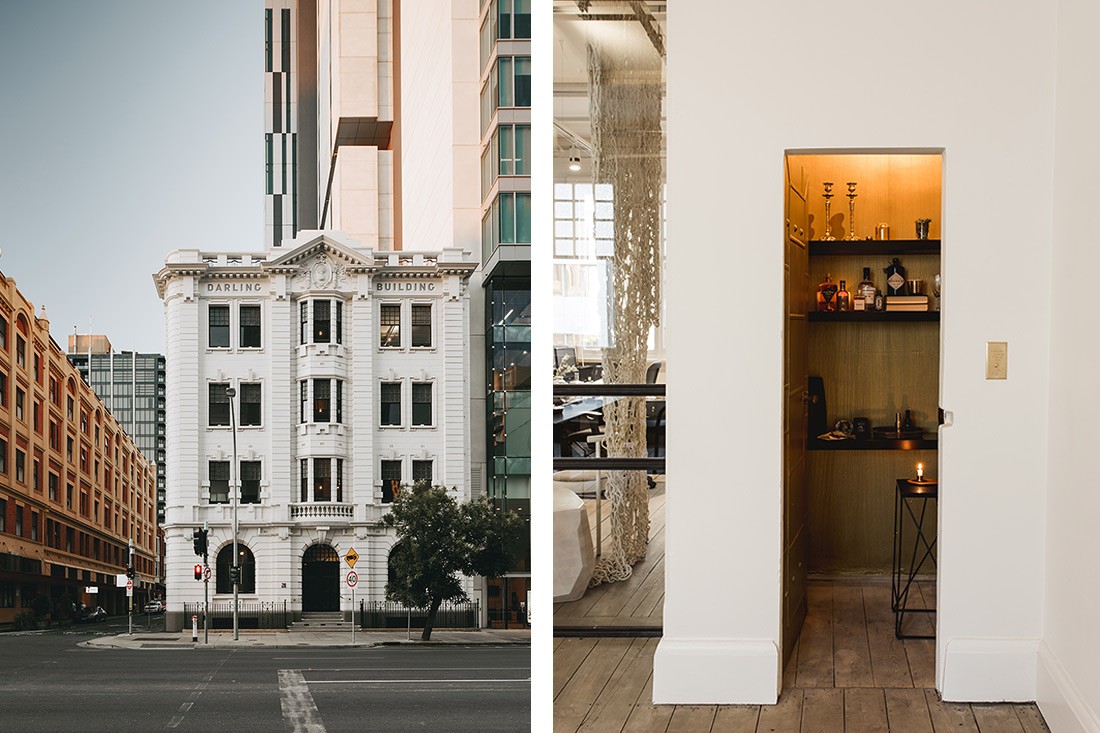
In restoring the building, Burton, Leopardi and the WBL team painstakingly and sensitively renovated each level, making sure to take full advantage of the top floor’s existing light well and double-hung windows to create a bright, airy workplace.
The studio’s resulting design concept was based on heritage conservation principles outlined in The Burra Charter and an interest in kintsugi (the ancient Japanese art of repairing broken ceramics with lacquer mixed with powdered precious metals). “The charter talks about this idea of touching things as little as possible and as much as necessary, so we combined that with the philosophies of kintsugi to tell the story of the building,” explains Burton.

“Age and patina can be virtues as long as it’s not a salvaged aesthetic and the result is high quality. We wanted to make sure everything we did with the space was not at the expense of its authenticity and so we didn’t layer it with stuff that hadn’t been there previously or was fake or a reproduction.”
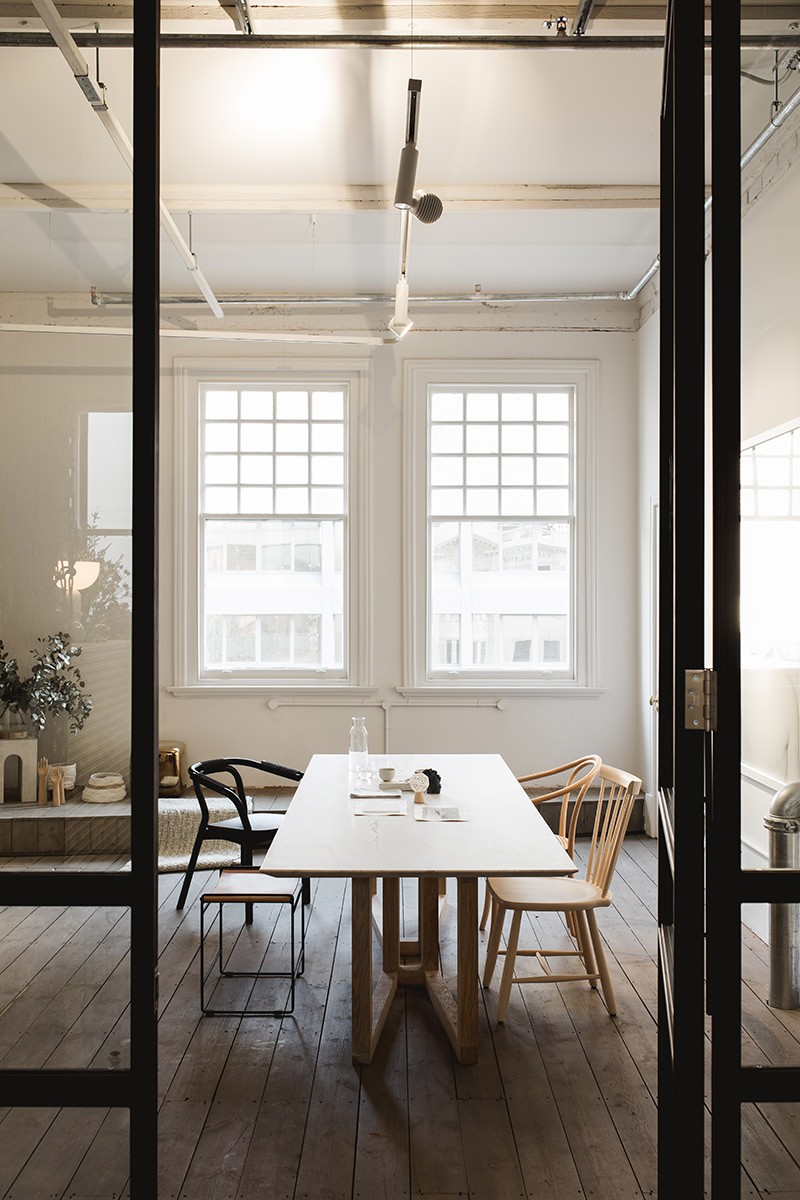
An existing ceiling fan was restored, as was the timber flooring and a number of partitions that were discovered in the basement have been painted and integrated into the space. Where something new has been added, it’s been done so with a clarity and assertion that distinguishes the WBL approach.
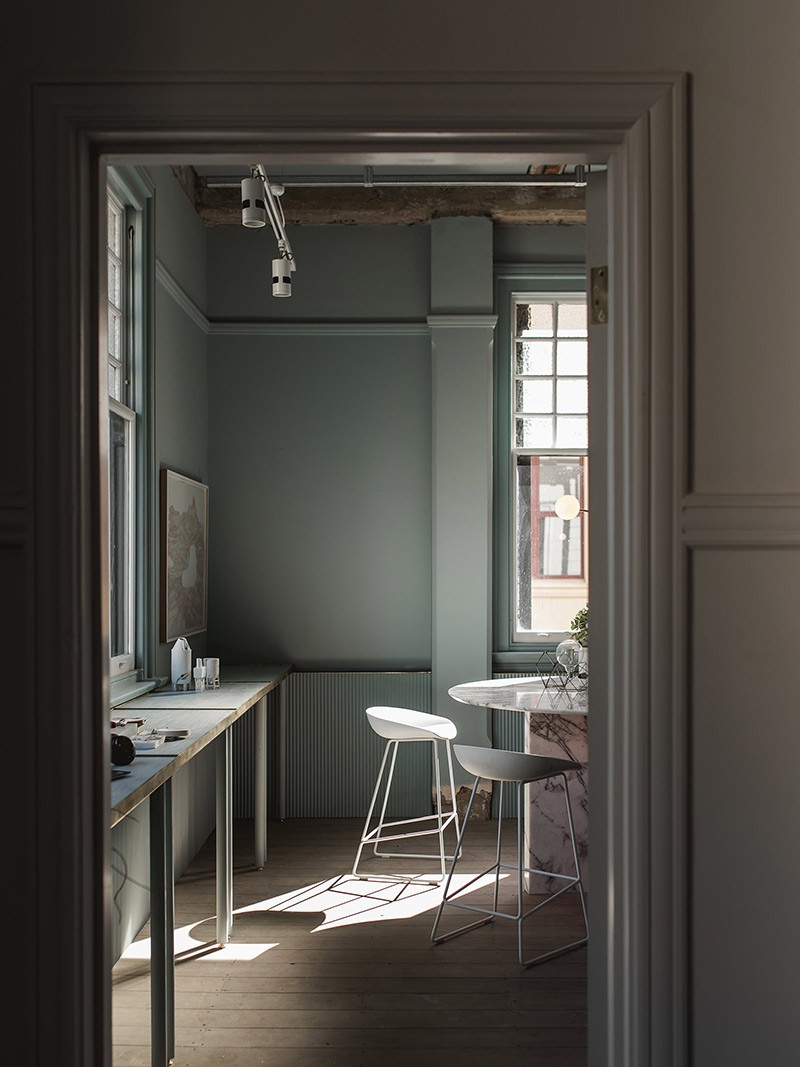
So steel beams that replace walls removed to allow for the open plan main workspace are finished in an unmissable gold colour – a direct nod to the process of kintsugi. And while the walls of the small meeting and research rooms that border this workspace are painted a distinct dove grey or chalky green, these colours were inspired by the building’s original palette.
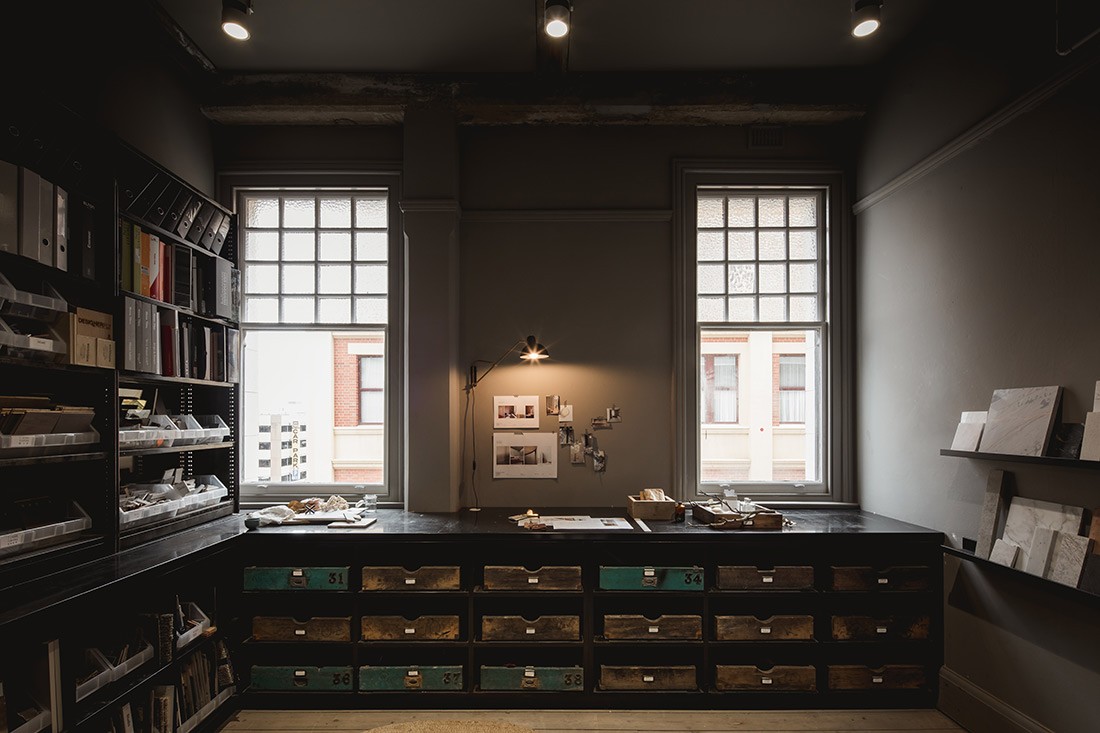
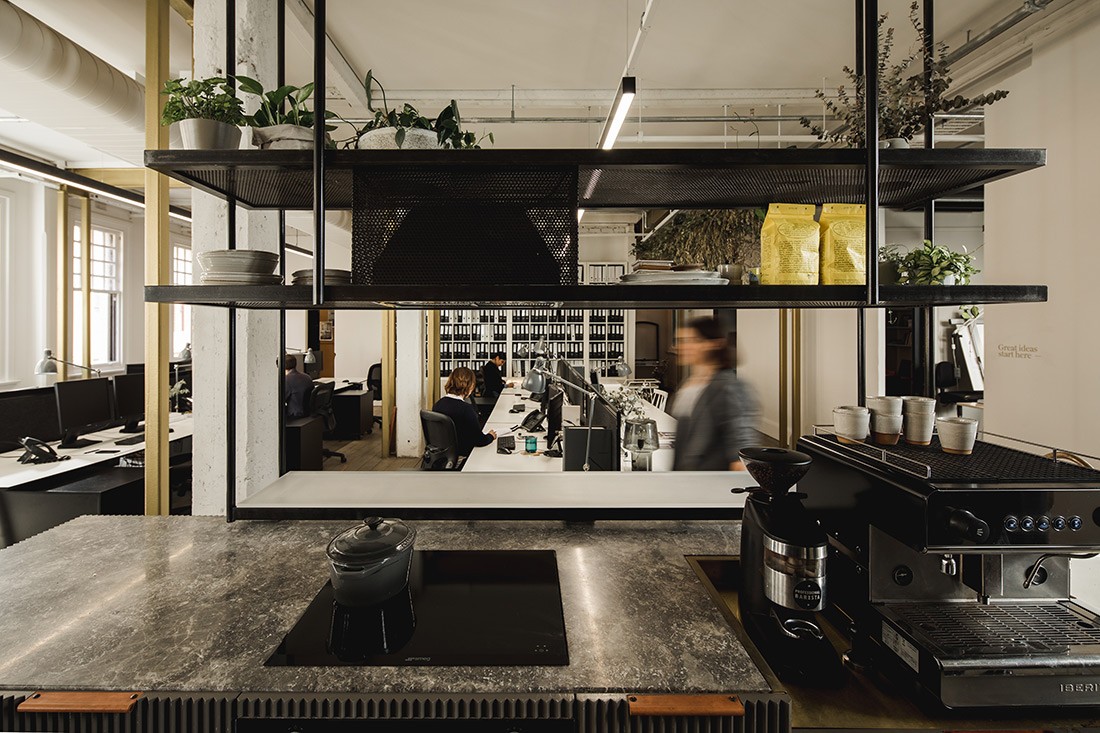
The overall scheme reads like an incredibly beautiful, curated space that’s domestic in scale. And just like any welcoming home, the kitchen is pivotal to the design. In deciding to position it in the centre of the floor, the architects wanted to create a work environment conducive to connection and collaboration.

As Burton notes, “We configured the studio around the kitchen so there’s always an opportunity for incidental conversation. There’s always something happening, which makes everyone feel like they’re in the middle of it all, rather than being tucked away in their own little corner.”
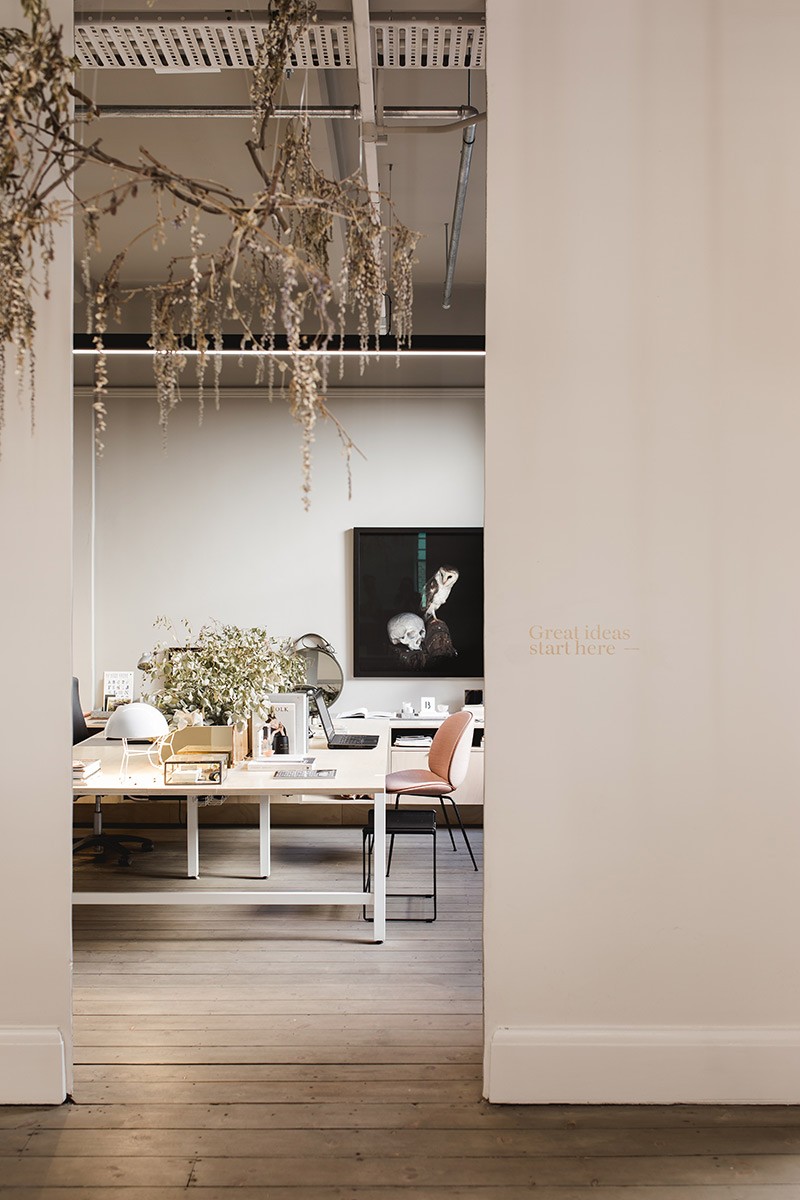
This new workplace is both a reflection of WBL as a practice and an indication of how they approach a project, underpinning the team’s principles of creativity, heart, collaboration, enrichment and authenticity. It gives clients a sense of what they can expect and while it’s not all about representing a particular style, the new studio does display WBL’s signature elegant aesthetic and fine attention to detail, which successfully blends old and new with a respectful regard for materiality, colour and spatiality.
Photography by Christopher Morrisson.
Want more inspiring workplace design? Sift through our archive. And sign up for our newsletter to get updated weekly.