The simple design tool making the impossible possible. Everyone said loopcreative’s plan for Alquema’s flagship store couldn’t be done, but they knew better. We find out how 3D printing turned an abstract design into reality.
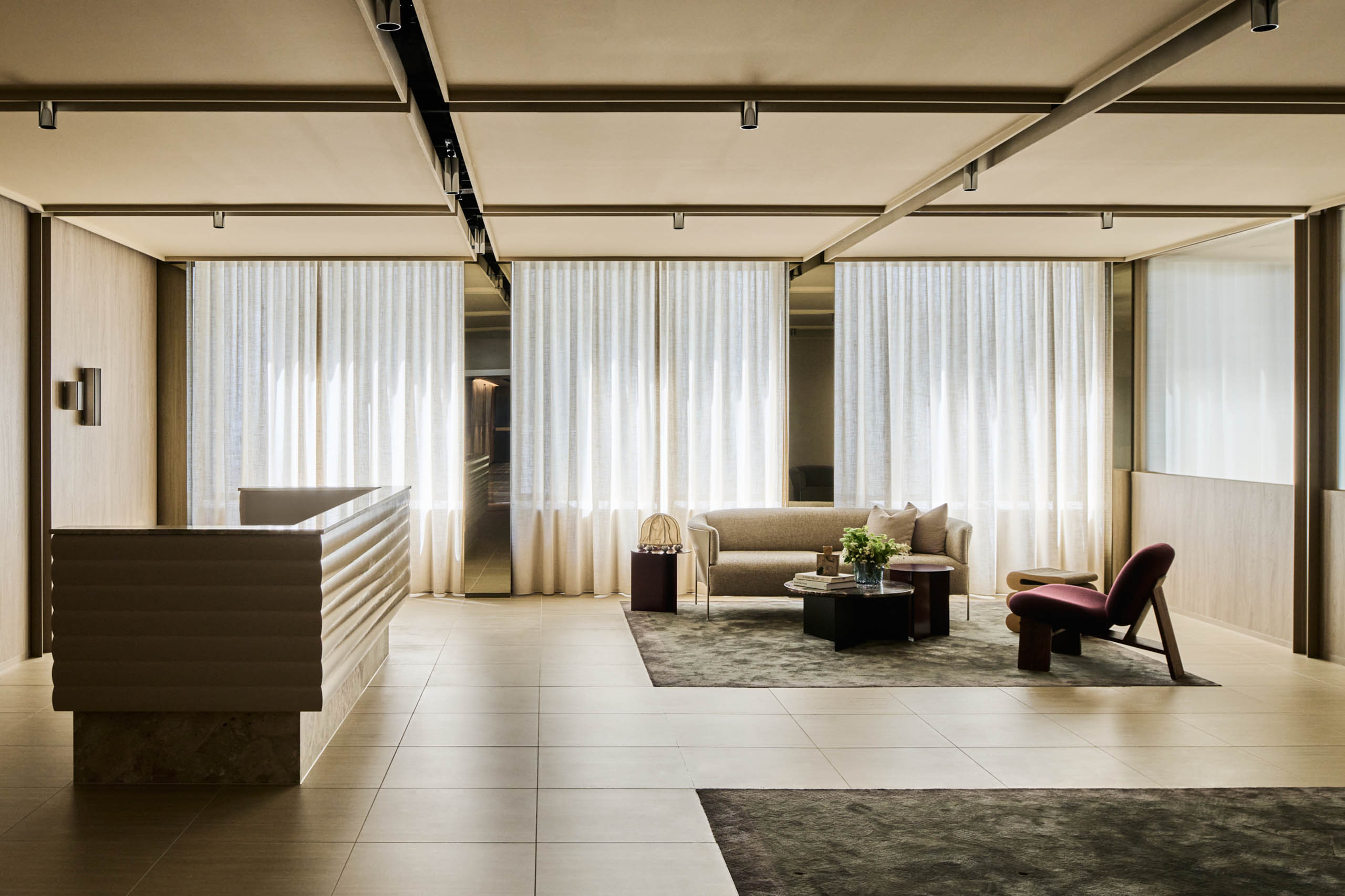
Visit Alquema’s flagship store in Sydney’s Queen Victoria Building and you may not be the first to confuse it for a gallery.
Design studio loopcreative’s elegant, refined treatment of the space highlights each item while allowing it to speak for itself, much like an exhibit of great works of art. “[The owner] could have a showing here,” explains interior designer Michelle Grimm. “She could take all the clothes out and have paintings hanging.”
Perhaps the store’s most striking piece is a giant custom designed, sculptural steel rack that displays clothing while guiding shoppers through the space, dictating the way they experience the brand. Amazingly, if not for loopcreative’s forward thinking this centrepiece would never exist. “We had no fewer than five builders tell us that what we had designed could not be built,” recalls loopcreative director Rod Faucheux.
So the team turned to technology for their answer. By printing 3D nylon models, Faucheux and Grimm were able to make their idea tangible and simple. It was this process that opened the door to a builder who could grasp their concept and help them realise it.
The final piece is nothing short of spectacular. Owning the store’s pride of place, the rack stands as a remarkable tribute to the fact that nothing is impossible with some ingenuity, determination and the right means of communication.
INDESIGN is on instagram
Follow @indesignlive
A searchable and comprehensive guide for specifying leading products and their suppliers
Keep up to date with the latest and greatest from our industry BFF's!
In the second instalment of our performance seating three-parter, we turn to DKO’s Michael Drescher and Jacob Olsen to peek behind Sayl’s confident architectural form and explore the ideas of inclusivity, adaptability and freedom to move as hallmarks of what sitting your best actually means.
Blending versatile cooking with smart performance, Bosch AccentLine appliances bring a quieter sense of order and simplicity to the modern kitchen.
In the last instalment of our three-part performance seating series, Alex Bain from Architectus explains why sitting well shouldn’t feel like sitting at all and explores an unexpected success metric of the hybrid workplace: the grounding power of emotional support.
In the first instalment of our three-part series exploring what it means to sit your best, we pose the question to Gray Puksand’s Dale O’Brien, who discusses the importance of ease and majority rule when it comes to sitting and reveals why specifying a task chair is not unlike choosing a Volvo.
As a significant renewal of an established social housing project, JPW’s recently completed Cowper Street Housing in Glebe, Sydney aims to bring sustainable and community-focused density to an inner city suburb.
Powerhouse Parramatta has commissioned more than 50 leading designers from across Australia to shape the spaces and experiences of the new museum, including public, exhibition, restaurant and retail spaces.
At Machine Hall, Herman Miller gathered Sydney’s design community to consider performance seating as part of workplace strategy, not just workplace furniture.
Scheduled to open later this year on the banks of the Parramatta River, the 30,000-square-metre Powerhouse museum — designed by Moreau Kusunoki in collaboration with Genton — represents a major shift in the geography of Sydney’s cultural infrastructure.
The internet never sleeps! Here's the stuff you might have missed
M Moser Associates has reimagined DuPont’s Shanghai R&D Centre as a network of connected neighbourhoods, using local references and workplace strategy to support collaboration, flexibility and future growth.
In this interview, Michael Leeton reflects on his philosophy of placemaking, connection to landscape and the importance of designing homes that balance intimacy with scale, using his award-winning project House on a Hill as a central reference point.