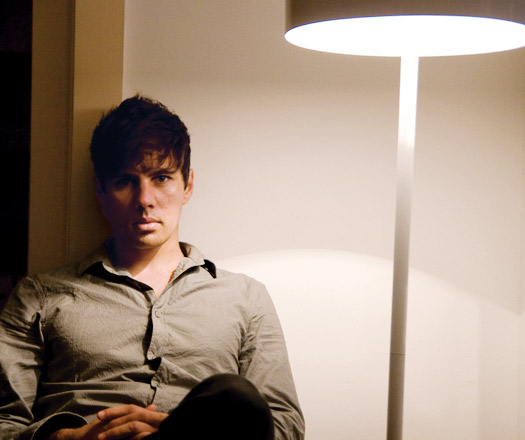
There’s an architectural Al-Qaeda lurking in our midst, and Dirk Anderson is its sole Australian member. Far from any sort of terrorist group, the Urban Future Organization (UFO) is actually a network of architects and design professionals collaborating on global projects.
The comparison with Al-Qaeda, explains Anderson, refers to an article published in Archis describing UFO’s structure – “we’ve got all these sleeper cells that awaken when there’s a project or a competition that needs some help.”’¨’¨
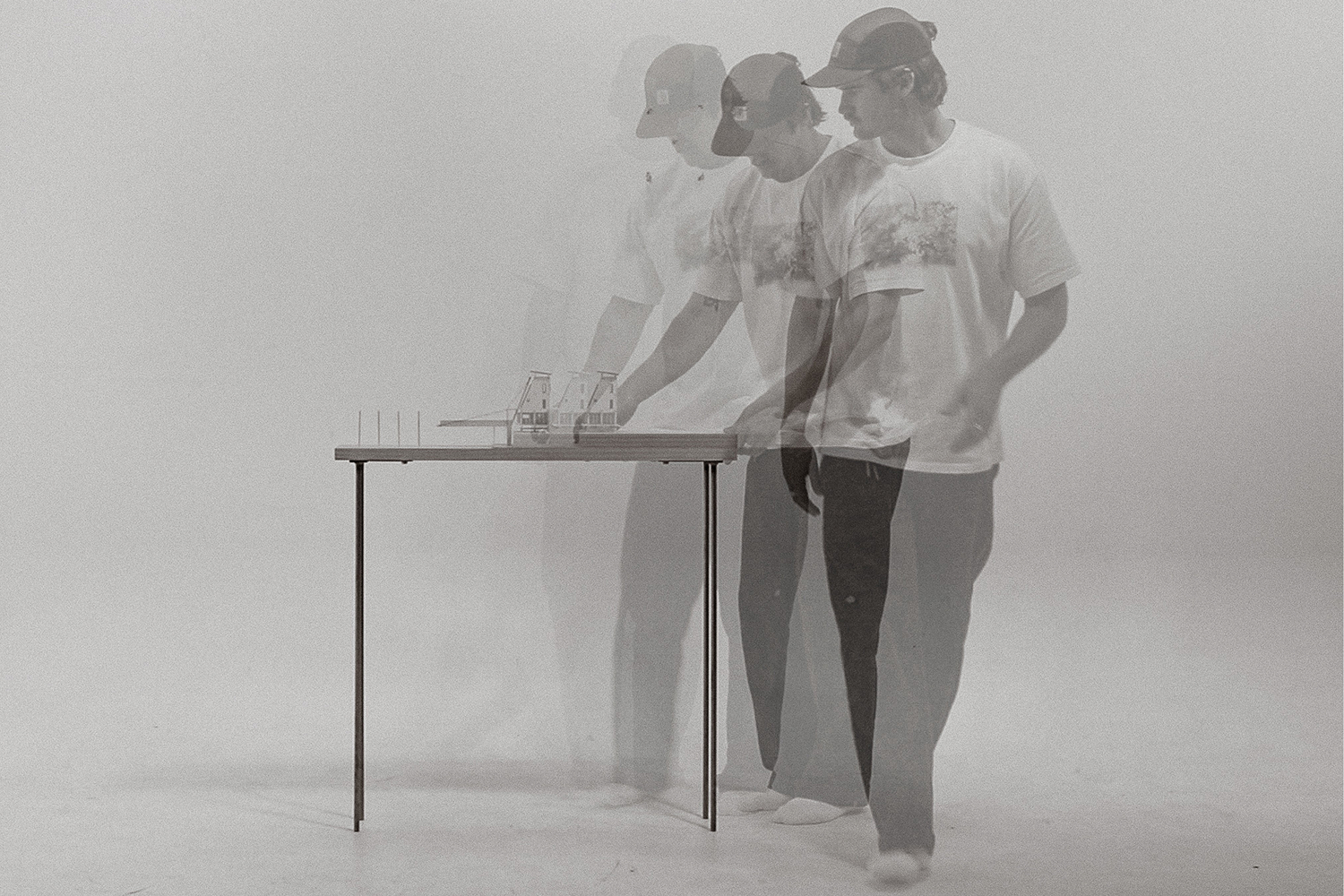
Specialising in ‘digital design’, UFO members are based around the world and are free to collaborate on projects as they arise. Anderson, a trained architect, became involved with the group when working in London in 2002, moonlighting on a number of their projects.’¨’¨
The organisation’s success is measured in the realisation of several notable projects throughout Europe, the UK and – most recently – Australia. However, UFO differs as a business model, there is no top-down management structure and each member is free to get involved whenever they like.’¨
“In a sense it’s non-authoritarian… you can be free to do collaborations with whoever you want outside of that,” he says. “There’s not really an ideology with Urban Future, it’s more about production and generative design, having a lot of creative people to keep the momentum going.”
Anderson has worked throughout the world, from Dubai to Korea but returned to Australia to explore the burgeoning digital design scene. “There was a niche market here for design with a new flavour; not a digital flavour, but new form or techniques, and nobody was really taking that on board.”’¨’¨
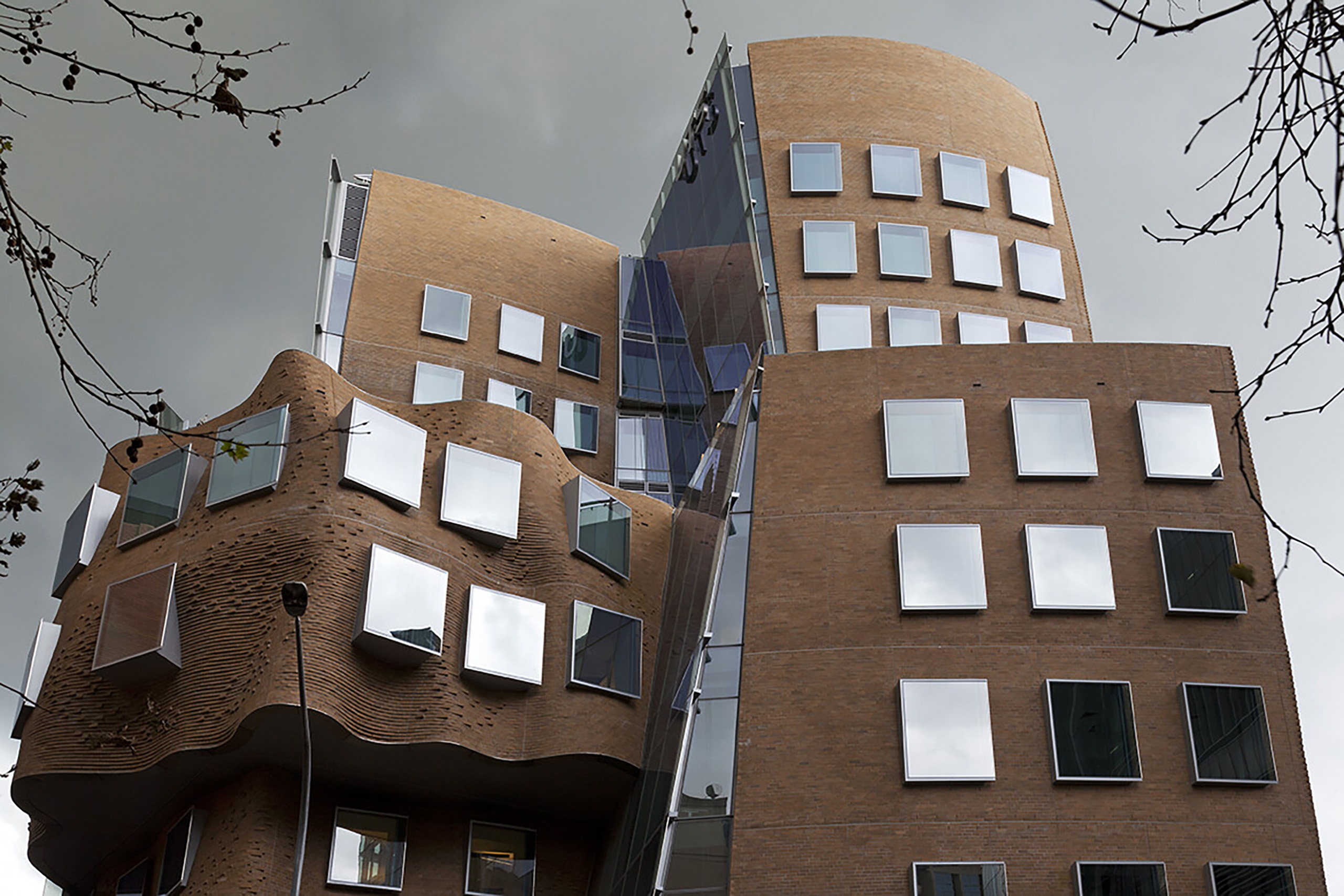
Describing the projects he’s worked on, Anderson uses the words ‘folding’, ‘twisting’ and ‘distorting’ – making them sound more like malleable paper or fabric than actual buildings – however all of their designs are intended for construction.’¨’¨
“I think that’s the difference between UFO and other digital architects. A lot of the others are producing utopia/dystopia futuristic material that can’t be built. We want to push the technology and design techniques as far as we can and have it realised,” he explains.’¨’¨’¨’¨
Anderson takes particular pride in a recently completed project in London, the ‘Nested House’, which uses digital design to make the most of a small, awkward city plot, by creating fluid pods suspended at different levels, housed within a traditional shell.’¨’¨
While UFO Australia is still in its infancy, Anderson is looking forward to the imminent arrival of another team member who will help him to establish a base here. Make sure you ‘stay alert’ for future projects popping up around the country.’¨’¨
See below, more UFO collaborations.
Nested House v1.03
Hackney, England, UK
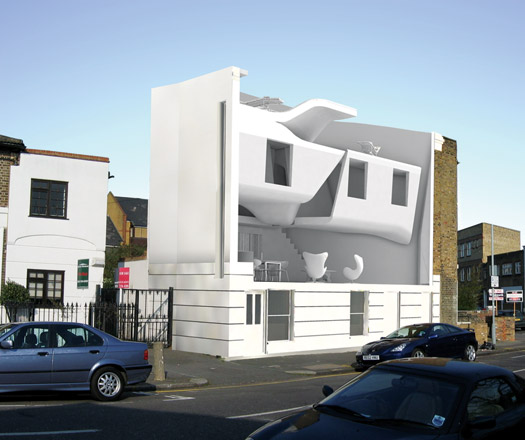
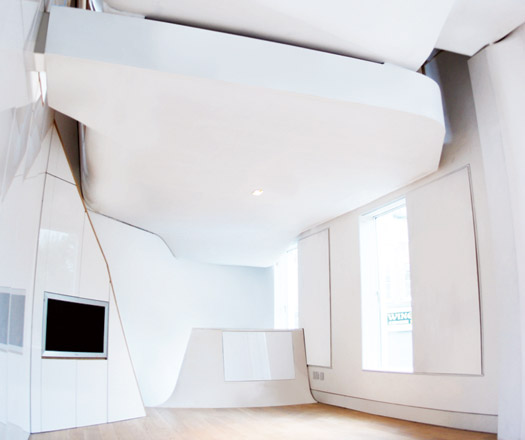
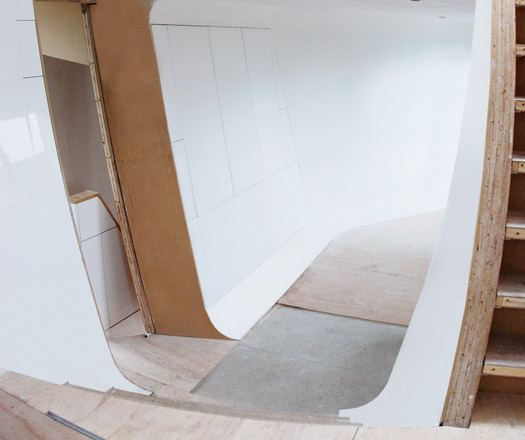
“A small residential project in hackney uses one digital three-dimensional model as the single source of all project information.
The site is an existing 45m2 maisonette terrace conversion distributed over three floors in the heart of the de beauvoir conservation area.
“Due to the conservation area restrictions, urban future deliberately decided to concentrate on the reorganisation of the interior space and its relation to a split-level garden on the roof, offering intimacy and privacy as well as unobstructed views to the city of London.
“The external treatment only hints at the less orthodox internal arrangement. The roof garden is sited on the two shifted bedroom nests, resulting in one section of the garden being at lower elevation, creating a more intimate and private space or outdoor room.
“The other garden is higher, with a lower parapet allowing for an open view of the skyline of London.”
Nested House v1.03 is expected to finish construction in August 2009.
Lemon Factory
Pace De Mela. Messina. IT
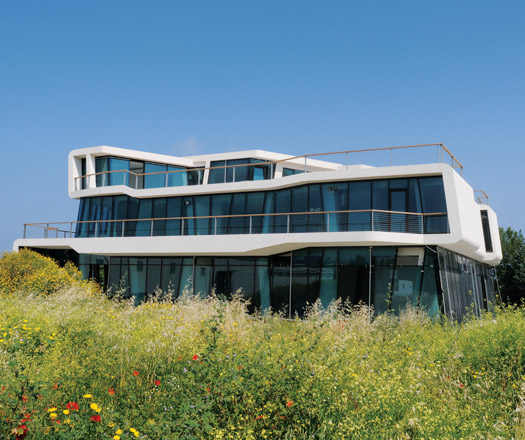
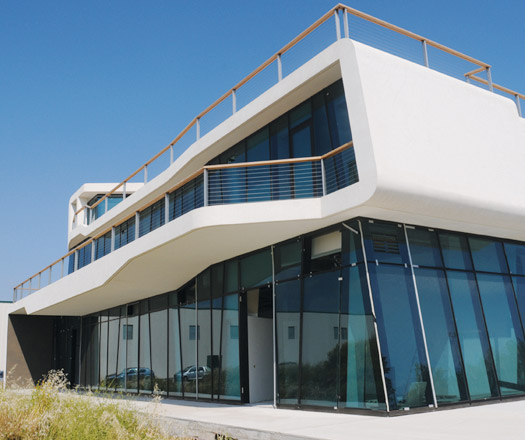
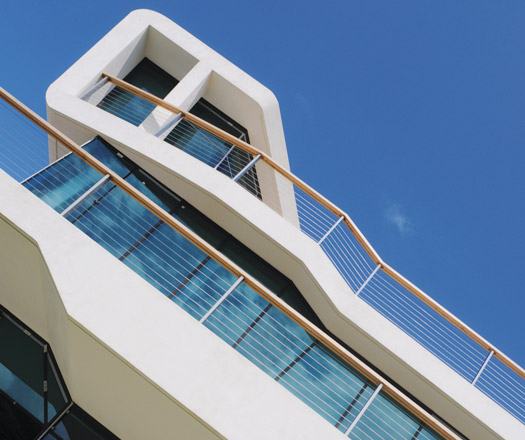
“A 3-level folded ribbon forms the shell and structure to the Simone Gatto lemon factory and HQ for the operation. The initial design sketches a folding surface that envelopes and differentiates various programmatic volumes.
“Within the volume the wrapped surface bifurcates to accommodate a ramped circulation that connects the three floors.”
The project is scheduled to complete in October 2009.
Shifted Space
Rose Bay, Sydney, NSW, AUS.
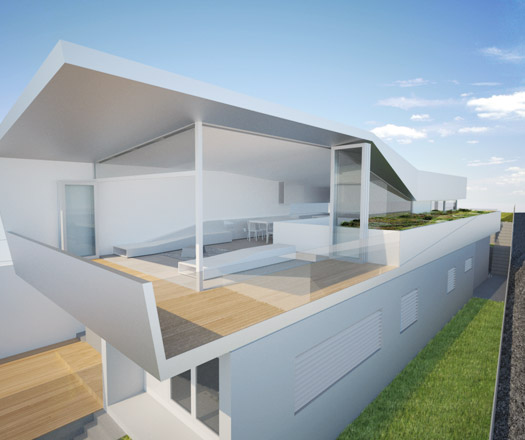
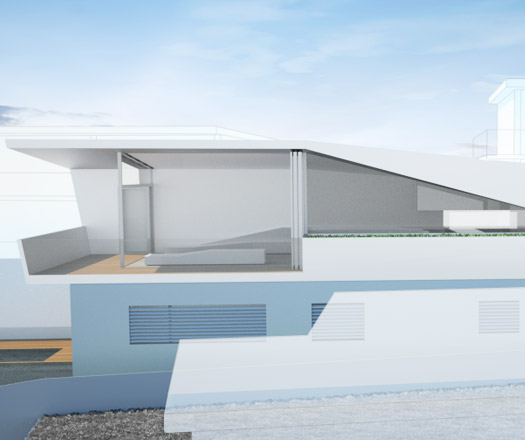
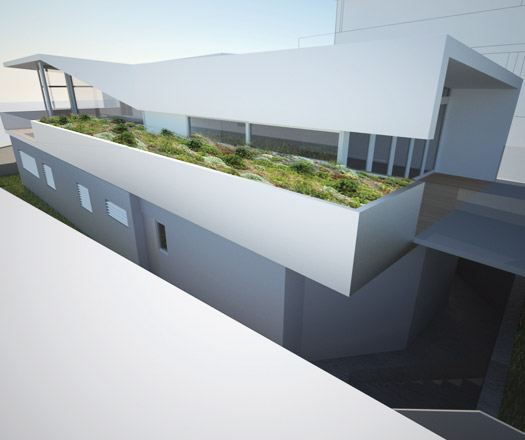
“The site is situated in the eastern suburbs with a prime view of the harbour bridge and city CBD and the proposal is for a second level addition to a 4 bedroom Californian bungalow.
“The scheme sought to capture the vista through a modulation of the internal spatial configuration, combining exposure of the external and maintaining an intimacy internally. A simple fold and shift in the roof structure provides variation in the upper volume, opening the northern end whilst framing the view from the southern lounge area.”
The project is currently in documentation (construction certificate) stage and is expected to commence on site in early 2010.
Fold Pethouse
Double Bay, Sydney, NSW, AUS.
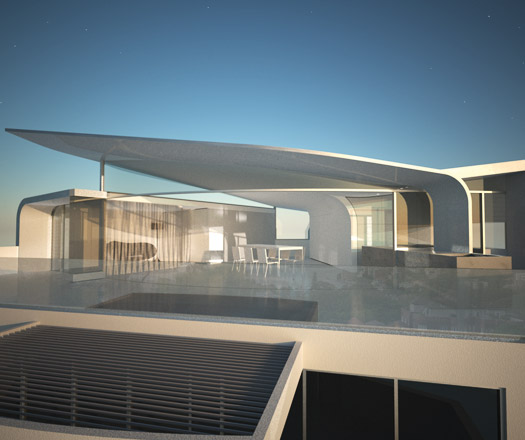
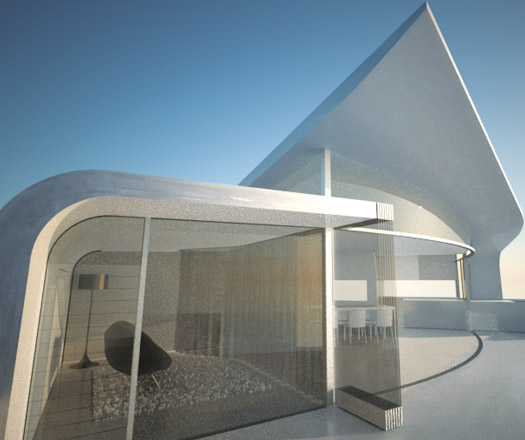
“The fold project is rooftop pavilion proposal in the double bay area. it was conceived as a wrapping surface that enveloped the internal space. This wrap protects the volume from intense southerly weather fronts, whilst opening up to the 180 degree north views across the harbour, catching the cooling north easterly winds in summer.
“The project is of lightweight steel structure and is designed to fully open up during the summer months diffusing the threshold between indoor and outdoor.”
Fold is currently in documentation (construction certificate) stage.