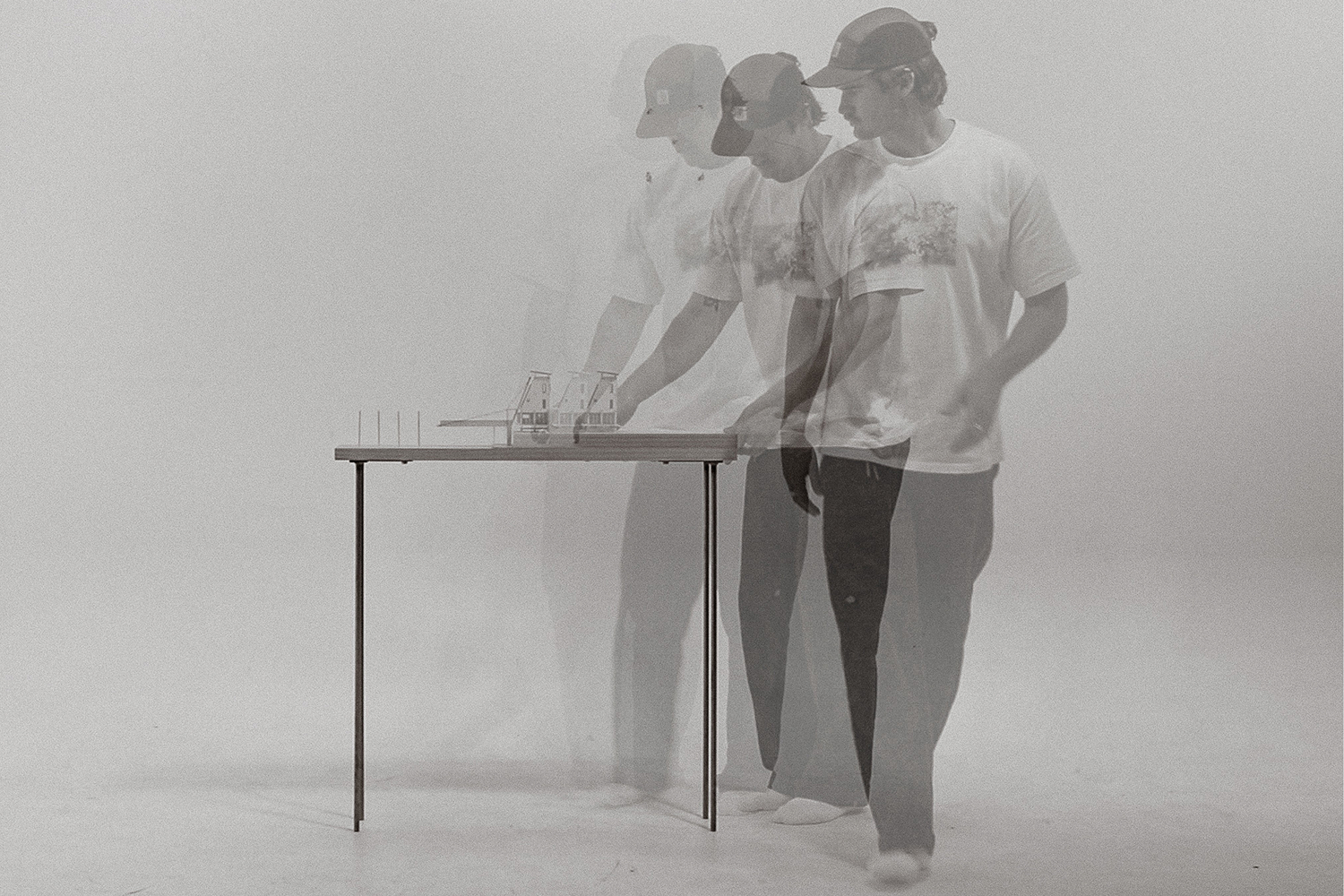
Adelaide’s current design renaissance is due to a handful of exciting young practices reimagining the City of Churches in a way people never expected. And it’s fair to say studio -gram is leading the charge. The small architecture firm simply produces outstanding work, with a freshness that has reinvigorated Adelaide’s design landscape and contributed to the broader dialogue on a national design identity.

The studio -gram team.
Canadian Graham Charbonneau and Dave Bickmore, who grew up in South Australia’s Riverland, met while studying architecture at the University of South Australia. Theirs is a solid friendship that quickly developed into a working partnership which became official when Charbonneau asked Bickmore to join him in renovating Hotel Harry in Sydney’s Surry Hills in 2014.
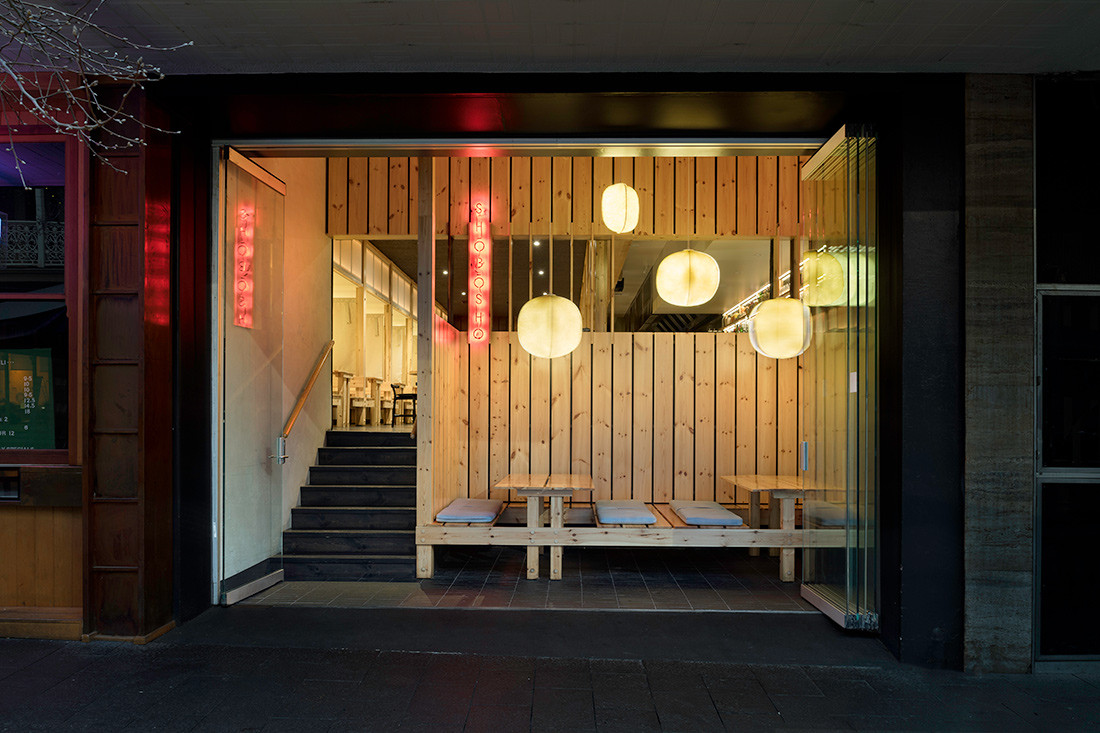
Shobosho.
It didn’t take long before the commissions started rolling in and while studio -gram projects are peppered throughout the country, it’s in South Australia that the practice has made the biggest impact. Visit any of the State’s design hotspots and chances are they’re the fine work of Charbonneau, Bickmore and their team. Case in point, the elegantly breezy Melt in Henley Beach, Pirie Street’s stunning Osteria Oggi and the ridiculously cool Shobosho in the CBD’s West End.

Melt brings beachside vibes. Photo by David Sievers.
For a practice so prodigious, the diversity of its work is remarkable. No two projects look the same yet all are distinguished by an intuitive handling of materiality and exquisite detailing. Charbonneau and Bickmore’s desire to avoid a one-size-fits-all approach serves studio -gram’s design outcome well and they ultimately pride themselves on being able to elaborate on a client’s ideas and delivering them with clear resolve.

Osteria Oggi.
As Bickmore explains, “We established really early on that we didn’t want to have a distinct style; we didn’t want people to look at our work and say that’s a studio -gram project. It’s not about what we want but what our clients want, so our methodology isn’t prescriptive, it’s organic and the process is collaborative.”

Shobosho.
With Osteria Oggi, the practice combined a sensual material palette and elegant colour scheme to evoke all the cosmopolitan ambience of an Italian piazza. The high-end restaurant’s fit-out is a measured expression of bespoke detailing and textural surfaces, which reveal a commitment to craftsmanship and artisanal skill. At the other end of the spectrum, Shobosho’s interior is a study in how a low-tech material such as Baltic Pine can be used to great effect. Its singular use defines the tight narrow space and is particularly striking employed as booth seating partitioned by operable canvas blinds.
.
“We established really early on that we didn’t want to have a distinct style.” – Dave Bickmore, studio -gram
.
To date, it’s the practice’s most exciting project because it showcases the pair’s ability to think outside the box and arrive at a solution that feels genuinely innovative. It also perfectly expresses their vision to create spatial experiences rather than just creating spaces. To this end, their work is evocative, immersive and so tightly resolved there’s a feeling their next project couldn’t get any better (although it invariably does).

Osteria Oggi.
With 40 projects completed in the five years since its establishment, studio -gram’s output isn’t waning. Quite the contrary, the practice is expanding into furniture design and adding more residential designs to its portfolio. This space is definitely one to watch.