The home of architecture and design in the Asia-Pacific
Get the latest design news direct to your inbox!

Get the latest design news direct to your inbox!
What turns a team into a community? Following a whirlwind tour of Europe’s most successful workplaces, Heidi Smith of Gray Puksand, shares the team’s findings.




Heidi Smith, partner and national interior design lead, Gray Puksand.
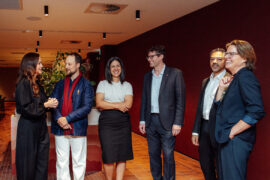
It’s lunchtime at Gray Puksand. In a conference room, a small group gathers over a delectable array of savouries, passing bread and wine to each other – a fitting entrée to the presentation to come.
“Food is so important in fostering genuine connection,” says Heidi Smith, partner and national interior design lead at Gray Puksand. “It’s one of the most effective ways of bringing people together.”
As part of Gray Puksand’s In Focus discussion series, Heidi presents a snapshot of the firm’s research into workspace design, detailing new influences in this sector, and unpacking current thinking behind today’s leading offices. A key observation identifies the crucial flaw in open-plan workspaces.
“What we know is that we need two types of distinct settings for creativity to be at its best,” Heidi explains. “The one we’ve been getting right for the past 20 – 25 years in the workspace is the team collaboration area. But the part that has been largely neglected is space for quiet activities.”
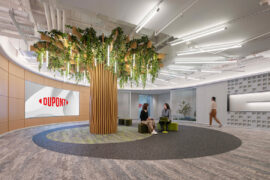
David Jones and Country Road Group HQ.
Productivity research indicates that creativity is, first and foremost, a solo activity.
“That spark, that initial idea of creation generally happens when you’re by yourself, before you bring that idea to the team,” says Heidi. “And in our work, we’ve certainly seen a rise in retreat-type work settings, for respite and solo work.”
The conversation moves beyond architecture and design, touching on workplace culture – more specifically, what businesses can do to encourage meaningful interactions between staff. Activities such as group singing and yes, shared lunches, were put forward as ways to complement new spaces centred on human connection.
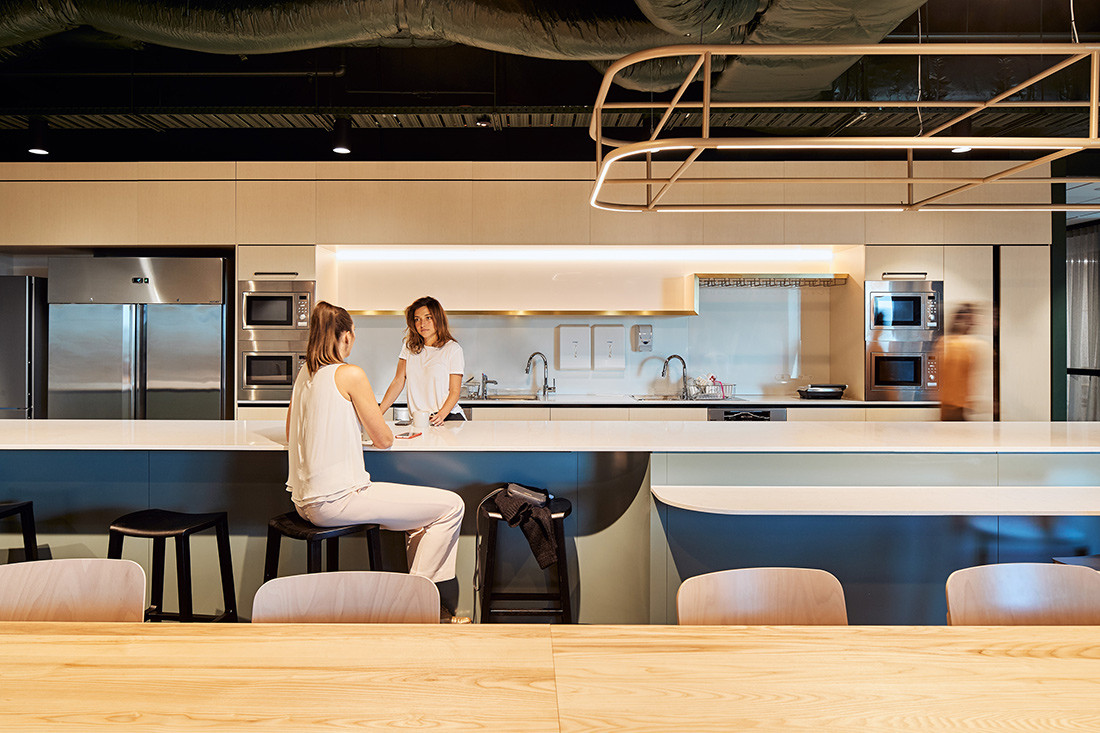
David Jones and Country Road Group HQ.
“It seems basic, but we don’t collaborate with people we don’t know,” Heidi says. “So it’s crucial to build in spaces for socialisation that aren’t solely geared toward work, or this idea of forced collaboration.”
In preparation for its recently-completed David Jones and Country Road Group project, the Gray Puksand team took a study tour to Europe, visiting retail headquarters which projected a strong sense of identity and community. Of particular interest were the Scotch & Soda offices in Amsterdam, where the stylish on-site canteen formed an important part of office life.
“It didn’t matter whether you were the guy in the warehouse, or you were the CFO – everyone came together to share a delicious chef-made meal,” says Heidi. “You came away from your desk, you weren’t doing work, and you actually got to know your colleagues. It plays a big part in creating the community feeling that they have.”
Want more workplace inspiration? Pick up a copy of Indesign magazine #76 – the Workplace Revolution issue now. Also, hit up our mailing list to keep your finger on the pulse.
INDESIGN is on instagram
Follow @indesignlive
A searchable and comprehensive guide for specifying leading products and their suppliers
Keep up to date with the latest and greatest from our industry BFF's!
The internet never sleeps! Here's the stuff you might have missed