The home of architecture and design in the Asia-Pacific
Get the latest design news direct to your inbox!

Get the latest design news direct to your inbox!
How objects change the world. How we change objects. How they change us. Here we investigate the incredible need to design.
Last year I stood in a room filled with the oddest collection of stuff. To my left was the sarcophagus of Egyptian nobleman Hornedjitef from before 200BC. To my right, an early Victorian tea set (missing one saucer). In the centre of the room under a glass case sat a Visa Credit card from 2009 that was newly compliant with the UAE’s Sharia law. My mind boggled trying to find a common thread that would unite the 100 objects scattered throughout the room (you try finding the connection between a 13,000 year old Mexican spear point and a 6 year old solar lamp and charger from mainland China!).


But that was the whole point of it all, really. I was at the National Museum of Australia to see a travelling exhibition from the British Museum – A History of the World in 100 Objects. The landmark project remained, essentially, a celebration of ‘things’ that allowed attendees to travel back in time, across the globe, and see how for more than 2 million years humankind has used design to shape our reality. And, irrespective of the fact that these objects were from every corner of the world and every moment in time, what amazed visitors to the exhibition was not the apparent chaos of arbitrary objects, but the elegant points of similarity. A jade axe, the label from an Egyptian sandal, a Pakistani seal and a writing tablet told a story of design transporting communities from village lifeways to cities and their attendant urban psychology in the pre-modern era. Jumping forward several thousand years, a Soviet ashtray, the aforementioned credit card, a Mozambique throne made from the shells of AK-47s owned by child soldiers, and a 1966 portrait by David Hockney suddenly articulated a moment when the power of marketing brought the objects of our design into communication with political struggle, sexual exploration and experimental commerce.
Neil Macgregor – senior curator of the exhibit – was similarly astounded: “When people came to the museum they chose their own objects and made their own journey around the world through time. But what I think they found was that their own histories quickly intersected with everybody else’s, and when that happens, you no longer have a history of a particular people or nation, but a story of endless connections”.


Immersed in the world of design as I am, if for no other reason the exhibition reminded me that the history of industrial design reinforces to us that not all objects are created equal – but that doesn’t preclude their significance. Whether we celebrate form over function, decoration over utility, or even performance over resilience, the objects of our creation are constantly being reinterpreted across an enormous spectrum of aesthetic and performative criteria. And, just when we think we’ve ‘cracked the code’ (as it were), history throws us another curve-ball: …innovation. When, for example, was the last time you used an ice pick or an inkwell?
What exactly lies at the heart of our pursuit of innovation through object design is a question which the 2017 INDE. Object Award seeks uncover. Functionality, signification, aesthetics, sustainability, how well something moulds to, adapts or is, indeed, adapted by the human body comprises the fundamental rules that constitute the ‘success’ of any given piece of industrial design.
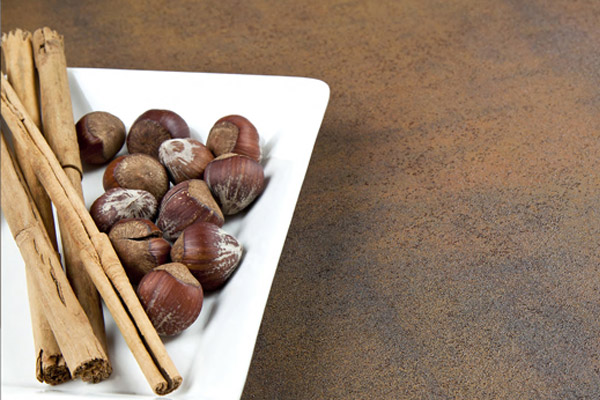
And thanks to your Official Partner for the 2017 INDE. Object Award – Neolith, supplied throughout Australia thanks to CDK Stone – we have the chance to see which object across the Asia Pacific region will be held up as a shining example of the spirit of design, today. In more ways than one, however, we couldn’t think of a better brand to partner with an award celebrating the best in object design. After all, there are few boxes which Neolith doesn’t tick. Eco-friendly, endurance-tested, of top-shelf quality and a mainstay in contemporary design throughout many sectors, in the words of CDK Stone’s Director Tony Victor its “ethos seeks to help our customers develop world-class projects and businesses, to lead our industry to the highest level of professionalism […]. Neolith allows us to provide a product that not only helps us meet our values but allows us to introduce an innovative material to the market, which then encourages designers and architects to push the envelope and come up with exciting, new design concepts”.
Evidently, such a product is the result of a rigorous level of research and development initiatives that few can match. Neolith’s research and design department is constantly pushing innovative ways to introduce cutting-edge design solutions to the end-user, in addition to heretofore unseen ways the construction and building professionals can reimagine spaces. The slabs, themselves, are created in a completely automated, up-to-the-minute high-tech factory to ensure that flawlessness is not only a goal, but a reality that is set in stone (pun intended).
Follow the Neolith innovation journey, here.
INDESIGN is on instagram
Follow @indesignlive
A searchable and comprehensive guide for specifying leading products and their suppliers
Keep up to date with the latest and greatest from our industry BFF's!
The internet never sleeps! Here's the stuff you might have missed