The home of architecture and design in the Asia-Pacific
Get the latest design news direct to your inbox!

Get the latest design news direct to your inbox!
Hong Kong’s first Community Green Station at Sha Tin adopts a new approach to recycling.
June 11th, 2015
Photos: Keith Chan. Courtesy of Architectural Services Department
The Community Green Station, incepted for the prevention of low value items from descending into landfills, will focus on reusing waste in educational workshops and exhibitions or the act of categorising waste to be sent to licensed recycling entities. The first of 18 such stations is located in Sha Tin, near the Shek Mun MTR, where it was materialised end of 2014 with a modest budget of USD$2.4 million.
“How can we create a temporary recycling station in our neighbourhood that would have a positive impact on the community?” questioned Alice Yeung, Thomas Wan, Jacqueline Lee and Edward Wong from the Hong Kong Architectural Services Department, who took charge of the design direction of the facility. The team’s creative ambition for the space was to instill a positive impact within the local community, rather than simply becoming a rubbish collection spot.
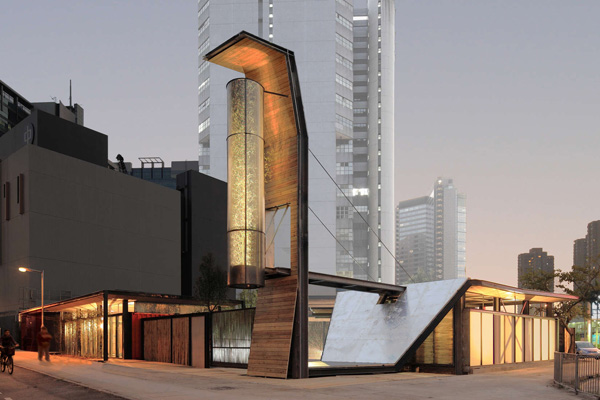
An under utilised carpark was transformed into the 780 square metres community space, where sustainable design is driven an integral part of local culture, rather than a gimmick or technique.
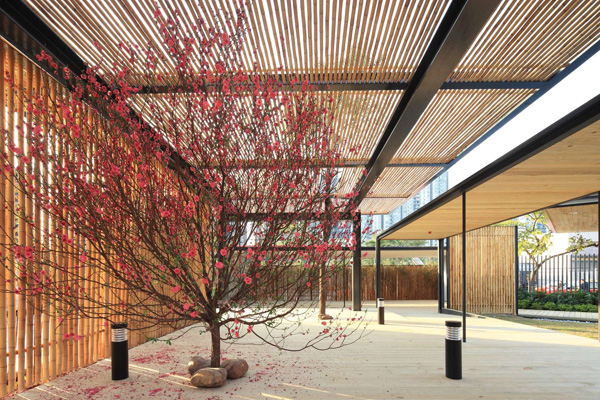
The space was segmented into a garden courtyard and backcourt, each serving as platforms for exhibitions and workshops respectively. A touch of an oasis at the heart of an industrial district, the garden courtyard creates a sense of openness to encourage community spirit.
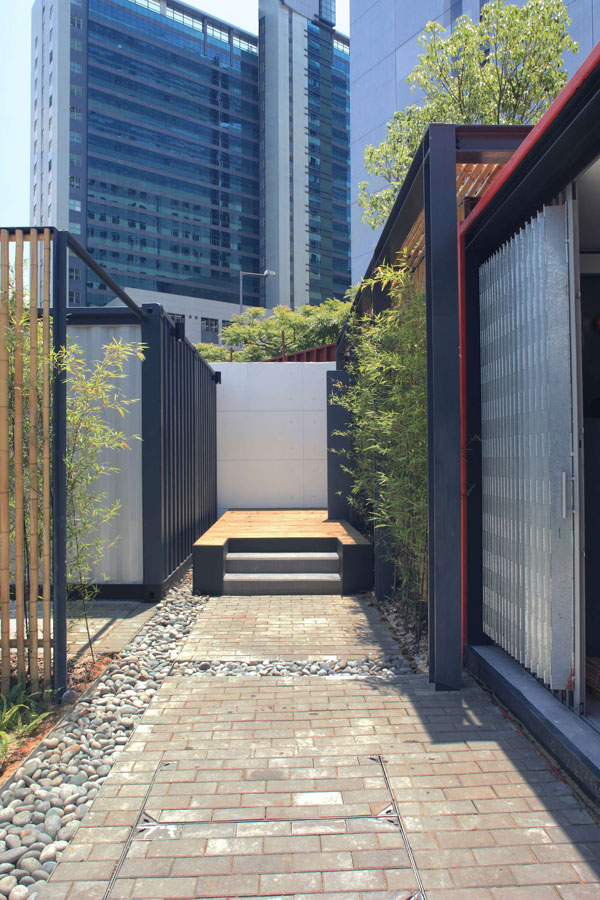
Within the Community Green Station, layers of space from public to private; open to semi-open and enclosed are created, reminiscent of the idea of pavilions sitting within Chinese gardens.
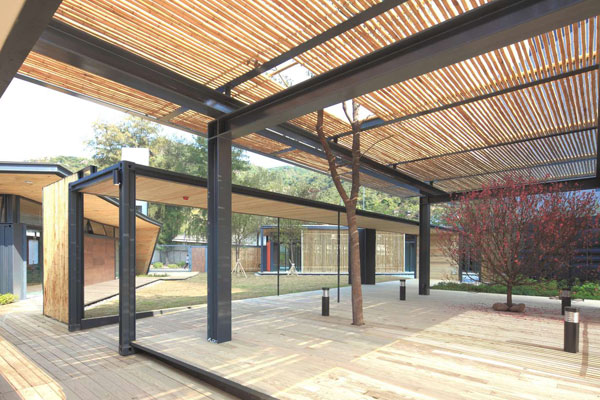
Concepts of ‘pavilion’ and ‘veranda’ are expressed across the exhibition and circulation spaces, where diffusion of daylight through bamboo screen and trellis create natural beauty.
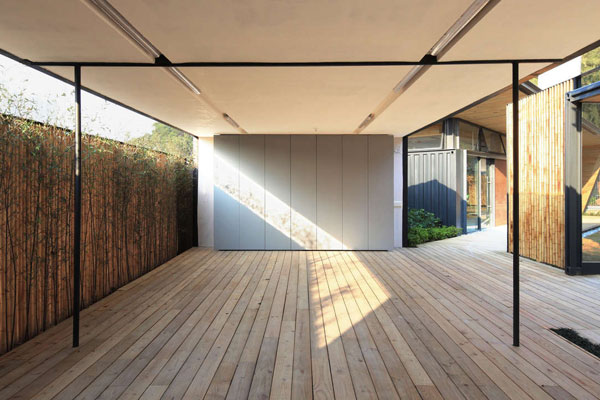
In keeping with the green spirit, there will be no air-conditioning. As the building opens up to the courtyard, cross ventilation is maximised, in conjunction with “large overhanging roof and vertical trellis” sheltering visitors from the sun. Components including containers, wall tiles and paving blocks were made of recycled or salvaged materials.
The buildings are composed of modular containers modified to adapt to the needs of various functions. The modularity of the space and off-site fabrication of building components enhanced the site’s overall buildability.
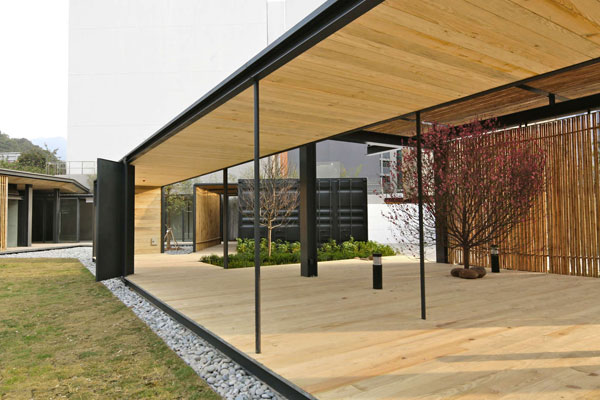
“Although the Green Station is temporary, it embodies permanent cultural value, rediscovers our roots and finds parallel with prevailing green features,” the designer concludes.
INDESIGN is on instagram
Follow @indesignlive
A searchable and comprehensive guide for specifying leading products and their suppliers
Keep up to date with the latest and greatest from our industry BFF's!
The internet never sleeps! Here's the stuff you might have missed