The home of architecture and design in the Asia-Pacific
Get the latest design news direct to your inbox!

Get the latest design news direct to your inbox!
Featuring a network of elevated walkways that unites Shenzhen with its waterfront, WilkinsonEyre and Morphis’ design has won the competition for a masterplan in the city’s Greater Bay area.

Architecture practice WilkinsonEyre and landscape architect Morphis‘ design proposal has emerged as the winner of the international design competition for the Shenzhen Bay Avenue East Extension.
Commissioned by the Shenzhen Government, the project aims to reshape the city’s urban fabric with a kilometre-long pedestrian that connects the commercial district with the bay area.
The competition was organised by Chinese developer CR Land and saw entries from the likes of Sasaki Associates, Turenscape, MLA+UPDIS, BNP+ShenDu Group and Aecom.
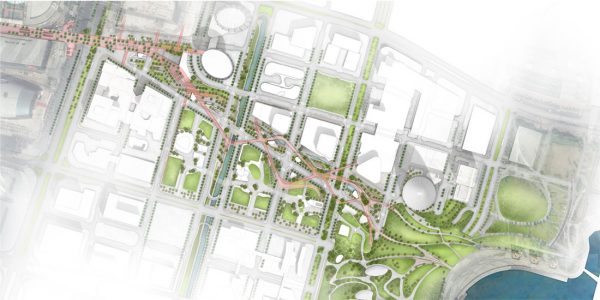
Taking the concept of ‘City-Culture-Bay’, WilkinsonEyre and Morphis’ winning entry aims to create a vibrant and culturally animated transition between the two areas with a set of elevated walkways.
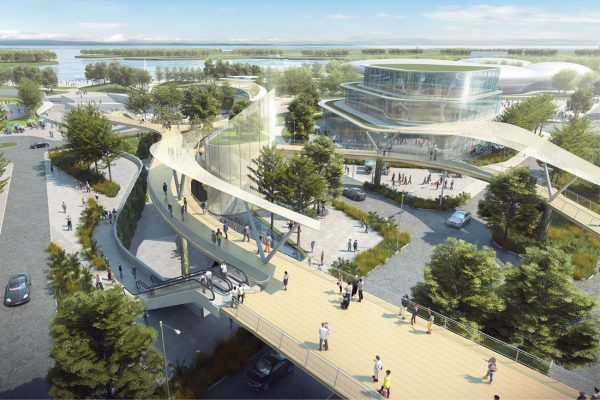
Escalators and stairs connect this elevated network to the streetscape and basement-level civic realm while new commercial and cultural buildings framed the journey.
The elevated route connects three nodes: the central business district, a new cultural quarter and a landscaped park on the bay. The design also plans a series of smaller destinations along the way.
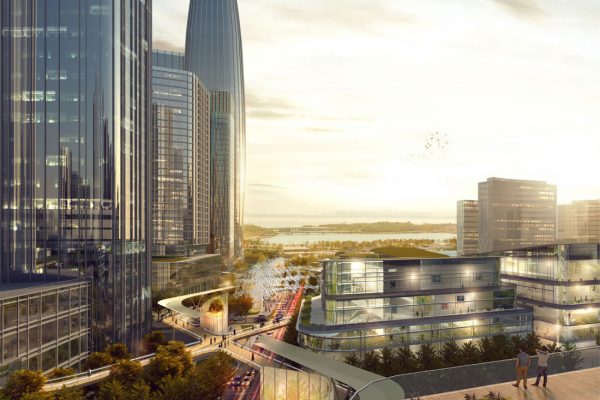
“Our concept will deliver a strong linear public space with the flexibility to allow the city to breathe, develop, grow and adapt,” says Matthew Potter, director of WilkinsonEyre Hong Kong, commenting that the design proposal “holistically blends architecture, urban design and landscape design.”
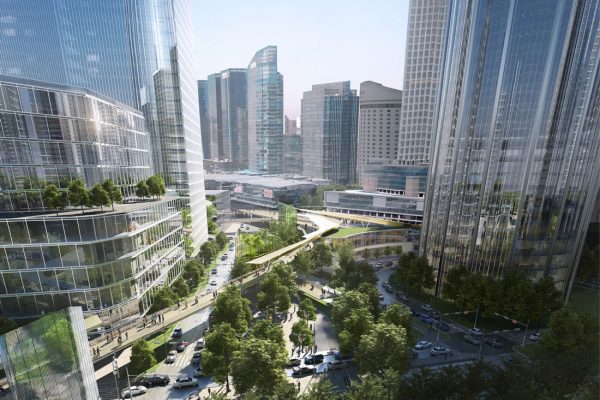
Key urban spaces in the design include a transport interchange with a bus station that links to two subway stations, a sunken plaza and a park dubbed the Platform Park, which is envisioned as an oasis of calm amid Shenzhen’s hustle and bustle.
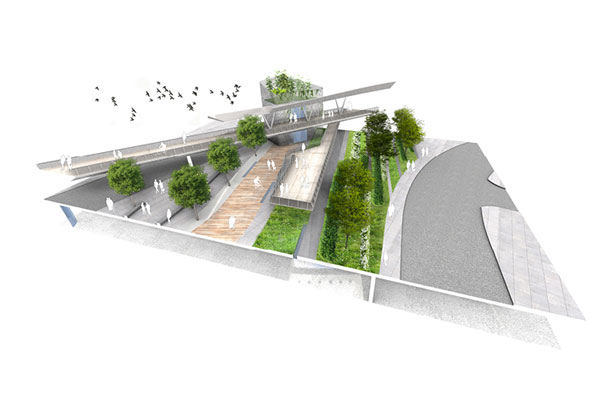
Along the Avenue,multi-layered landscape brings light and shadow into the two basement levels that house the retail units, creating dramatic internal spaces and vertical circulation nodes.
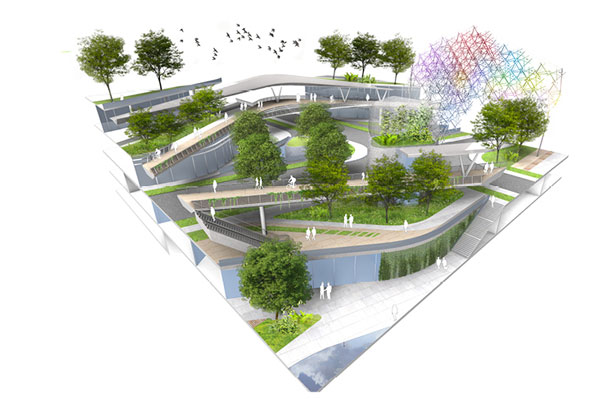
“The creation of new and contemporary public realm integrated with city life is crucial to simultaneously transform and unite Shenzhen with its waterfront,” says Mark Blackwell, director of Morphis.
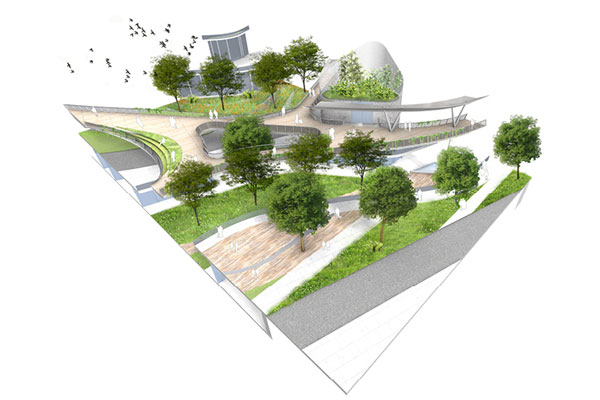
“It will be spectacular and dynamic, beyond imagination, rooted in the culture of Shenzhen’s diverse community delivering a thriving, well-served and sustainable cityscape,” Blackwell adds.
INDESIGN is on instagram
Follow @indesignlive
A searchable and comprehensive guide for specifying leading products and their suppliers
Keep up to date with the latest and greatest from our industry BFF's!
The internet never sleeps! Here's the stuff you might have missed