The home of architecture and design in the Asia-Pacific
Get the latest design news direct to your inbox!

Get the latest design news direct to your inbox!
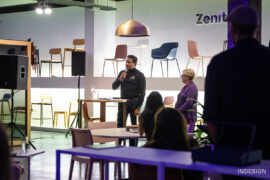
In tandem with the official opening of Zenith Interiors in Hong Kong on 25 June 2015, Schamburg + Alvisse will be in town to introduce their sustainable furniture practice to the design community. We catch up with Michael Alvisse before the big day.

June 15th, 2015
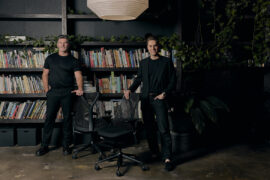
Top: Marc Schamburg and Michael Alvisse
Australian duo, Marc Schamburg (Bach. Design) and Michael Alvisse (Bach. Architecture) established Schamburg + Alvisse in 1997. In their pursuit to reduce carbon footprint, the design entrepreneurs pioneered the design and manufacture of sustainable furniture – a decade before green standards were embraced by the construction industry.
The success story of up-cycling post-consumer waste plastics into high value furniture remains a milestone for the studio. Schamburg + Alvisse became the first Australian furniture manufacturer to satisfy the rigorous green timber standards of the Forestry Stewardship Council (FSC) and Greenpeace.
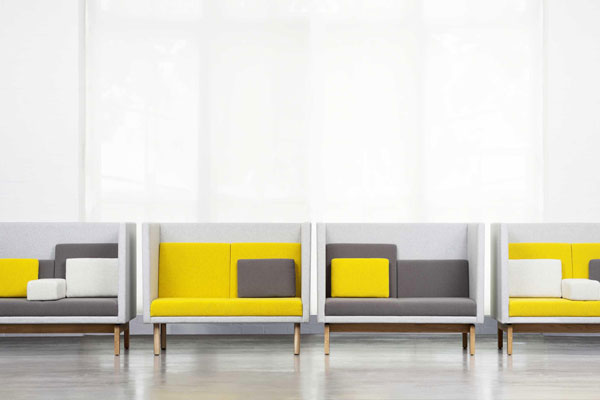
EDO Modular High Back Lounge
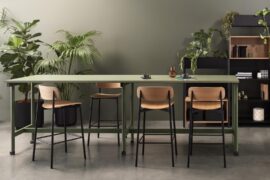
Taking cues from Australian lifestyles and landscapes, Schamburg + Alvisse’s collections are suitable for commercial, educational and hospitality usage. The company focuses on product quality, user comfort and provides its clients with the reliability of supply.
Schamburg + Alvisse’s work belongs to the permanent collection of Sydney’s Powerhouse Museum, and have been exhibited at the Milan Triennale Museum, San Francisco’s Museum of Modern Art, and the Melbourne Museum. The duo has also been honoured with Standards Australia’s “International Design Award”, the Powerhouse Museum’s “Sustainability Award”, and are listed in the world’s Hot 100 design studios in Taschen book, “Designing the 21st Century”, as well as The Sydney Magazine’s “100 most influential people” list for their work in sustainable design. Their products were selected for the high profile project, NAB Docklands in 2012.
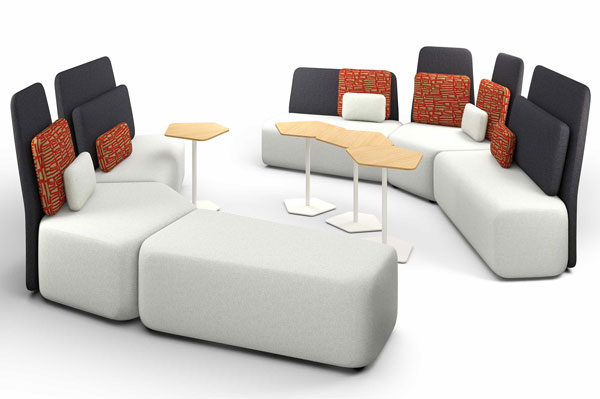
Pebble Table Pedestal
Aside from being immersed in Schamburg + Alvisse, the design entrepreneurs are also involved in a slew of personal endeavors.
With strong interest in eco-innovation and business ethics, Marc Schamburg created videos about the design process for the Centre for Learning & Innovation, as part of the Australian high school curriculum. His design principles are often expressed though a wide spectrum of mediums, including furniture design, jewellery, lighting, and textiles. Schamburg is also a frequent collaborator of Food Wine & Design and partakes in fund raising events for children’s health.
Michael Alvisse hopes to build the competitiveness and problem-solving skills of companies and communities. As a regular public speaker, Alvisse often teaches about the power of “innovation-thinking”. It forms part of Object Centre for Design’s school education program. He is also on the management team of Tamarama Surf Life Saving Club and part of the jury for this August’s Sydney Indesign Launch Pad.
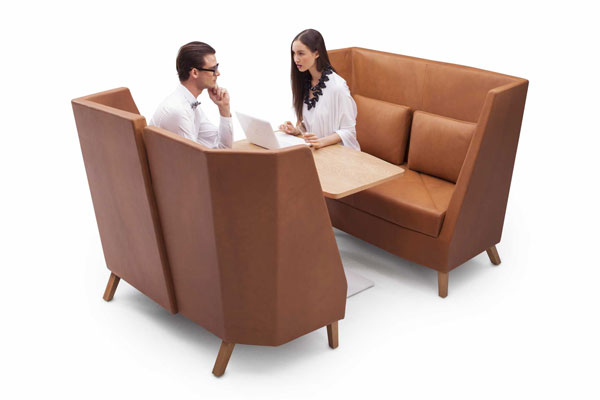
3000 Standard 2-Seat Lounge
Where did the idea of using “post-consumer waste plastics” derive from?
We spotted the idea in the 90s. The Sydney Morning Herald featured a research project by Royal Melbourne Institute of Technology on up-cycling post-consumer waste plastic into first grade consumer product.
What challenges did you faced in the beginning?
In the mid-90s, our major challenge was finding customers who cared enough about environmental sustainability to champion a chair made of recycled plastic. Most people were only just becoming aware of how the materials we use in our consumer goods impacts human health and the health of our environment.
Thankfully, the leading ethical investment funds began to push the environmental agenda, and this led to major corporations actively seeking out green products for their buildings and interior fit-outs.
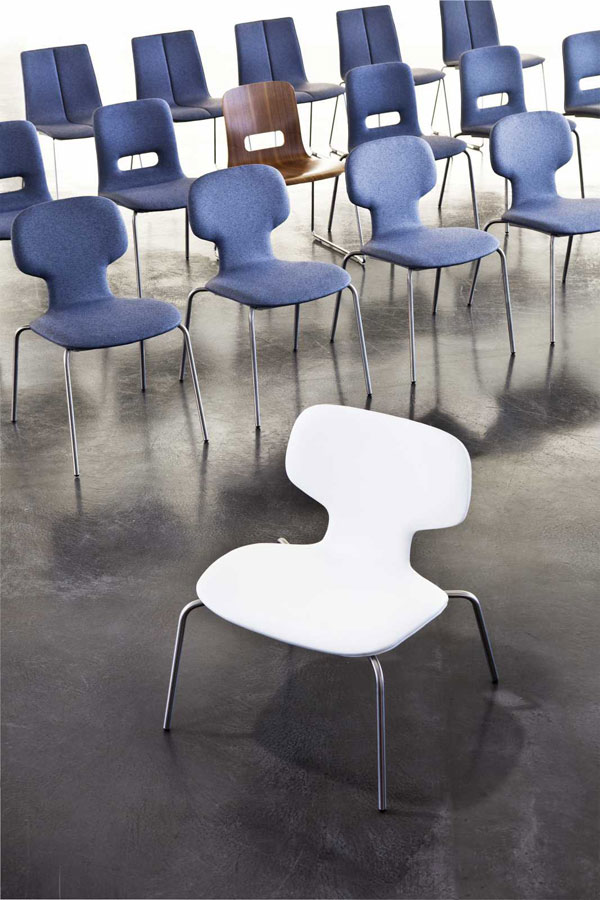
Elliott Side Chair
Where do you obtain plastic waste, and how are they treated before production?
The plastic comes from discarded telephones, printers and car lights. They’re chipped into small pellets, and then fused together into new shapes using pressure and some heat.
What is the Schamburg + Alvisse design process? Does it differ from other furniture companies?
Because we’re a small studio, we have to innovate quickly and think on our feet. For example, when we asked to bid for our largest ever furniture project, the National Australia Bank (NAB), we were competing against the iconic Steelcase and Herman Miller. When NAB chose us for that project, they did so because we were able to create an entirely new furniture range customised to their needs, more quickly and more competitively priced than the international furniture giants could offer.
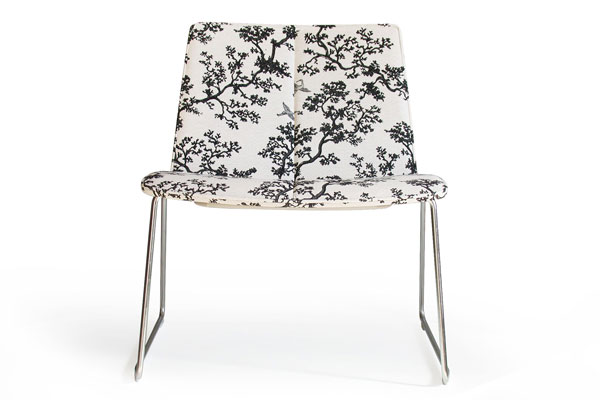
Miles Lounge Sled Chair
How do you then ensure the “reliability of supply”?
Reliability is all about smart supply chains. We learnt, earlier on, that a trustworthy supplier who tells you the truth, fixes problems promptly, and consistently achieves the quality you want, is worth their weight in gold! This is why we choose to collaborate with Zenith.
We couldn’t agree more. What’s next for Schamburg + Alvisse?
We are simply excited to be launching Schamburg + Alvisse in Hong Kong. This city is such a dynamic global hub, it’s an honour just to be here.
Its our pleasure to have you.
Zenith Interiors
zenithinteriors.com
INDESIGN is on instagram
Follow @indesignlive
A searchable and comprehensive guide for specifying leading products and their suppliers
Keep up to date with the latest and greatest from our industry BFF's!
The internet never sleeps! Here's the stuff you might have missed