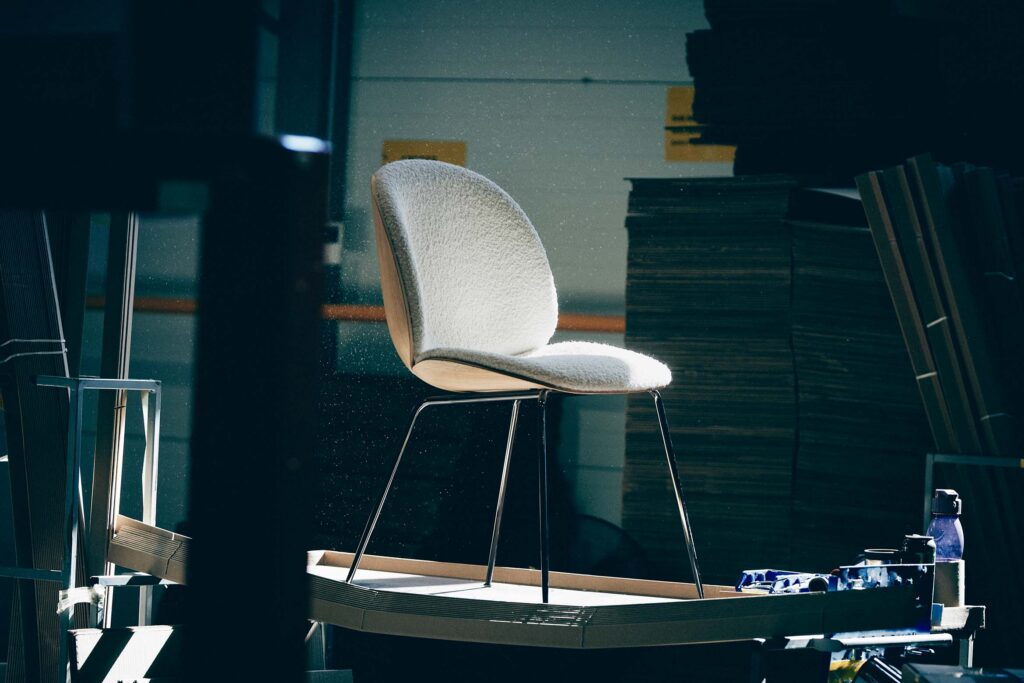
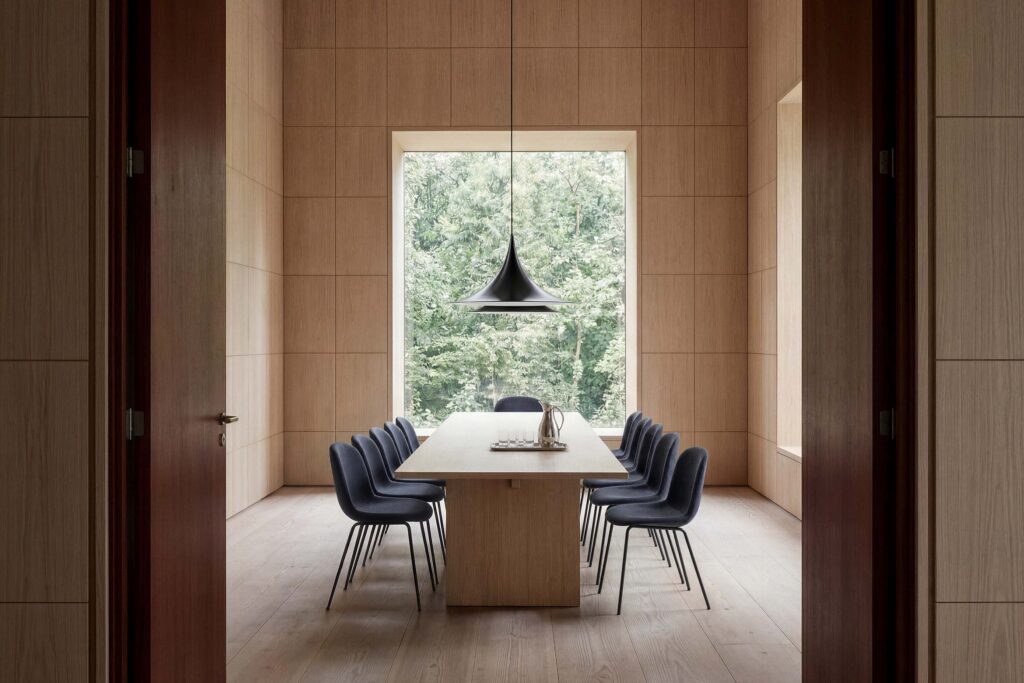
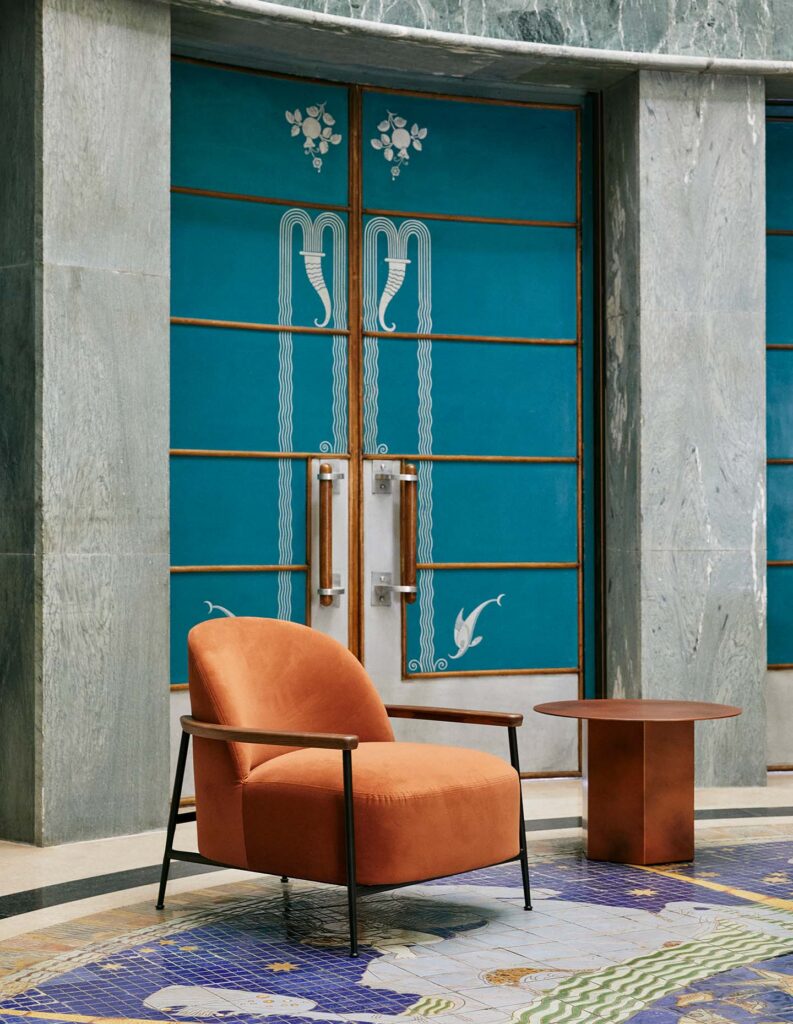
With the arrival in Melbourne of GUBI CEO Marie Kristine Schmidt and Enrico Fratesi of GamFratesi, there was an opportunity to sit down and talk design. GamFratesi has worked with GUBI for nearly 20 years, creating products that are today icons of the industry. Think the Masculo Chair, designed in 2008, the Beetle Chair in 2013, Gent in 2018 and Sejour in 2020. This year brings a new design, the Brim Chair, which looks set to join the list.
To celebrate, an exhibition was held in early November at the Cult showroom in Sydney. Titled GAMFRATESI: The Stories Behind the Icons / From Sketch to Form, the exhibition featured GamFratesi designs for GUBI. It drew on original and reproduced studio material, including sketches, drawings, development imagery, material studies and archival references, alongside finished products.
Speaking with both designer and brand leader at the Cult showroom in Melbourne was enlightening, as the partnership between GamFratesi and GUBI is stronger than ever, with Brim the latest offering.
Jan Henderson: GamFratesi was founded by you, Enrico, an Italian, and Stine Gam, a Danish architect, in 2006. But how did you meet?
Enrico Fratesi: We met in architecture school in Ferrara. She was an exchange student at the time. I was studying there, and immediately we started to collaborate on a school project. But there was something very unique. I have to say, I had already had the idea to move to Scandinavia because I was fascinated by the culture. So the meeting was kind of the right person in the right place.
JH: How did you establish your practice?
EF: We became a couple in life and work, and the intimacy and the way of sharing this passion for our two different cultures and countries shaped GamFratesi. We entered a few competitions, then we started to work, and we could see that we had potential through our diversity, both as people and in our design backgrounds, which became a very important point for us.
JH: Can you explain the idea of your diversity?
EF: It’s about the education we had in the past. Stine’s education in Denmark was very open. You are given a question without a prescribed answer because the answer should come from you and your own analysis. It’s based on workshops rather than theory or a strict manifesto. It’s very much about understanding the authenticity of the material and what the workshop can teach you through the honesty of the material.
So for Stine, she is an architect specialising in furniture, and not industrial design. That’s a big difference. It’s like the old masters, such as Hans J. Wegner. They were architects doing furniture design. It’s a very big difference from just being a designer. And the way they work is always very open.
In Italy, it’s very technical. You follow what the teacher, or the architect, says almost as a rule, and there is not very much space for your personality.
So already working together, it was interesting because both of us wanted to go in the same direction, but the paths we took to get there were very different.
Related: Jordan Knight explores architecture in an ever-changing landscape
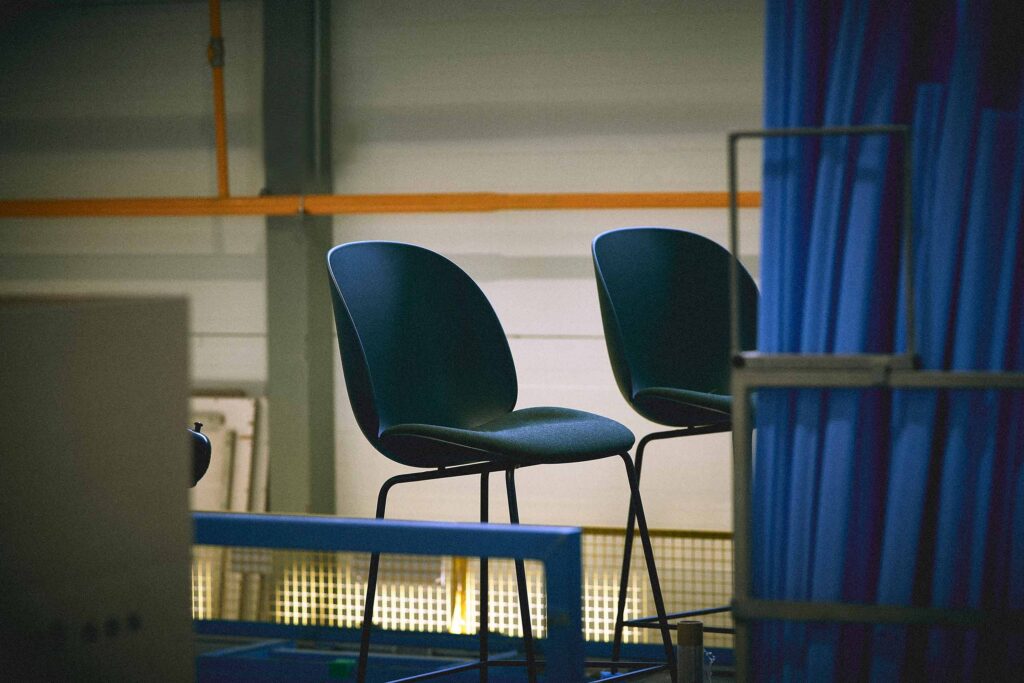
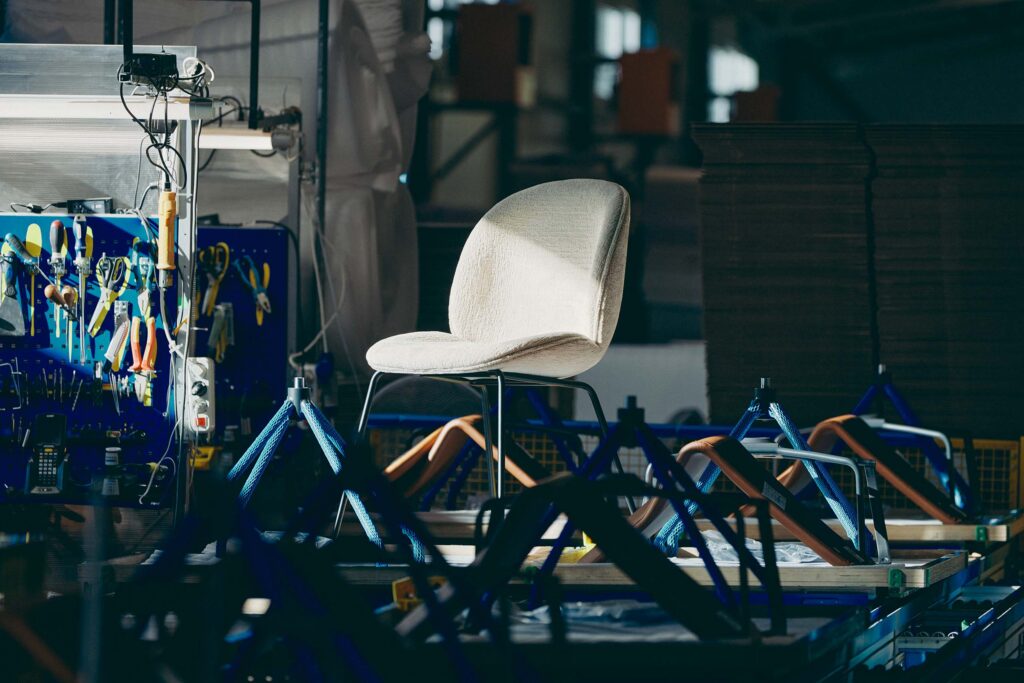
JH: What do you think sets your work apart from your peers?
EF: So, in a way, Danish designers had traditionally been reluctant to question their design heritage. I came with my Italian way of saying, okay, but this is what was, so why don’t we challenge tradition?
Our very first product with GUBI was very much our interpretation of modern classic Danish furniture, the Masculo Chair. It’s clear there is inspiration from Hans J. Wegner, but for us it was about changing the material, the proportions and the function. So it was not that we just took an element and made a mid-century chair. It was about taking some ingredients, looking back with respect and trying to move to the next step. As an Italian, I was more free to design and not constrained by the history.
JH: And what changes have you seen in the industry, Enrico?
EF: Before, you would go to an exhibition, show a chair and a producer would come to look, but now everything moves incredibly fast. It was much slower when we started GamFratesi. It was a beautiful time to have a relationship with a producer, time to talk and discuss. But working with GUBI, we have always sat down, now with Marie, and asked, okay, what’s next?
In fact, the Beetle Chair started as an invitation to GamFratesi for an exhibition in Milan promoting craft and design on an international platform. One of the requests was, please work on a chair because the chair is a very iconic element, and it was then launched by GUBI.
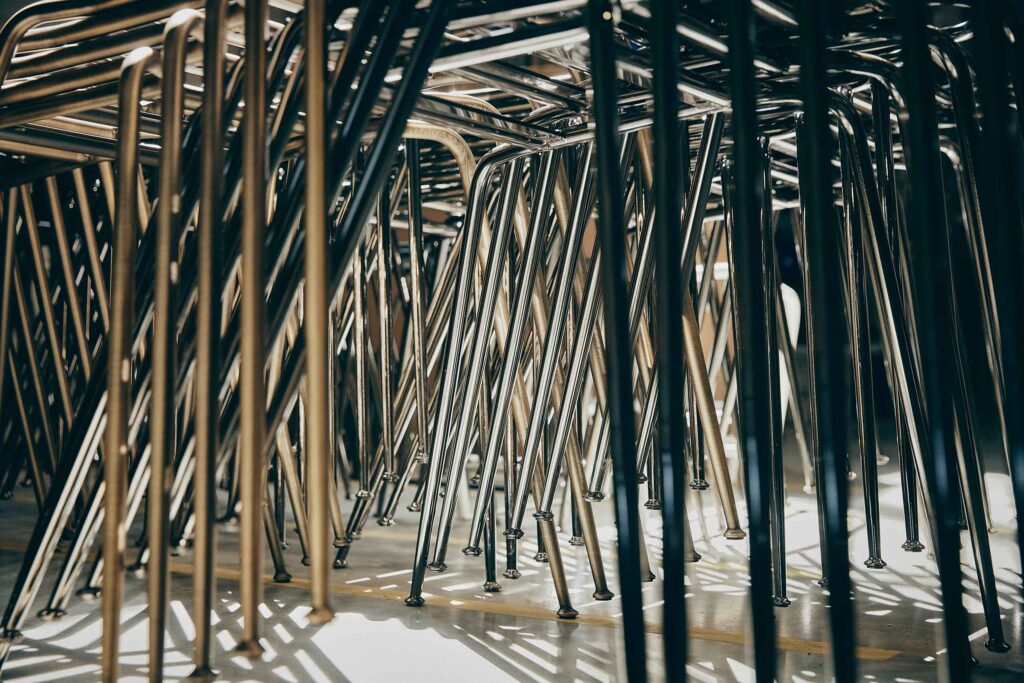
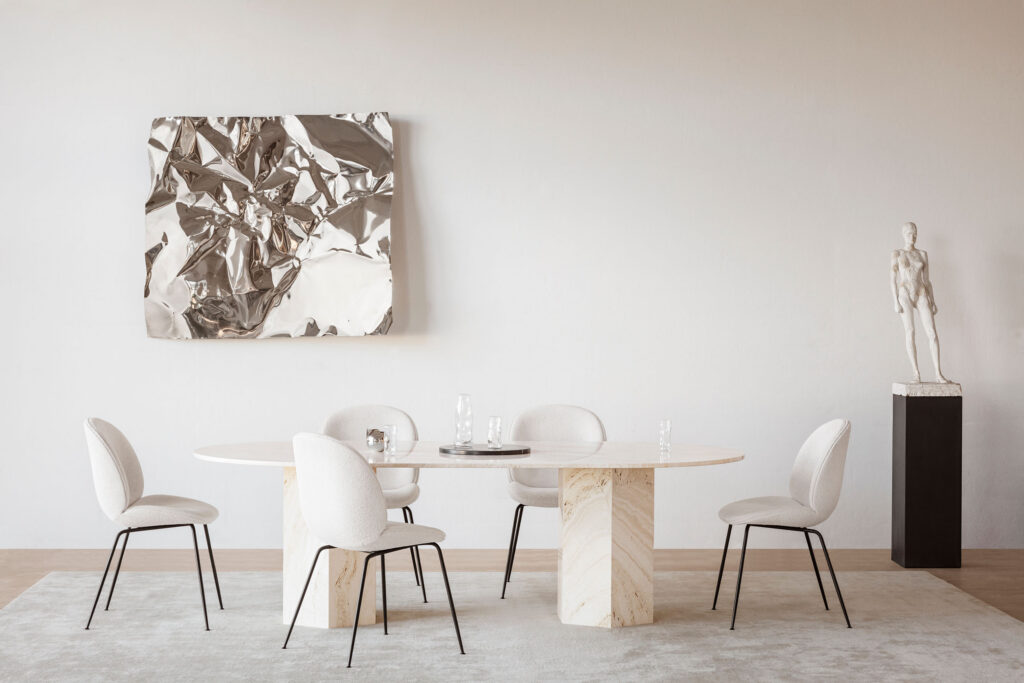
JH: Marie, what is it about GamFratesi that makes your working partnership so successful?
Marie Kristine Schmidt: We have a shared perspective. I would say GUBI is also very much about Danish minimalism and Southern European warmth, and I think that is also, to a certain extent, the essence of GamFratesi’s work.
With Stine and Enrico, we build on the same philosophy of design. And when you work together for so long, you grow and evolve together. The conversation never really ends. It is a continuous exchange of ideas.
JH: Marie, tell us about the vision of the GUBI brand, as you are renowned for both contemporary and archival products.
MKS: GUBI is an eclectic brand, and we are a brand that has an international outlook. Our passion is definitely around history as well, and you see that in our collection. We reissue selected pieces from the past and we bring them into the present. It’s never about nostalgia; it’s always about why a design is relevant now.
I think having that shared passion is a really good place to start the conversation. So we bring contemporary design as well into a curated universe of curiosity and courage. I think we’re one of the first to take this path, and that is the idea for GUBI, that it continues to have that creative nerve.
But it’s also about timeless pieces. So when you look at the GUBI brand and where we differentiate from a lot of other brands, we have a certain pulse and dynamic in our brand.
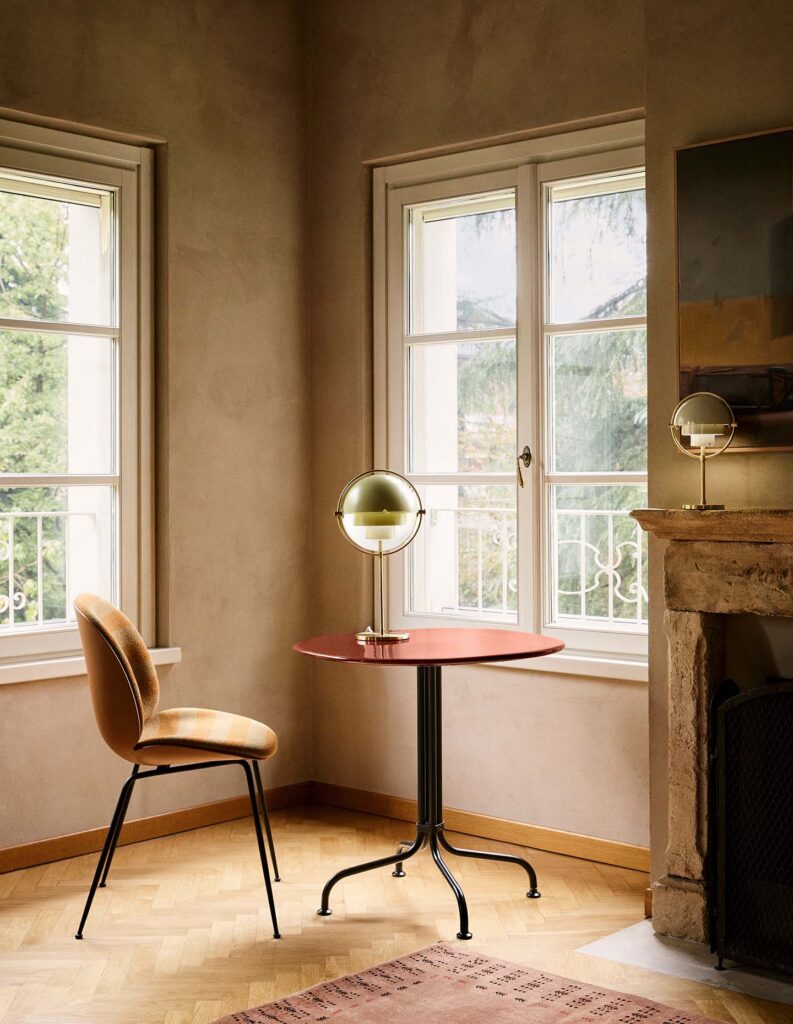
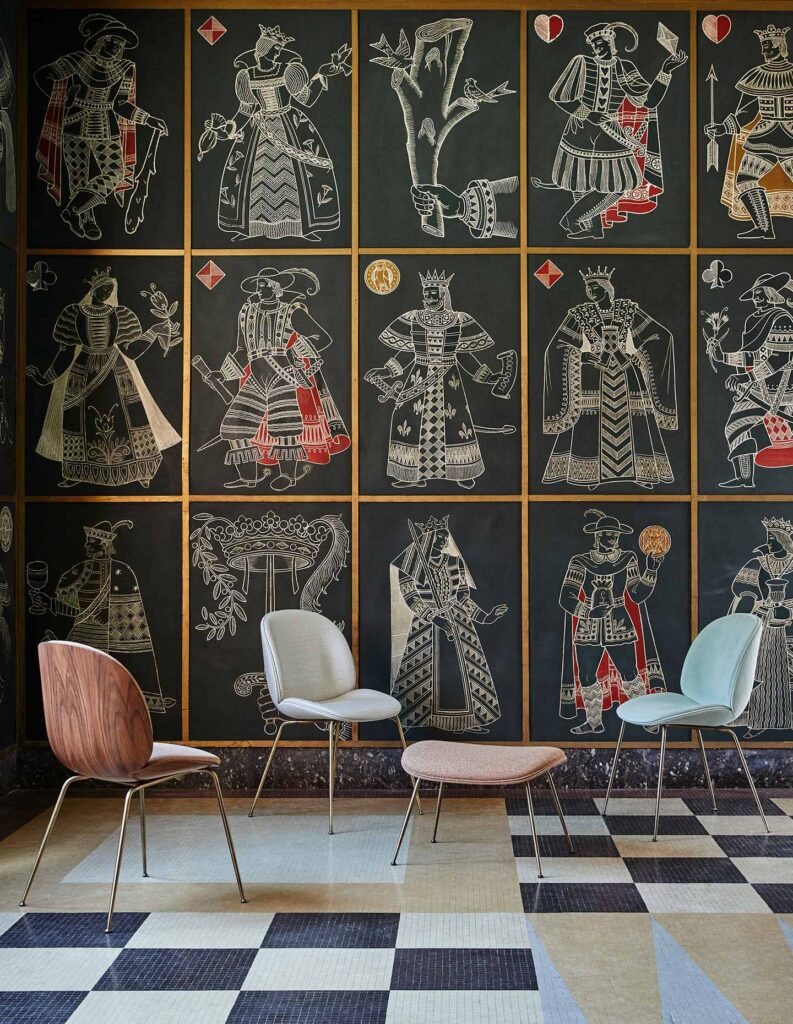
With GUBI’s 60th anniversary next year, the brand has grown considerably. Working with GamFratesi, which has also matured and evolved, the partnership has produced designs known throughout the world. Now, with the launch of Brim, GamFratesi brings another design to the GUBI collection, continuing a collaboration that has endured for nearly two decades.
GUBI is available at Cult, and the new Brim Chair can be seen in showrooms across Australia and in Auckland, New Zealand and Singapore.
GUBI
gubi.com
GamFratesi
gamfratesi.com
Photography
Courtesy of Cult