The home of architecture and design in the Asia-Pacific
Get the latest design news direct to your inbox!

Get the latest design news direct to your inbox!
While the alluring myth of a lone genius can be particularly appealing, Knoll’s enduring legacy was built on a more profound reality: that a singular vision is only augmented through dialogue, proving that collaboration is one of the most transformative tools in design.


June 30th, 2025
There is a powerful solitude in the act of creation. It percolates in the quiet, focused intensity of a design studio – in the all-consuming process of wrestling an idea from the abstract into the tangible. And this immersive, somewhat isolating act – punctuated by essential stretches of introspective thought – can seem like a lonely endeavour. But the truth is, timeless design is never a solitary pursuit.
The inherent spatial individuality of the objects it produces – a chair, a table, a lamp, each uniquely self-assured in its singular expression – might gently conceal the layered truth of its origin: it’s rarely the result of a singular vision. Rather, as an outcome of an eclectic dialogue, each enduring piece is born in the space between the individual and the collective, the sketch and the machine – the vision and its committed champion.
For nearly a century now, Knoll has generously fostered this inspiring exchange. The iconic design powerhouse has been the champion, the catalyst and the master curator of an evolving conversation transcending time and distance. And to tell the story of the intricate design dialogue irrevocably enmeshed in Knoll’s ethos is to explore the story of modernism itself – not as a series of consecutive, interreferential objects and topical vignettes, but as a constellation of collaborative genius, where the solitary vision of the world’s most notable design luminaires found its collective voice.
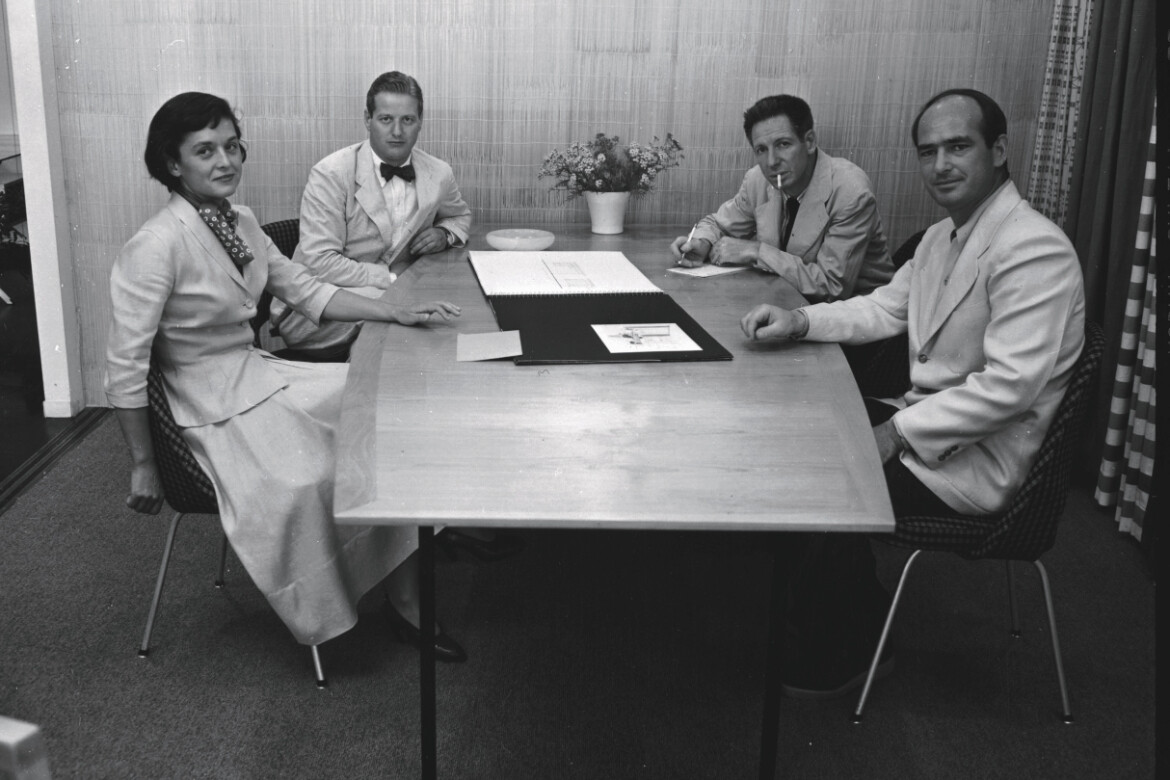
Dialogue with genius
The very foundation of the Knoll legacy was conceived through a multifaceted, intimate and symbiotic bond between its founders. The industry-defining partnership between Hans Knoll, with his bold entrepreneurial spirit, and Florence Knoll, with her extraordinary design acumen and industry connections, became the company’s galvanising engine. Theirs was the original dialogue.
Hans’ commercial drive would yield a powerful platform upon which Florence’s meticulous design curation would flourish, extending a generous invite to friends, mentors and colleagues to join a revolutionary fold built on absolute trust, creative autonomy and a shared desire to define a new, modern world.
This ethos was fittingly encapsulated by the duo’s relationship with Florence’s former teacher and most influential instructor, Ludwig Mies van der Rohe. Florence was deeply committed to championing his minimalist philosophy, exquisitely expressed through the now-iconic Barcelona Chair, designed in 1929 for the German Pavilion at the Barcelona Industrial Exposition as the ultimate embodiment of the master’s profound commitment to refined detail.
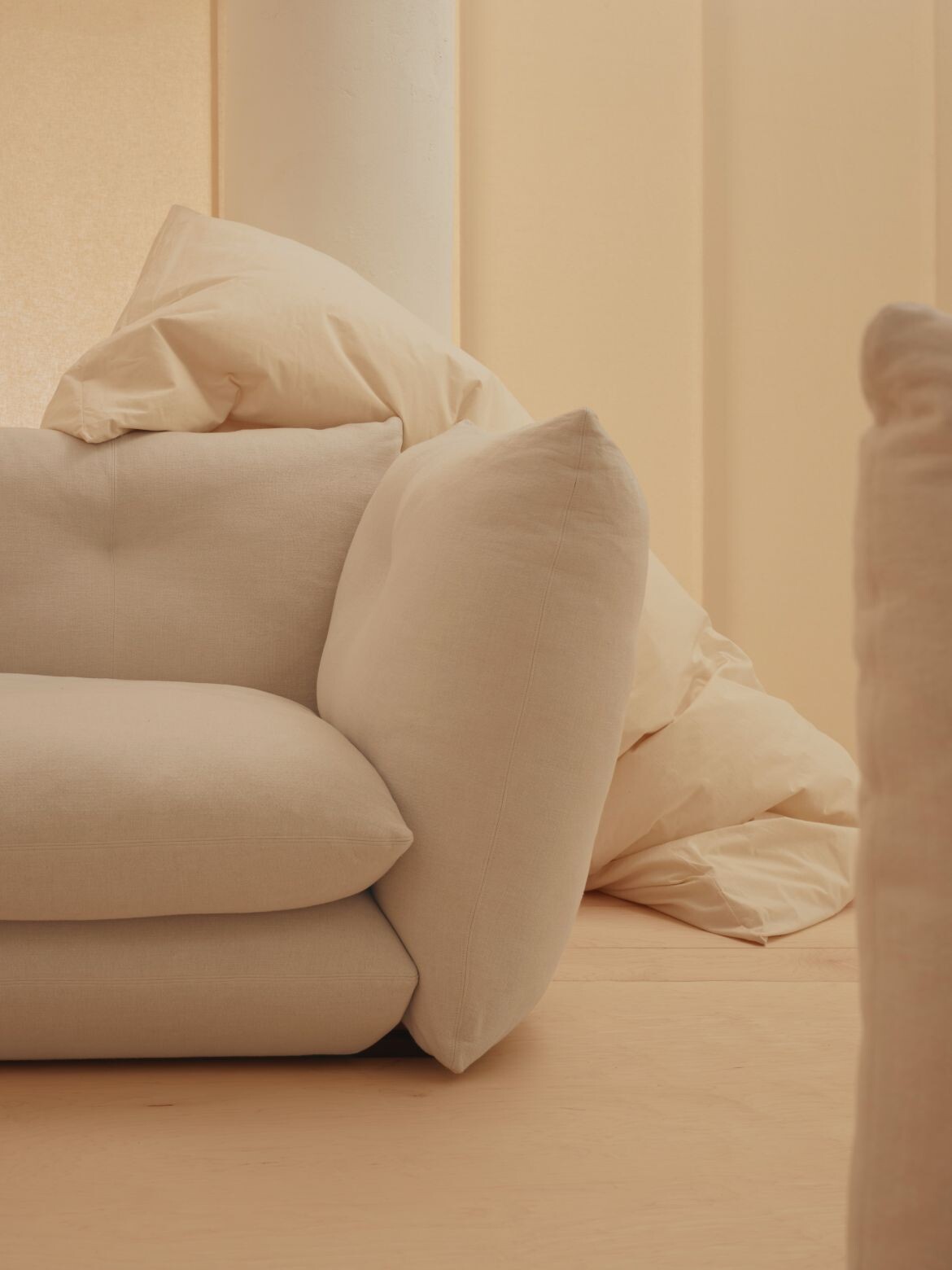
Florence’s formative relationship with her mentor was underscored by Hans’ business acumen that saw the potential in translating Mies’ monumental vernacular into a more approachable design language. As a result, in 1953, Knoll was granted the exclusive production rights for the Barcelona Collection, undertaking the immense challenge of rearticulating the chair’s impossible – and never intended for the masses – grace into a reproducible icon. This move repositioned a singular masterpiece into a universal symbol of modernist thought, democratising its architectural expression and forever framing collaboration as one of design’s most transformative tools.
Another significant voice in this layered design conversation was Eero Saarinen, a lifelong friend Florence had known since her days at the Cranbrook Academy of Art. As part of Knoll’s collective, Saarinen’s artistic sensibility helped paraphrase the realm of furniture design through the lens of his sculptural craft, yielding the revered Pedestal Collection. Launched in 1958, the range emerged as a compelling embodiment of sculptural engineering, its forms resolved in a seamless fluidity of gesture. Saarinen brought this distinct organic expression to other iconic Knoll designs over the years, including the gracefully proportioned Tulip and Womb Chair, which articulated the concept of comfort through its own, distinctly shapely vocabulary.
But perhaps no collaboration better illustrates Knoll’s patiently fostered design exchanges than the one with Harry Bertoia. A multidisciplinary artist whom Florence also knew from Cranbrook, Bertoia was granted the ultimate freedom – a studio, a budget and an open-ended invitation to experiment. Immersed in his solitary and undefined artistic process, he began exploring and bending metal rods, creating structures that would go on to rearrange the physical relationship between space, form and metal. The result was the iconic 1952 Bertoia Collection, a series of chairs so visually elusive they appeared woven from air and light, as if – in the words of the pioneering designer himself – space passed right through them. This influential partnership, elevating the artistic exploration of a singular vision, brought about the concept of functional sculptures that forever blurred the lines between the two disciplines.
And then, of course, the master curator herself, Florence emerged as the most essential voice that quietly shaped the collective’s exchange across time and space. Through her revolutionary Planning Unit, she professionalised the practice of interior design, creating holistic and hyper-functional spaces that re-examined the dialogue between the interiors, the fit-outs and their occupants across post-war corporate America. Her essentialism set the foundation of rational, restrained and proportionate grammar upon which the star-studded, expressive portfolio was built, and her unwavering loyalty to the comprehensive philosophy of total design remains Knoll’s guiding principle, reverberating through the international cross-section of contemporary design conversations with undeniable and enduring relevance.
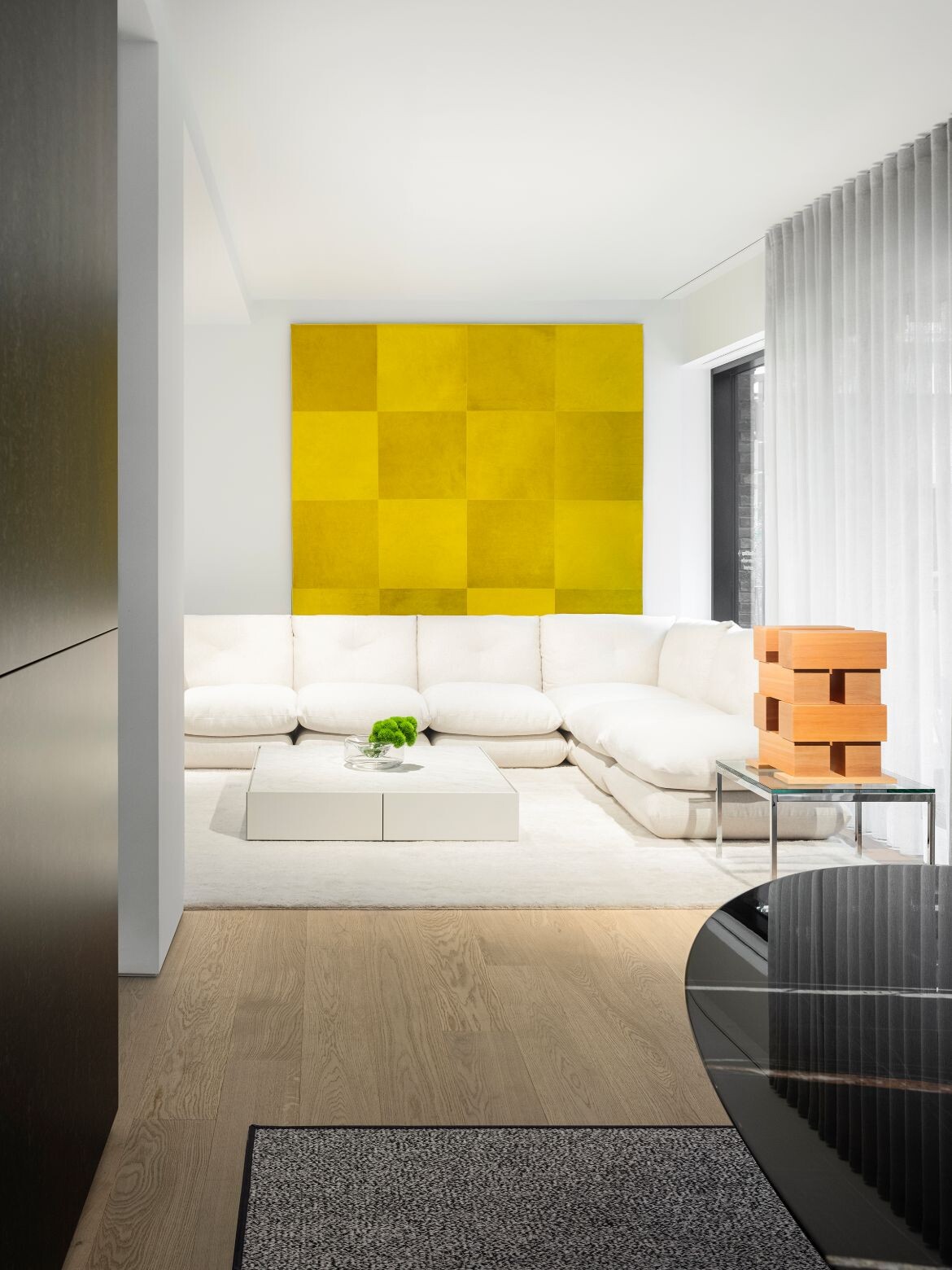
Conversations across continents
Now, the totality of Knoll’s foundational dialogue was always destined to surpass geographic and cultural boundaries, evolving into a new kind of vibrant international dialect. The acquisition of Italy’s Gavina SpA in 1968 was a pivotal moment, integrating the entire furniture collection of Florence’s early mentor, Marcel Breuer, who had revolutionised design with his tubular-steel creations famously inspired by the lightness of bicycle handlebars. The move instantly made Knoll the primary custodian of the Bauhaus legacy in the world, with the rigorous vocabulary of the Wassily and Cesca chairs adding a distinct tone of German modernism to the brand’s eclectic lexicon.
But this was just one part of a much broader and profound global narrative. From Denmark, Jens Risom – who joined the young Hans Knoll Furniture Company in the early 1940s as the sole designer of interiors and furniture – had already introduced the warmth of Scandinavian design through his use of natural wood and clean, approachable forms. Later on, Knoll’s international dialogue would embrace the passionate, intellectual and often radical spirit of Italy. Postmodern visionaries like Gae Aulenti brought a bold, structural sensibility, while celebrated architects like Antonio Citterio contributed a distinct brand of industrial precision and effortless grace. Designed by an Argentine trio, Antonio Bonet, Juan Kurchan and Jorge Ferrari Hardoy, the informal poetics of the Butterfly Chair also found a landing pad with Knoll, proving that enduring design could be born of bohemian ingenuity as much as Bauhaus rigour.
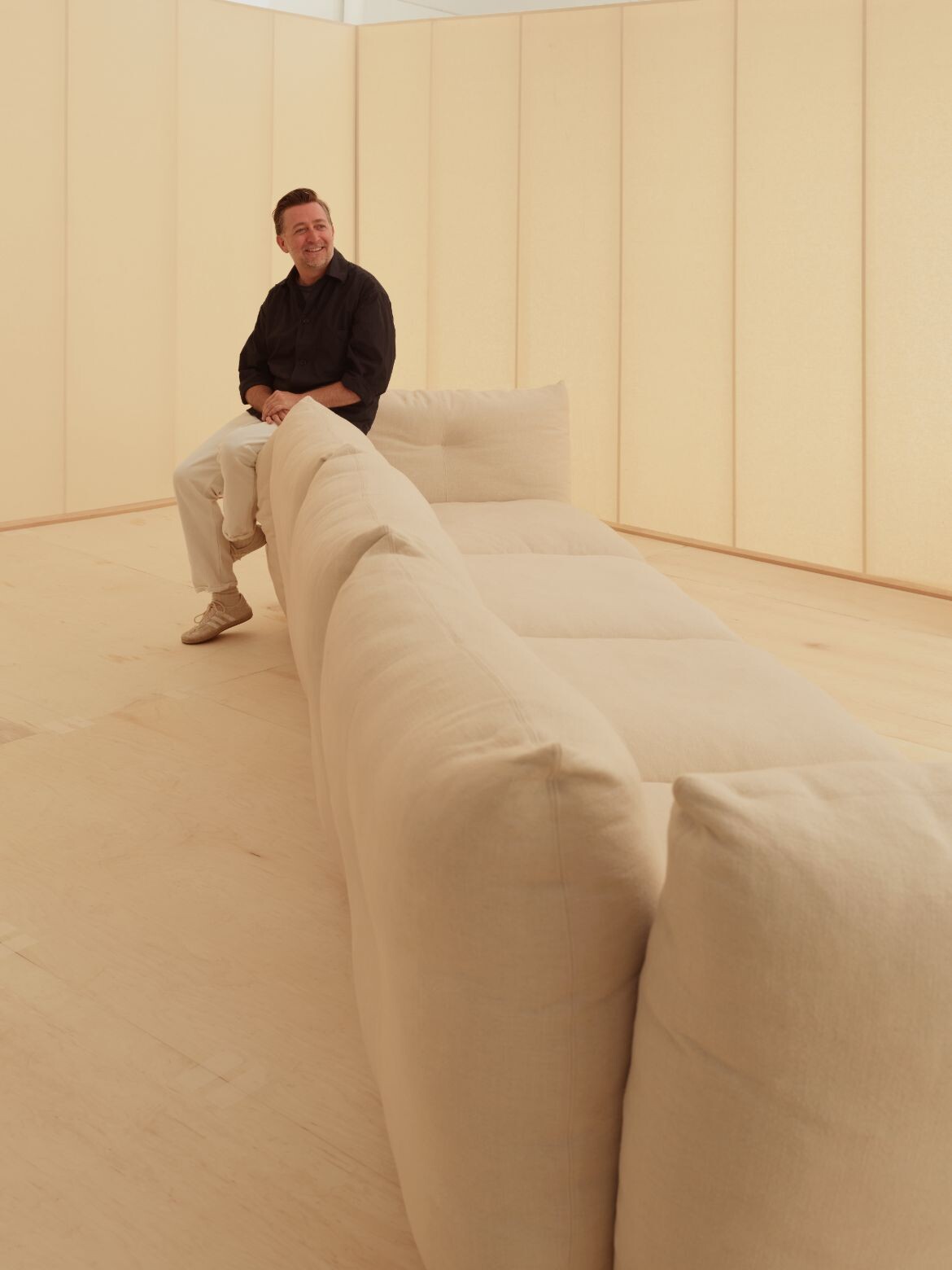
Driven by the unwavering belief that a truly modern collection had to amplify the diversity of global design voices, Knoll actively sought out these diverse perspectives. And today, this extraordinary legacy continues as a timeless and dynamic language enlivened by the neological relevance of contemporary talent.
The collaboration with British designers Edward Barber and Jay Osgerby feels like a mindful reiteration of Knoll’s pioneering foundations. Their very first project was a direct call-back to Florence’s architectural Knoll Sofa, while Bertoia and Saarinen’s ethos is subtly reaffirmed in Barber and Osgerby’s engineering rationality, resulting in forms that are both sculpturally refined and entirely user-centric, fostering a wordless conversation between heritage and innovation. In Italy, the celebrated architect Piero Lissoni continues the tradition of eloquent restraint, and his work for Knoll emerges as a masterclass in a soft minimalism that embraces the emotional gesture of feeling just as much as the form. The common language he shares with the brand is one of uncomplicated perfectionism that distills an object to its most essential state, reinforcing the notion that simplicity remains the most timeless expression of grace.
Pushing Knoll’s rich design lingo into entirely new territories are industry contemporaries like Antenna Design. Echoing the revolutionary imprint of Knoll’s Planning Unit, the New York-based duo, Masamichi Udagawa and Sigi Moeslinger, engages in a profound exploration of the shifting vernacular of work itself, producing collections of highly adaptable systems that solve the problems of the modern office with human-centric ingenuity. Adding a provocative new voice infused with both music and fashion is creative director Willo Perron, who is galvanising Knoll’s constantly evolving vernacular with the rich vocabulary of culture itself – raw, expressive and unapologetically contemporary.
These contemporary luminaires are the essential voices writing yet another chapter of the design house’s ever-expanding narrative. Inspired by the same promise of authenticity, collaboration and creative freedom that drew the masters of the 20th century to this iconic collective, they ensure that Knoll’s legacy is not a static lexicon but a resonant and vibrant dialogue that continues to give shape to the world we inhabit. They invent new words, phrases and meanings to rearticulate, expand and continue the collective’s story through space and time, gently etching these enduring narratives into the spaces we occupy. In that, they reinforce the foundational truth: while iconic designs often galvanise interiors as striking conversation starters, it is the profound dialogue they’re conceived within that imbues them with timeless relevance that commands the space.
Experience firsthand how this global creative dialogue continues to enrich Knoll’s iconic design language by visiting your nearest MillerKnoll dealer.
INDESIGN is on instagram
Follow @indesignlive
A searchable and comprehensive guide for specifying leading products and their suppliers
Keep up to date with the latest and greatest from our industry BFF's!
The internet never sleeps! Here's the stuff you might have missed