The home of architecture and design in the Asia-Pacific
Get the latest design news direct to your inbox!

Get the latest design news direct to your inbox!
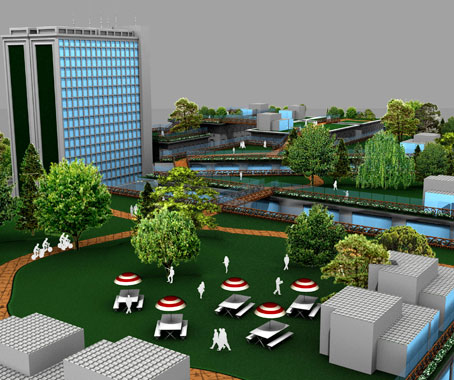
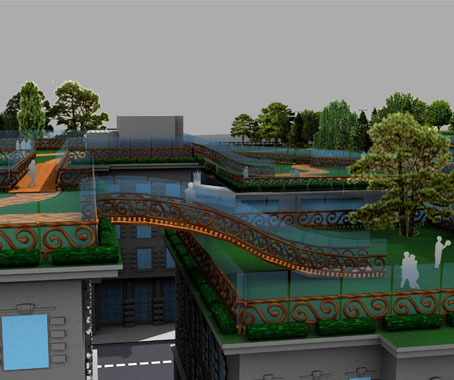
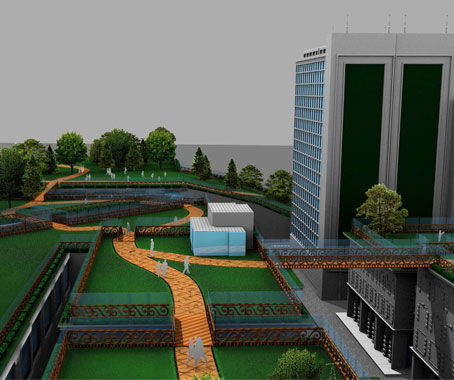
Inspired by New York-style gardens, Elevated Garden City is a concept for the post-quake Christchurch. Lee Suckling discusses its potential.
March 30th, 2011
It’s the hottest topic in New Zealand right now – when Christchurch’s central business district begins to rebuild, how will it retain its ‘quintessential Christchurchness’?
Known as the Garden City, Christchurch is being touted as a potential green, sustainable city of first-class proportions. It’s early days yet, but some concepts for the new Christchurch have popped up online from invested locals.
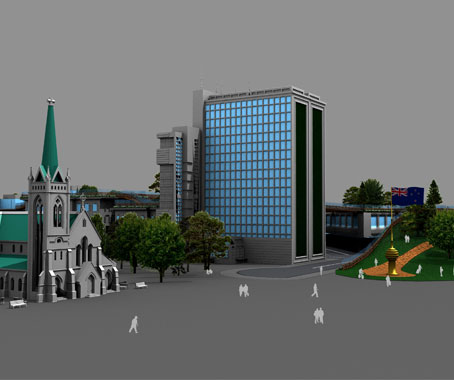
“We are in a unique position where people are unlikely to build high rises but want to do something interesting,” says Grant Ryan, one of the team behind the Elevated Garden City campaign, inspired by Manhattan rooftop parks such as High Line.
“This new set of low rise buildings gives Christchurch the opportunity to build an elevated garden/walkway space. With new sustainable, energy-conscious buildings we would become the greenest city in New Zealand – inside and outside.”
Architect Norman Foster has weighed in his thoughts. “The importance of a city is less about its individual buildings – it’s much more about its public spaces, its routes, its main street, how you move from one place to another, the infrastructure.”
Aside from the open, green spaces, Elevated Garden City’s key feature is its wooden bridges.
“[The bridges make] the space useful and linked with walk/cycle ways,” Ryan comments. “[It’s a] relatively low cost way to create a city that could become an iconic world destination for tourists and creative people.”
Both industry professionals and laymen have taken to forums ReImagine Christchurch and Rebuild Christchurch with ideas for the city’s future, with green city ideals being met with the most support.
“It’s a unique opportunity – how many cities are going to be able to do a rebuild?” Ryan adds.
“If [Elevated Garden City] ends up sparking other better ideas, that is an even better outcome. The worst-case scenario for Christchurch is to become just another city.”
INDESIGN is on instagram
Follow @indesignlive
A searchable and comprehensive guide for specifying leading products and their suppliers
Keep up to date with the latest and greatest from our industry BFF's!
The internet never sleeps! Here's the stuff you might have missed