The home of architecture and design in the Asia-Pacific
Get the latest design news direct to your inbox!

Get the latest design news direct to your inbox!
MillerKnoll releases the 2025 Better World Report showcasing how design can drive meaningful change through measurable progress across social, environmental and governance initiatives
December 5th, 2025
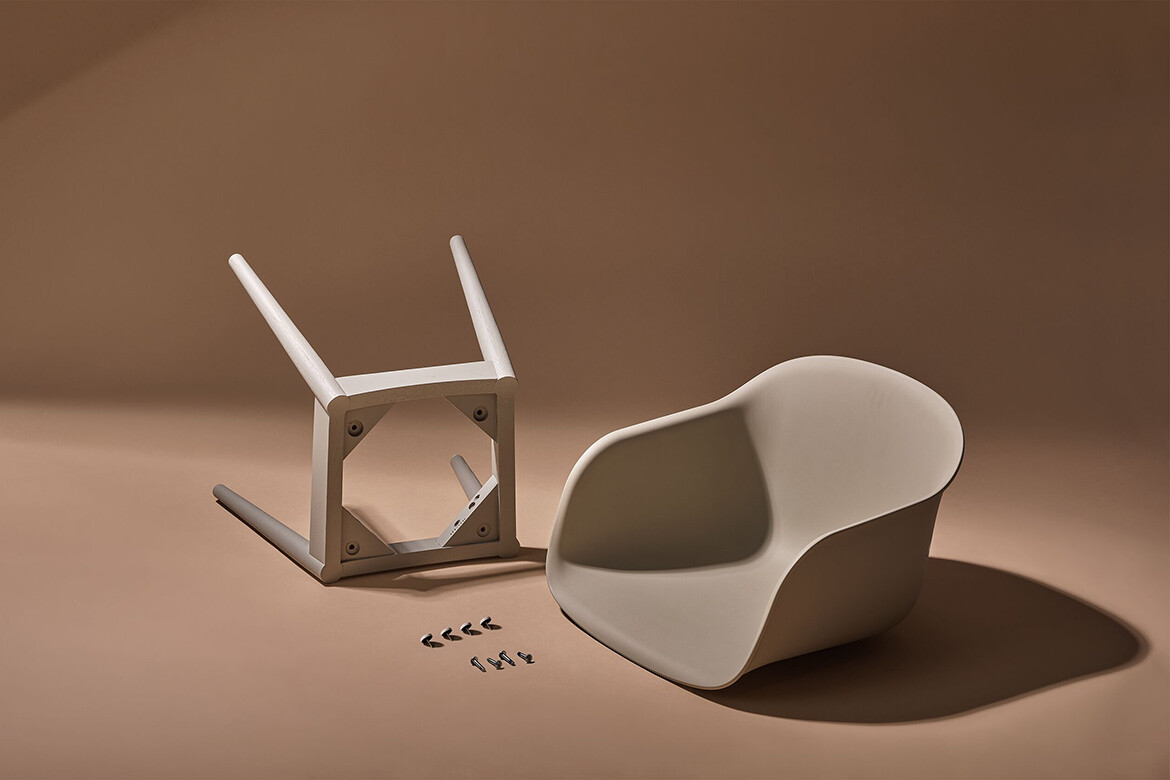
MillerKnoll‘s 2025 Better World Report demonstrates the fundamental proposition that exceptional design and environmental responsibility are not competing interests, but complementary imperatives. The report details measurable progress across the company’s global operations, revealing how design-led thinking can address the urgent challenges of environmental stewardship while maintaining the exacting standards for which the collective of leading brands has long been recognised.
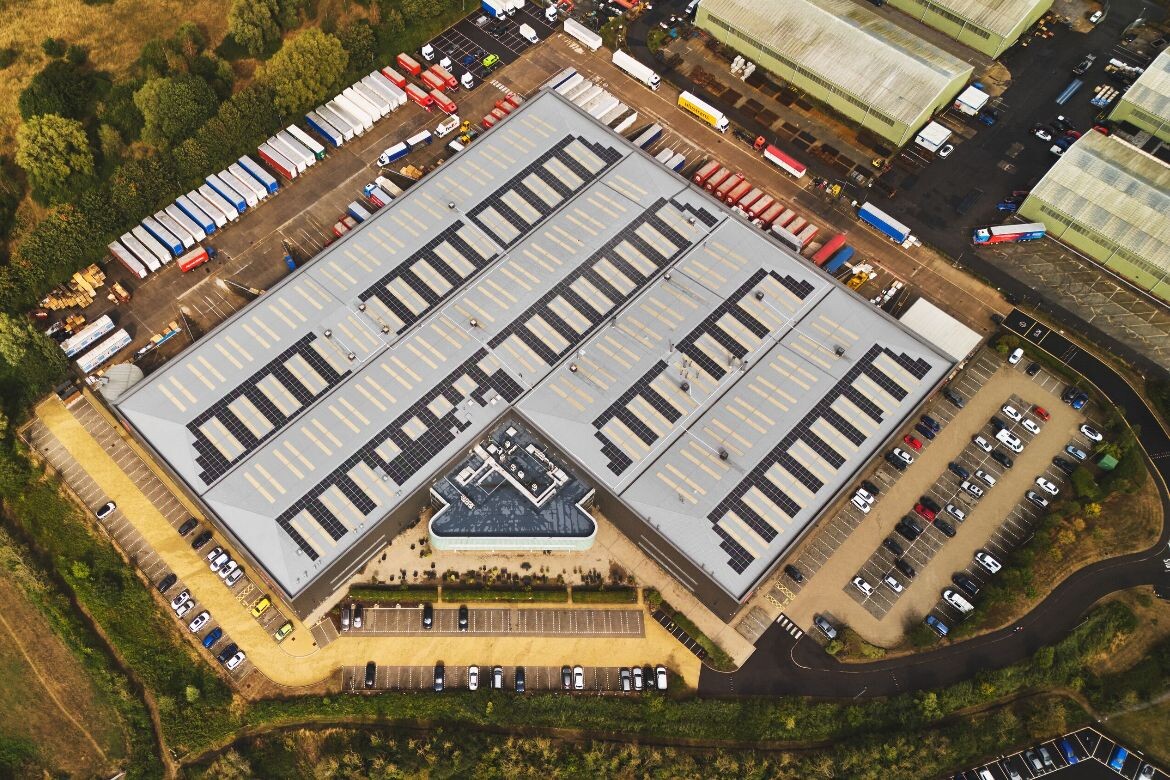
The achievements documented in the report reflect substantial commitments. MillerKnoll has achieved 100% renewable energy across all manufacturing facilities worldwide, reaching this milestone ahead of schedule. This transition represents more than an operational shift, it signals a comprehensive approach to manufacturing that integrates sustainability at every level of production.
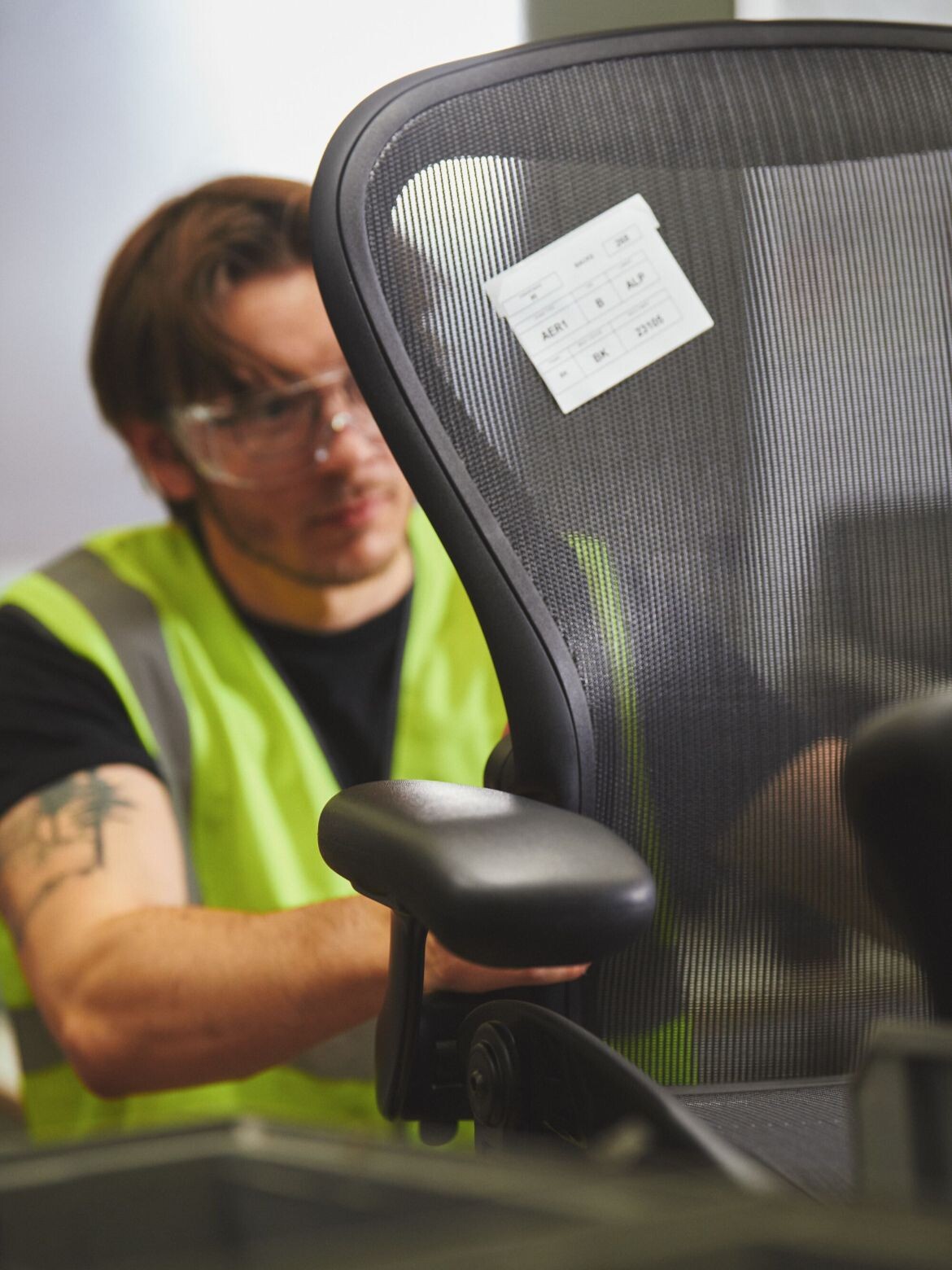
Through circular design initiatives, the company has diverted 4.2 million pounds (1.9 million kilograms) of furniture from landfill in 2025, equivalent to 102,439 Aeron Chairs being kept in circulation rather than consigned to waste streams. First introduced in 1994 by designers Bill Stumpf and Don Chadwick, the Aeron Chair pioneered ergonomic office seating and became the company’s first product to receive Cradle to Cradle Silver Level certification. Today, the chair incorporates ocean-bound plastic sourced from coastal communities in India and Indonesia, diverting an estimated 150 metric tonnes of plastic from marine environments annually. This evolution illustrates how iconic designs can be continuously refined to meet contemporary environmental standards without compromising their fundamental integrity.
Gabe Wing, Vice President of Sustainability observes: “Embedding sustainability into how we design and operate isn’t just about reducing impact; it’s about shaping a better future through good design and responsible stewardship.” This philosophy extends across MillerKnoll’s portfolio, which encompasses the two icons – Herman Miller and Knoll – and other distinguished brands including HAY, Muuto, and Maharam. The company’s founding membership in NextWave Plastics has facilitated the integration of ocean-bound plastic across multiple product lines and packaging solutions.
The circular economy principles guiding these initiatives are rooted in decades of practice. Both Herman Miller and Knoll have maintained end-of-life programs for over a decade, enabling clients to reinvest in circularity by extending product lifecycles. Such programs acknowledge that truly sustainable design must consider not merely production and use, but the complete trajectory of materials through their lifecycle.
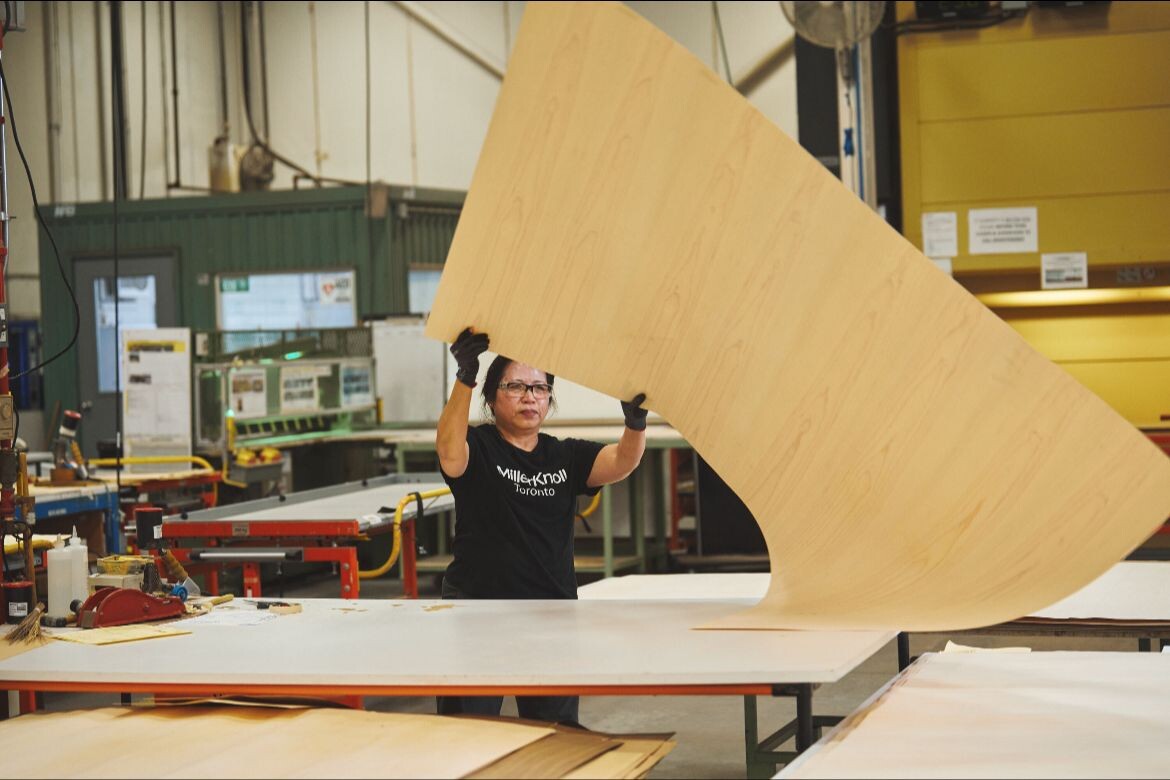
Material innovation represents another critical dimension of MillerKnoll’s approach. With materials accounting for more than half the carbon footprint of products sold, the company has committed to incorporating 50% recycled content across its manufacturing operations. This commitment influences decisions throughout the design and production process, from initial material selection through to final assembly and distribution.
Andi Owen, President and CEO states: “The 2025 Better World Report is a testament to how design shapes a better future. Our teams bring MillerKnoll’s purpose to life every day through innovation, sustainability, and community engagement.” Design for the good of humankind provides the foundational principle guiding the collective’s operations across its global facilities and workplace culture. Moreover, at the annual Global Day of Purpose, associates contributed 13,000 hours of service through 400 volunteer events across 175 cities on 5 continents.
The report arrives at a moment when the design industry faces intensifying pressure to reconcile aesthetic ambition with environmental accountability. MillerKnoll’s response suggests that this need not be a compromise. Rather, environmental considerations can inform and enhance design thinking, yielding solutions that perform better across multiple offerings. The company’s achievements in renewable energy adoption, waste diversion, and material innovation demonstrate that large-scale manufacturing can align with rigorous sustainability standards while maintaining design excellence.
As MillerKnoll continues to advance its 2030 sustainability targets, including net-zero carbon emissions, the 2025 Better World Report serves as both documentation of progress and a framework for ongoing accountability. It represents a commitment to transparency and measurable outcomes in an industry where clarity is imperative.
INDESIGN is on instagram
Follow @indesignlive
A searchable and comprehensive guide for specifying leading products and their suppliers
Keep up to date with the latest and greatest from our industry BFF's!
The internet never sleeps! Here's the stuff you might have missed