The home of architecture and design in the Asia-Pacific
Get the latest design news direct to your inbox!

Get the latest design news direct to your inbox!
Taking on the extraordinary challenge of turning what was a prison into a hotel and hospitality offering, CHADA has made some elegant moves.


January 30th, 2024
When there is no getting around the fact that a pair of hotels have been created within the notoriously brutal former penitentiary, HM Prison Pentridge (1851-1997), the only way forward is to see the space from a new perspective. To this end, CHADA has responded with an interior that, while cognisant of the patrons likely to be attracted to the project, speaks to freedom as the flip side to imprisonment.
“We wanted to honour the prison’s past without dwelling on it, so that the guest experience is both joyful and romantic,” says Juliet Ashworth, CHADA Creative Director and Partner.
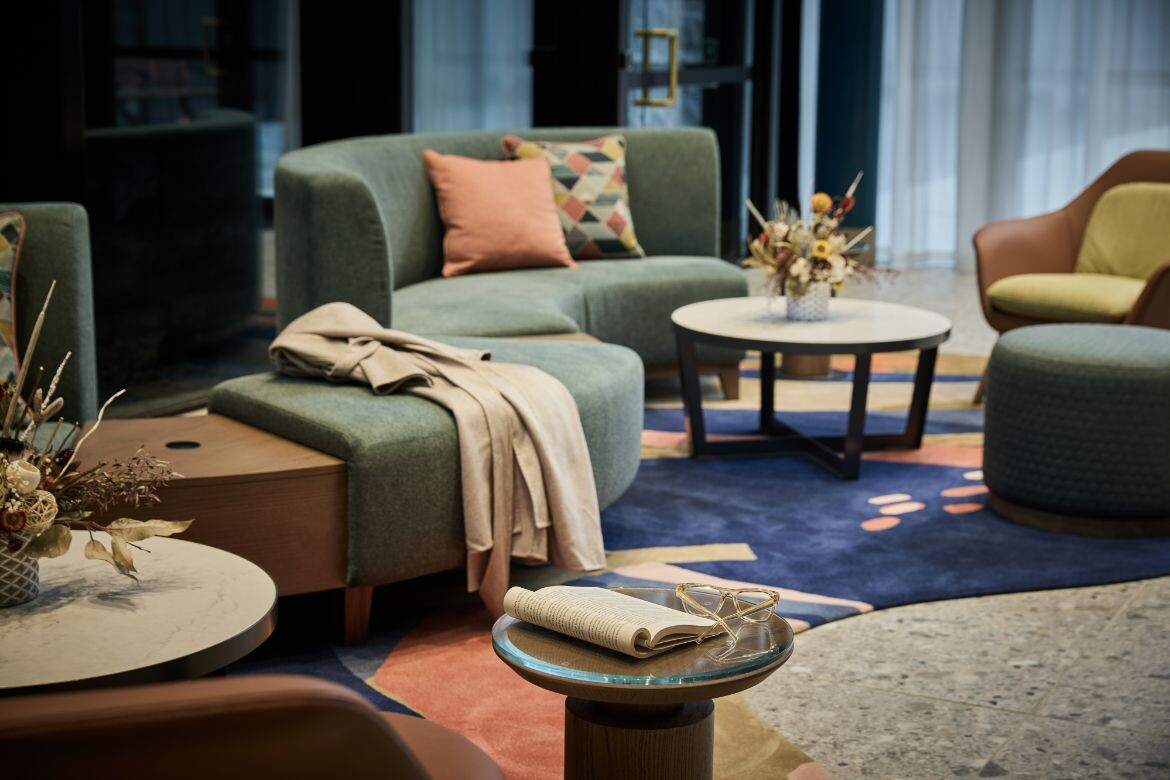
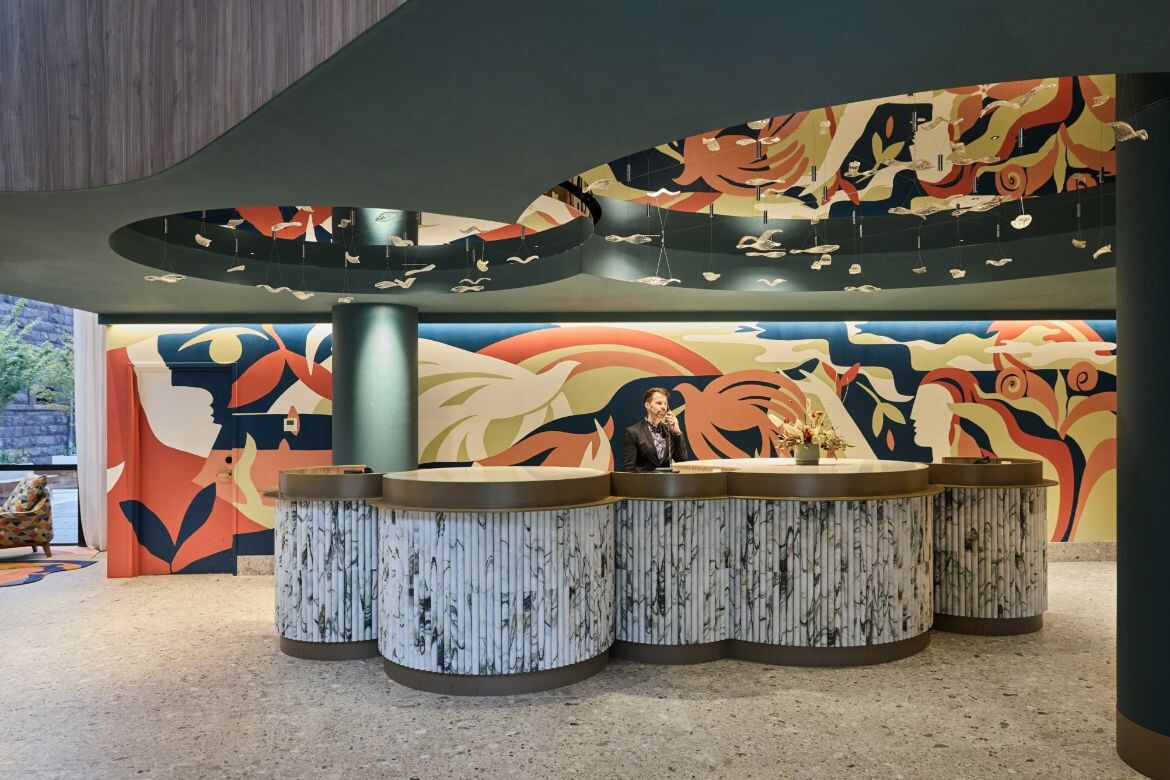

Tasked with creating the public spaces connecting the two GSA-designed TFE Hotels offerings of Adina Apartment Hotel Pentridge (a completely new build sitting within the bluestone walls of the former prison) and The Interlude (the high-end experience crafted with the cells), CHADA developed the full planning and design of the hotel’s food and beverage outlets and interior public areas including ballroom, library, meeting rooms and so forth. Effectively creating the connective space between two quite different aesthetics, CHADA introduced colour, curves and softening elements to the mostly stone interior.
“With a design concept centring around notions of freedom, optimism and escape, rounded organic shapes with sweeps of colour and soft textures were introduced to both contrast and complement the cold, hard surfaces of the former prison,” says Ashworth.
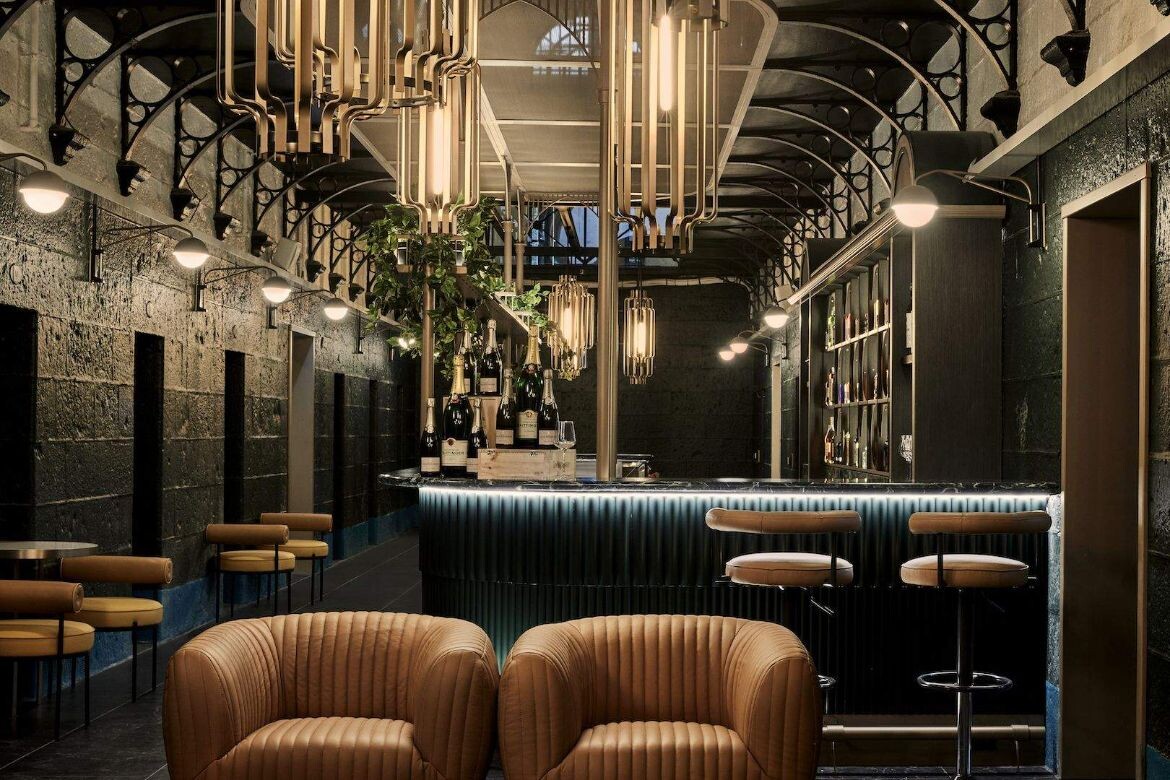
With heritage permission to join the original bluestone cells through a side cut and clad opening that doesn’t disguise the small scale of each original cell, the Olivine Wine Bar is effectively a string of cells presented as intimate alcoves. With curtains between each cell, each is effectively a private lounge area, and while the original bars remain on the windows, the mood is far from sombre. Rather, CHADA have brought colour and form into the space with the deliciously surprising inclusion of canary yellow ottomans.
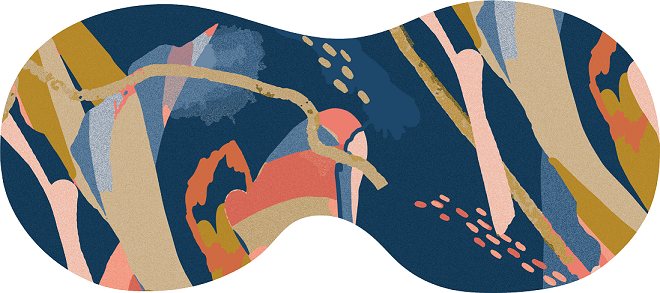
Containing this zone is a bespoke rug of large geometric radiating design that makes reference to the panopticon geometry of an exercise yard that was discovered during excavation of the former prison site. In doing so, CHADA subtly acknowledges the former prison site, without the standard repertoire of prison motifs coming into play.
Related: Capella Sydney by Make Architects
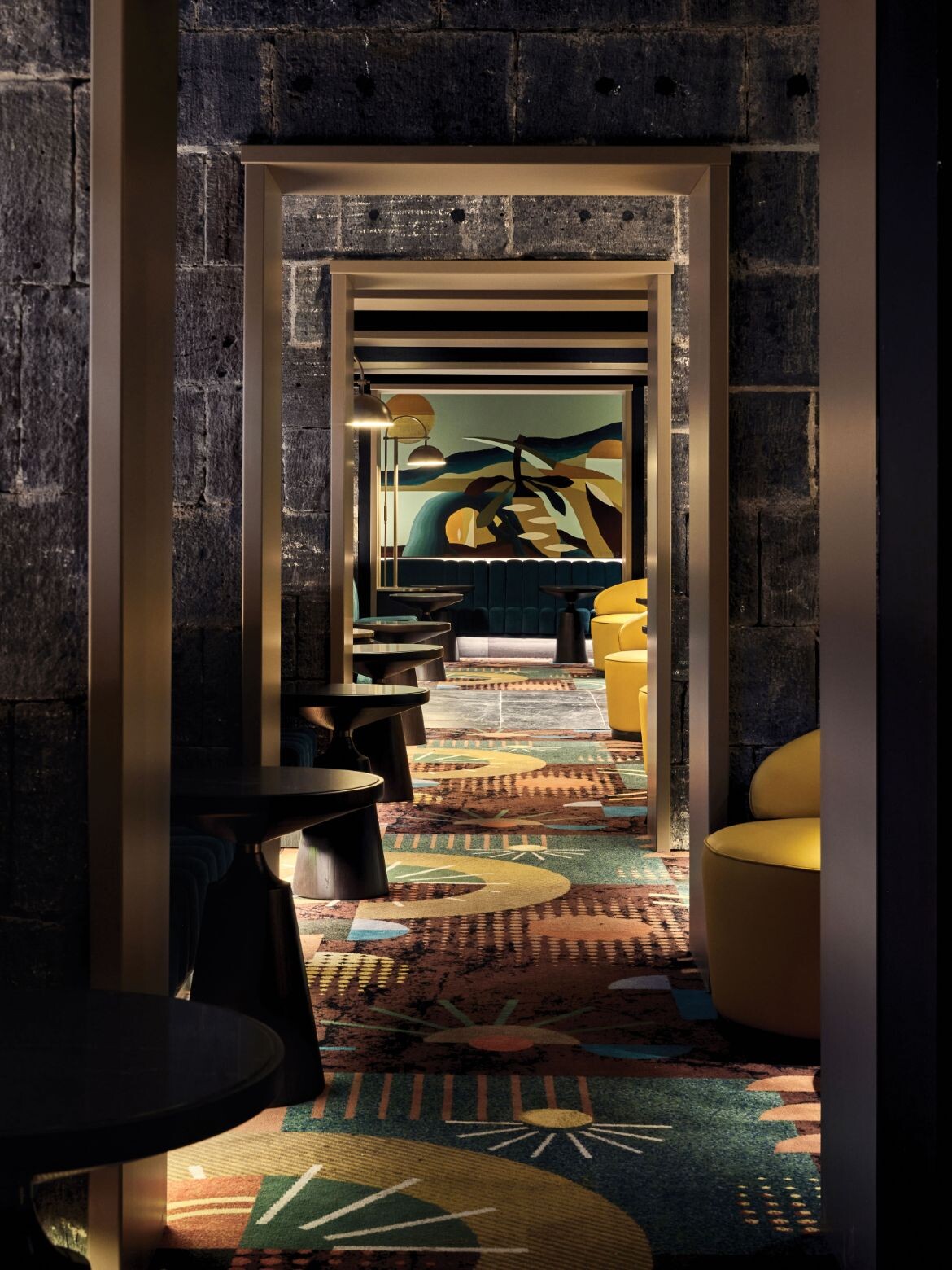
This is an approach CHADA has consistently taken with the project. The bar, for example, does allow the dark tones to dominate, but the insertion of a fine brass mesh ceiling, brass poles, contemporary brass lights and soft caramel leather seating renders the whole space far more Parisienne than prison chic.
In a similar fashion, the lounge is focused on freedom and specifically the optimism of dreamt futures. The motif CHADA has selected to represent the dream of freedom, is the bird, which appears throughout the hotel, but is at its most prevalent in the lounge where birds flock in a spiralling suspended sculptural installation: “There’s a lovely story around a character called The Sparrow, who operated a radio station in the prison to convey messages from the outside world, from family and friends to the prisoners,” says Ashworth.
Carving an experience that speaks to both the past and present, the arrival into the lounge and lobby presents a large wall of the original bluestone set within an otherwise contemporary lobby with a curved glass wall and an abundance of colour. Large yellow lounges work well with the vast scale, as does the colour blocking they provide against the bespoke patterned rugs and club chairs. A large mural by Natalie Bessell (artist in residence in another part of the prison complex) creates the primary wall feature with a fluted marble reception counter siting below a dark green carved soffit. Artist Al Stark created the artworks in the bar, pre-function spaces and ballroom.
“We wanted to create a space that was a really a commuter space, where people would actually use it to either work on their laptops or have something to eat or drink and as a spill over from the bar. So, we’ve created this fulcrum of all the spaces to be welcoming and multi-faceted,” says Ashworth.
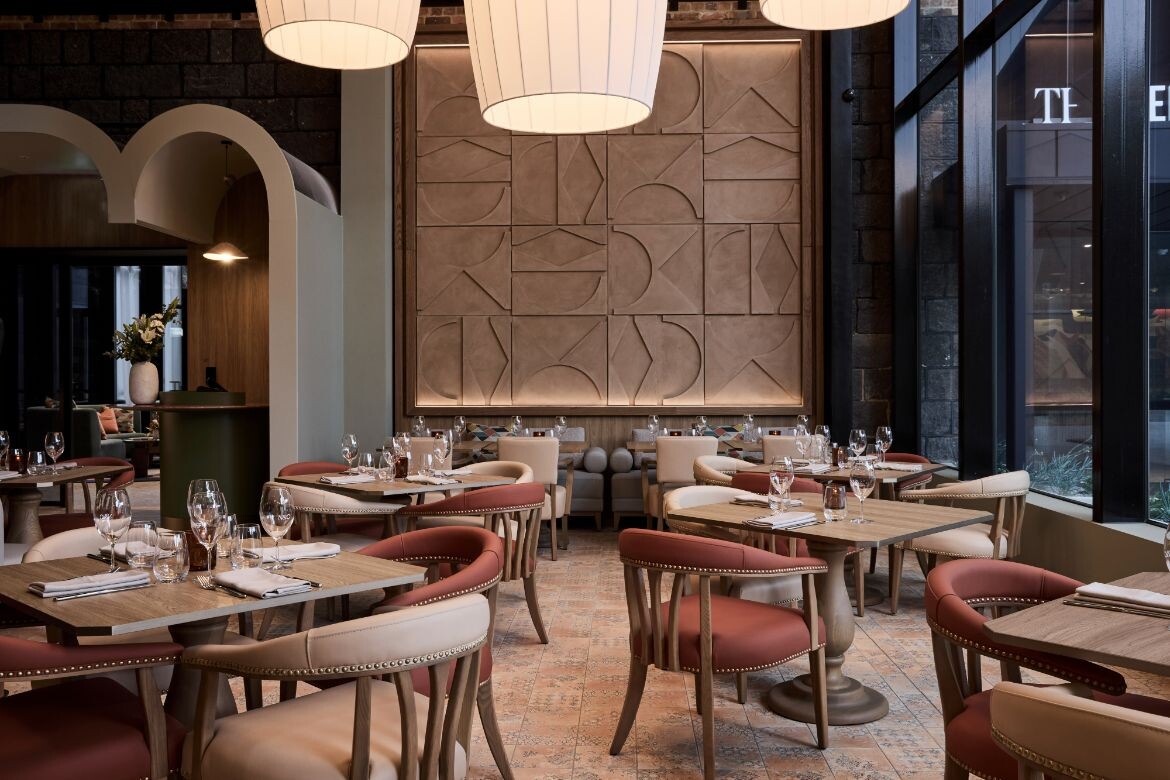
North & Common is a hatted restaurant that, while aligned to contemporary restaurant design, has worked around a vast scale compounded by heritage restrictions. Entering via a free-standing bespoke frame of double arches, the palette juxtaposes the prison’s bluestone past with rounded organic forms and natural shades of soft pinks and warm earth. A large feature wall of geometric abstractions, delivered via a proprietary resin product, works well to negate space, as does the intricate but subtle repeat patterns of the bespoke carpet and oversized sculptural pendant lamps.
Lighting has played a key role with CHADA electing to spot light small moments rather than flood the whole with light: “You could have ended up with a space that felt like a shopping mall because of the architecture and the volumes,” says Ashworth. Instead, features of the original architectural, the ironwork underneath the walkways, the artworks, seating groups, and corridors are given a wide warm spot of glowing light.
It is difficult to separate the idea of a hotel from the former prison, and it won’t appeal to all. That said, the CHADA design works well to address the needs of patrons looking for the former prison experience, those looking for history and those just looking for a convenient luxury accommodation.
CHADA
chada.com.au
Photography
Courtesy CHADA and TFE Hotels
We think you might also like this project feature on InterContinental Sydney by Woods Bagot.
INDESIGN is on instagram
Follow @indesignlive
A searchable and comprehensive guide for specifying leading products and their suppliers
Keep up to date with the latest and greatest from our industry BFF's!
The internet never sleeps! Here's the stuff you might have missed