I’ve just returned to Australia from the trip of a lifetime to Europe, where I undertook a Byera Hadley Traveling Scholarship. My research project aims to accelerate the uptake of biogenic and circular construction materials in Australia, with a focus on industrialised components made from straw. I gained so much, both personally and professionally, from the time I spent in Europe and the people I met.
Since I last checked in with this publication, I spent time in the Netherlands, Denmark and Sweden. So, what did I learn?
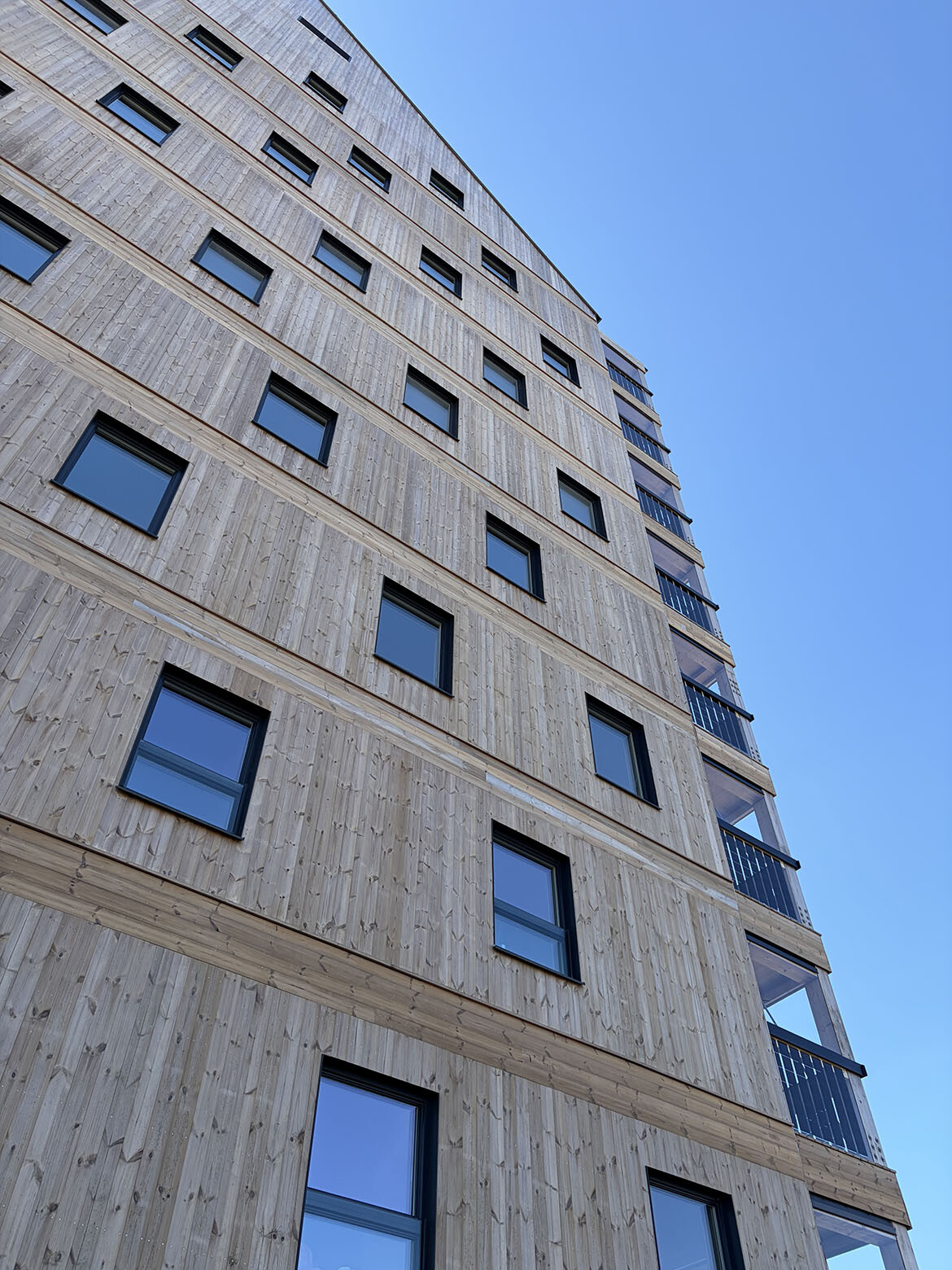
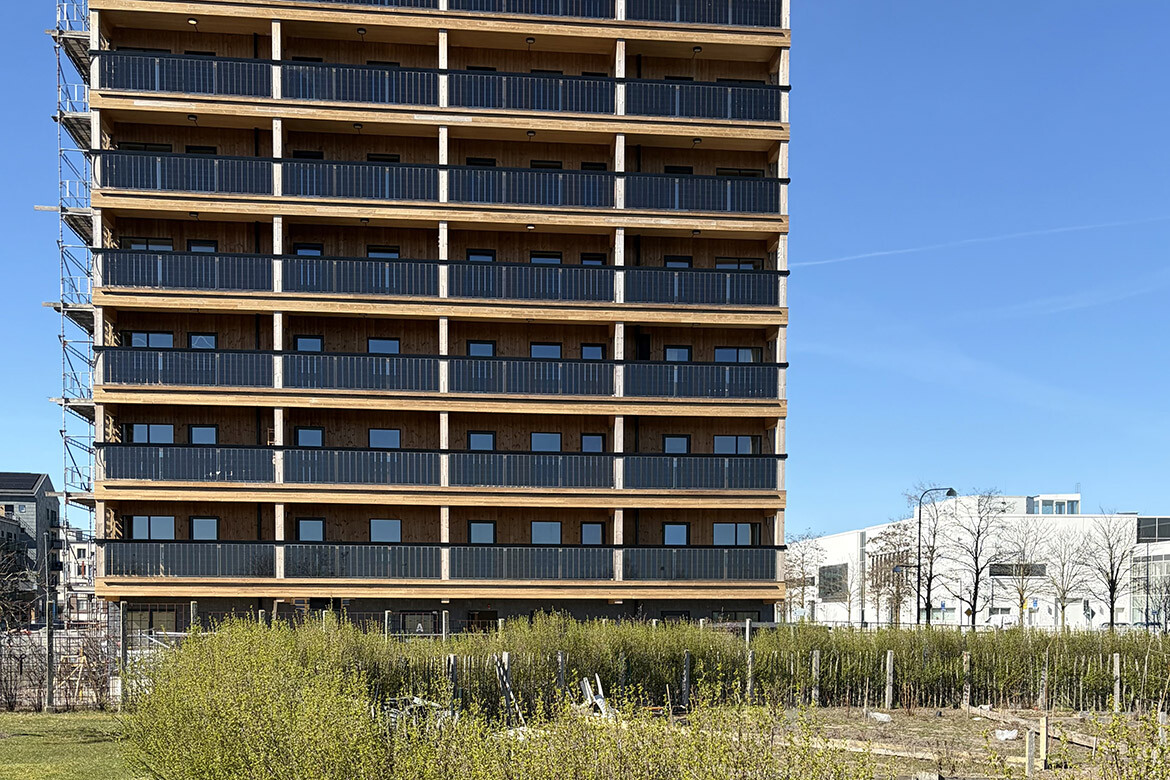
I’ll start with a very tall straw. In Malmö, Sweden, I visited ETC Hyllie, which at 12 storeys is the world’s tallest straw building. With all above-ground structure made from CLT and all external walls made from straw-filled prefabricated panels, this project is brave, pioneering and oh so important to learn from.
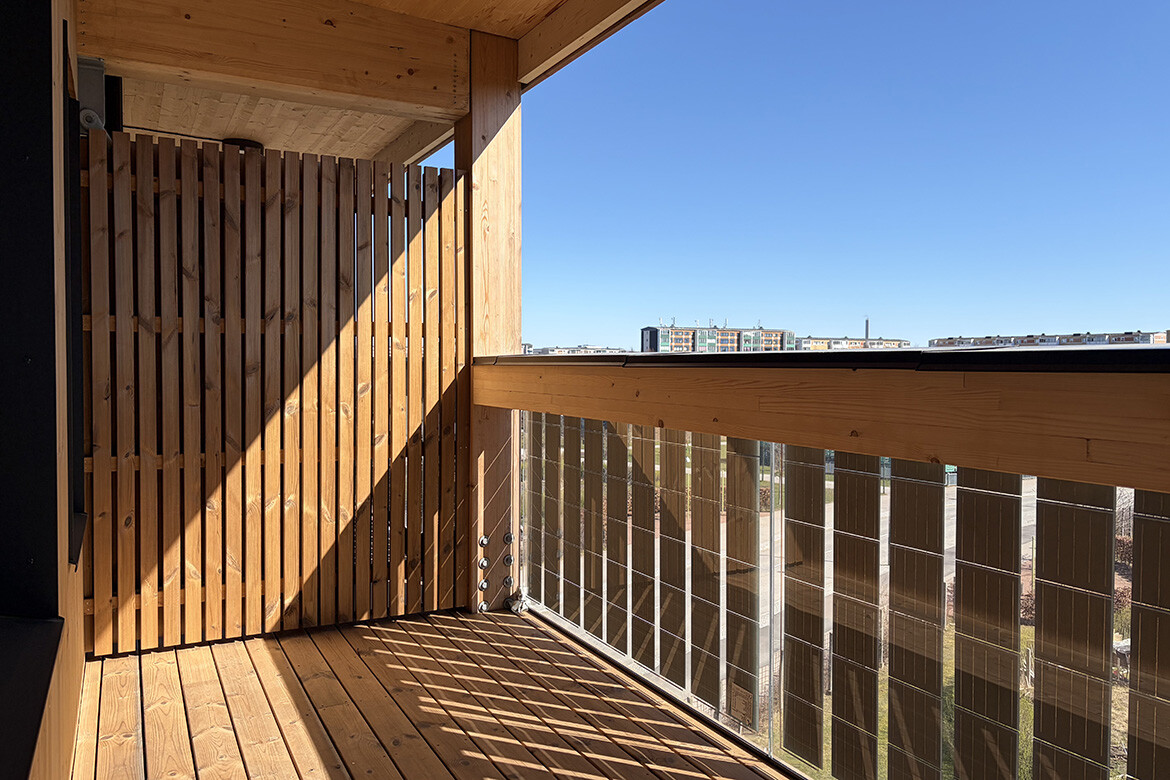
I observed the project’s carefully considered responses to fire safety in the context of biogenic high-rise. I learnt how services were reticulated, how finishes were installed and how moisture is managed in the structure. Notably, the entire roof, the whole south façade and the balcony balustrades are all solar collectors, showing a happy combination of solutions addressing both operational carbon and embodied carbon.
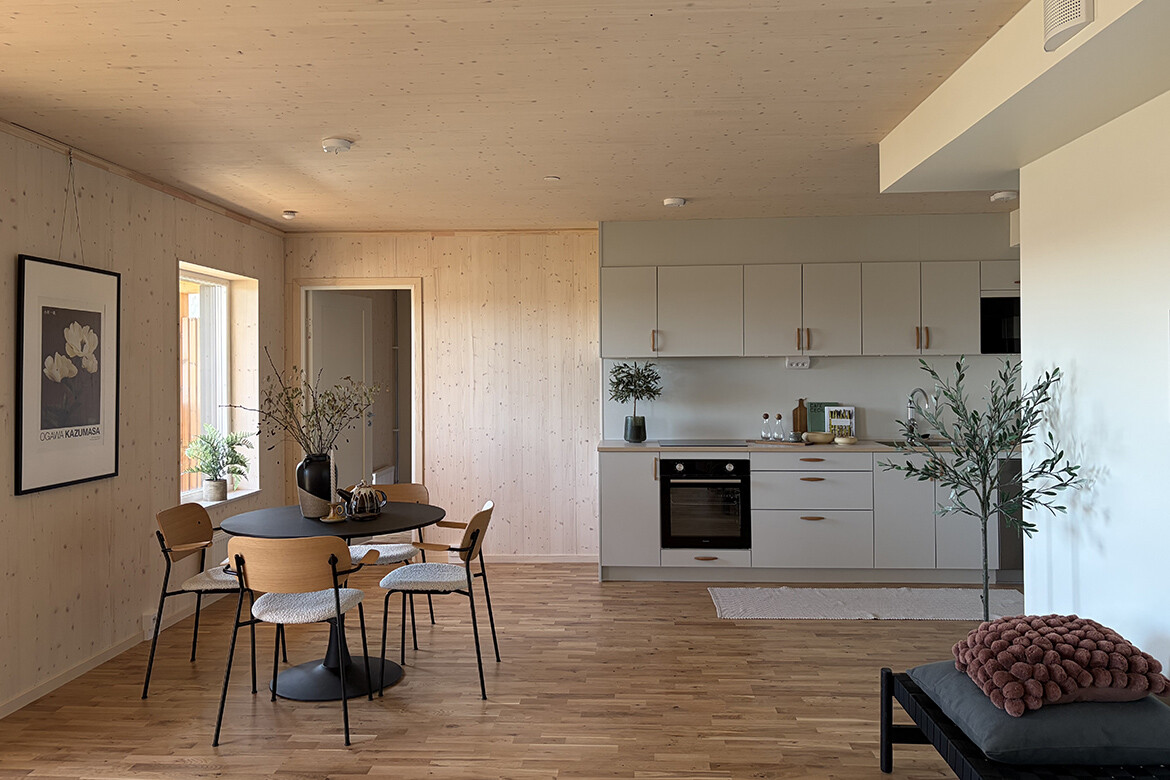
I visited two of the 65 apartments, and found both to be spacious and bright. There is an undeniable but intangible feeling inside them — somewhere between scent, sound and touch. It’s a warm, biogenic calm… perhaps it’s hyggelige. No smell of paint, carpet or cabinetry; just nature, resonating with the same frequency as my human body. Or maybe I was seduced by the Scandi styling of the display suite?
Some apartments are already occupied as the building heads for full hand-over within months. Its completion will, in my mind, herald a new global benchmark for housing humans within our planetary boundaries. Special thanks to Vitalis Videika from ETC Bygg for the tour.
Related: The Byera Hadley diaries from Europe

Its completion will, in my mind, herald a new global benchmark for housing humans within our planetary boundaries.
Next, there’s an even taller straw. In Eindhoven, I met with architecten|en|en and Bygg Architecture and Design, who are the architectural team for Salix, a proposed 14-storey straw apartment tower. Conceived as 60 apartments gathered into 4 vertically stacked neighbourhoods, with abundant communal green space and biodiversity-positive initiatives all throughout, this is one to watch. Thanks to Robbert Urlings and Tim Kouthoofd for generously sharing your work.
Also in Eindhoven I visited the Rustenburgstraat project in which 60 outdated homes are being replaced by 89 new social housing units. The development has a significantly higher density delivered at ‘short straw’ two-storey scale, with additional dwellings built in the backyards of the street-facing homes being replaced. The new footprints are carefully positioned around the ‘green capital’ identified by the ecologist and landscaper. The design preserves and enhances the neighbourhood identity that is meaningful to the community. There is so much Sydney can learn from in this project.
But the real story of this project is technical. Straw wall elements were pre-assembled in a controlled environment and delivered to site ready for installation. This approach enabled shorter on-site construction time, reduced disruption for residents, higher quality control and improved thermal outcomes.
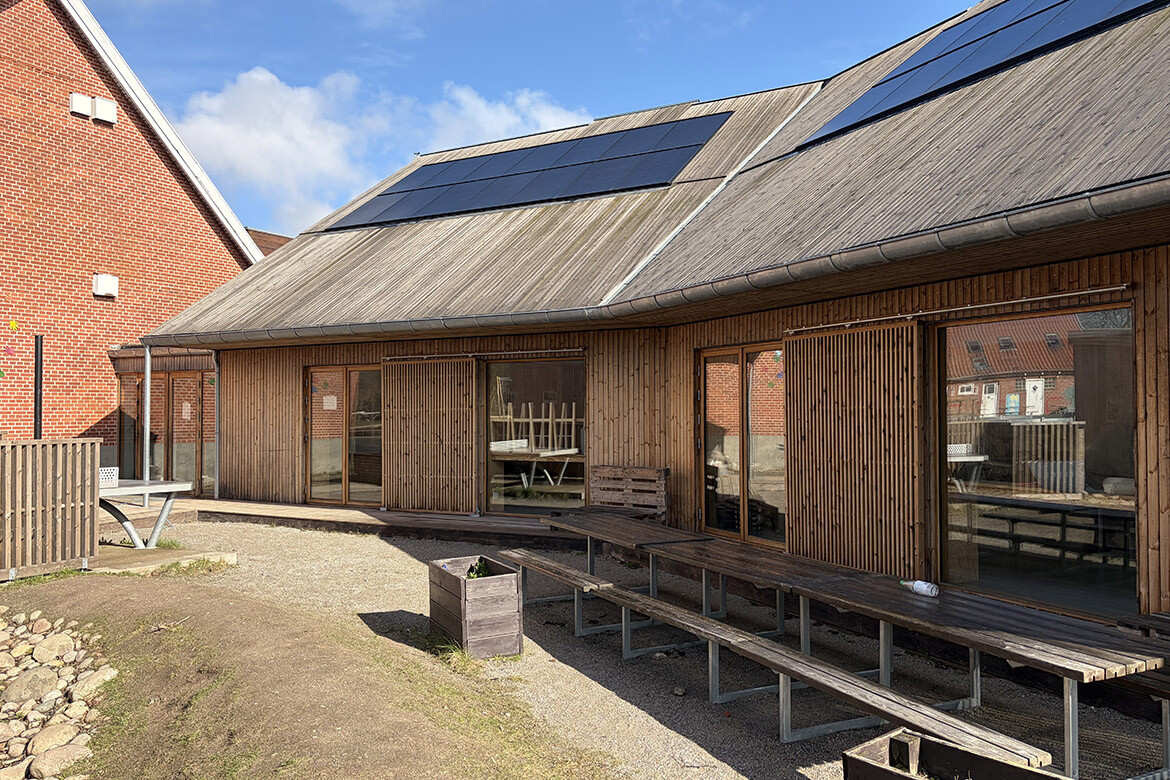
In Denmark, I visited Henning Larsen’s beautifully resolved Feldballe School. This is a crisp and understated addition to a small school campus that shows straw construction can meet contemporary and refined aesthetic tastes. This is fine architecture, competently executed. Special thanks to Lars Keller from EcoCocon for being a wonderful host.
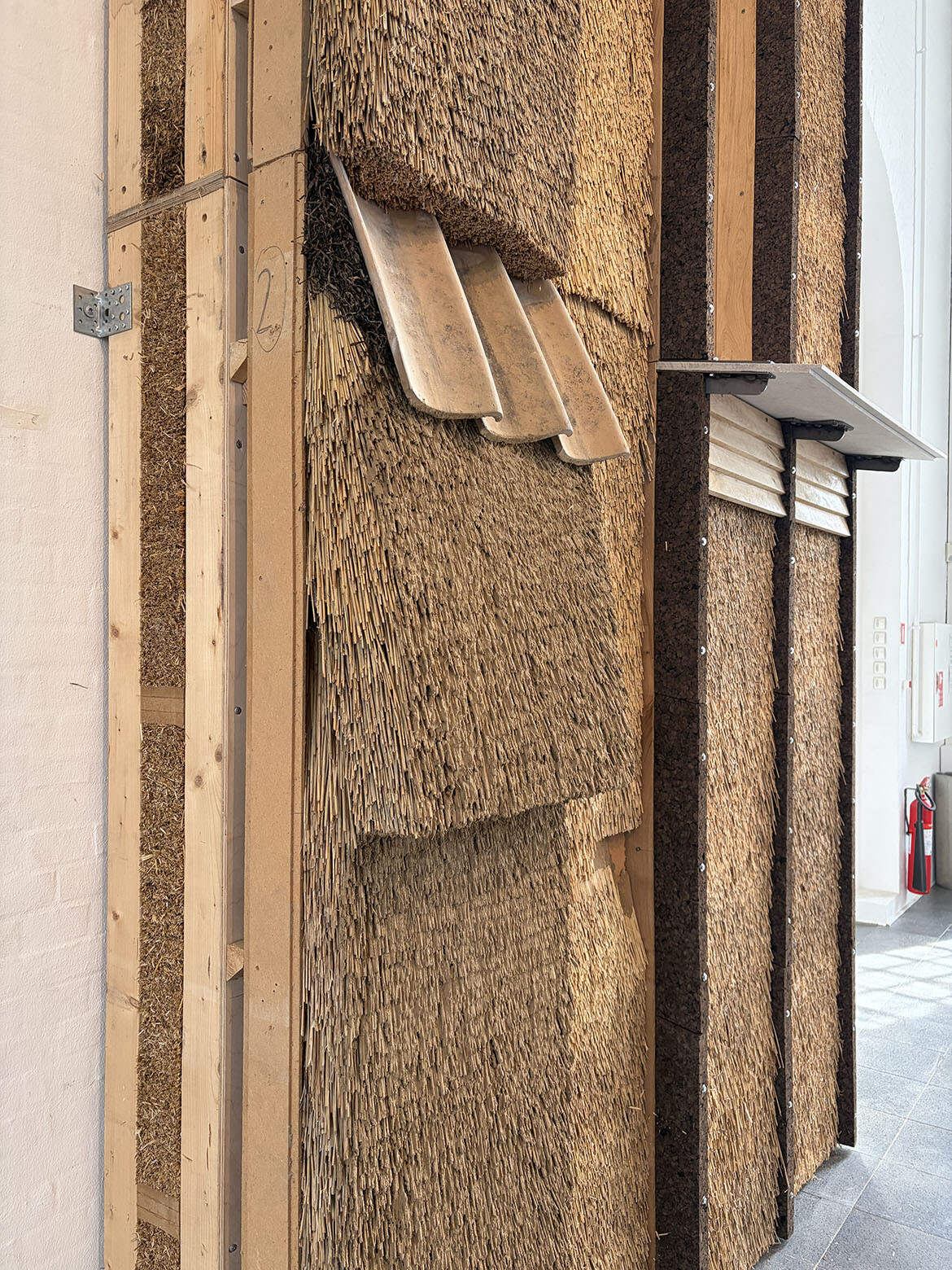
As well as buildings, I toured DBI, Denmark’s premier fire testing lab, thanks to the generous and articulate Asmus Haastrup, one of DBI’s innovation consultants. I saw the furnaces where pioneering fire tests are being done, and discussed the nuances of combustibility, fire rating, charring and smouldering of biogenic materials. I also visited CINARK, the Centre for Industrial Architecture at the Royal Danish Academy, where there is a strong and enduring focus on biogenic innovation. Indeed, there is presently a three-storey façade mock-up of a straw wall with three variations of thatched cladding sitting proudly in their main hall.
A key takeaway from this trip is that sustainable construction at scale is not about slowing down. Nor is it about paying a premium for bolt-on initiatives. And it is not about some kind of heroic masochism that insists on sacrifice for the sake of it. Instead, it is about combining ecological materials with factory-level efficiency. It is about healthier interiors, faster builds and better performance. Nothing lost, everything gained.
I encourage more practising architects to embark on trips like this one. If you are a registered architect in NSW and haven’t applied for the BHTS, I suggest you look into it. It is a rare and special opportunity to dig deeper and search for authenticity and meaning — whatever that may mean to you in the context of your work. Thanks again NSWARB for providing this opportunity to me.