The home of architecture and design in the Asia-Pacific
Get the latest design news direct to your inbox!

Get the latest design news direct to your inbox!
Vietnam is yet to adopt green buildings and sustainability at the same pace as the rest of the world. GroupGSA Vietnam Studio Leader and architect Thien Duong posits that the growing resorts and hotel sector is one area where designing for biodiversity can have enormous benefits, and show developers how it can be achieved locally.

Sol Melia by GroupGSA
April 11th, 2023
With its sprawling coastlines, beautiful beaches and warm, tropical climate, it is little wonder Vietnam has topped tourism lists as a must-see Southeast Asian destination in 2023. These drawcards make coastal resort development in Vietnam ideal. Yet, the country’s hospitality sector remains largely under-developed in comparison to neighbouring nations, like Thailand and Indonesia.
Rising population, rapid urbanisation and economic growth are placing increasing pressure on Vietnam to adopt a greener, more sustainable approach to development. A critical up-scaling in green infrastructure investment in Vietnam must not overlook biodiversity in the design of sprawling resorts and future urbanscapes.
Vietnam has a tremendous opportunity to learn from its neighbouring countries, whose approach to design provides a holistic perspective on biodiversity and biophilia. As Vietnam’s cities continue to urbanise and condominiums begin to take over low-rise shophouses, we must look to countries like Singapore, Australia and even Malaysia for best practice examples of biodiversity as a key urban consideration.
Furthermore, one of the best places to employ biodiversity design is in our expanding resorts, hotels and condotel sector. Resorts offer the greatest opportunity to employ biodiversity design as they continue to take up a large expanse of Vietnam’s 3,444km of coastline.

Savills Hotels (APAC) Director Mauro Gasparotti said developers must prioritise sustainability when planning hospitality projects because it will ultimately serve as an operational foundation. “We cannot deny that tourism pressures natural resources and the environment, which is why it is so important to look at how to limit this impact. Travellers are also wanting sustainable options, which allow them to engage in wellness activities, contribute to local communities, and minimise their impact.”
Gasparotti added that we need more initiatives that cultivate eco-friendly concepts, prioritise locally sourced materials and sustain local communities, while still delivering convenience, comfort, and great experiences. Ultimately, “good planning and execution will foster long-term economic, social, and environmental protection,” he concluded.

According to the Ministry of Construction (MoC), housing demand in Vietnam will increase by 70 million square metres each year – the equivalent to 17,500 buildings of 30 floors – by 2030. However, by the end of 2021, Vietnam recorded only 201 green building projects.
The International Finance Corporation (IFC) suggests the country’s green buildings sector is almost a US$80 billion investment opportunity in waiting. The call for more green infrastructure has been amplified by Vietnam’s commitment to achieve net-zero carbon emissions by 2050 and its increasing vulnerability to climate change.
In recent years, the construction sector has enacted a growing number of laws to facilitate the construction of green buildings. But to date, little address biophilia and biodiversity in developments.
Currently, a ‘green’ building must meet several sustainability criteria, including achieving high efficiency in energy and material usage, minimising environmental impact and meeting safety standards. By far, the biggest Green Rating Tool system in Vietnam today is Excellence in Design for Greater Efficiencies (EDGE) by IFC. However, EDGE is all about reduction of carbon footprint.
EDGE accounted for half of Vietnam’s 201 certified green buildings in 2021. This was followed by the Leadership in Energy and Environmental Design (LEED) at 44 per cent and LOTUS (7 per cent) – Vietnam’s own green certification rating tool, developed by the VGBC, of which I’m a board member. I’ve proposed that the LOTUS tool be updated to include biodiversity as part of Health and Comfort standards – a move that was accepted and will be enacted later this year.
VGBC Executive Director Doug Snyder said LOTUS rewarded projects with designs that support indoor health and biophilia – a connection to nature for building users. “The VGBC is now beginning a 2023 review of its rating systems with an aim to even more deeply promote health, nature, the circular economy, and climate smart design,” Snyder said. “As the local affiliate of the WGBC [World Green Building Council], we will continue to customise our criteria to specifically address the most critical challenges facing Vietnam and Southeast Asia.”
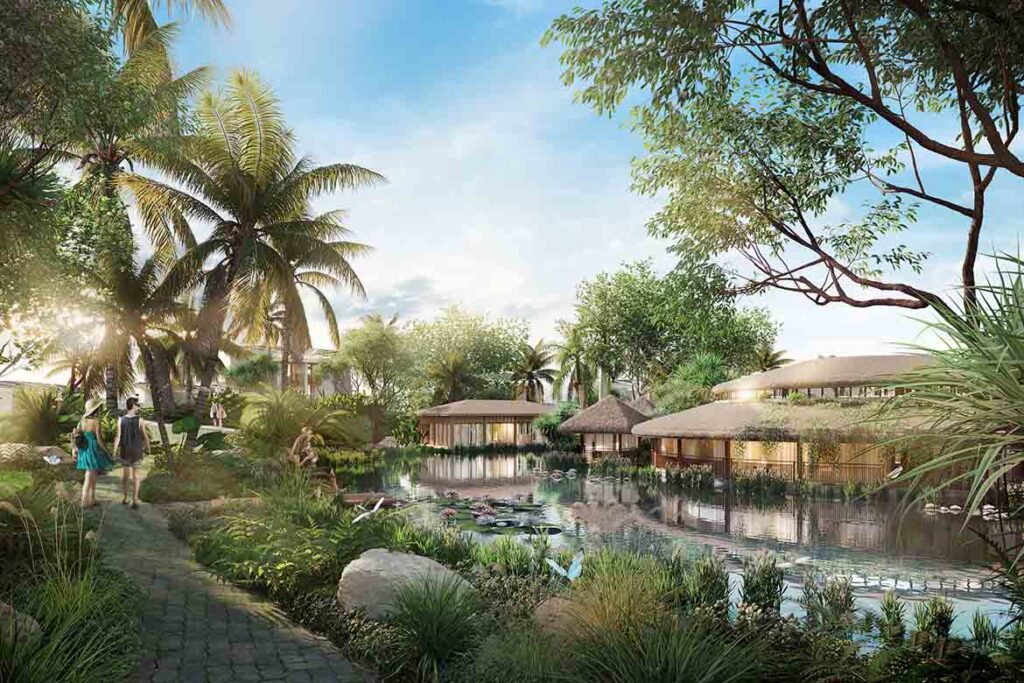
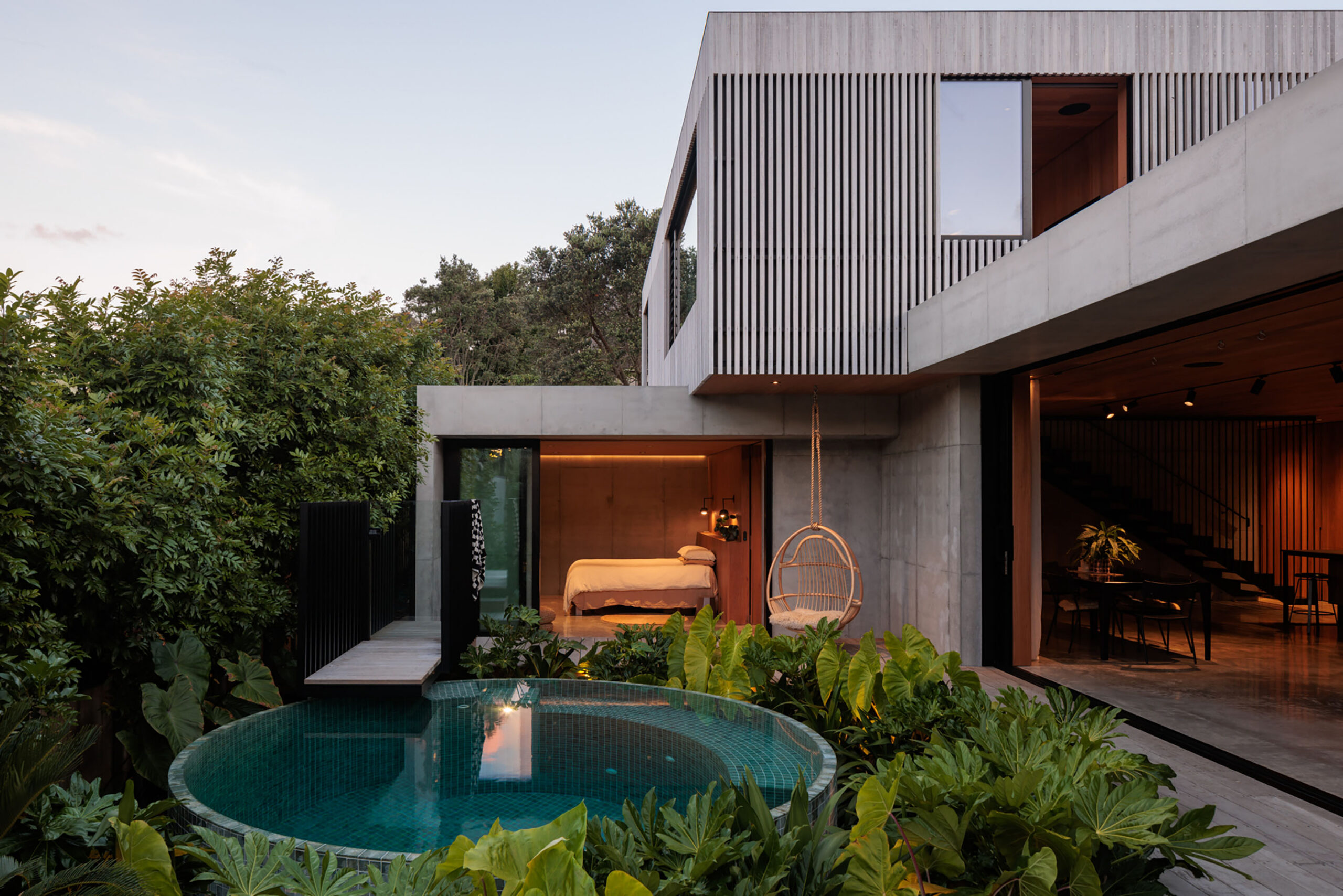
Typically, landscape design across Vietnamese hotels and resorts features ‘manicured’ landscaping, which is not sustainable. Biophilic design extends beyond build form and interiors to utilise keystone indigenous species which are authentic to the environment and self-sustainable.
Hotel developers should consider biophilia as a key consideration because it captivates tourism and creates an authentic sense of place. It also reduces sourcing and operating costs as flora and fauna are in their natural state. At the same time, biophilic interventions increase the physical and mental health and wellbeing of users.
Strong biophilic design considerations have been given to GroupGSA’s latest Vietnamese projects, including Ixora 2– a 512-room condotel and 63-villa coastal resort located in Ho Tram – opening this year. Sol Melia is another GroupGSA-designed resort, comprising three towers of hotels and condotels with a series of beach-side villas. At the heart of Sol Melia is an 8,000-square-metre pond, which will provide habitat for breeding, shelter and food for birds, pollinators and other animals.
For both projects, water plays a dominant role in the landscaping. Other biodiversity design elements include native plant selections with shade and cooling, drought-tolerance and erosion-prevention capabilities. Local species of water-plants are also used to naturally cleanse water and attract small insects and other wildlife into the resorts.
Architecture plays an important role in fostering biodiversity by protecting habitats and creating new ones alongside development, including linking habitats further afield. Biodiversity is key to developing a sustainable and healthy urban life with countless environmental benefits, but it also has cultural and commercial value too.
INDESIGN is on instagram
Follow @indesignlive
A searchable and comprehensive guide for specifying leading products and their suppliers
Keep up to date with the latest and greatest from our industry BFF's!
The internet never sleeps! Here's the stuff you might have missed