The home of architecture and design in the Asia-Pacific
Get the latest design news direct to your inbox!

Get the latest design news direct to your inbox!
André Fu’s design language derives from his desire to create a cross-cultural dialogue initiated by the Hong Kong Palace Museum, and now he revolutionised the concept of modern luxury articulation for the historical and artistic exchanges that comprise the institution.

In his latest July collaboration for the newly opened Hong Kong Palace Museum, André Fu sought to tap into the deeper context of the museum and explore the union of the past and the present to synchronise with the museum’s vision. This resulted in a design execution of three specific commissions: an installation of modular seating for the public atrium spaces, a featured tapestry for the auditorium entrance, and a large floor rug for the VIP room.
Fu’s inspiration was ignited by the ceiling installation in the main atrium when he first visited the site in the summer of 2021. Fu interpreted the dynamic of the cascade metallic ceiling as a “modern re-interpretation of traditional roofing tiles that evokes fluidity and movement.” Meanwhile, its play of light and shadow serves as a visual metaphor for his desire to convey a sense of cultural convergence. Fu then embarked visually into a cultural phenomenon that conveys those senses of harmonious rhythm; the interlocking vignette of traditional Chinese roof tiles, the energy and movement of synchronised dancers, and the fluid tempo of ink-painted brushstrokes.
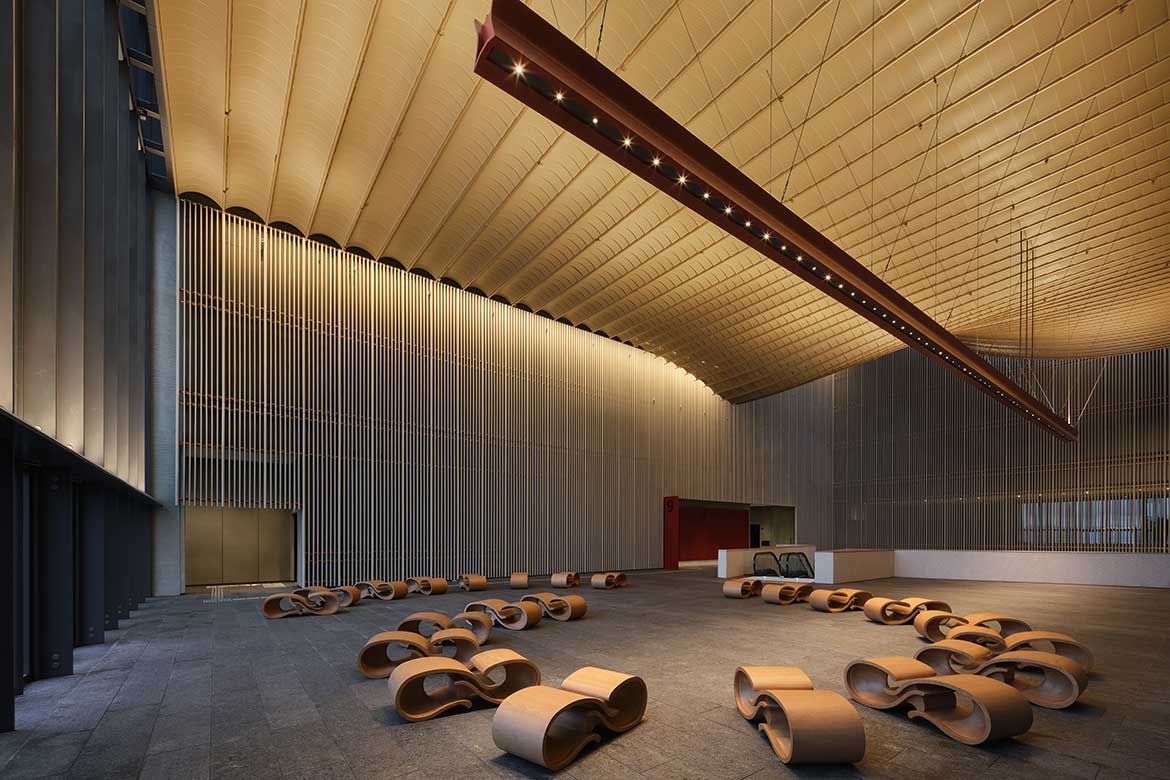
The key highlight for the collaboration is the creation of the public seating installations located within the two main atrium spaces. Titled Eternal Links, each of the 30 benches is hand-crafted from Chinese oak, which curvilinear form is derived from Fu’s initial sketches with two brush strokes. When placed together in a spiral format, the installation conveys a poetic feeling of movement and visual dynamic. Fu has drawn influences from the silhouettes of traditional Chinese roof tiles and their ability to interlock and interlink spatial experience.
“From a functional perspective, the benches have the ability to foster a space for communal exchange and conversation, which is something I also wanted to represent abstractly through the overlapping and curvilinear shape. The form of the benches allows them to immerse with the architectural elements of the building, creating a holistic and harmonious environment conducive to discussion,” Fu explains.

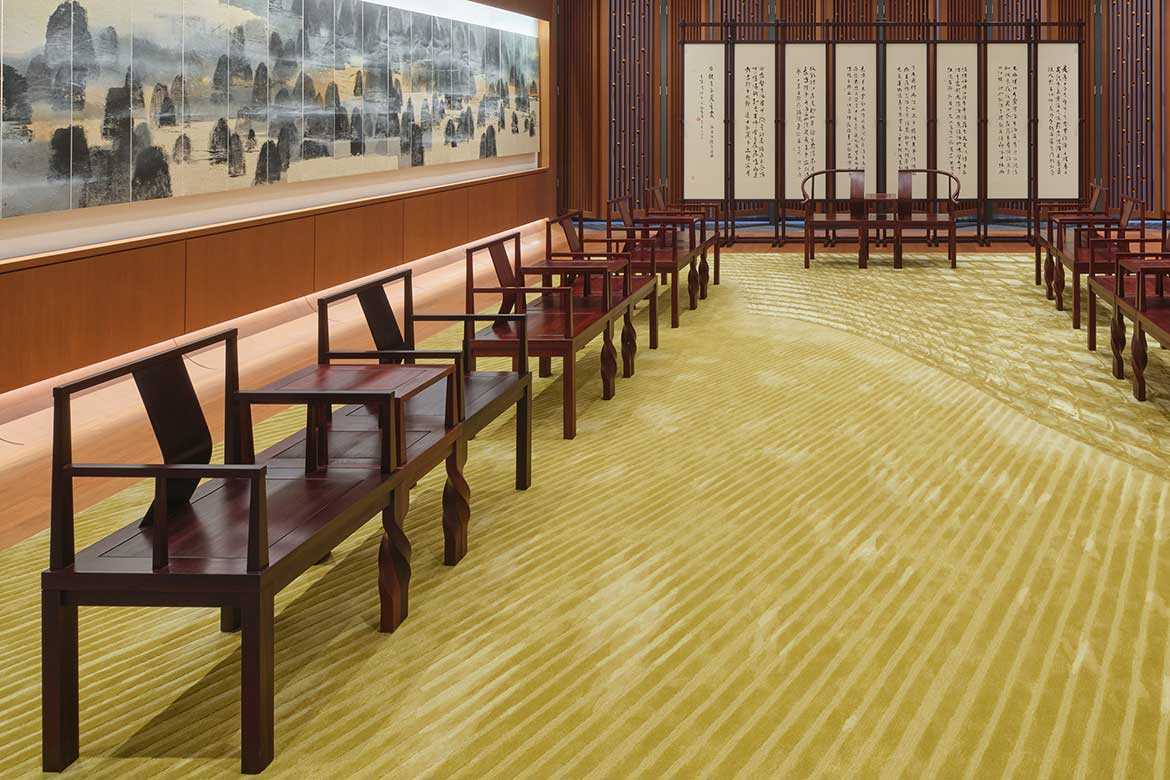
The other two installations, the tapestry and the rug were both named The Convergence. Each piece acts as a metaphor for the interwoven cultural heritage behind Hong Kong Palace Museum’s vision. The Convergence presents textured surfaces of various artisan execution techniques that evoke the movement of shadows cast in the museum’s main atrium through the day. Their surfaces almost vibrate with the sense of energetic movement cast by the patterns of light and shade. The dynamic illusion is created through the monochromatic play of 12 different shades of deep purple for the tapestry, and 12 shades of yellow and mustard for the rug.
“Creating these pieces for the museum was a unique opportunity to incorporate the various contextual facets of heritage, culture, and conversation at play,” says Fu. “By invoking a sense of movement in each work, I wanted to reflect the exchange of ideas that takes place in a cultural institution of this calibre while simultaneously honouring designs of the past. Each piece tells a narrative of history and technique by blending the customary with the contemporary, creating a visual representation of the evolution of Chinese craft.”
André Fu Studio
andrefustudio.com

INDESIGN is on instagram
Follow @indesignlive
A searchable and comprehensive guide for specifying leading products and their suppliers
Keep up to date with the latest and greatest from our industry BFF's!
The internet never sleeps! Here's the stuff you might have missed