The home of architecture and design in the Asia-Pacific
Get the latest design news direct to your inbox!

Get the latest design news direct to your inbox!
It all starts with context and materiality for Japanese architect and designer, Keiji Ashizawa, whose work can be defined by harmonised details through an emphasis on simplicity and curated collaboration.

February 20th, 2023
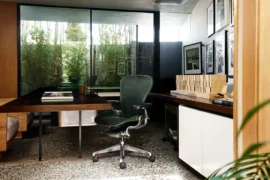
Tokyo-based architect Keiji Ashizawa, of Keiji Ashizawa Design, gets straight to the point: “I believe that first of all a space should be functional and beautiful.” The epitomising statement reduces any unnecessary distractions, just like his work itself. “To achieve this, we are considerate in not mixing unnecessary lines and designs. Often this results in light and minimalist spaces.”
As one of Japan’s leading architects, Keiji Ashizawa can be best described as a ‘maker’. At his Tokyo-based architectural and design studio, established in 2005, he leads a team of 18 with projects across architecture, furniture, product and landscape design. From luxury residences to DIY furniture design, it all starts with context and material. Akin to a chef, he looks towards choosing the right ingredients — and often, collaborators — utilising their qualities to create all-encompassing spaces that allow the element of reduction to shine. The designs hold a figurative lightness and simplicity led by an emphasis on harmonised details.

Growing up with an architect father greatly influenced his entry into design. Ashizawa’s studies in art and his time working at a steel company in his early twenties further shaped a true understanding of making things.
“I wanted to create and draw things rather than studying academics,” he muses. Ashizawa’s ‘Garden House’, situated in the rear of a residential design named ‘House S’, is a compact, pavilion-like structure that showcases his custom all-encompassing approach across furniture, architecture, and landscape – “all of which I like,” he adds.
Ashizawa’s ‘House In Saiko’, a private residence in Japan’s Yamanashi prefecture located alongside a cliff, was designed within the context of its surrounding environment. Ashizawa created a pillar-less nine-metre-wide opening for the house that enhanced the site’s landscape views whilst providing natural ventilation.
Related: The Upper Tokyo by Luchetti Krelle

The house’s central feature involves a large custom table crafted from the client’s own camphor timber. This holistic approach to design pairs the harmony of nature with human values. “Design is the most important essence in creating an environment, and I believe that design is necessary for living a better life,” says Ashizawa.
Yet Ashizawa’s projects are equally diverse and extensive — from an early project with Australian architect Peter Stutchbury and lighting design for Australian creative agency Broached Commissions to more recent interiors for coffee company Blue Bottle in Japan and China. Ashizawa nominates establishing the Karimoku Case Study furniture brand with Danish architecture firm Norm Architects and co-founding Ishinomaki Laboratory as cornerstones in his career.
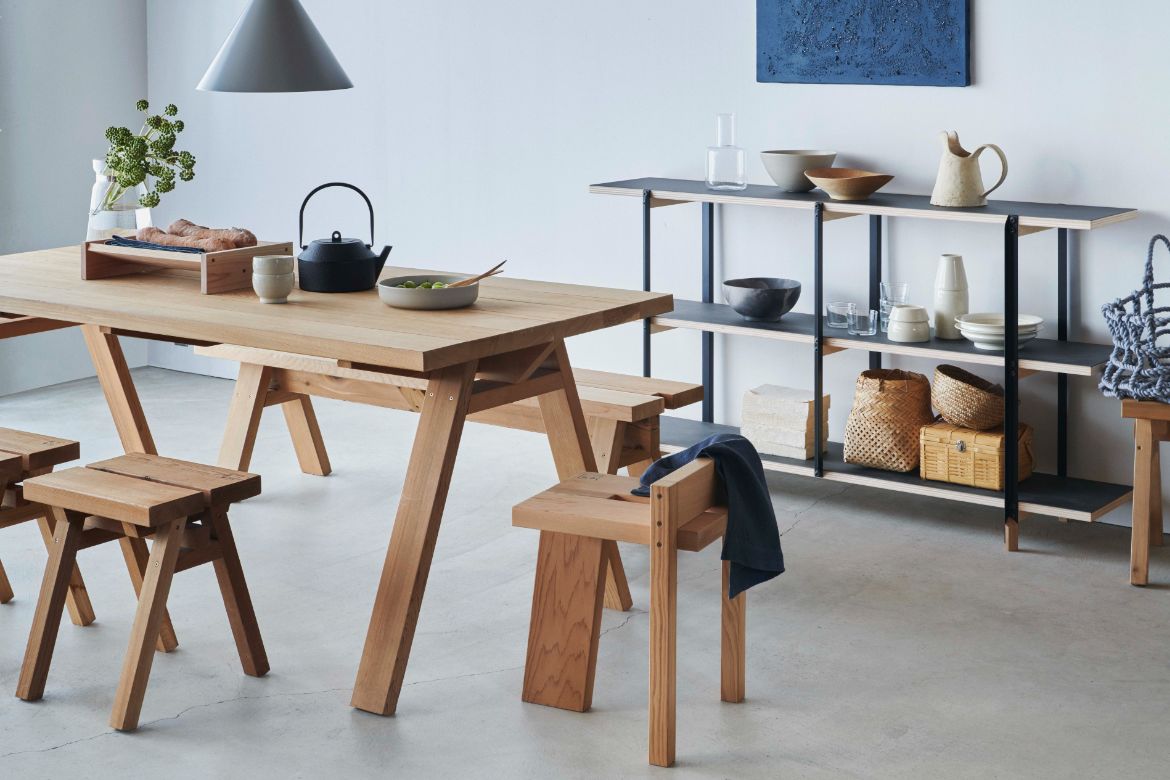
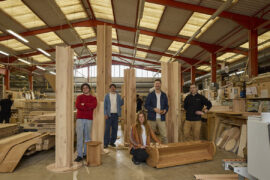
Ishinomaki Laboratory is an unprecedented community-born furniture brand established in the wake of the devastation of the Tohoku earthquake and tsunami in 2011. During a visit to the region for recovery efforts, Ashizawa identified an opportunity for local businesses to rebuild with basic materials and a simple DIY method which soon found international, commercial appeal.
Open, unbounded, observational and globally-connective, Ashizawa’s character reflects his collaborative design ethos. “I believe that my job is to create a good space and environment, not to express myself. Whoever’s idea or design it is, if it’s good, there is great importance in having it realised. And to do that, collaboration is a key in creating a better environment. It’s a method that improves the quality of the accumulated discoveries. And above all, we can share happiness with many people when collaborating, making things better.”
With no signs of slowing down, upcoming projects to look out for include designing the second Trunk Hotel in Tokyo, another Blue Bottle Coffee in Shanghai, and the VIP rooms and lounges at a luxury hotel in Tokyo’s Shinjuku area.
Keiji Ashizawa Design
keijidesign.com


We think you might like this story on Keiji Ashizawa’s Ishinomaki Laboratory.
INDESIGN is on instagram
Follow @indesignlive
A searchable and comprehensive guide for specifying leading products and their suppliers
Keep up to date with the latest and greatest from our industry BFF's!
The internet never sleeps! Here's the stuff you might have missed