The home of architecture and design in the Asia-Pacific
Get the latest design news direct to your inbox!

Get the latest design news direct to your inbox!
In China where a majority of people shop online, Various Associates raises the stakes to connect with customers through intense emotion.




Qianyi Lin and Dongzi Yang founded Various Associates in 2017. The pair had just returned to Shenzen from London after graduating from the Royal College of Art: Lin with a degree in interior design and Yang in architecture. “There were huge development opportunities in Shenzen,” says Lin, whose partner speaks of the Chinese city’s “newness” and “lack of cultural expression”. Within the urban landscape of rapid expansion, they create spaces that ask users to do the opposite: to slow down.
Qianyi Lin: Shops in China tend to all look the same. We want to bring some personality to the retail landscape here – to create some differentiation and to really express our clients’ identities. Clients are also realising that stores aren’t just about turnover. They want to connect to their customers on an emotional level. Sometimes they want to shock people. In any case, they want people to remember the space – and they want a design that can compete on an international stage.
Dongzi Yang: Online shopping is incredibly popular in China, more so than in physical retail stores, so one of the main questions we’re trying to answer is how to attract people back to offline environments.
QL: After our initial discussion with the client, we use storyboards to draft a concept that matches the tale they told. Our design also has to suit the site, and we follow a function-first mentality.
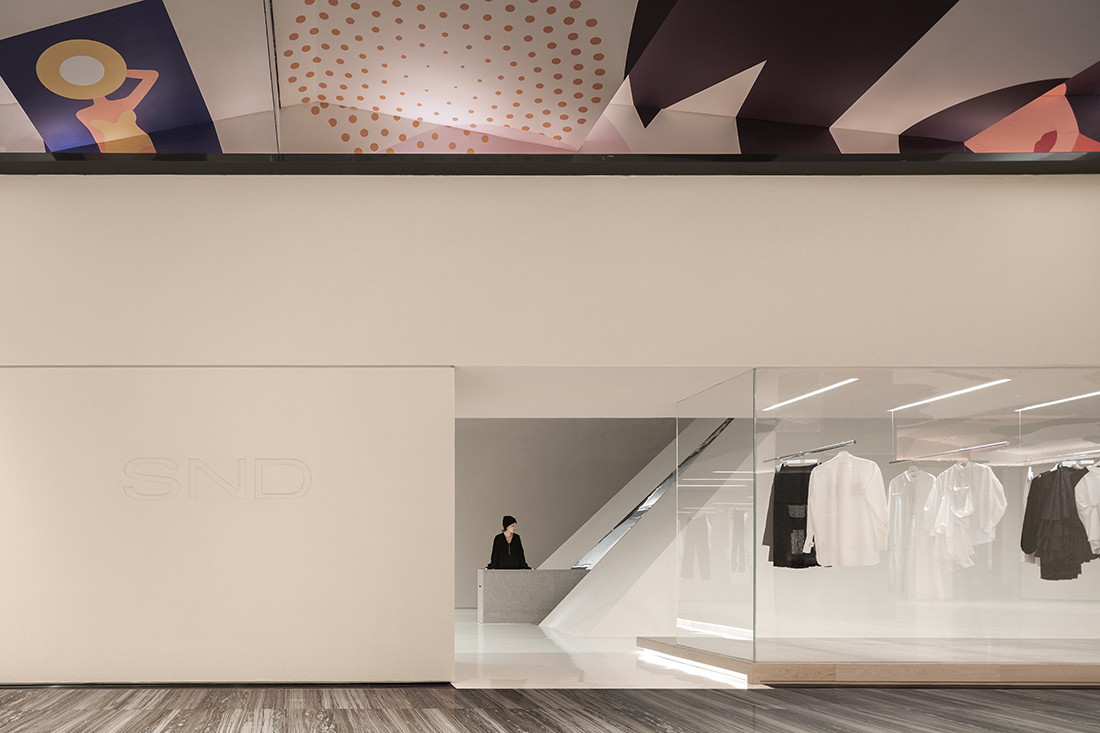
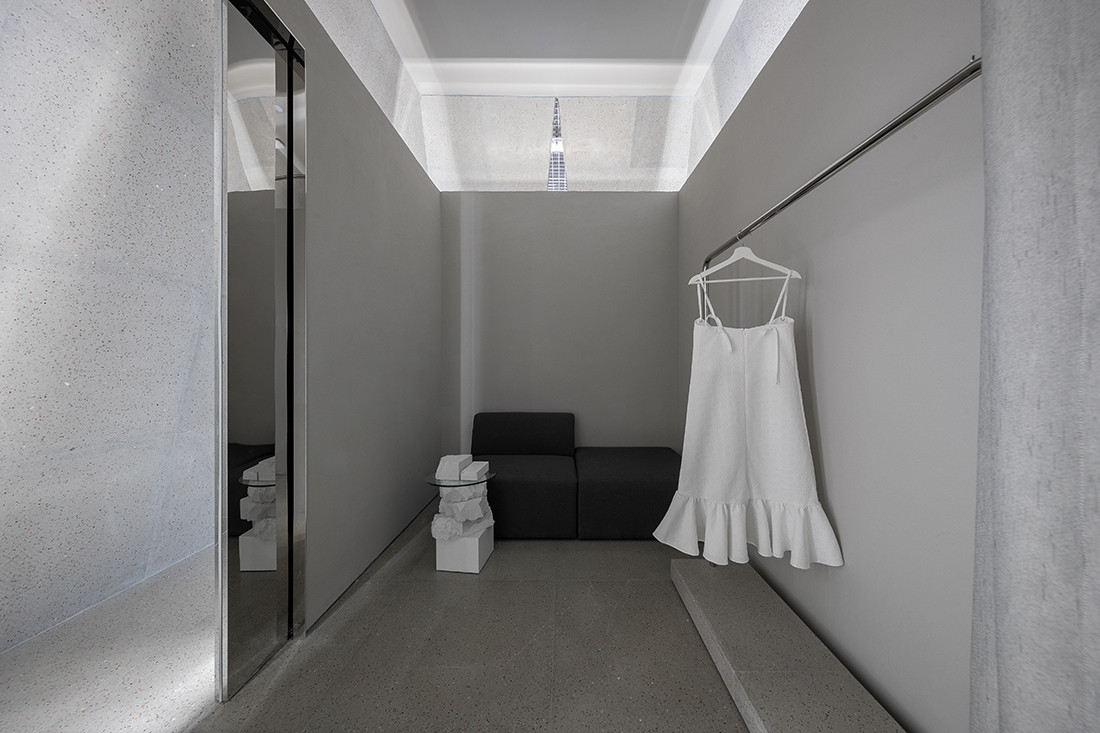
DY: Take our recent boutique for SND. The client saw and liked a gallery we’d previously done in Shanghai. There are very few gallery spaces in Shanghai; that’s how he found us. He wanted to replace his existing string of small stores with just one: a bigger space with a bigger impact. The idea was to create a gallery-like environment, with every item treated as a work of art.
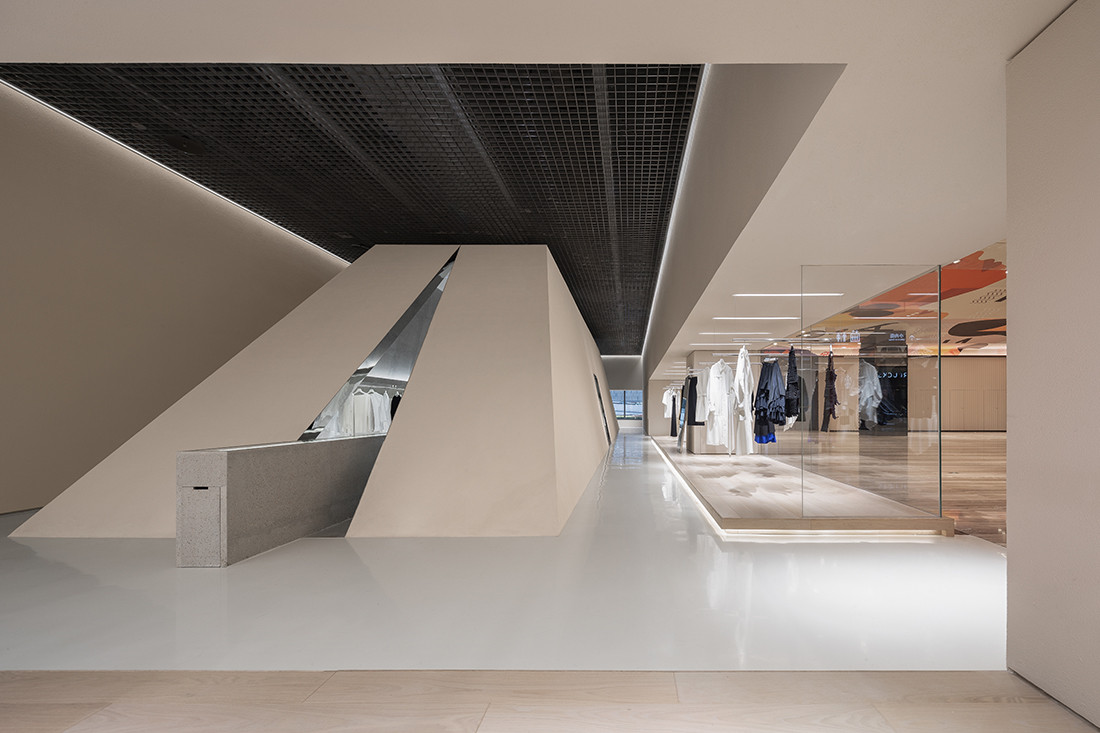
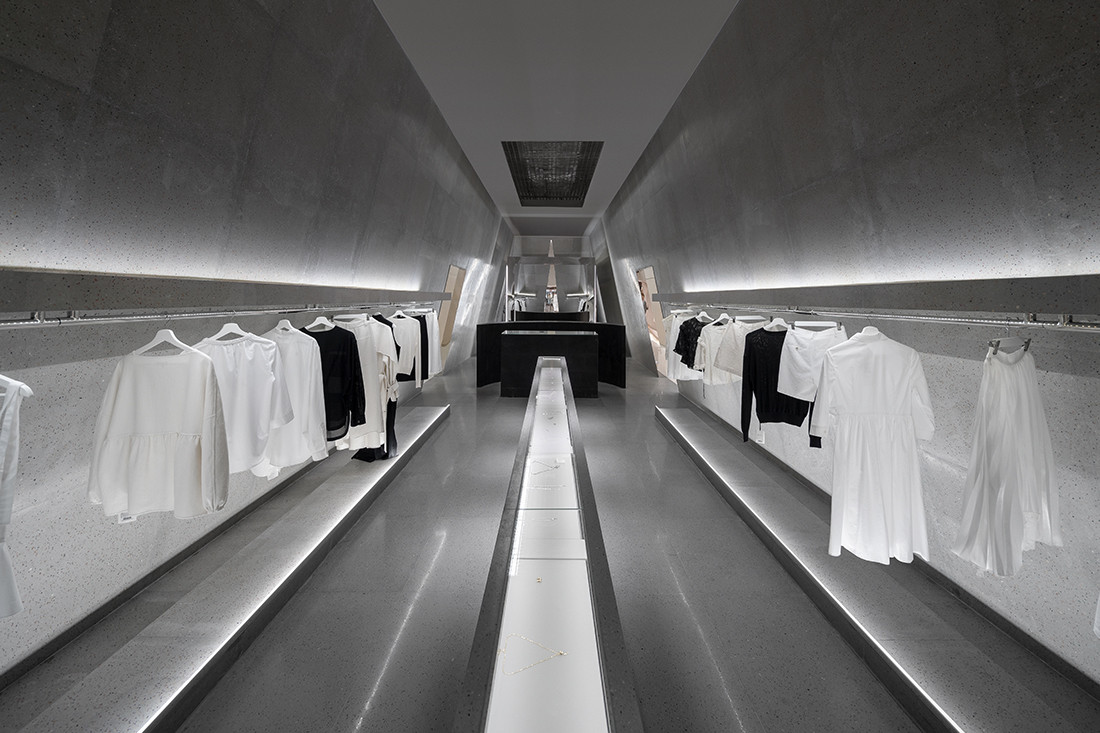
QL: Retailers want to make sure customers walk around the store to see as much as they can. At SND, we made sure they follow a certain route, as you would in a gallery. The interior is arranged around a central pyramid. A small gap, visible from the outside, offers only a peek inside to pique the curiosity of passers-by. When they enter, they have only one way to go.
QL: We want people to slow down, to explore. For SND, we therefore broke with display conventions. Lots of boutiques want to show lots of things in one area. And they often show too many things in total – it’s overwhelming. The pyramid divides the SND space into two areas: one bright and open, the other more charming yet more secretive. The latter houses the most expensive items. And instead of using mannequins, we designed displays that you can leisurely weave in and out of. You’re encouraged to walk back and forth, to see everything.


We think you’ll love these other Chinese retail projects? Join our online design community for weekly inspiration to your inbox.
INDESIGN is on instagram
Follow @indesignlive
A searchable and comprehensive guide for specifying leading products and their suppliers
Keep up to date with the latest and greatest from our industry BFF's!
The internet never sleeps! Here's the stuff you might have missed