The home of architecture and design in the Asia-Pacific
Get the latest design news direct to your inbox!

Get the latest design news direct to your inbox!
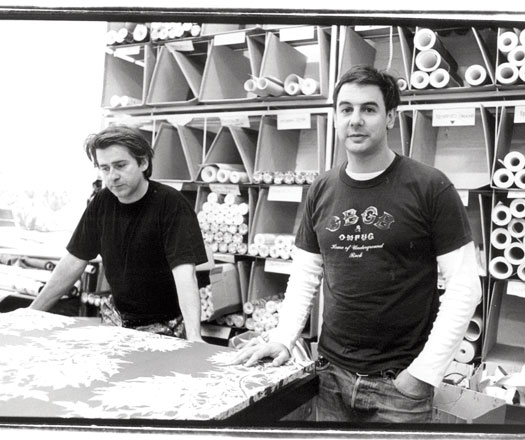
Marg Hearn meets the daring duo behind those experimental Glaswegian textiles designs.
February 22nd, 2010
Timorous Beasties have always dared to be different, producing designs that they really wanted to, taking risks and staying true to their design philosophy.
“It is a gamble that you have to take,” says Paul Simmons, co-founder of the Glasgow-based textile design studio.
Glasgow School of Art textile design graduates, Alistair McAuley and Paul Simmons forged their partnership in 1990 based on a shared attitude of producing what they felt was right and a reaction against the high volume fast turn-around production common to the early 1990s textiles market.
Ideas rich but cash strapped, “we spent a lot of time out in the wilderness living on our wits, experimenting, surviving,” recalls Simmons.
Electing not to be bound by accountants, the practice adhered to the fundamental belief that silk screening need not be restricted to fabric, nor to use of ink, and made the fortuitous early decision not to sell their designs to manufacturers, instead venturing into production themselves.
Their initial design mediums reflected salvaged material boons – from granite remnants of a building that had been bombed by the IRA to wallpaper off-cuts that made possible the production of their first wallpaper collection and exhibition.
“This kicked off a dialogue about pattern, print, recycling and materials,” at a time when wallpaper had become very dull, and could be credited as a turning point in the market’s preparedness to use pattern in a different way.
For the full text turn to page 197 of Indesign #40 on newsstands now.
Browse the gallery for additional project images.
INDESIGN is on instagram
Follow @indesignlive
A searchable and comprehensive guide for specifying leading products and their suppliers
Keep up to date with the latest and greatest from our industry BFF's!
The internet never sleeps! Here's the stuff you might have missed