The home of architecture and design in the Asia-Pacific
Get the latest design news direct to your inbox!

Get the latest design news direct to your inbox!
Steve Leung Design Group curates an upscale ambience distinguished by Japanese design elements and thoughtful spatial plan that offers patrons utmost discretion.

Large Dining Room
January 11th, 2022
For most, food and ambience are the two key factors when choosing restaurants to dine in. God of Teppanyaki, opened in Hong Kong at the end of 2021 dishes out a tantalising fare – at least according to rave reviews online – and presents a sophisticated yet moody setting that ‘teleports’ diners to Japan.
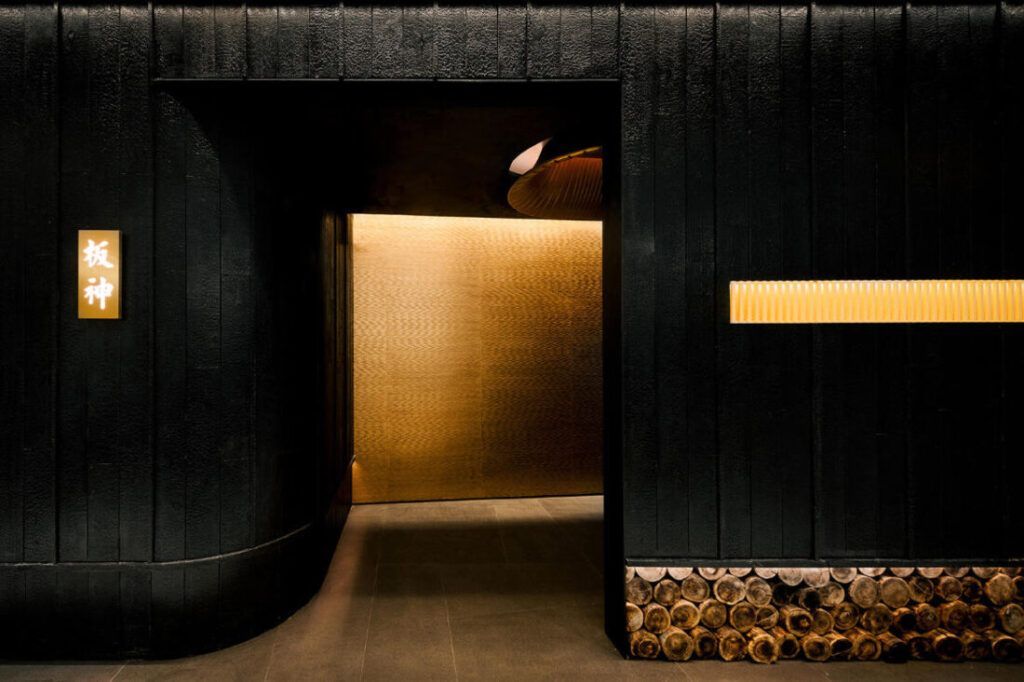
Dark shades and luminous accents pair together beautifully like sashimi would with wasabi, imbuing an understated luxury that Steve Leung Design Group is renowned for. Amid the handsome facade, diners are greeted by a soft, warm glow that leads into the reception area, where a stylish bullet-shaped overhead lighting accentuates the modern take on traditional Japanese culture.

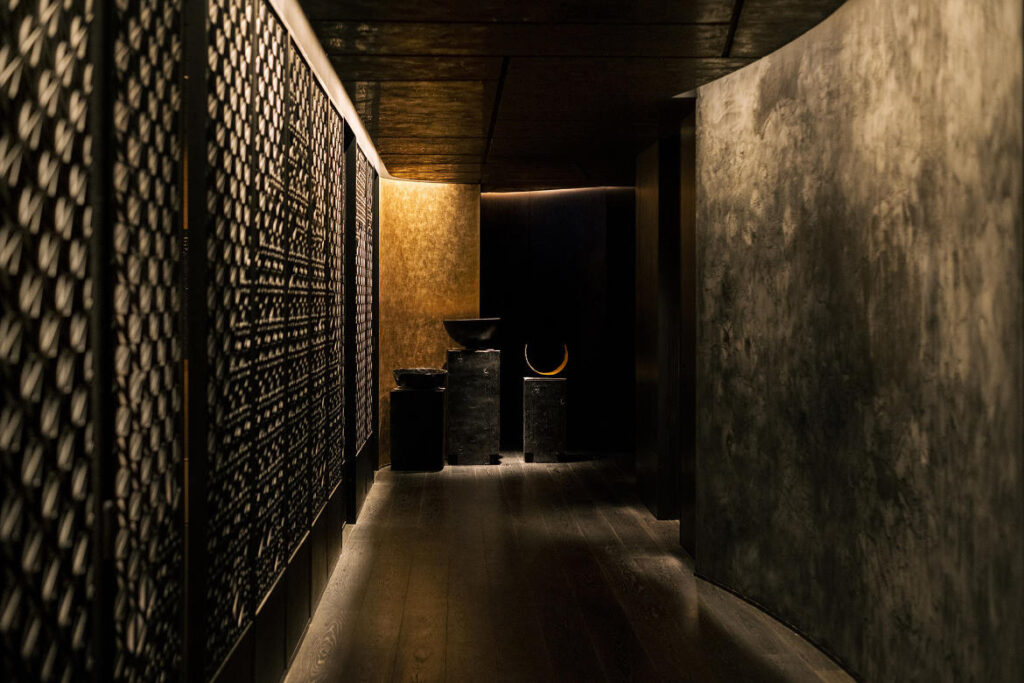
Inside, the 604-square-metre restaurant unfolds a sense of discovery as the generous space is segregated into multiple private dining rooms, a sake bar, a sushi bar, a wine and sake tasting room and elaborate partitions to host small groups of four and up to large groups of 24. The thoughtful spatial design not only curates a variety of dining experiences, but also addresses the increased demand for secluded privacy amid the COVID-19 pandemic.
Connecting the different restaurant areas whilst ensuring visual continuity with the rest of the environs is a bridge-inspired corridor in special metallic paint. Set at the end of the corridor is the tasting room, which houses exclusive wine and sake sourced worldwide, as well as a premiere cigar selection for the aficionados to indulge in.
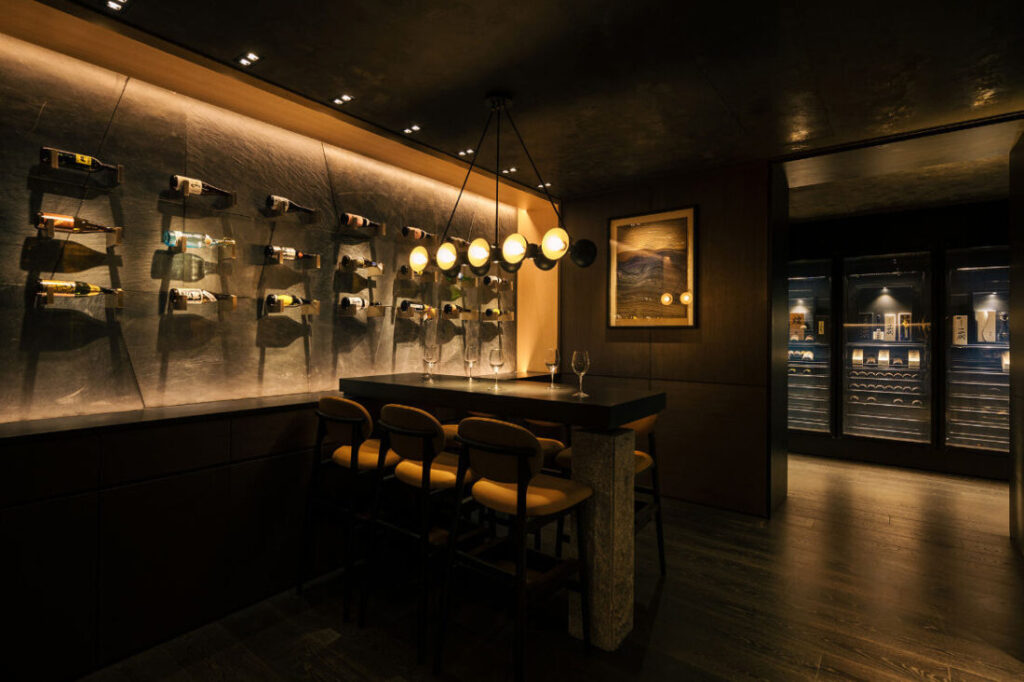
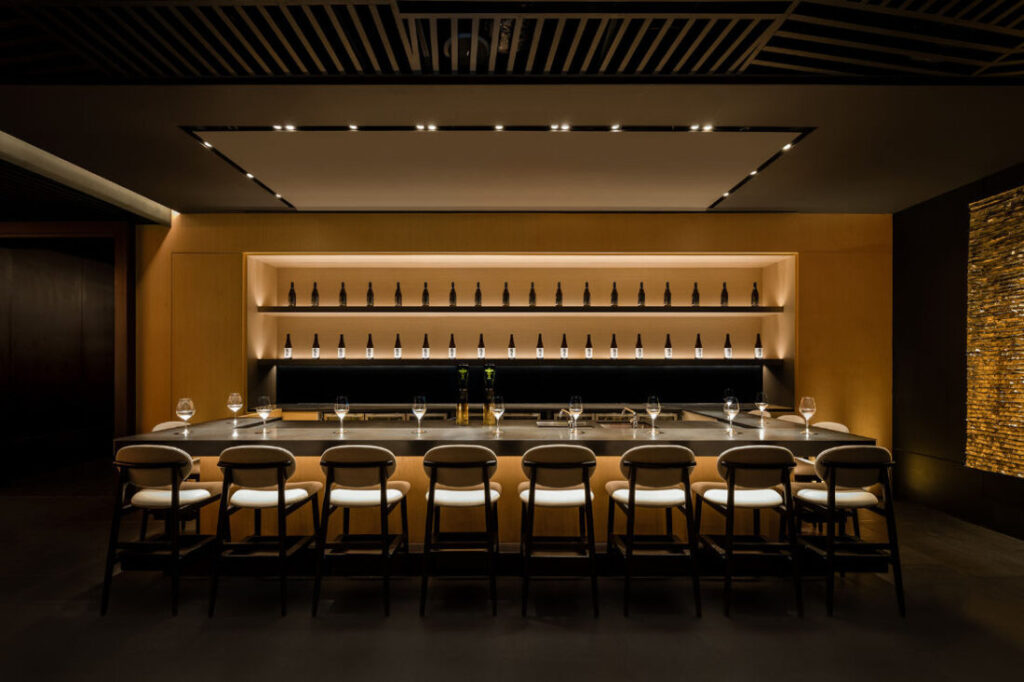
The recurring colour scheme of gold and black is prominent at the sake bar. Recessed lighting was purposefully arranged to shine on the black table surface, allowing the lustre of sake to radiate through the glasses. Meanwhile, the gold accent backdrop imbues sumptuousness to the space and experience.
Set in the prime location of Causeway Bay and surrounded by prestigious Michelin-starred restaurants, God of Teppanyaki also pays homage to the enchanting beauty of Japan’s natural landscape; but were done so tastefully and discreetly.
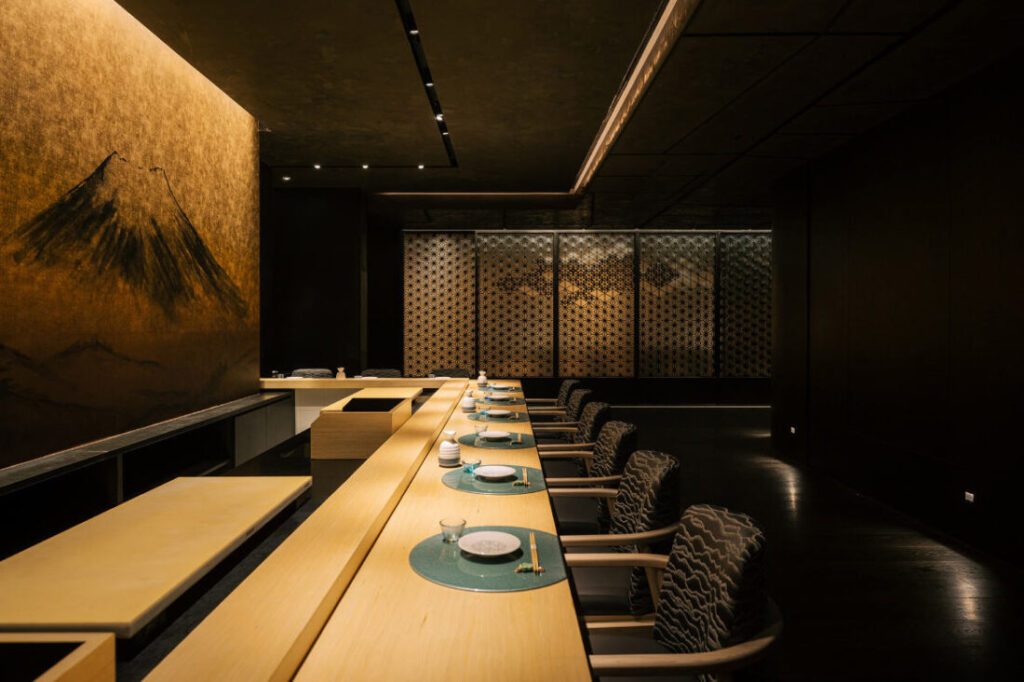
An arresting Mount Fuji backdrop sets the scene at the sushi bar while geometric screens in delicate Kumiko-inspired patterns from adjacent small private dining rooms further reference the strong association with authentic Japanese culture. In terms of materiality, timber and granite are used throughout the gastronomic space.
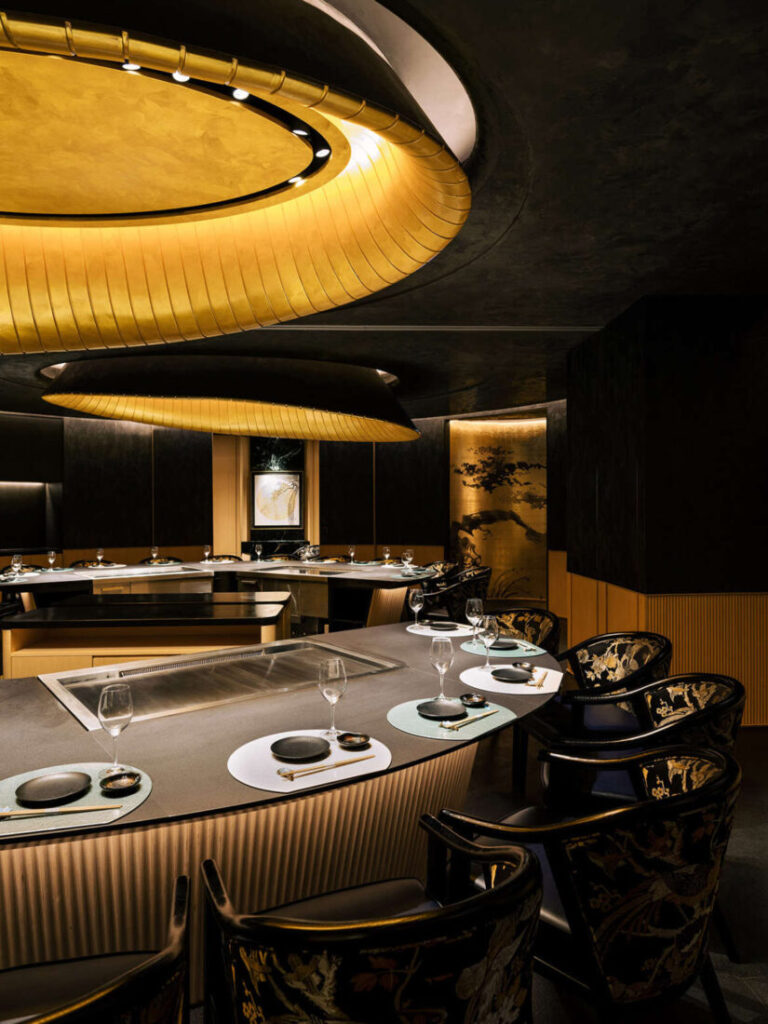
In each of the main private dining rooms reveals a one-of-a-kind horseshoe dining table. The bespoke table set the stage for a unique theatrical experience of chefs showcasing their culinary masterpieces, whilst encouraging seamless and continuous interaction between patrons.
To host a larger group, a hidden sliding panel easily turns two separated 12-seat rooms into a spacious 24-seat setting. Furthering the cinematic experience are dramatic ceiling lights above the teppan tables, which are modelled after Wagasa – traditional Japanese oil-paper umbrellas. These along with the rest of the bespoke lighting were arranged by renowned lighting master Tino Kwan to enhance the design aesthetics and deliver a paradisiacal aura to the restaurant.
Client: Hong Huan Catering Ltd.
Location: Causeway Bay, Hong Kong
Interior designer: Steve Leung Design Group
Design director: Hester Lau
Design team: Ryan Fan
Lighting designer: Tino Kwan Lighting Consultants Co., Ltd.
Developer: Grander Fung Ltd.
Date of completion: June 2021
Time to complete: 6 months (design and construction)
Total floor area: 604 sqm
INDESIGN is on instagram
Follow @indesignlive
A searchable and comprehensive guide for specifying leading products and their suppliers
Keep up to date with the latest and greatest from our industry BFF's!
The internet never sleeps! Here's the stuff you might have missed