Fine jewellery is an investment. And as such, jewellery retail spaces are crafted to project opulence and exclusivity, often at the expense of customer’s ease. Lee Hwa, Singapore’s first publicly listed jewellery brand, offers a warmer and more engaging approach with its new experiential boutique, Lee Hwa’s Jewelspace, at Suntec City.
At the 83-square-metre boutique offers a retail experience modelled after that of an art gallery. Customers can spend their day in the boutique browsing the products, learning more about jewellery and creating bespoke pieces at a workshop. Aiming to connect with the millennial shoppers, Lee Hwa commissioned experiential design practice Parable Studio to design the space.
“The jewellery retail culture has changed, and so the spaces and places that customers interact with the product should in transform in ways that the customer can easily understand and adapt,” says Parable Studio co-founder Ken Yuktasevi.
Parable’s scope in the project included customer experience research, touchpoint design, customer service experience ideation, interior design, signages, and visual merchandising. In crafting the experience of the space, the studio focused on three key areas of experience.

Firstly, the studio took away the physical levels of entry and exclusivity. There is no physical barrier between the boutique’s premise and its broader retail environment. A casual jewellery ‘bar’ serves as a touchpoint that allows customers to stumble into the store without feeling like they have to go through a security screening.
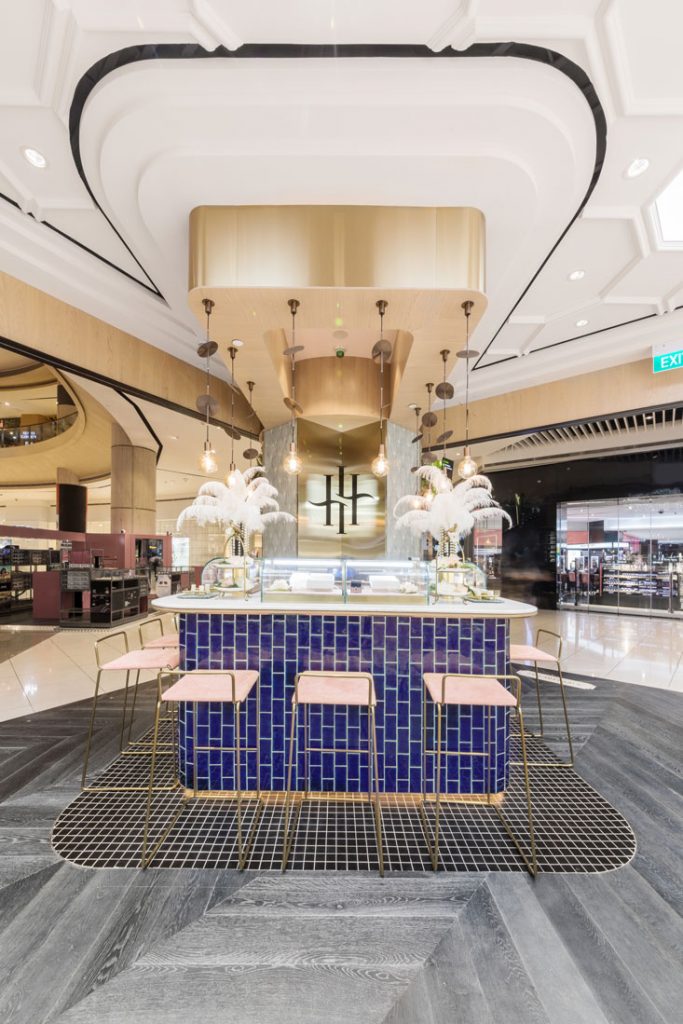
“Customers really want their spaces to be relatable to them in a way that is not overbearing or at the expense of convenience,” says Yuktasevi.
There are few different interactions that can follow this easy entry. Parable created a variety of settings to accommodate these interactions. Customers can interact with staff and products in private coves or in a workshop table setting with a magnifying glass.
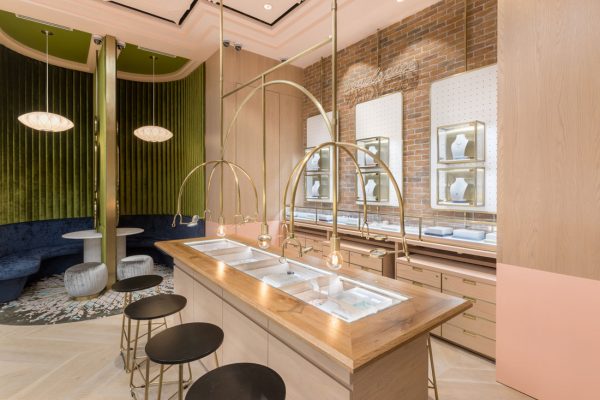
“When a customer walks into the store everything should be in view and easy to understand from the get-go. She feels like she has options to start her journey at her own leisure from simply having an excuse to browse without feeling bad about not buying anything to wanting to go deep in conversation with a salesperson about how jewellery is made,” says Yuktasevi of the customer journey envisioned in the space.
Secondly, Parable focused on enabling the space to empower relationship. “[We] let the staff move away from playing the role of ‘watchmen’ to assuming the relationship as ‘expert friends’,” says Yuktasevi.
The studio replaced all the locking mechanisms with RFID locks. There are no keys being taken out should a customer would like to inspect a jewellery piece. A (seemingly) simple tap will activate a release system that allows them to immediately view the piece.
“This allows the staff to focus less on keeping watch and more on conversations that help customers make the right choices,” adds Yuktasevi.
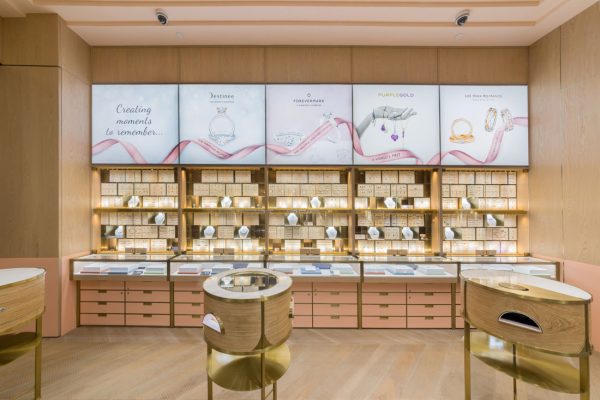
Touchpoint areas are designed around two things: conversation dynamics (from over the counter to side by side layouts) and customers’ viewing preferences, which vary from seeing an array of products at once like an open vertical gallery, to intimate environments that allow more scrutiny of the individual pieces.
Parable also designed three distinct ‘jewelscapes’ that enabled customers to create their own content.
The Infinity Space features a series of mirrors that displays the jewellery (and its wearer) from all angles. Diorama is a seasonal display that invites customers to have a finger catwalk. Fans of the minimalist would love, the Spotlight, a dark space cocooned in black velvet pierced by a single light beam that invites one to step in and bask in the subsequent sparkle.
The third area Parable focused on was the theatrics of the space. Glossy surfaces and metallic sheen are paired with millennial-favourite pastel shades. The lighting plan evokes a flattering daylight effect that renders the space fresh and bright.
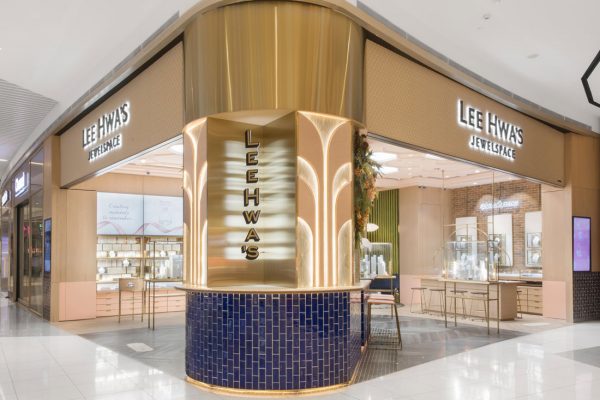
“We wanted to evoke positive emotions from customers based on memories from their first dinner date at an amazing restaurant bar, going to a beautiful art exhibition or discovering unique craftsmanship on a holiday adventure,” shares Yuktasevi of the narrative imagined for the space.
Of the demand of today’s shopper, he offers, “If they are going to make a trip down to a physical store it has to do things for them that digital stores can’t.”
He adds, “I personally feel that the transactional nature of retail will simply move online and the relational part will move to physical spaces. It’s so exciting for designers like us.”