The home of architecture and design in the Asia-Pacific
Get the latest design news direct to your inbox!

Get the latest design news direct to your inbox!
Think ‘chain restaurant’ and you probably won’t think ‘tasty design’. Ensemble challenges that perception by bringing a valuable design experience AND construction efficiency to ramen chain Sō.
September 5th, 2017
We all know the ingredients of chain restaurant design: identity, adaptability, cost effectiveness and efficiency. Things need to be smart but not overly simplified. You don’t want to be reinventing the wheel with every new opening, but neither do you want your charisma to be reduced to supermarket levels.
You need a design framework that’ll allow for variation and a meaningful experience of the interior. That’s what Singaporean design studio Ensemble delivered with the Sō ramen restaurant at NEX mall – the first of five branches that have been rolled out in recent months around the island.
Ensemble Director Leslie Seow believes it was Ensemble’s design method that won the studio the job. “We didn’t offer a signature look so much as a signature method,” he says. “We brought the client on a holistic design journey so they could understand how we interpret things – how we think from a design point of view.”
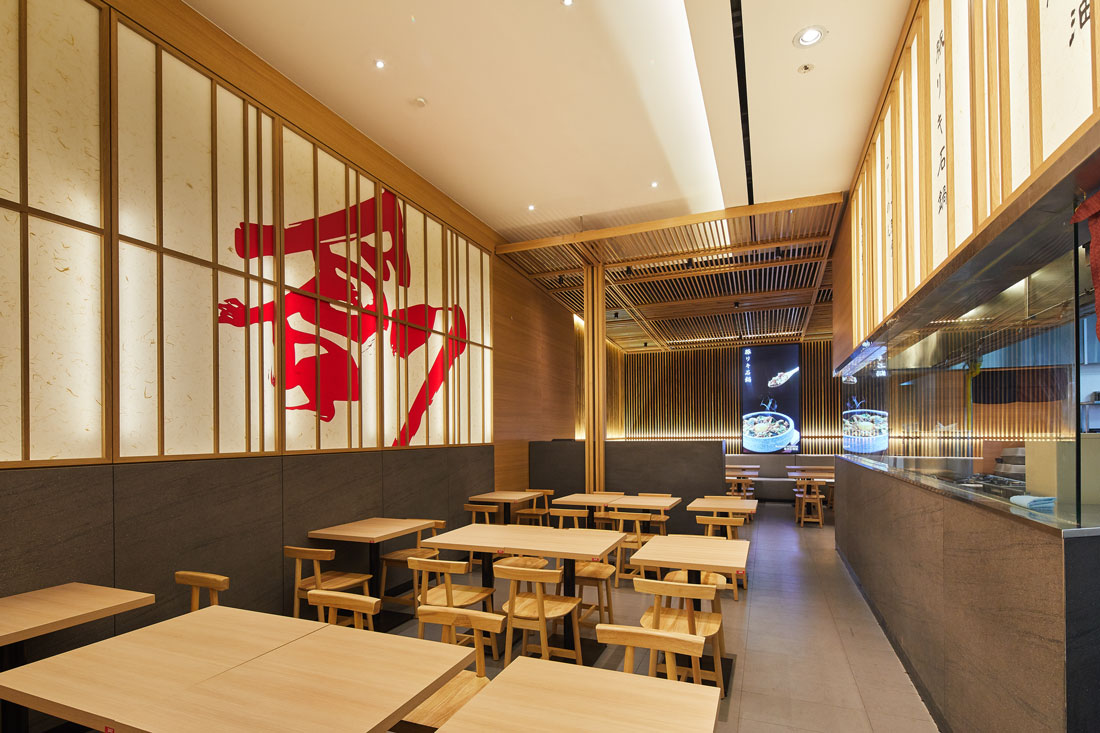
Ensemble’s method involved the development of an oak and bamboo pavilion and screen system inspired by traditional Japanese architecture. For the first outlet, the pre-constructed modular screens were assembled on site within two weeks. Elements of the system have since appeared in subsequent Sō restaurants.
To humanise the tunnel-like floor plan of Sō at NEX, Ensemble divided the interior into three dining zones. The facade and the first dining hall are defined by timber canopies, monolithic stone-like forms, and shoji-inspired screens. The second dining hall sits alongside the show kitchen. In contrast with the typically unforgiving glare of downlights and fluroros, this hall is illuminated by soft lighting that emanates through shoji-like screens. The third dining hall has the character of a private enclosure wrapped in oak and bamboo screens. Custom-made dining chairs were inspired by torii gates.
“We wanted to use the wall and ceiling design to make each of the spaces feel different while preserving a common language,” says Seow. It’s an approach that is easily transferable to alternate locations with the backstop of efficient modularity.
The expression of the Sō brand is not just about its logo or the treatment of its walls, as is commonly encountered in Singaporean chain restaurants. Ensemble has developed a three-dimensional character that can be enjoyed while it etches itself in the memory.
INDESIGN is on instagram
Follow @indesignlive
A searchable and comprehensive guide for specifying leading products and their suppliers
Keep up to date with the latest and greatest from our industry BFF's!
The internet never sleeps! Here's the stuff you might have missed