The home of architecture and design in the Asia-Pacific
Get the latest design news direct to your inbox!

Get the latest design news direct to your inbox!
Fancy a spatially driven history lesson in the park? You’ve still got time. Zarch Collaboratives’ Pathfinder series of pavilions for the Singapore Bicentennial will stand till 31 December.
September 20th, 2019
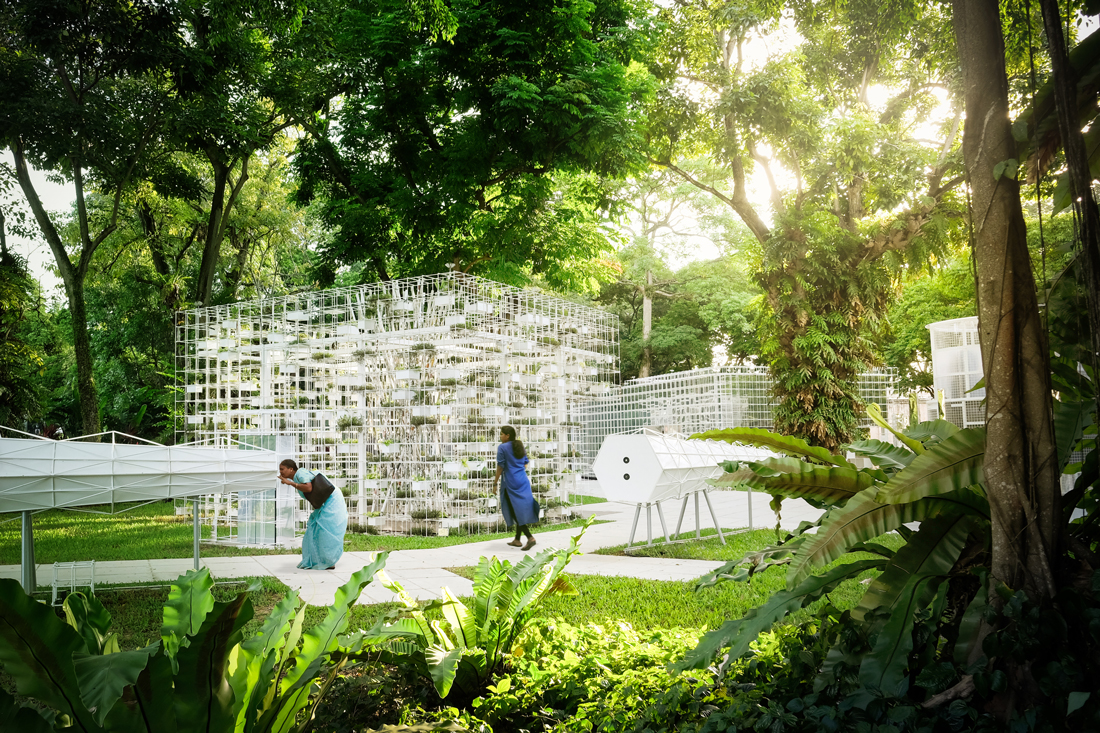
Though they’ve been created to mark Singapore’s bicentenary, the Pathfinder Pavilions in Fort Canning Park allow a spatial, visual, aural and digitally augmented exploration of 700 years of history.
The seven temporary structures were designed by Zarch Collaboratives with white steel lattice and arranged in accordance with an ordinate system of axes that take into account the context and layered history of Fort Canning.
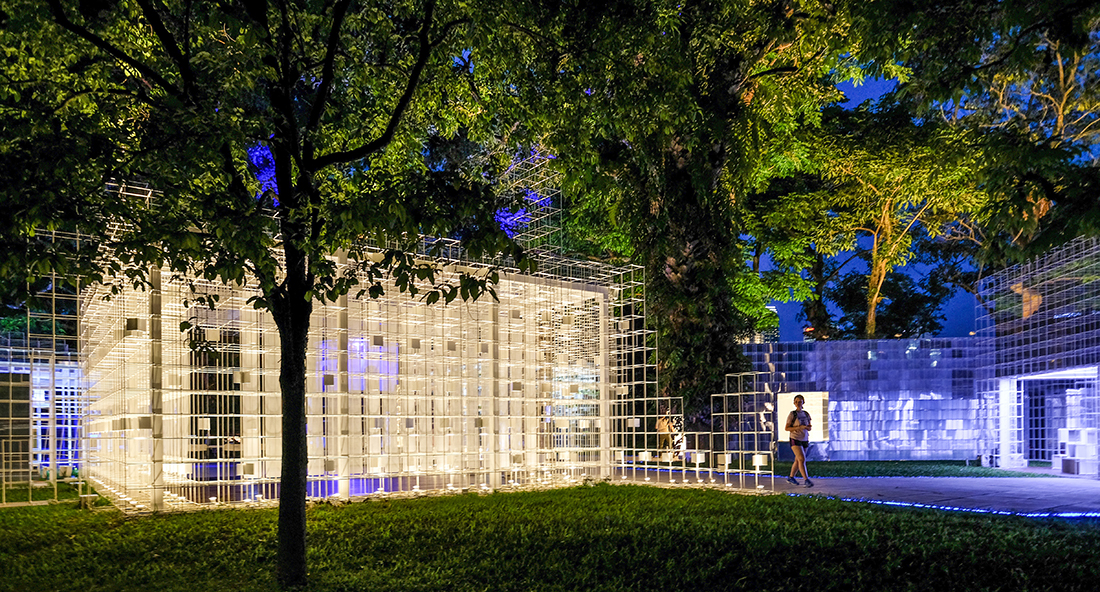
The steel lattice volumetrically expands and dissolves away in response to the landscape condition of the site. “The de-materialisation of architectural form coincides with a curation that seeks to ‘de-museumify’ the experience for visitors, who can enjoy the content within an open park setting,” say Zarch Collaboratives.
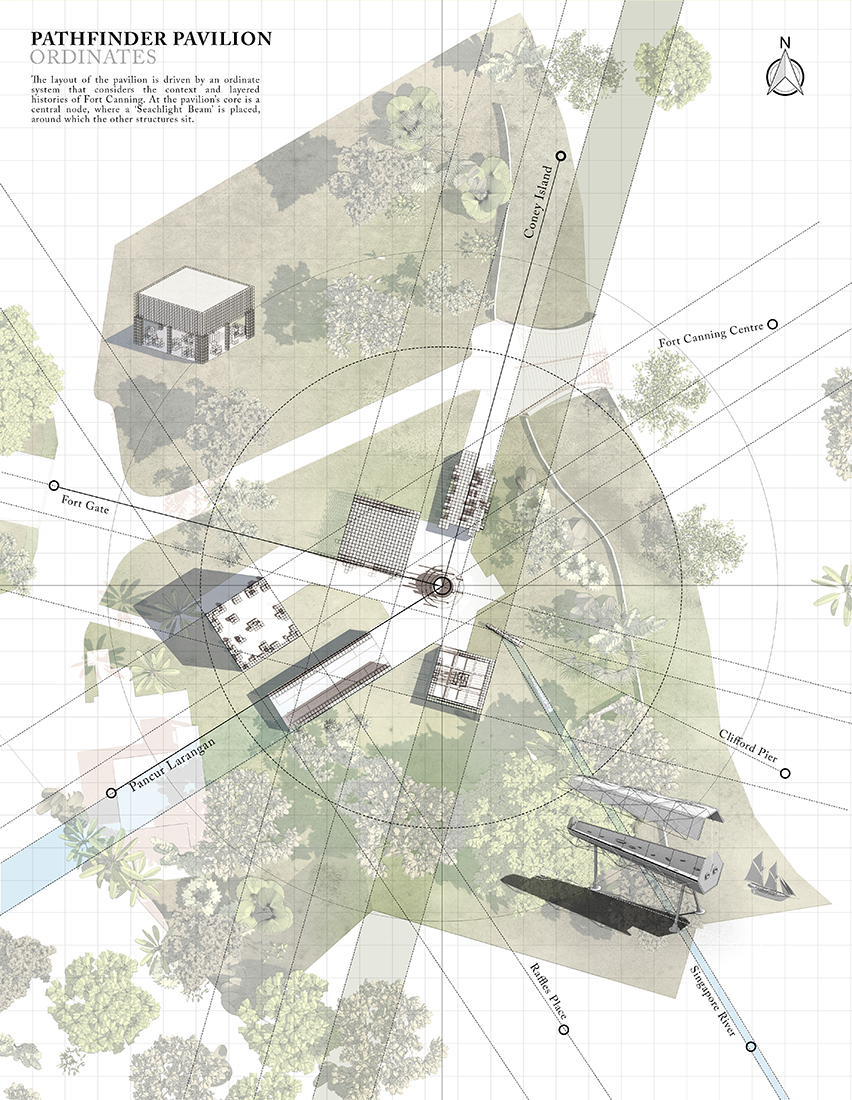
A series of directional passageways guides the visitor. The axes point to landmarks within Fort Canning (Fort Gate, Fort Canning Centre, Pancur Larangan) as well as other locations of historical and national significance (Coney Island, Clifford Pier, Singapore River, Raffles Place). The grid of the steel lattice is an expression of the units of cartographic measurement.
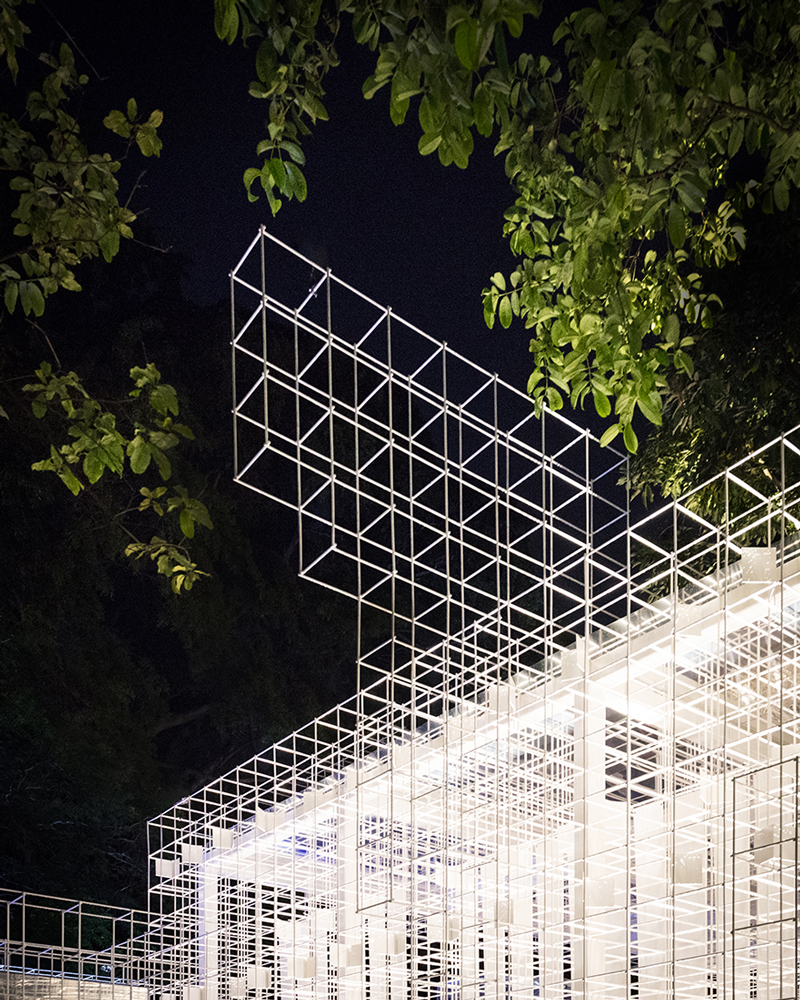
The adaptability of the lattice grid sees it readily transformed into display shelving, tables and seating, as well as a framework for modular attachments such as kinetic wind sails, planters and pools. The planters will allow some of the pavilions to be claimed by the vegetation that grows from them.
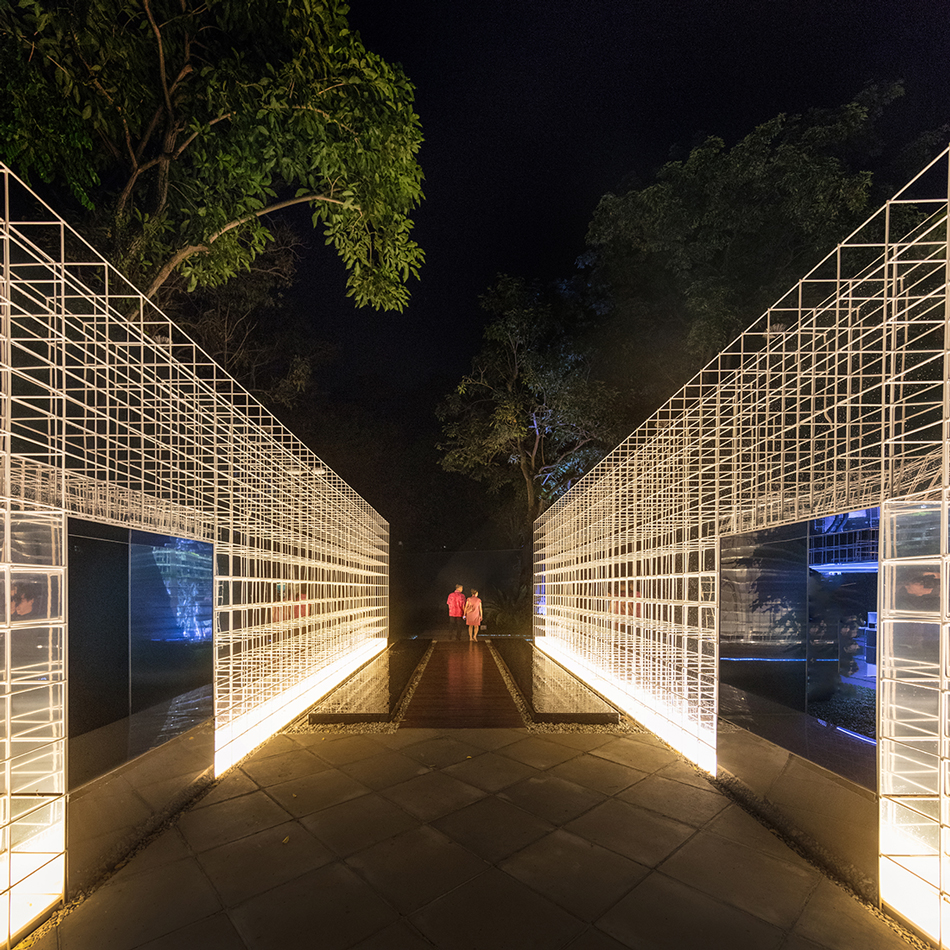
“A curated planting palette responds to Fort Canning as the site of Singapore’s first botanical garden, showcasing native plants and those which were cultivated for aesthetic and economic reasons,” says the Zarch team.
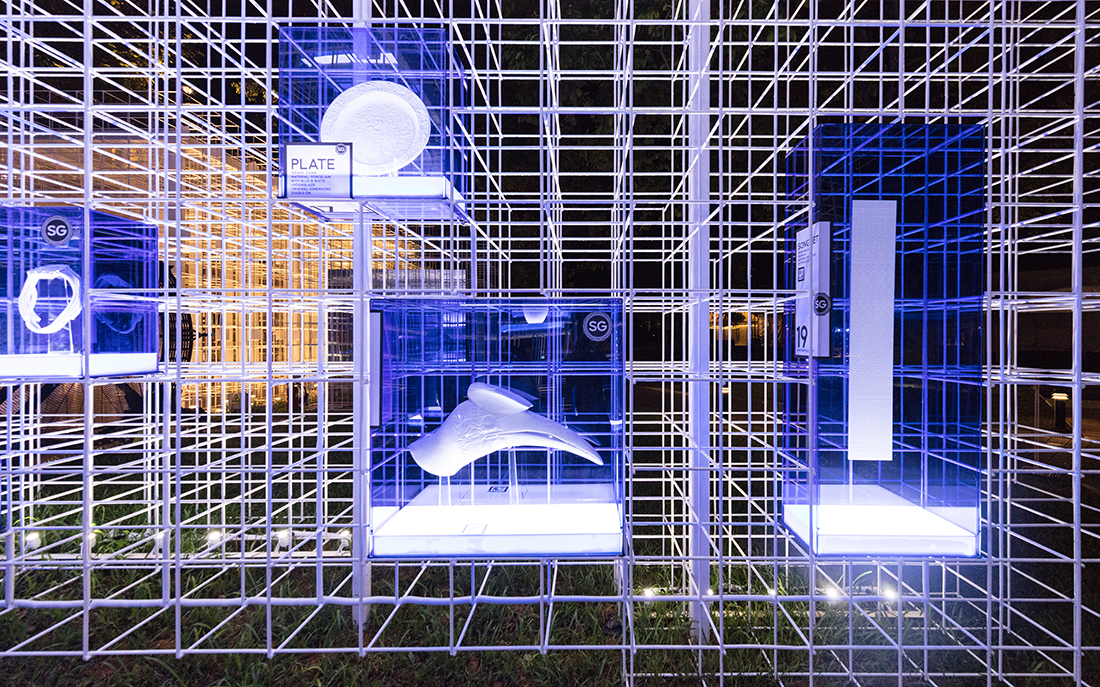
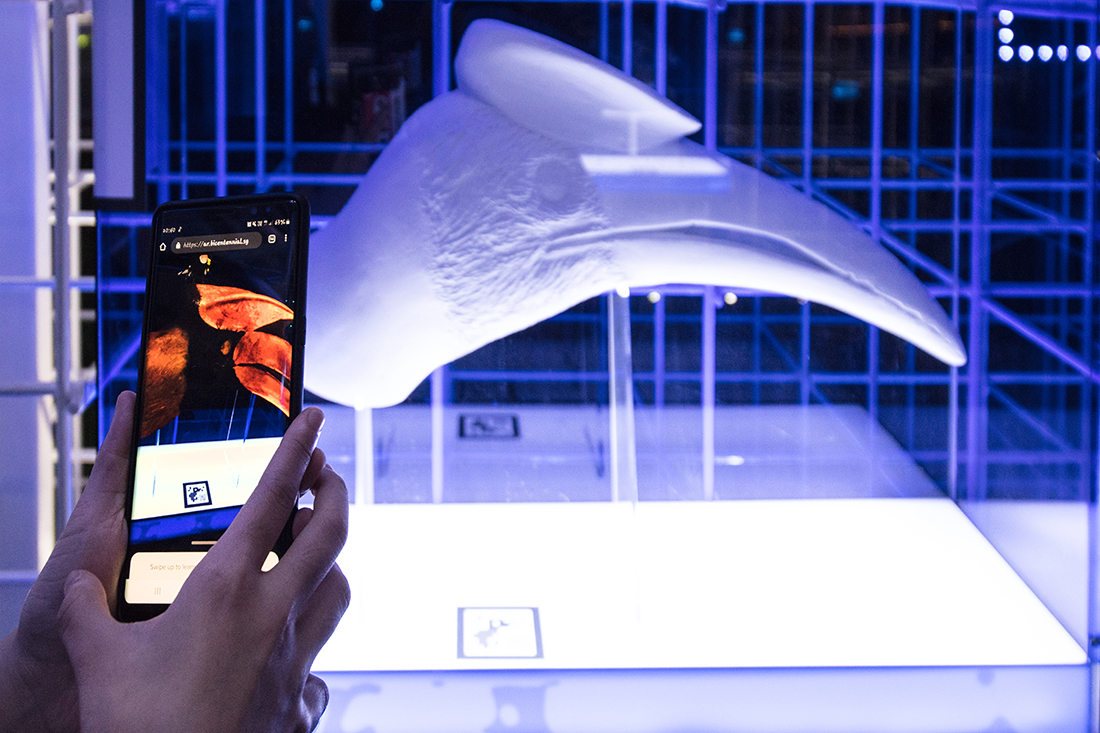
Among the installations is the ‘Emporium of the East’, which showcases trading goods that were found in Singapore and the surrounding region between the fourteenth and sixteenth centuries. Zarch selected some items for enlargement via 3D printing. These are presented within blue acrylic boxes. Visitors are encouraged to use AR technology to scan and interact with the objects within the architectural space.
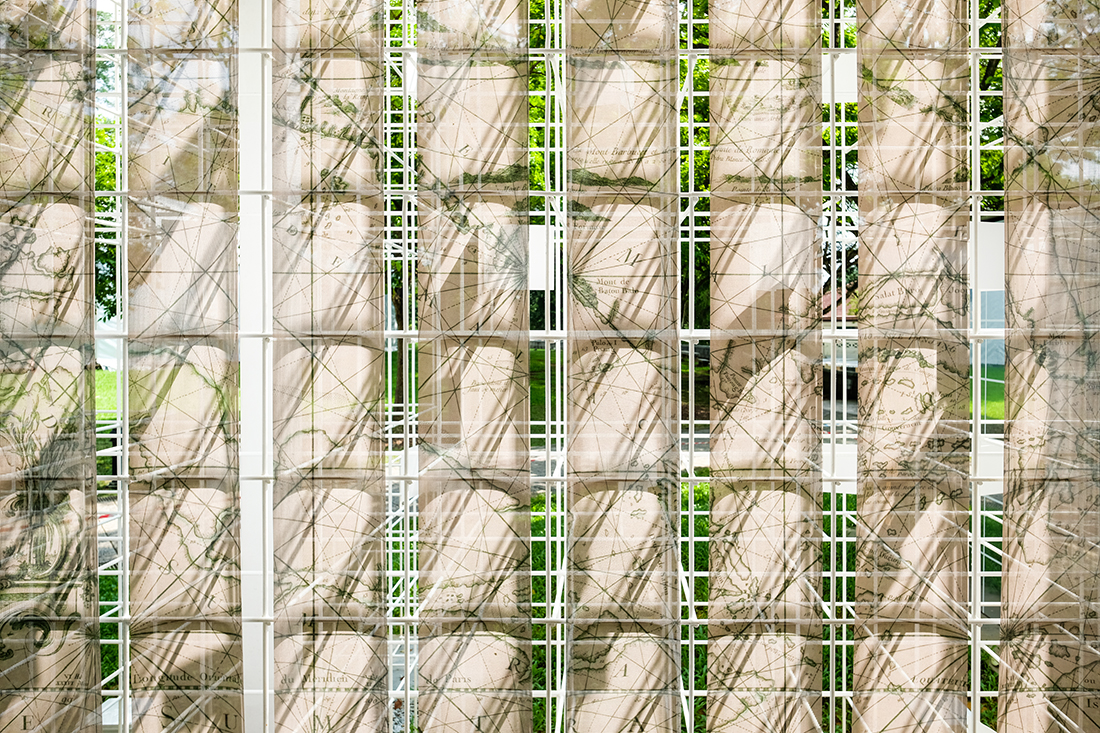
On another pavilion, termed the ‘House of Maps’, a kinetic facade mimicking sails responds to the wind. The ‘Seed Conservancy’ meanwhile features 700 years worth of flora – native species as well as those brought here by nature or humans.
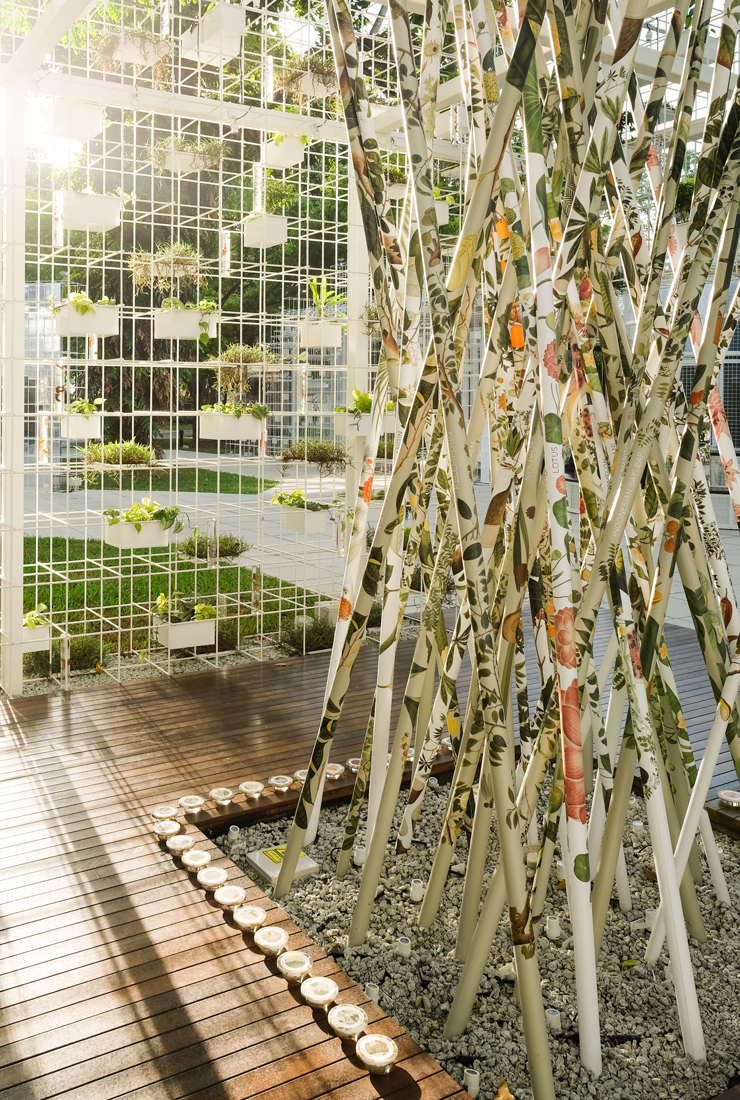
A bamboo-like installation adorned by botanical drawings from William Farquhar’s Collection is surrounded by seeds suspended in resin tubes.
This journey into Singapore’s history, minus the traditional museum framework, leaves plenty for visitors to interpret on their own steam. Visit the Pathfinder pavilions before they close at the end of the year.
Client: SBO (Singapore Bicentennial Office)
Architect: Zarch Collaboratives Pte Ltd
Architect’s Design Team: Randy Chan, Fiona Tan, Finbarr Fallon
Contractor: Kingsmen
Lighting Consultant: Ctrl Fre@k
INDESIGN is on instagram
Follow @indesignlive
A searchable and comprehensive guide for specifying leading products and their suppliers
Keep up to date with the latest and greatest from our industry BFF's!
The internet never sleeps! Here's the stuff you might have missed