The home of architecture and design in the Asia-Pacific
Get the latest design news direct to your inbox!

Get the latest design news direct to your inbox!
What sorts of experiences will we want from the city when online retail diminishes the scope of shopping even more than it already has? A mixed-use development puts the emphasis on F&B, porosity and shared spaces.
June 12th, 2018
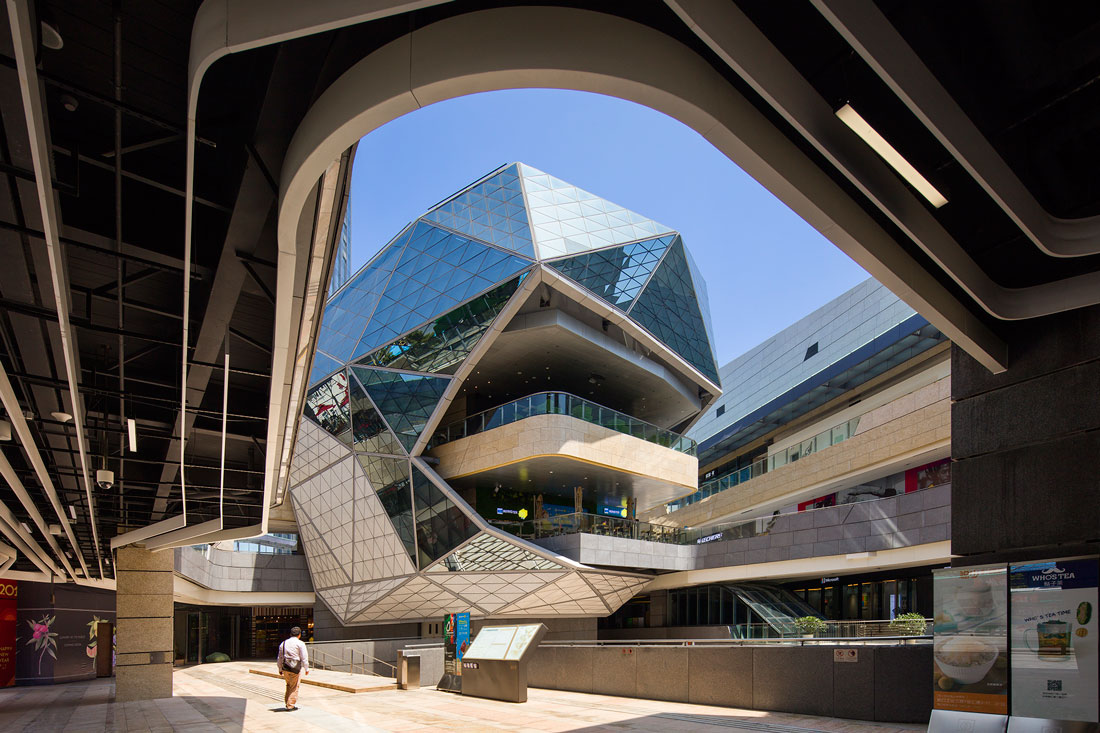
The design of Gateway One, a mixed-use development and transport hub in the Shekou district of Shenzhen, China, was in gestation before the effects of online retail on physical space began to be seriously felt. But the approach taken to its planning nonetheless makes for a valuable case study of how the mixed-use model might evolve in response to the new retail era.
“There’s a mantra that shopfronts in malls should all be clearly visible,” says Stephen Pimbley, a Director at SPARK’s Singapore studio. “But we think it’s just as important to see people enjoying themselves. F&B is what keeps people going to malls these days,” he says, with reference to the emphasis placed by SPARK on spacious F&B terraces, open plazas and pedestrian routes at Gateway One.
“Shop sizes are shrinking, and large retail spaces are being repurposed onto education, healthcare or F&B spaces,” observes Lim Wenhui, a Director at SPARK Singapore. She continues, “These days there are a lot more conversations with clients about communal, experiential spaces for new commercial projects in an effort to attract consumers. But the scale of these spaces is limited by the efficiency targets of the developers and operators.”
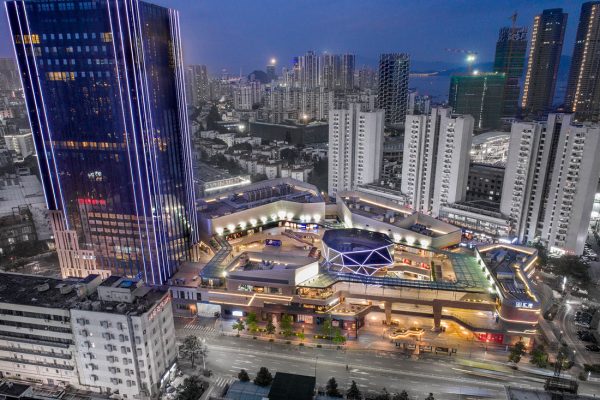
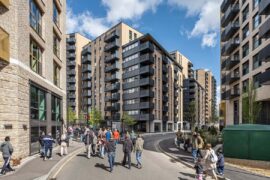
Gateway One consists of a 27-storey office tower beside a matrix of five low-rise pavilions. Communal spaces are layered from basement level (which links with a train station and incorporates a bus terminal) to ground level (where open courtyards create ‘retail rooms’) to the upper floors (where F&B terraces take prominence) in a web of pedestrian routes. The entry corners of the pavilions are ‘softened’ with curvature to encourage pedestrian flow into and through the development.
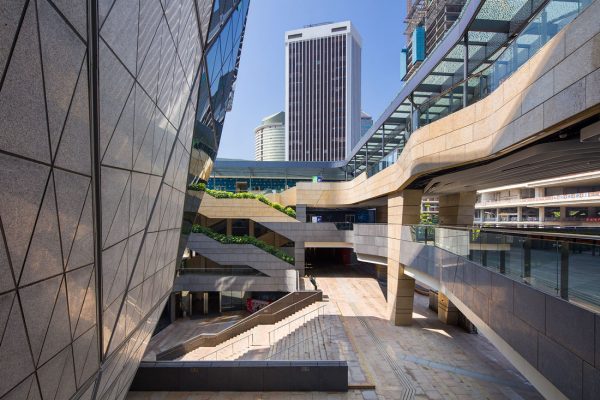
For the developer and operator, the network of open areas was a means of creating opportunities for the staging of events and promotions. But from SPARK’s perspective, the bigger conceptual picture was capturing the relaxed atmosphere of Shekou and the seaside location of Shenzhen.
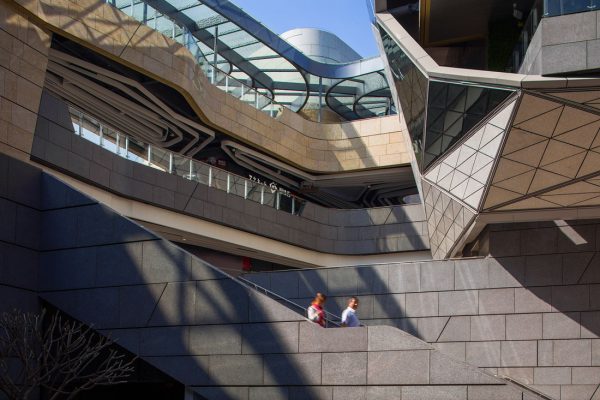
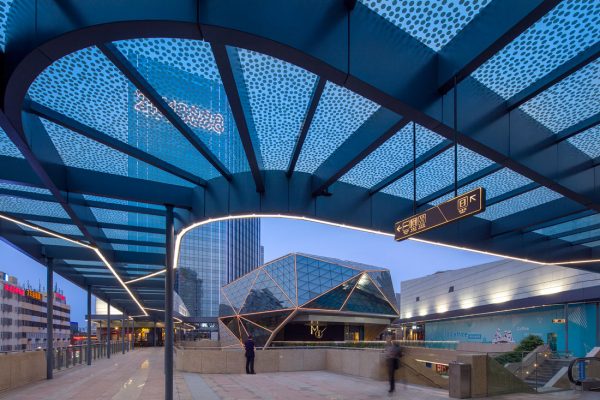
“We were thinking about the seaside experience,” says Pimbley. “Places like Brighton Pier are destinations for a communal experience underpinned by F&B. But in malls, F&B is typically on the inside and retail facades are on the outside.” Gateway One flips that tradition. While the pavilions have continuous glazed shopfronts at ground level to maximise the retail frontage, the F&B terraces on the upper levels help the building retain liveliness outside normal retail hours.
Read the full article in Cubes issue 87.
Project photography by SJ Photo, courtesy of SPARK.
INDESIGN is on instagram
Follow @indesignlive
A searchable and comprehensive guide for specifying leading products and their suppliers
Keep up to date with the latest and greatest from our industry BFF's!
The internet never sleeps! Here's the stuff you might have missed