The home of architecture and design in the Asia-Pacific
Get the latest design news direct to your inbox!

Get the latest design news direct to your inbox!
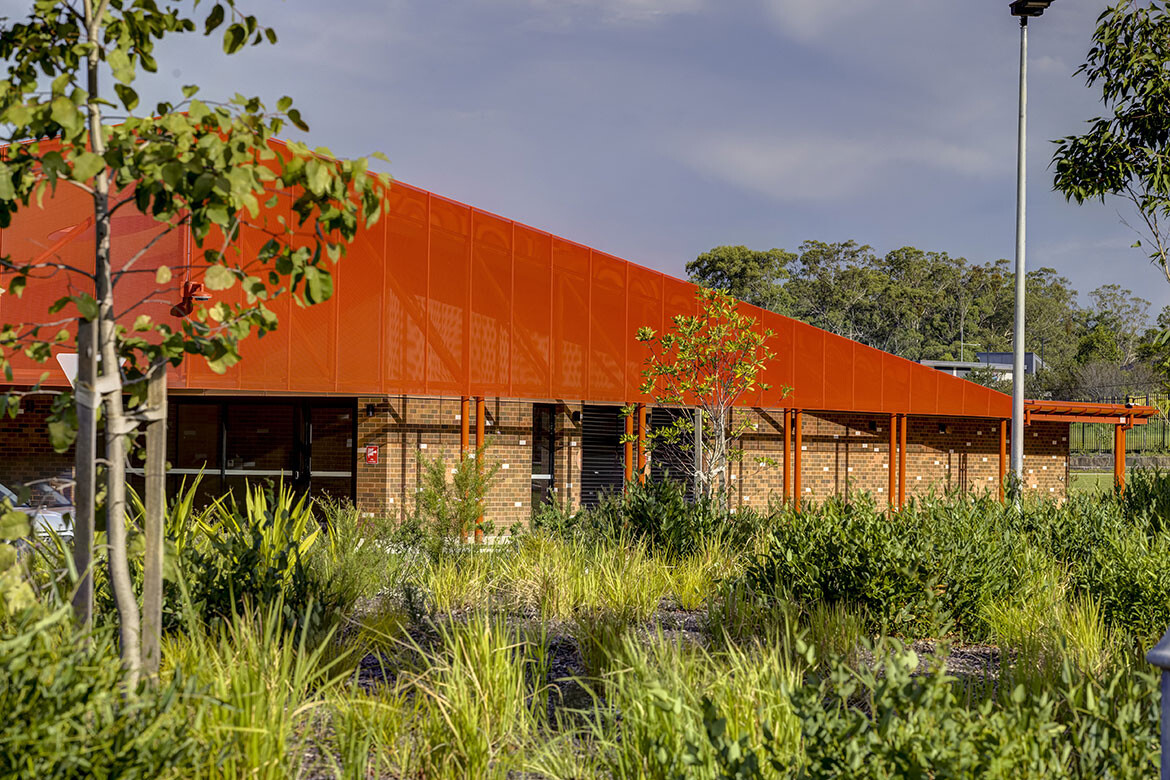
A new Sydney sports pavilion designed by Sam Crawford Architects (SCA) finds inspiration in the deep archaeological history of Indigenous sites nearby.

March 19th, 2026
Sport, we’re always told, is so central to Australian identity. But how often do sporting conversations think about anything older than a few decades? Even when it comes to inherited British sporting codes, the Australian consciousness barely registers their pre-history in the old country.
At Willowdale Sports Precinct, SCA’s conceptual framework is refreshingly wider, deeper and – historically speaking – a lot longer. Gabrielle Pelletier (Associate Director, SCA) explains how the client uncovered evidence of more than 10,000 years of habitation through archaeological investigations: “The creek line running through the site was a meeting place for the Darug, Dharawal, and Gundungara peoples – somewhere to trade, gather and share meals, as evidenced by the discovery of clay ovens.”
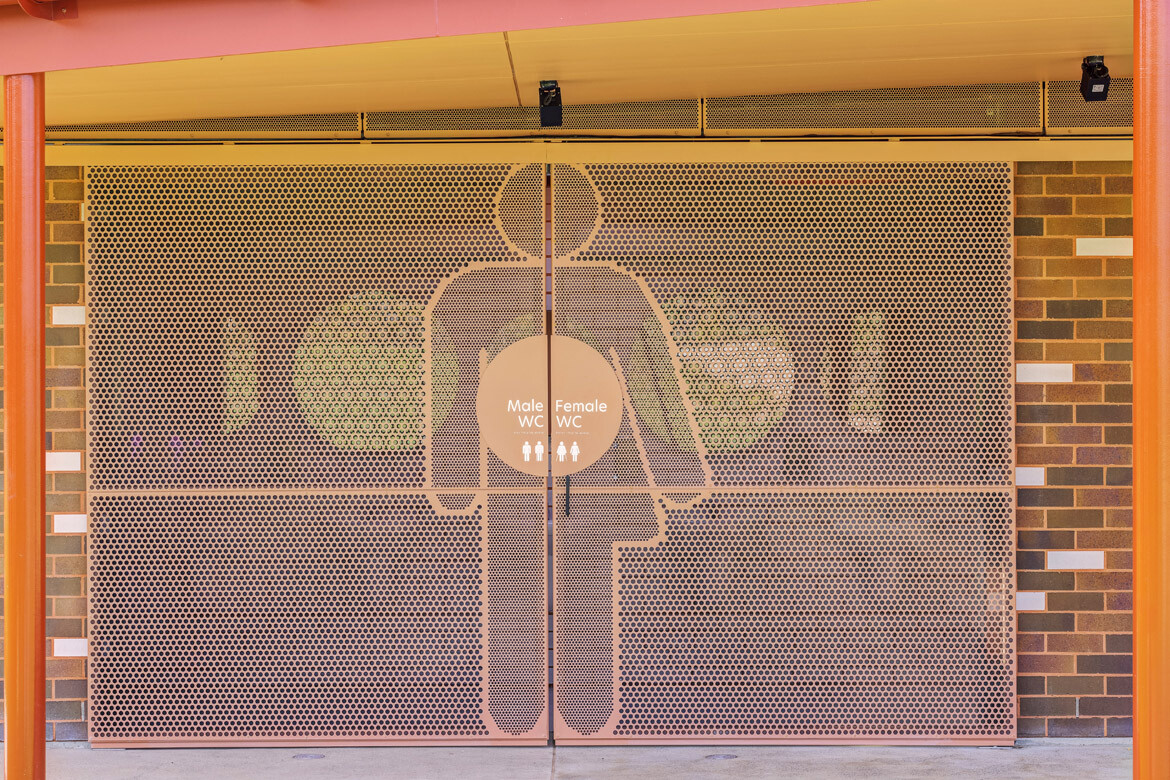
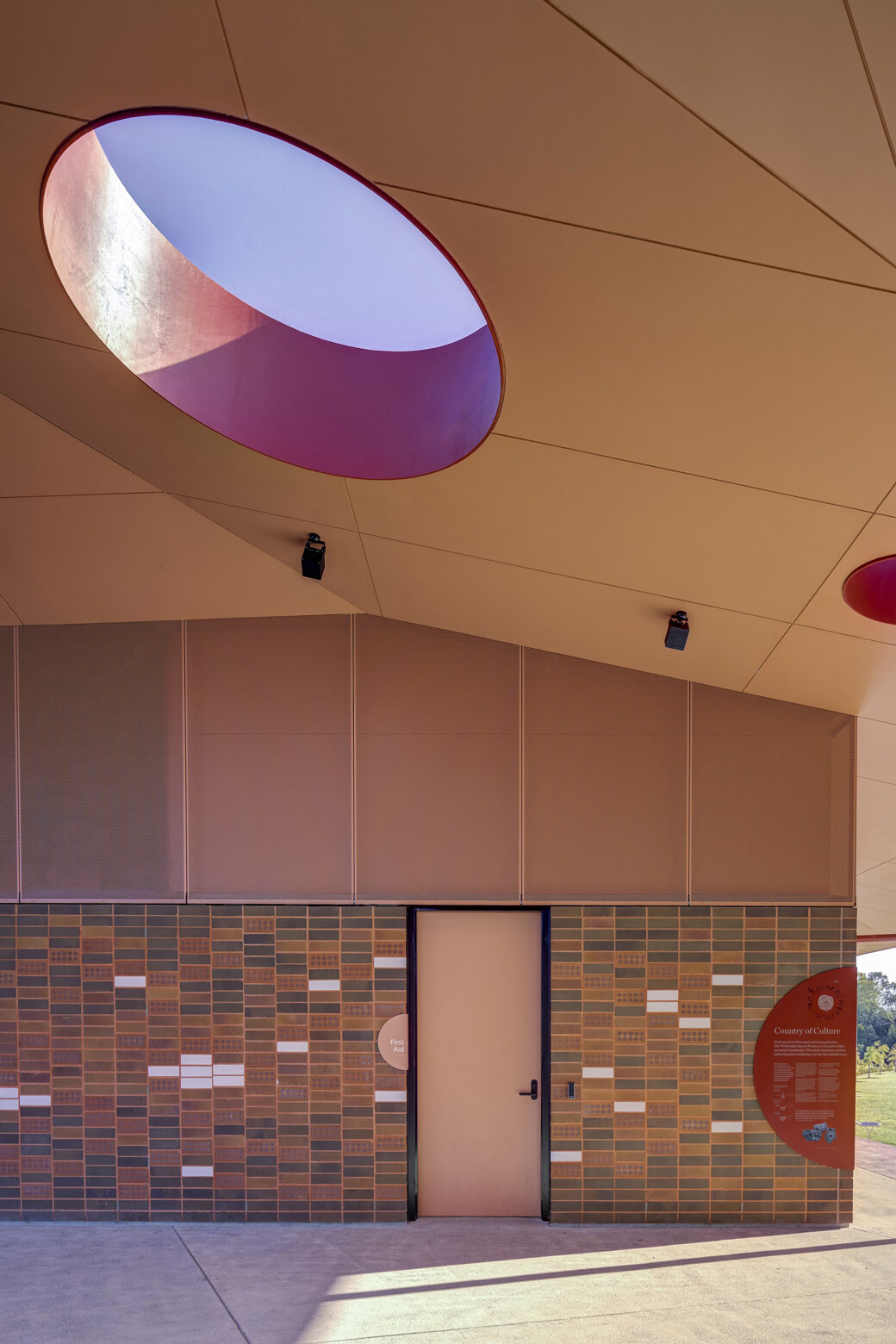
These clay ovens provide a significant point of inspiration for the project. An integrated art work, developed in collaboration with artist Lymesmith, includes clay bricks with multiple colours of ‘patterned earth’ – fire, clay and ash.
Sonia van de Haar, creative director Lymesmith, explains further: “At Willowdale, ancient camping sites exist side by side with new suburban houses. We wanted to give the people living here today an opportunity to learn about the incredible history of the site. It’s an invitation to engage with a deeper story of place.”
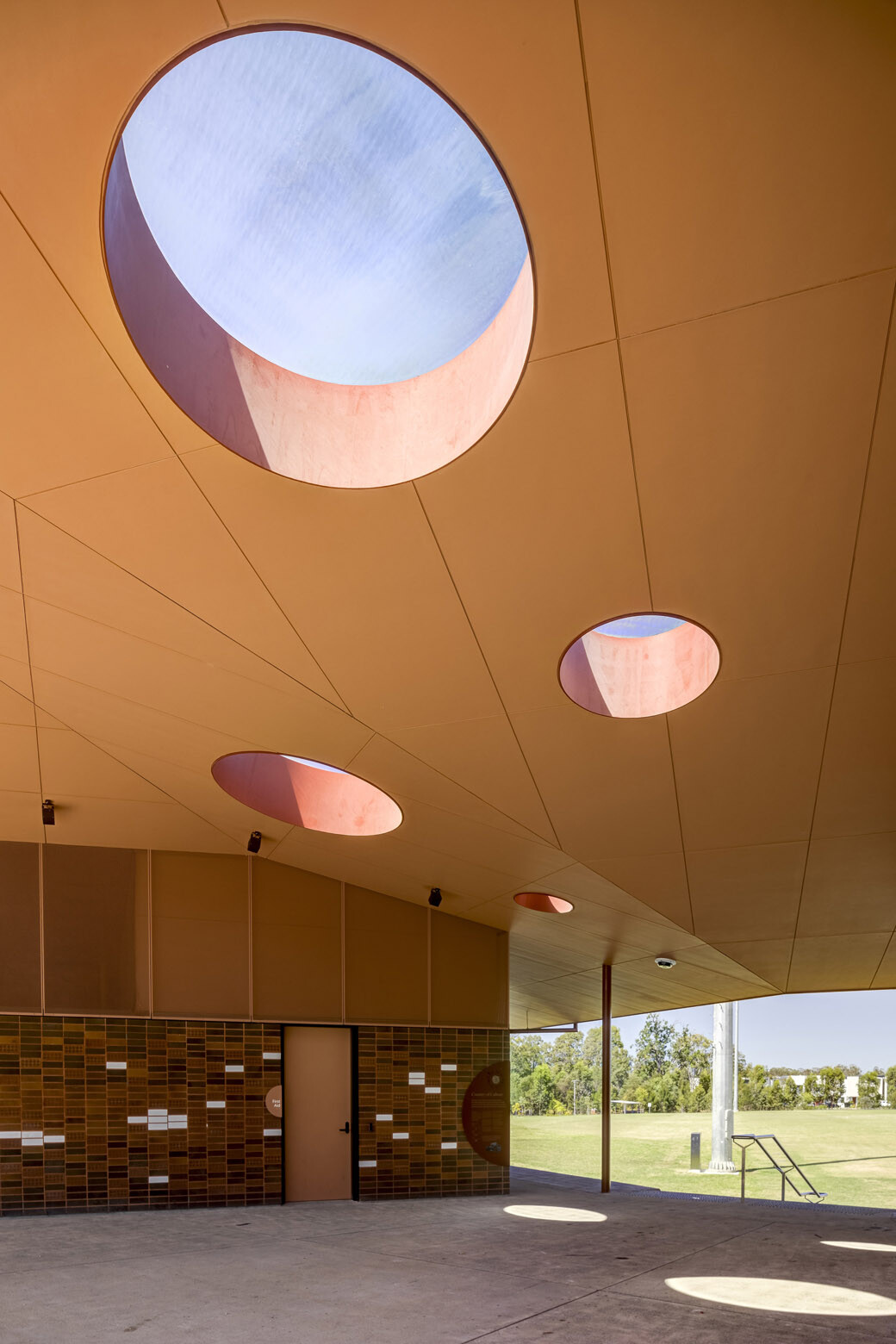
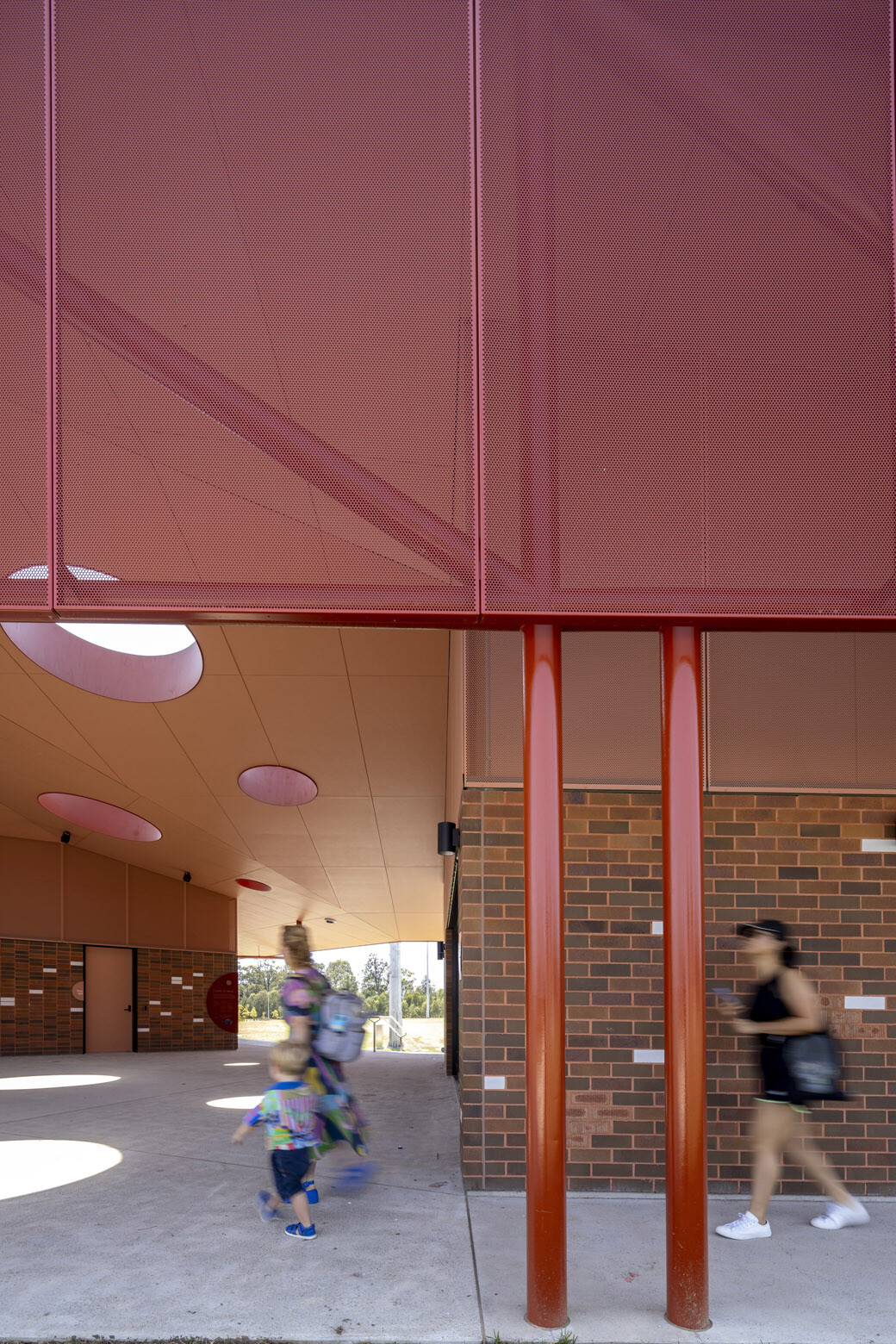
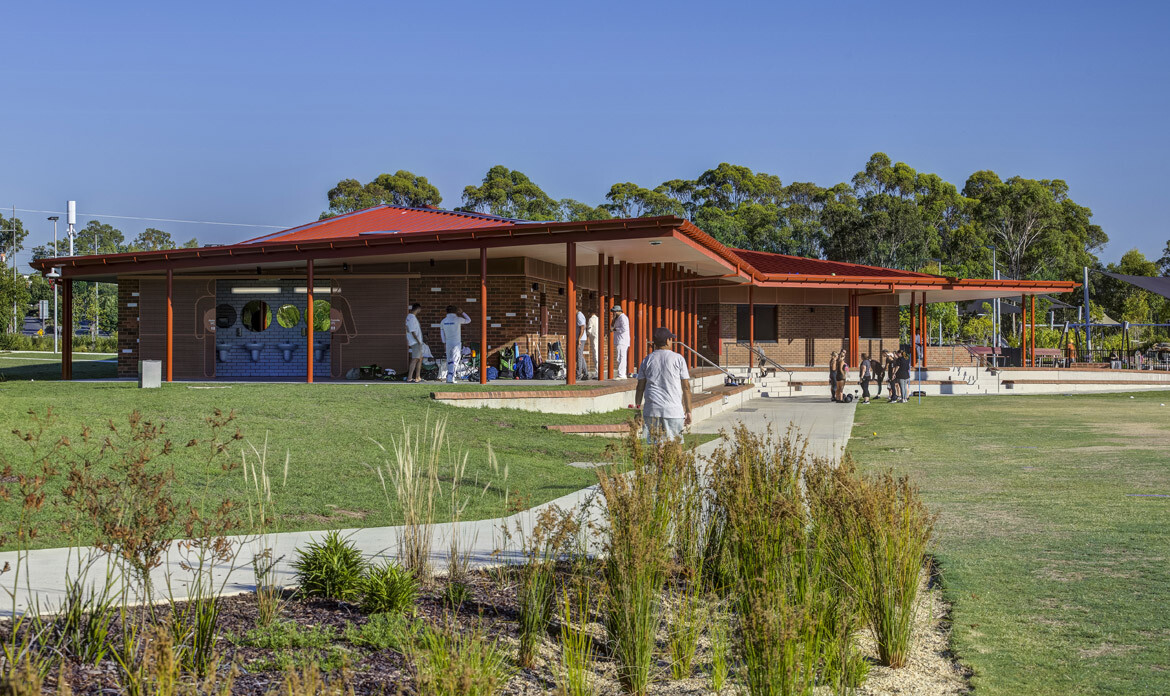
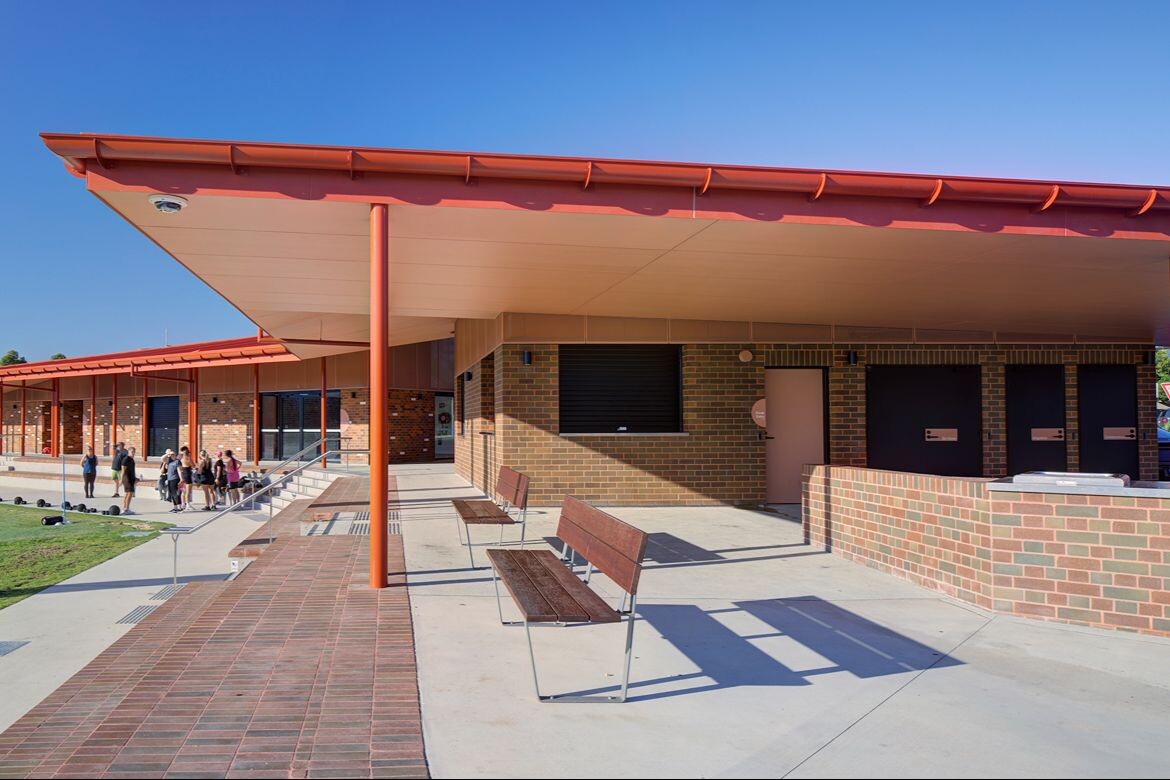
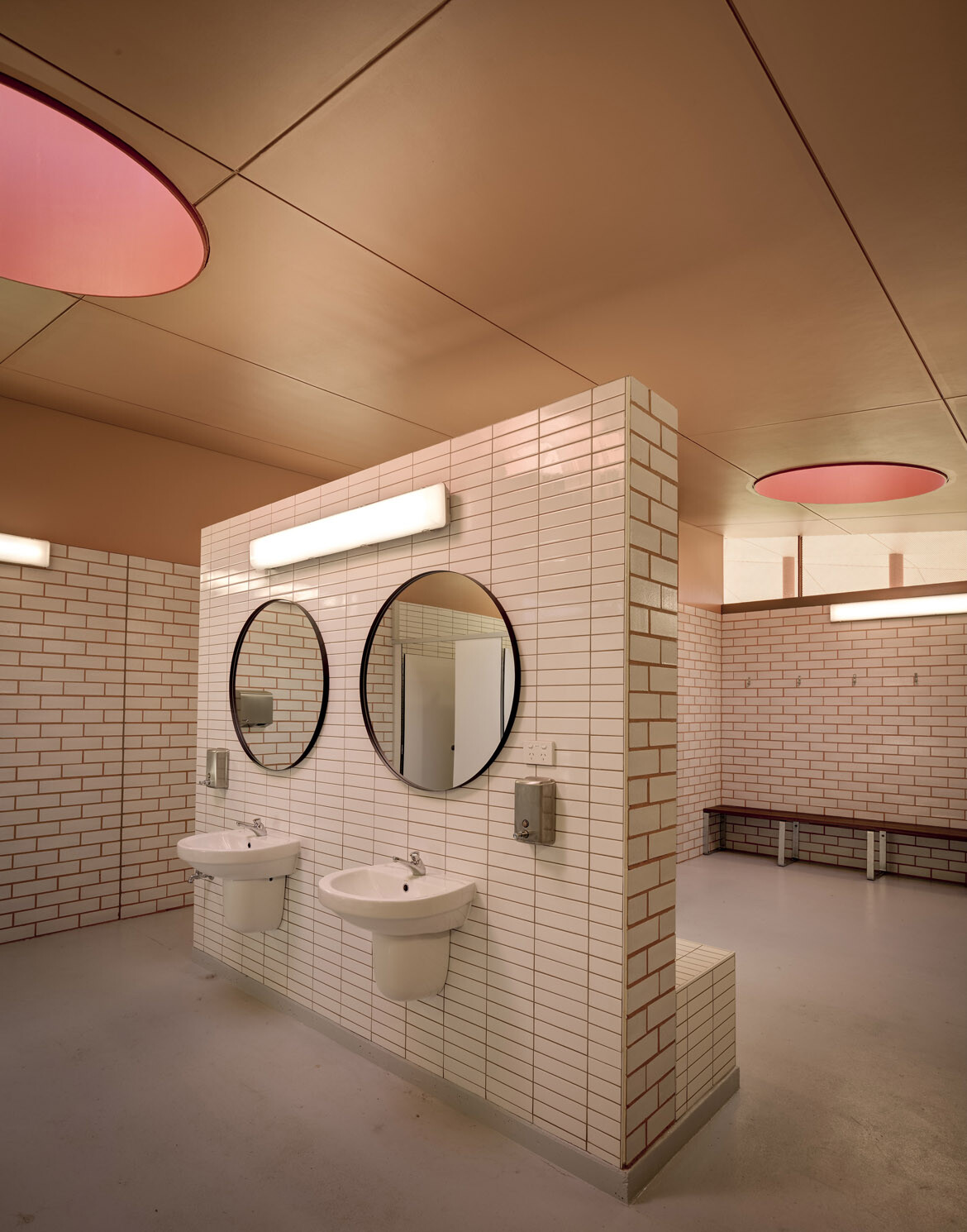
Working with four different brick types, Lymesmith created striated patterns across the façades, culminating in a mural addressing the central covered space. The artwork references both the ovens and the clay bead-making process, while the circle motif appears throughout as an abstracted point of reference to the clay beads. Meanwhile, ASPECT Studios acted as lead consultant and landscape architect for the project.
Related: New school learning with ClarkeHopkinsClarke Architects
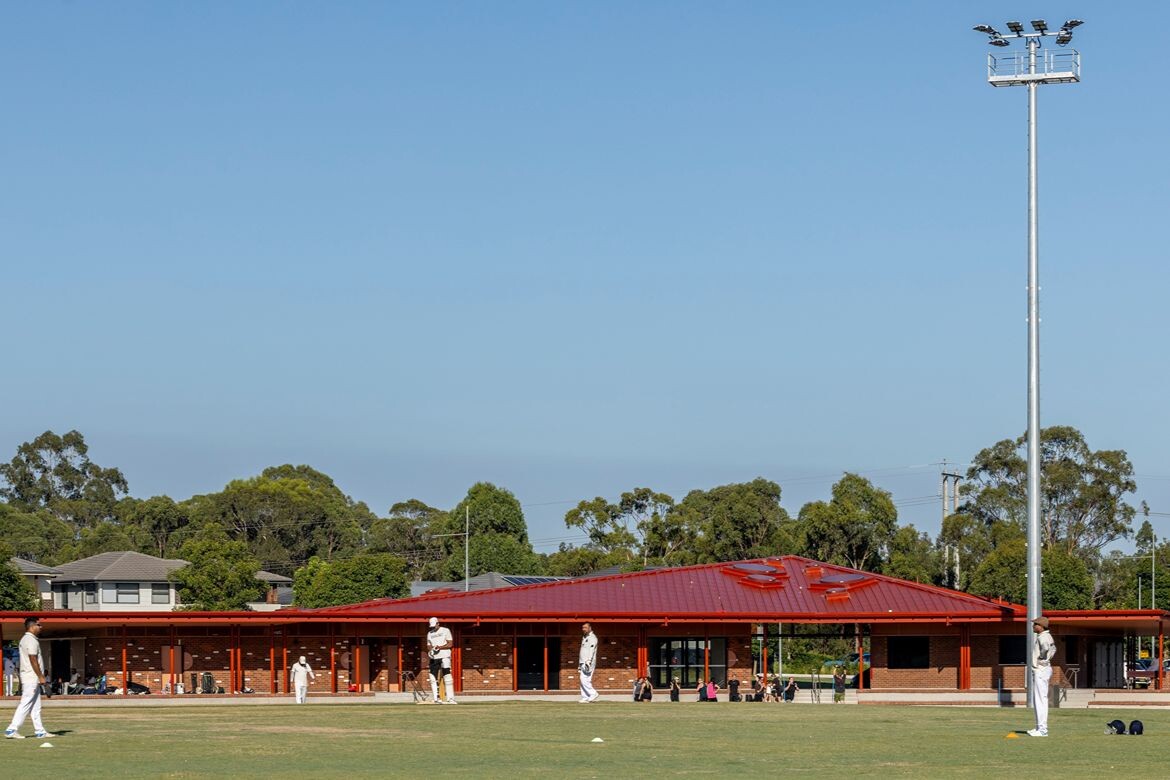
“It’s a unique place within the Sydney region because it contains evidence for ground ovens lined with baked clay balls (like heat beads) that were manufactured, traded and used for cooking by the local Dharawal and Darug peoples,” adds Sam Crawford, director of SCA.
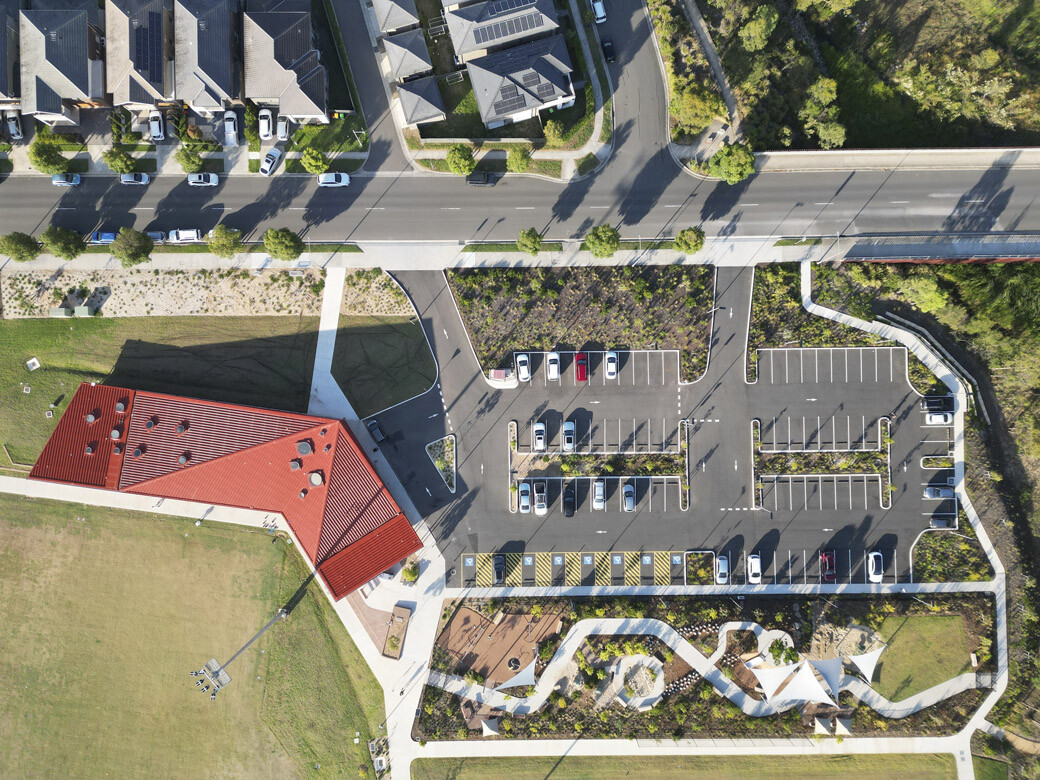
Functionally, the project houses a clubroom, kiosk, change rooms and public amenities, with stepped spectator seating and BBQ facilities. “The building needed to address two sports fields and the children’s playground, whilst also being within easy proximity to the site entry. As a result, we aligned the building along the west side of the main field and then ed it towards the northern field, allowing a spectator to have views across all critical areas whilst being sheltered beneath.”
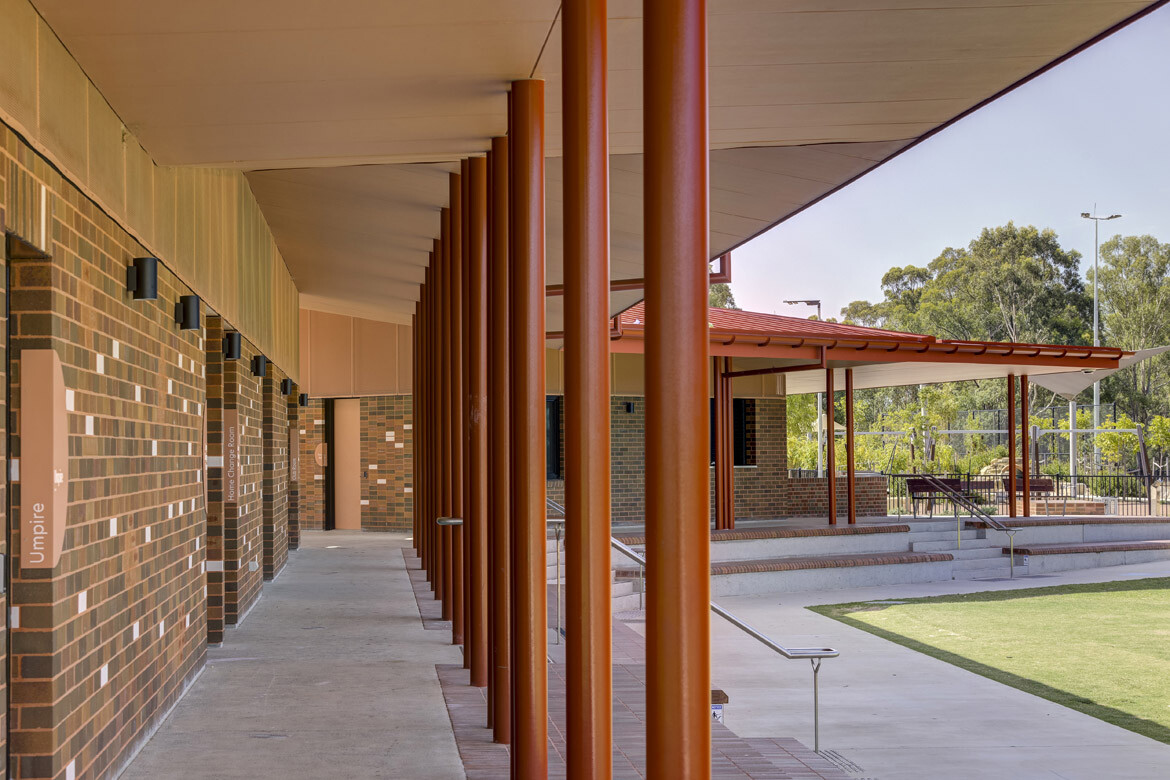
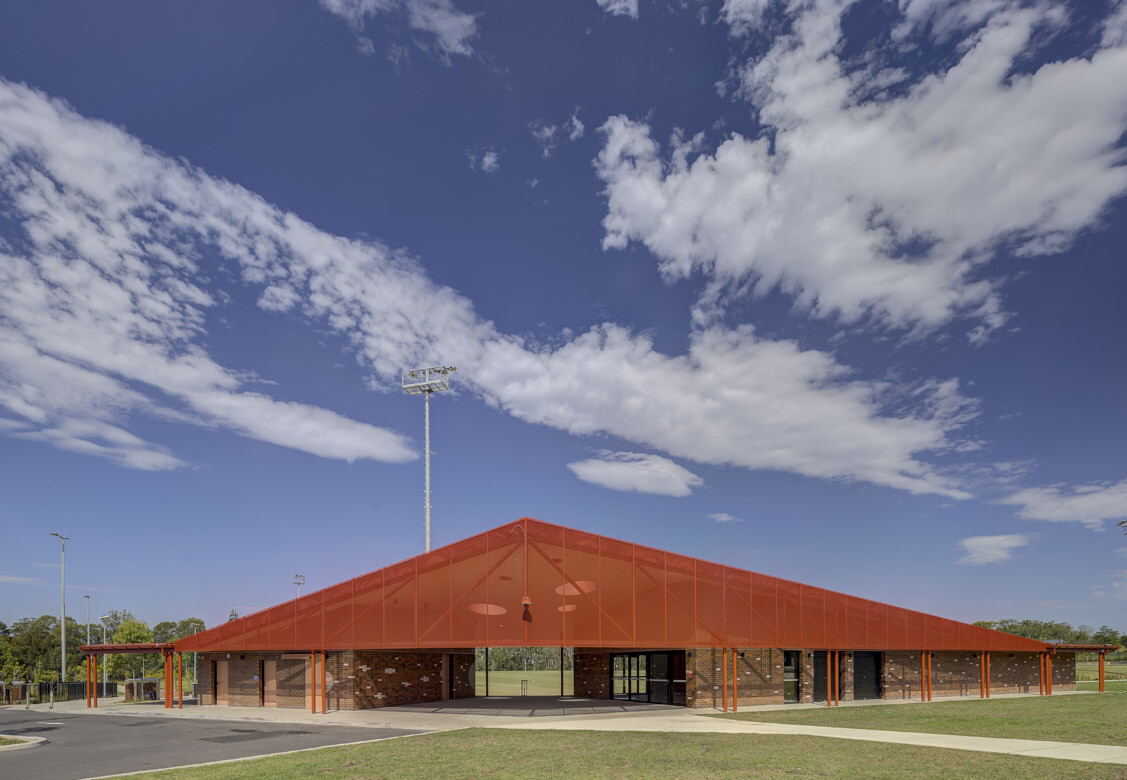
The building’s V-shaped plan is designed to act as a ‘pivot point’ connecting the various facilities, including the main public entry gateway and drop-off zone. “The pavilion is formed by two buildings sitting beneath a single folded roof,” explains Pelletier.
“The kink in the plan aligns with the highest point of the roof and creates a generous covered meeting space between the two volumes – effectively a gateway into the site. This central covered meeting space is really the heart of the project. It’s a generous, open civic space that allows for informal gathering, respite from the heat and spontaneous use.”
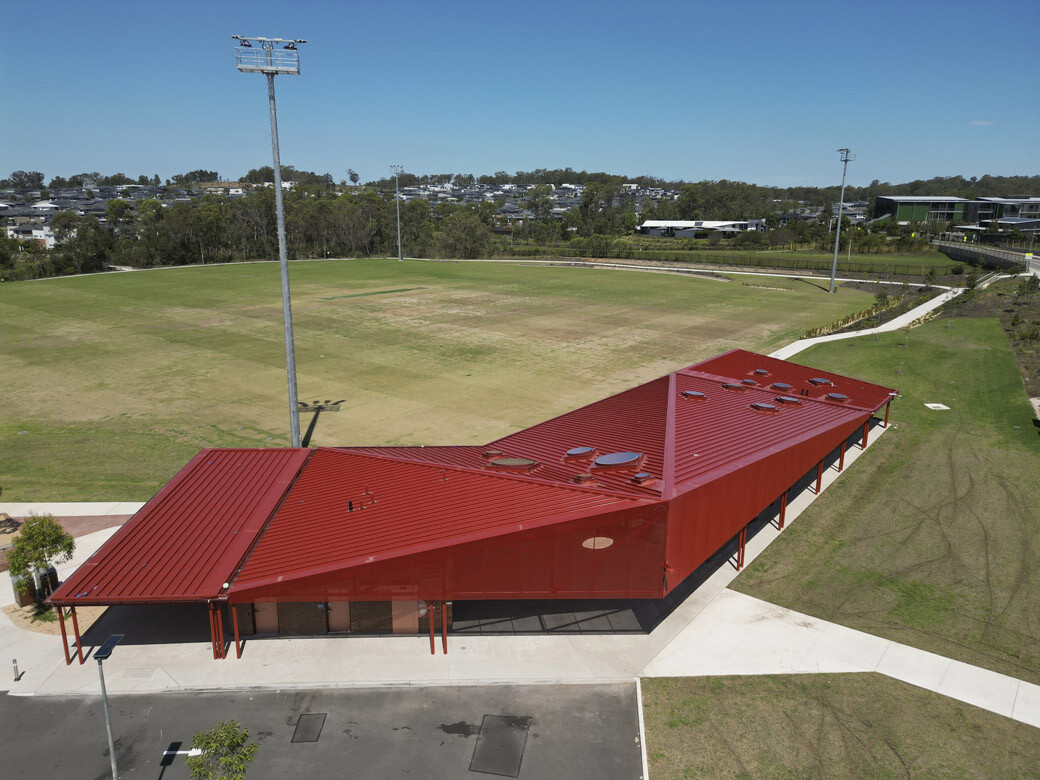
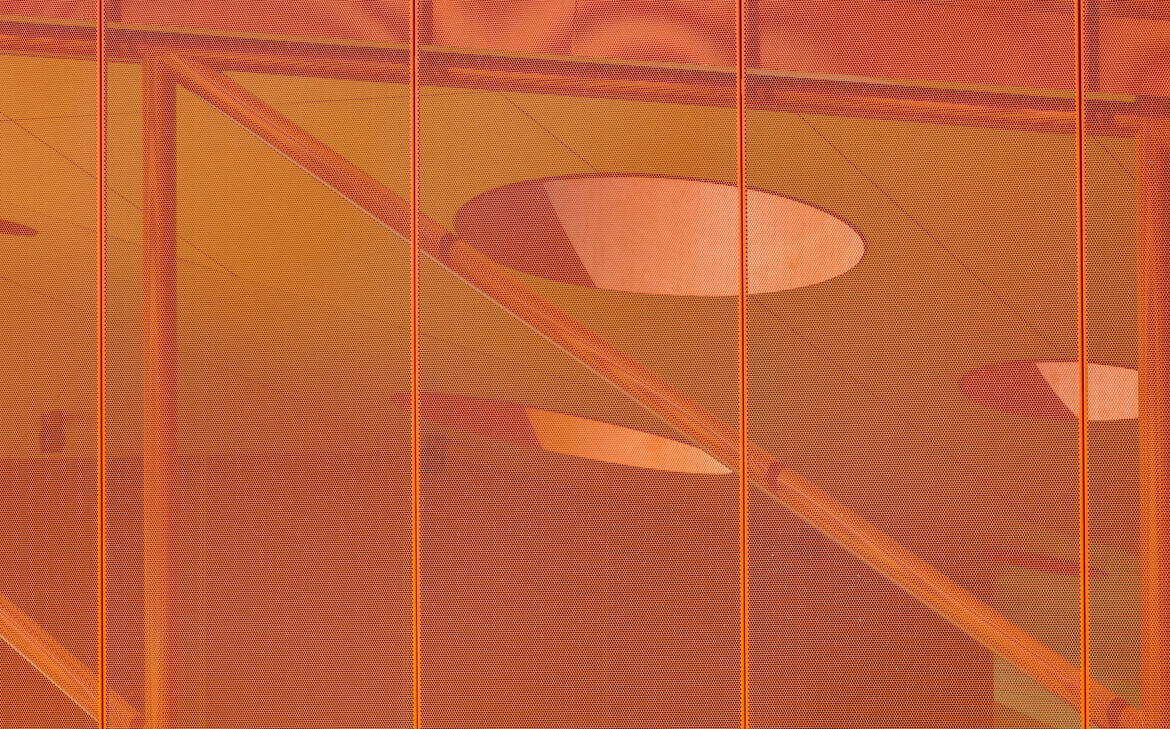
The folding red roof is also a distinctive feature of this project. It acts as another point of historical reference, this time for the more recent colonial context. Pelletier concludes: “One large triangular pitch faces the suburb of Willowdale – almost like a child’s drawing of a house. The roof then folds down toward the playing fields, forming a deep verandah that recalls the scale and language of agricultural sheds. Beneath that roof, the building is predominantly brick, a direct reference to the clay ovens discovered on site and across the region.”
Sam Crawford Architects
samcrawfordarchitects.com.au
Lymesmith
lymesmith.com.au
ASPECT Studios
aspect-studios.com
Photography
Brett Boardman
INDESIGN is on instagram
Follow @indesignlive
A searchable and comprehensive guide for specifying leading products and their suppliers
Keep up to date with the latest and greatest from our industry BFF's!
The internet never sleeps! Here's the stuff you might have missed