The home of architecture and design in the Asia-Pacific
Get the latest design news direct to your inbox!

Get the latest design news direct to your inbox!
There is a strong culture around looking after the environment and reducing carbon footprints at Westpac, and nowhere is this clearer than at their New Zealand offices which have implemented Method Recycling.

Westpac was voted the world’s most sustainable bank for ten years in a row in the Dow Jones Sustainability Indices.
Show Place, Westpac’s headquarters in Christchurch, claims pride of place as their most sustainable office in New Zealand. For a long time, the branch had been investigating waste solutions that would uphold their well-deserved reputation in this arena. Method Recycling emerged as the best choice, impressing Westpac with their adaptability and innovative ideas of how to waste less. Clearly marked, simple to use, and consistent with the colour scheme of the city’s waste service providers standards.

Each night, the waste in each container is recorded by Westpac’s cleaners, and the results are inspiring. Paul Bonini, the Christchurch Facilities Team Leader, said “We started on our Method journey with 70% of our waste going to landfill. Three years later we now run at 30% to landfill.” He aims to bring this figure down to 20% over the next two years.
The Method Recycling philosophy of Open Plan Recycling recommends that recycling bins are placed no further than a 10-15 second walk from employees. At Westpac, they were set up where staff would naturally walk past – with entry and exit doors the main targets – encouraging people to take micro-breaks and be less sedentary. Thus, the meaning of sustainability is being extended to include employees’ health, happiness and wellbeing.

They chose Method because of consistency and visibility, and Method bins have been shown to help change behaviour by designing their products to be placed and used in the open. This philosophy has been fully embraced by Westpac as well. Bonini says, “We’ve even made [the bins] a feature in the event space because we’re actually proud of our recycling.”
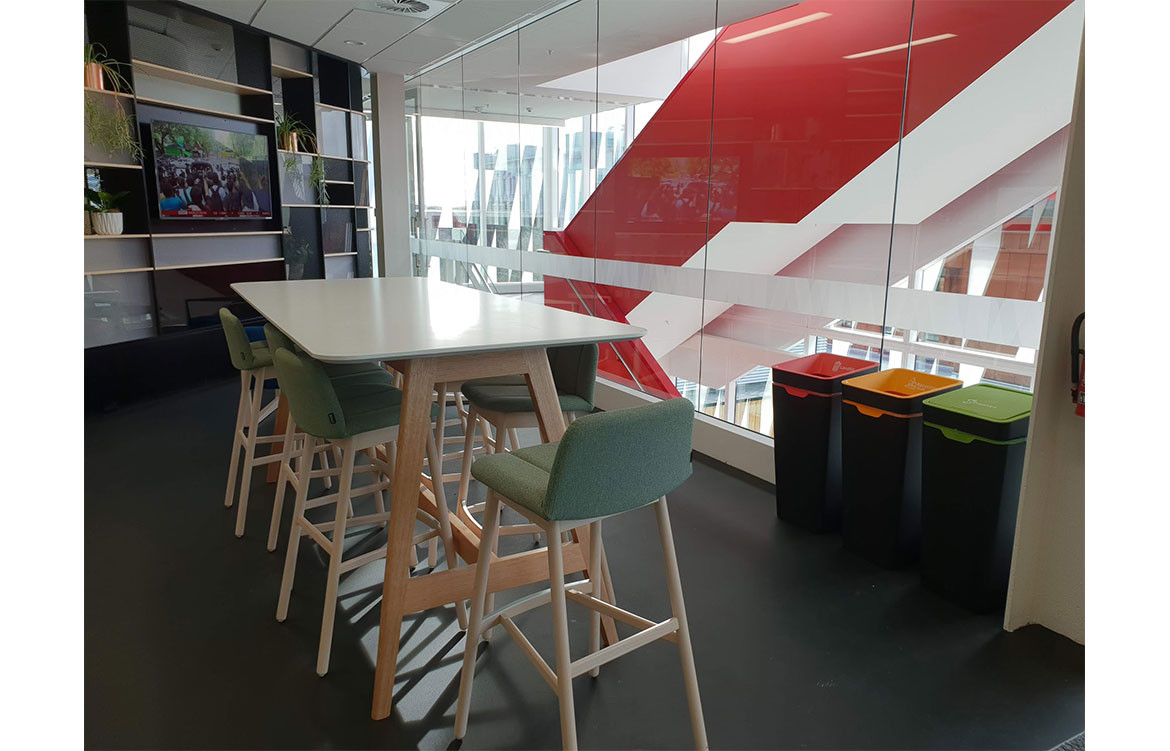
Westpac has also taken the step of educating their staff about how these products can be best used to their fullest efficiency. For example, labelling the paper towel dispenser to indicate their suitability for the Organics bin, and that placing these bins by the coffee machines would serve a similar purpose. At Westpac The Terrace, they have recently launched a new initiative whereby any catering or hospitality firms they work with ensure that all waste can be resigned to the Organics bin.
As Bonini says, “We need everyone involved to have that holistic view for success.” To encourage and maintain real change, Westpac shares their sustainability statistics regularly with their staff, and congratulate them for their contribution to that success.
INDESIGN is on instagram
Follow @indesignlive
A searchable and comprehensive guide for specifying leading products and their suppliers
Keep up to date with the latest and greatest from our industry BFF's!
The internet never sleeps! Here's the stuff you might have missed