Timothy Alouani-Roby: Please tell me about the site context.
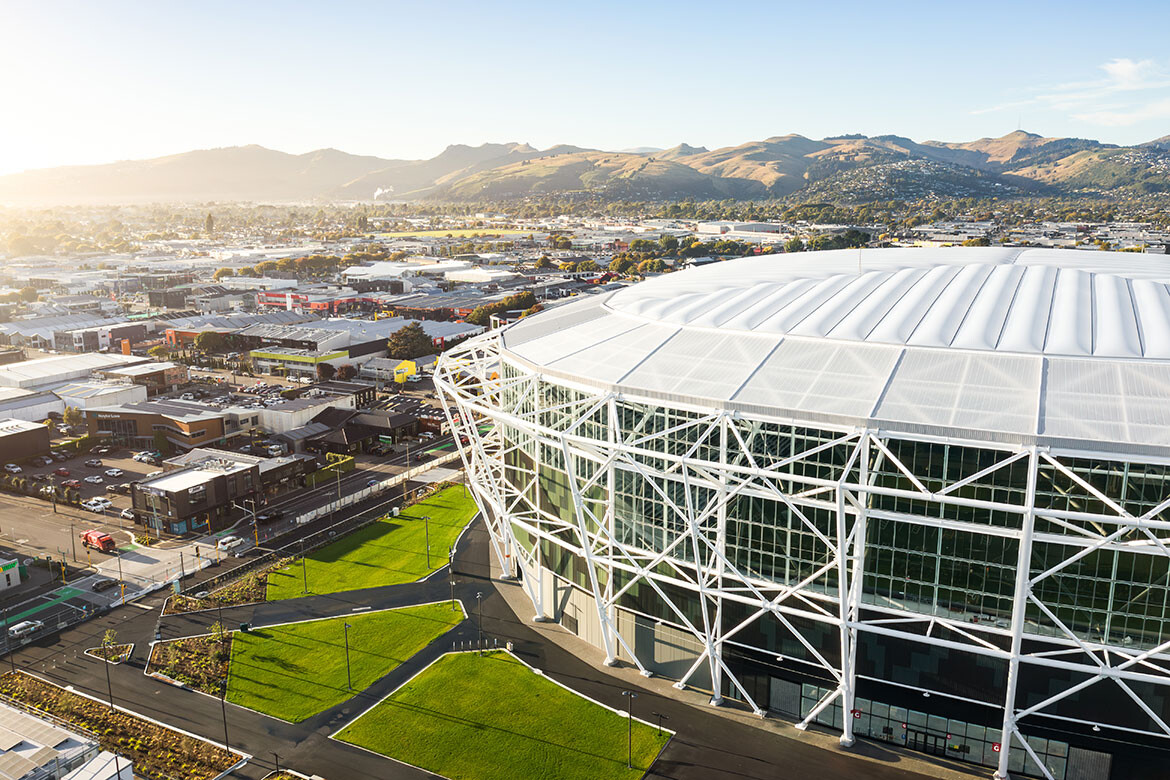
Josh Robson, Populous: As the final piece in the rebuilding of Christchurch following the earthquakes that devastated the city in 2011, One New Zealand Stadium at Te Kaha is a true multi-use facility designed to maximise year-round activation — from sporting fixtures to major concerts and everything in between.
Christchurch is located near two active seismic faults, the Christchurch Fault and Port Hills Fault. Designing the stadium so that it could withstand seismic activity, both during construction and after, completion was essential. This meant incorporating numerous earthquake-mitigating technologies, both temporary and permanent.
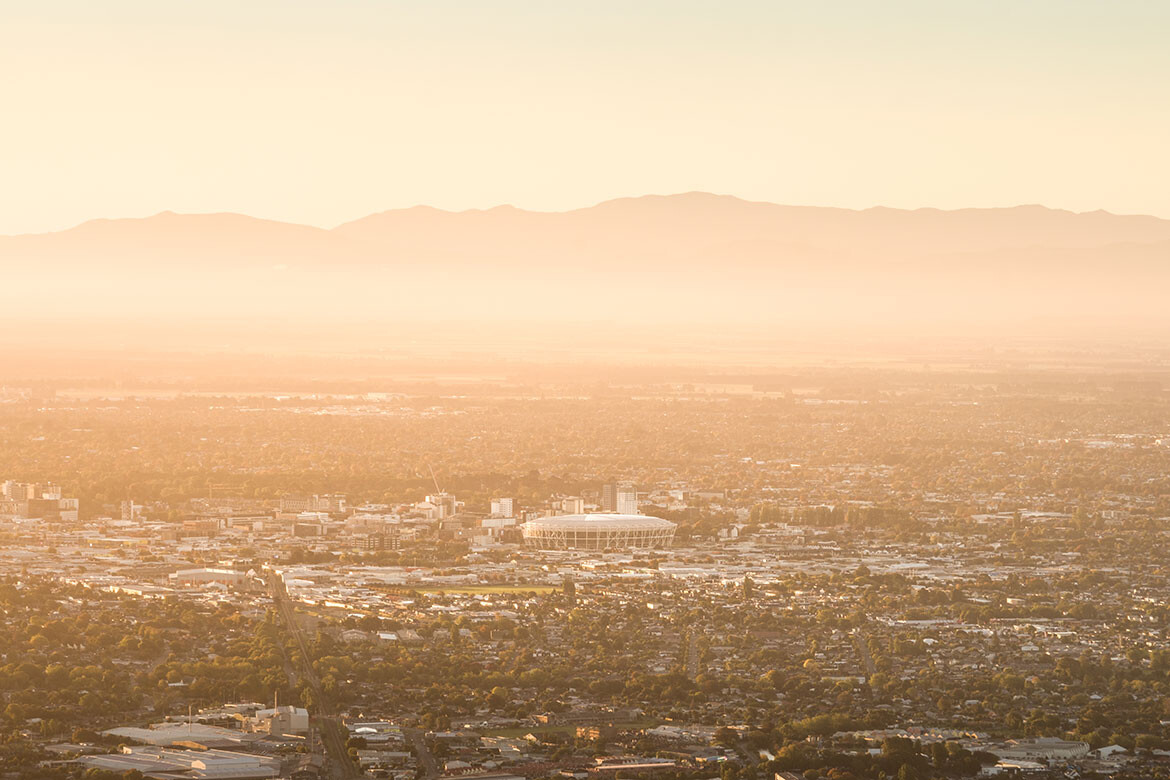
The site is located in the centre of Christchurch acting as a catalyst for local businesses, with opportunities for collaborations and partnerships that showcase the best of Canterbury’s cuisine and culture.
What can you tell me about the clients and their brief?
Christchurch is New Zealand’s home of rugby union, and the sport is a huge part of the city’s culture, so when the former stadium closed after the 2011 earthquakes it left not just a physical but also a cultural hole in the community.
One of the most significant elements of the client brief was to ensure a cultural connection to the land. While the venue is officially known as One New Zealand Stadium at Te Kaha, the land beneath it retains the name Te Kaharoa, meaning enduring strength. This name, gifted by Ngāi Tūāhuriri, reflects both the region’s rich history and its future. The design incorporates elements of Māori culture, with visual artwork by Morgan Darlison (Ngāi Tahu, Ngāti Porou, Tainui), which draws from the Māori creation narrative of Tāne and the separation of Ranginui (Sky) and Papātūānuku (Earth).
Related: Sydney sports pavilion by Sam Crawford
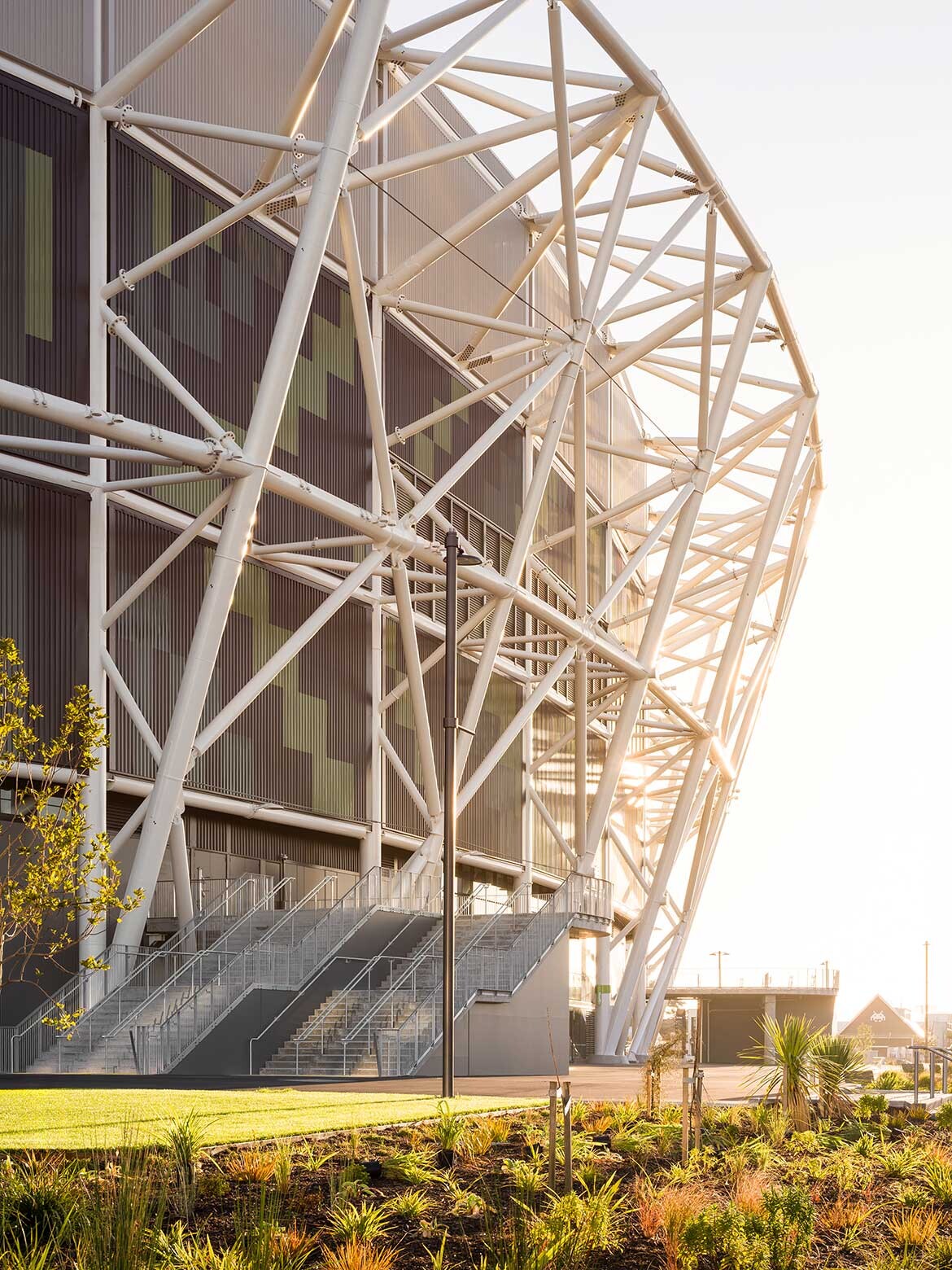
The stadium’s exterior features a unique steel façade, measuring 800 metres, with a design that reflects the Canterbury landscape — including the iconic Te Pātaka o Rākaihautū Banks Peninsula, the Port Hills and the Southern Alps. This design creates a visual connection between the stadium and its surroundings. No matter where visitors are viewing the building from externally, the façade mirrors the landscape behind it.
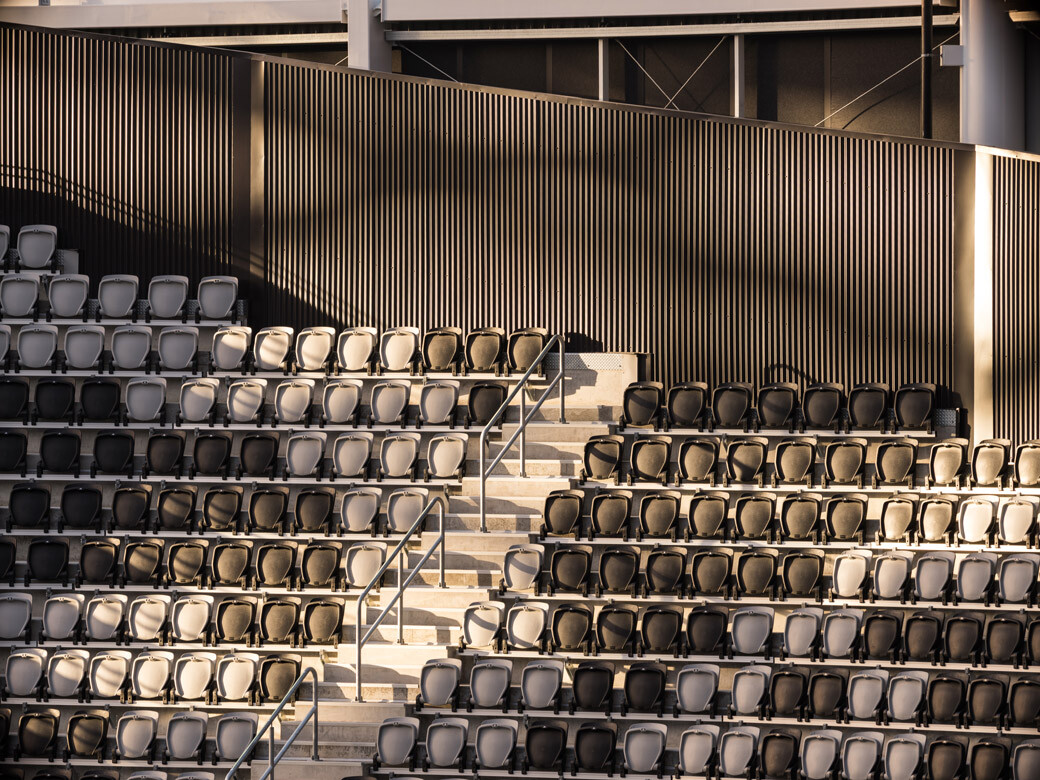
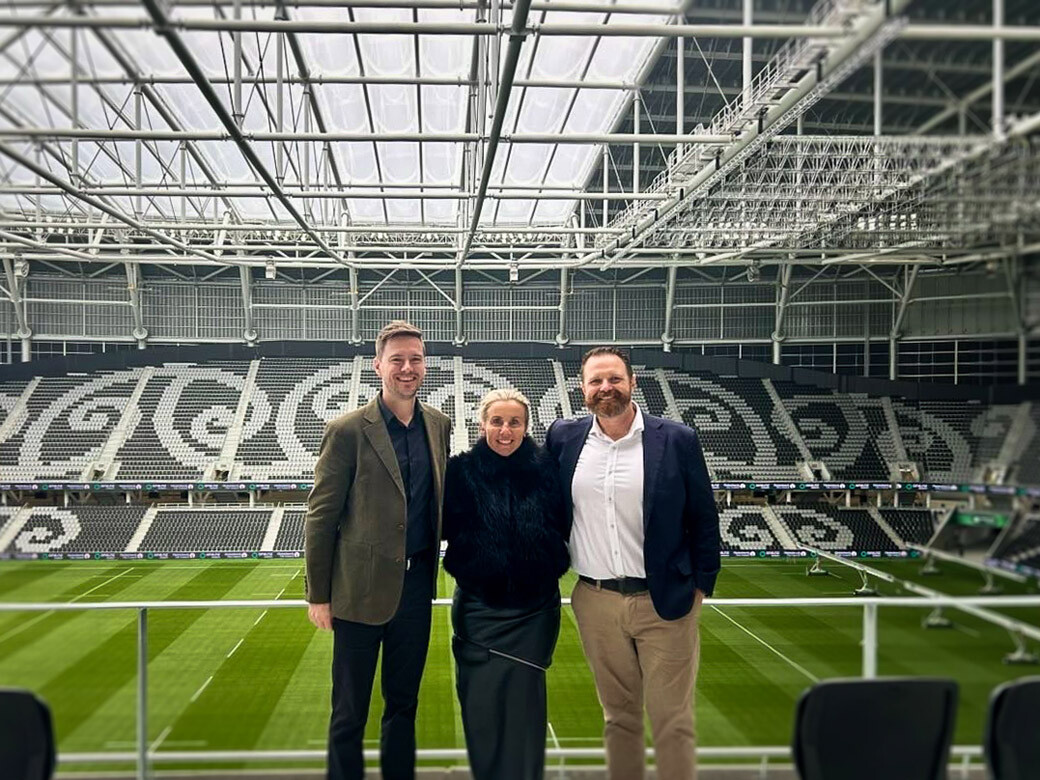
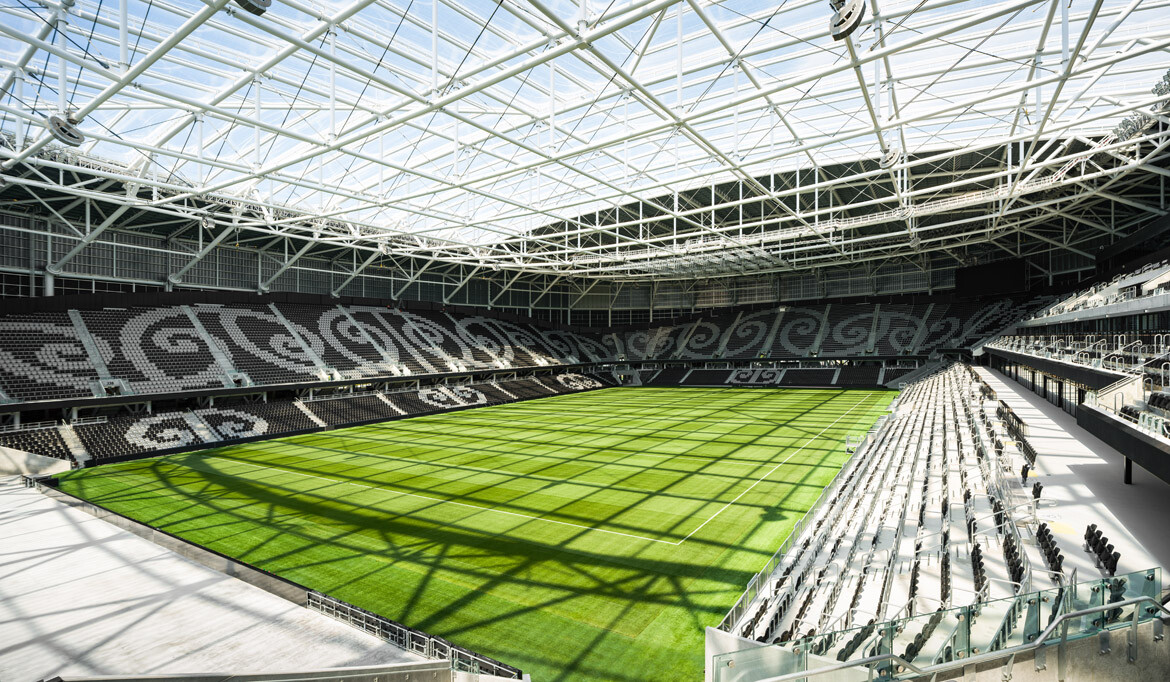
Inside, the seating bowl features a one-of-a-kind kowhaiwhai pattern inspired by the hammerhead shark (mangōpare) which represents strength, tenacity, speed and agility, designed to inspire performers and athletes using the stadium.
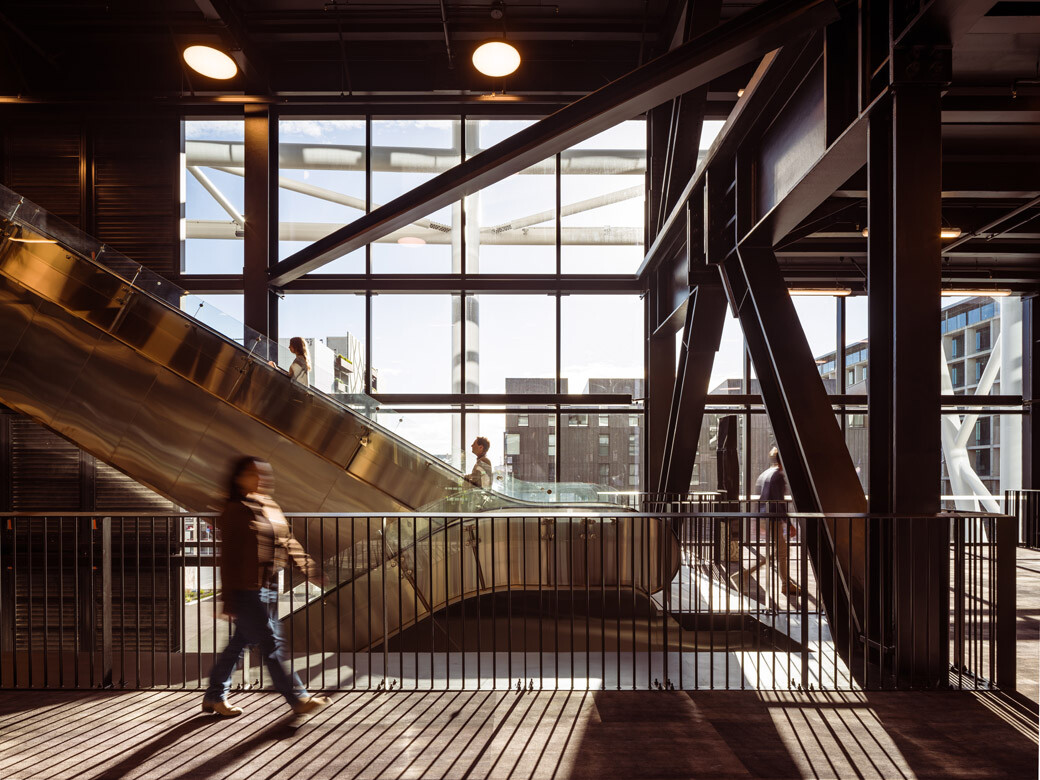
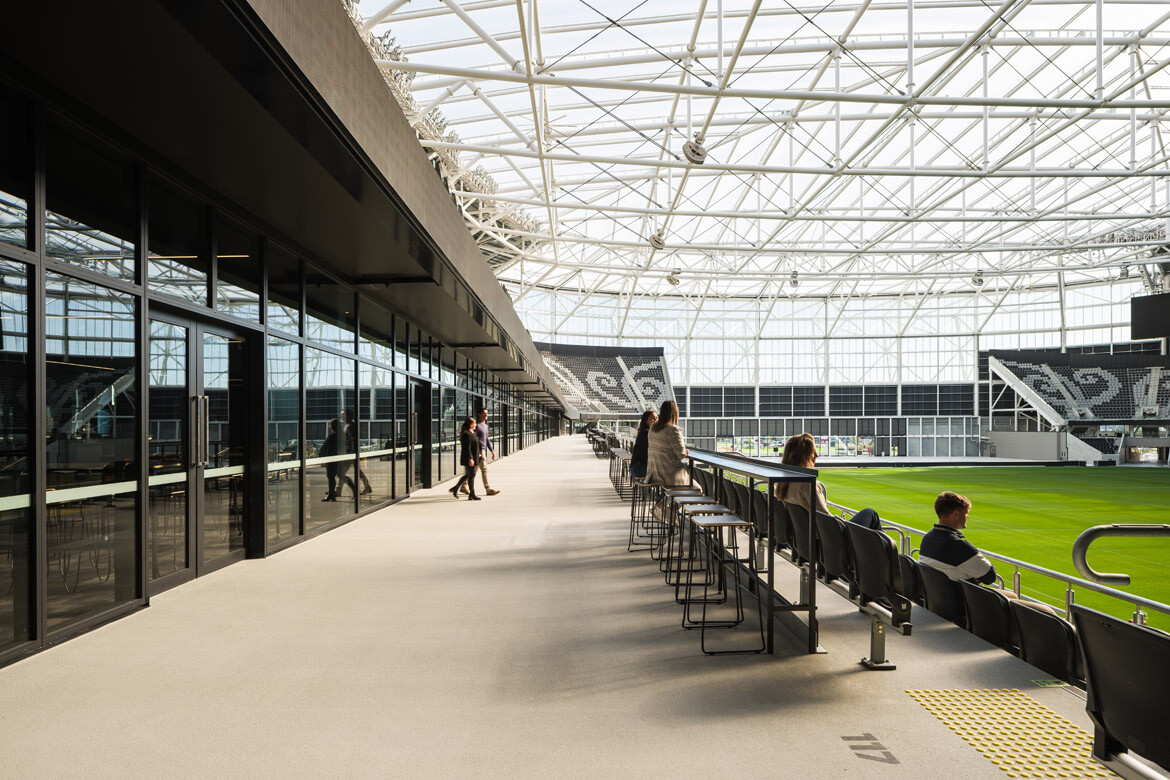
Patron experience is at the heart of the stadium. The venue is designed to be inclusive, accessible and comfortable, with exemplary food and beverage offerings, extraordinary seating bowl atmosphere, and a variety of spaces to encourage social gathering and connections.
What are the key material and structural choices?
Optimising the material and structural performance of One New Zealand Stadium was one of the primary drivers of the design team. Designing a long span structure within such onerous seismic conditions required a high degree of rigour, iteration and collaboration. Fundamental to this process was the early decision to separate the stands from the roof structure. This was adopted to enable the different structures to perform optimally in a seismic event, with the braced and rigid west stand moving less than the more elastic roof structure. The iterative design process saw the structural tonnage for the project reduce by 28 per cent — representing significant cost and carbon savings for the project.
From a materials perspective, the project was designed through a science-based performance approach to ensure optimal multi-use adaptability. PAR (Photosynthetically Active Radiation) analysis was used to study light ingress, fluid dynamics to assess air movement, and acoustic modelling for reverberation and attenuation. These requirements then formed the parameters which defined the design: balancing the extent of ETFE versus operable louvres or acoustic shell to get the balance between acoustic performance, ventilation and PAR transmission right. Each layer of analysis contributed to the delivery of an exceptional fan experience and coherent design outcome.
What key functional requirements does the design address?
Spectator comfort was prioritised on the project through the design of a permanently fixed roof, enabling it to be used throughout the year, in all weather conditions. Ordinarily, this would mean an artificial playing surface inside. However, Populous was able to leverage our experience from Forsyth Barr Stadium (the world’s first permanently covered stadium with a natural grass pitch) and improve on this winning formula for One New Zealand Stadium at Te Kaha.
The fixed roof combines a lightweight structure with transparent ETFE, precisely calibrated and tested to ensure optimal natural light to sustain the living turf below, while creating a bright, weather-protected environment that elevates every moment within.
What’s your favourite thing about the project?
It is far more than a stadium; it is a place where collective memory is made, where victories are shared, artists are celebrated and the community gathers in moments of unity. As the final anchor project of the city’s rebuild, we designed the stadium to embody resilience and renewal, standing as a physical expression of the region’s strength and optimism.
In bringing people together, it reinforces the enduring connections between people and place and ensures the stadium belongs not just to the city, but to its people.
Populous
populous.com
Warren and Mahoney
wam.studio
Photography
Dennis Radermacher, Lightforge; Courtesy of Populous