Since its inception, in 2010, Unispace has made it its business to revolutionise the world of workplace design. And there’s no denying that the pioneering practice—a trailblazing practitioner of agile design in the built environment and an exemplar to us all—has grown to own the space, at a global scale, in its relatively brief time on the scene to date. So it should come as no surprise that while the rest of the world went into COVID-19 induced turmoil, and got busy speculating about how work environments might shape up in the post-pandemic world, Unispace quietly rejoiced – it was its time to shine.
“Finally, organisations no longer have to fixate on desks, screens and keyboards — as these are the only things that work well from home,” says Harry Rowntree, a regional design principal at Unispace. “All offices need to re-consider the employee experience and create a destination to bring people back to the workplace.”
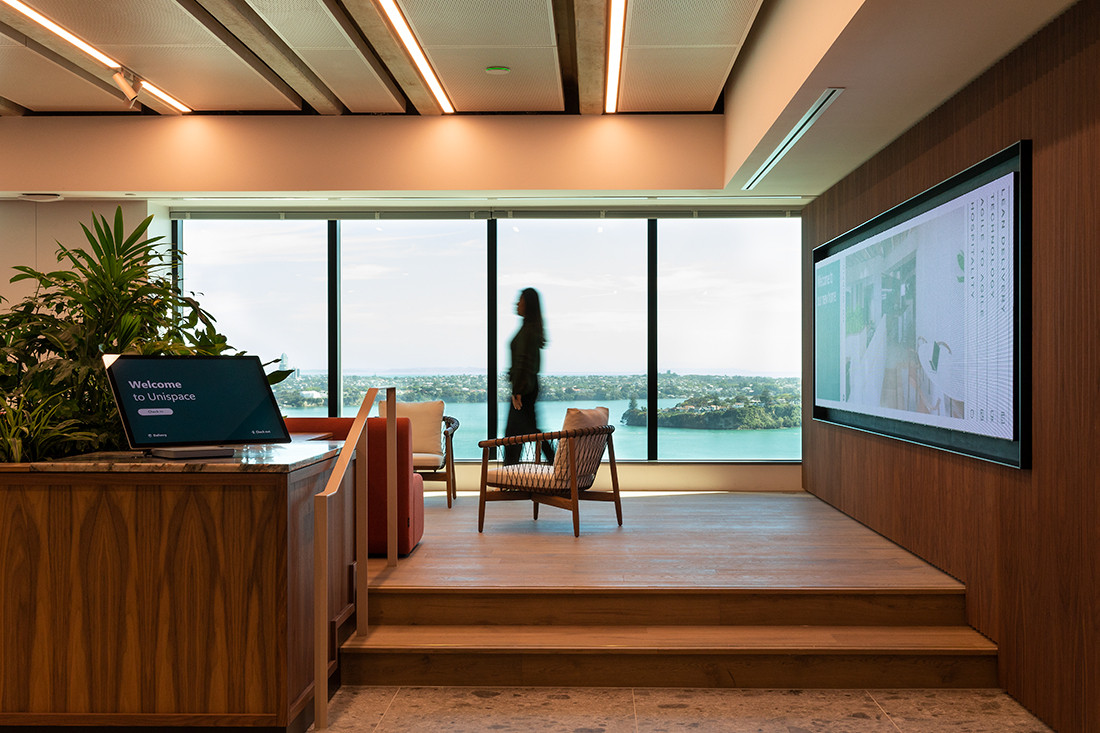
In true, agile form, the Australian-born, internationally present design practice wasted no time in prototyping and realising solutions running. Come May of 2021, Unispace had turned its own Auckland studio in a real-life case study for covid-responsive workplace design, providing an exemplary blueprint for handling the intersection at which physical meets digital, in the spatial realm of the post-pandemic era.
Ask Rowntree what constitutes the non-negotiables for ideal work environments moving forward, and he can tell you, without a moment’s hesitation, what facets of workplace are really worth giving gravitas in design. No points going for guessing what comes first and foremost: the integration of flexible hybrid working models.
“That cat is out of the bag now, staff have proven that they can be productive and trusted to work from home, and it will be very difficult for companies to deny some form of flexible work-practice adoption,” he says, reinforcing the irrevocable truth of it all. Where that starts to get interesting for workplace designers is the handling of the intersection at which physical and virtual space meet.
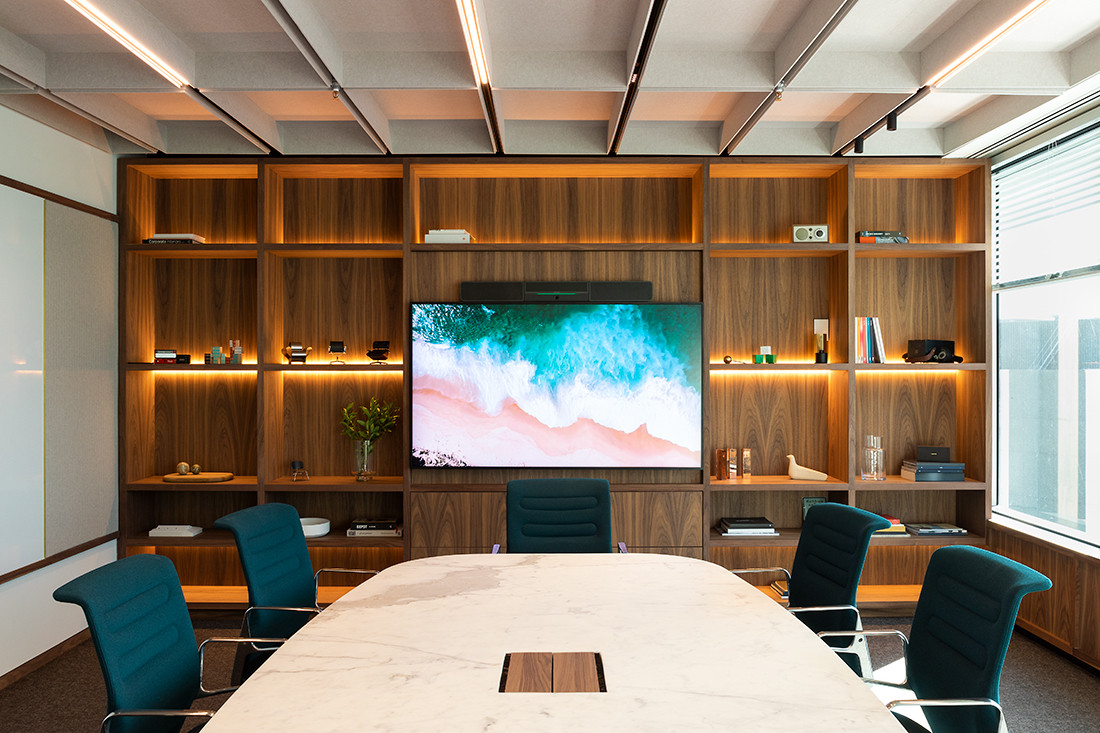
In embracing the increase of remote working, the Unispace Auckland studio is optimised to create a seamless interaction between physical and remote teams. Featuring custom-designed video conferencing ‘Teams’ pods with high-performing acoustic treatment and technology capabilities that operate as a cost-effective alternative to built-in meeting rooms.
“With more remote working, it is critical that employees not in the office are not adversely penalised when joining meetings with more than one colleague in the office. Every collaborative/meeting space should be integrated with VC capabilities,” says Rowntree
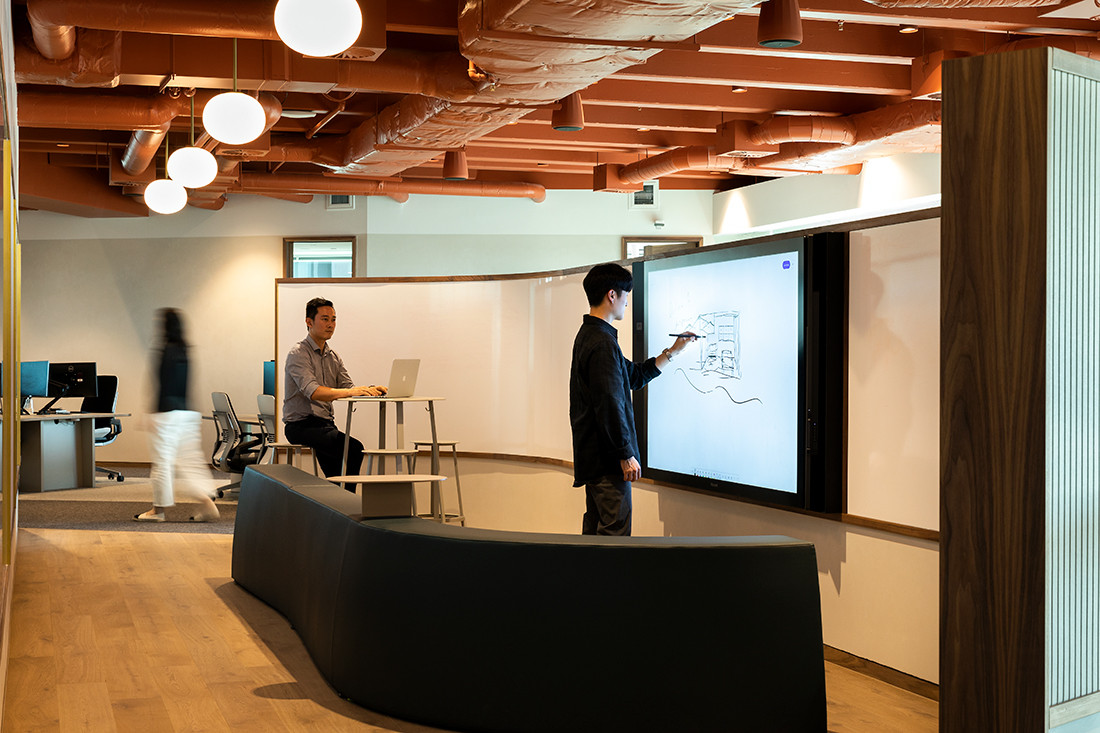
The innovation spaces in Unispace’s Propeller workplace in Auckland enable two or more groups to work uninhibited in the same space at the same time. The same goes for the room booking system, desk and room occupancy sensors, 52 ergonomic workpoints, and open space technology that empowers employees to work to their potential, anywhere. With almost 70 staff reporting to the Auckland studio and around 50 in the office at any given time, this choreography of people, space and time that transcends physical reality is no small feat.
The office is also equipped with Wi-Fi triangulation sensors that ‘heatmaps’ areas of greatest density in the floorplate and collects data to analyse the most popular office spaces to inform future workplace design, in addition to workstation occupancy sensors – if a desk is unoccupied for longer than 30 minutes it glows green to signify that another person can use the station.
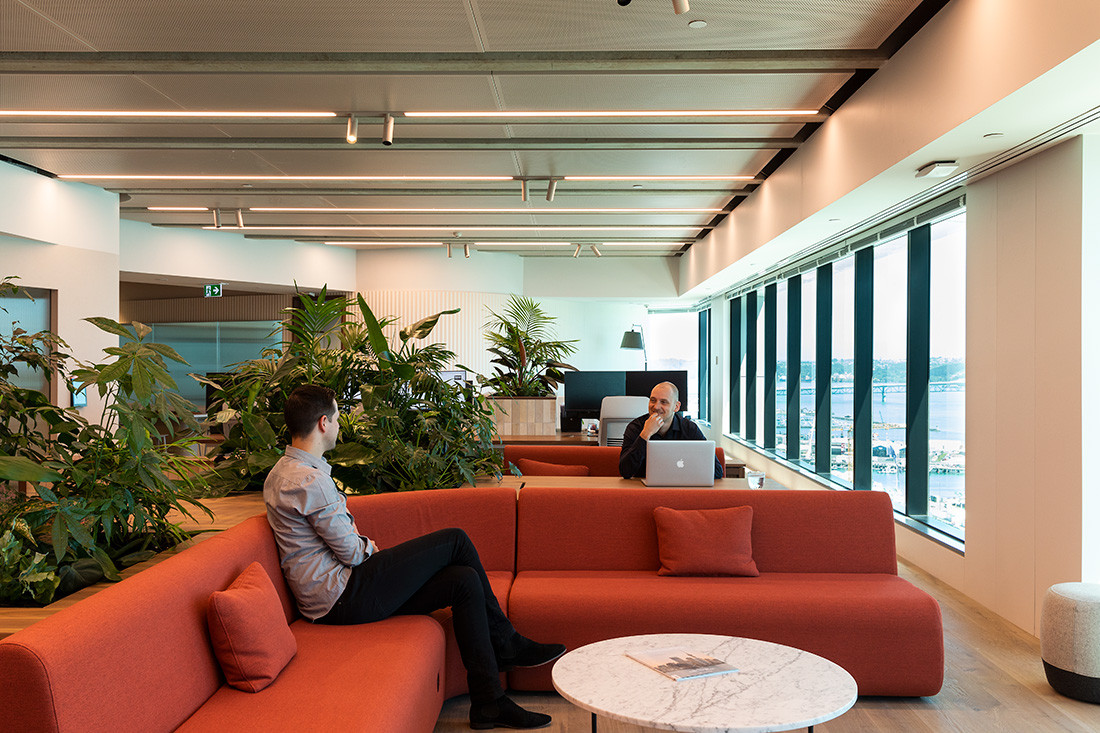
“Spaces that support innovation and community activities should now be considered with equal weighting to those spaces dedicated to workstations,” says Rowntree, naming the third and final non-negotiable for any workplace design that stands a chance from here on out.
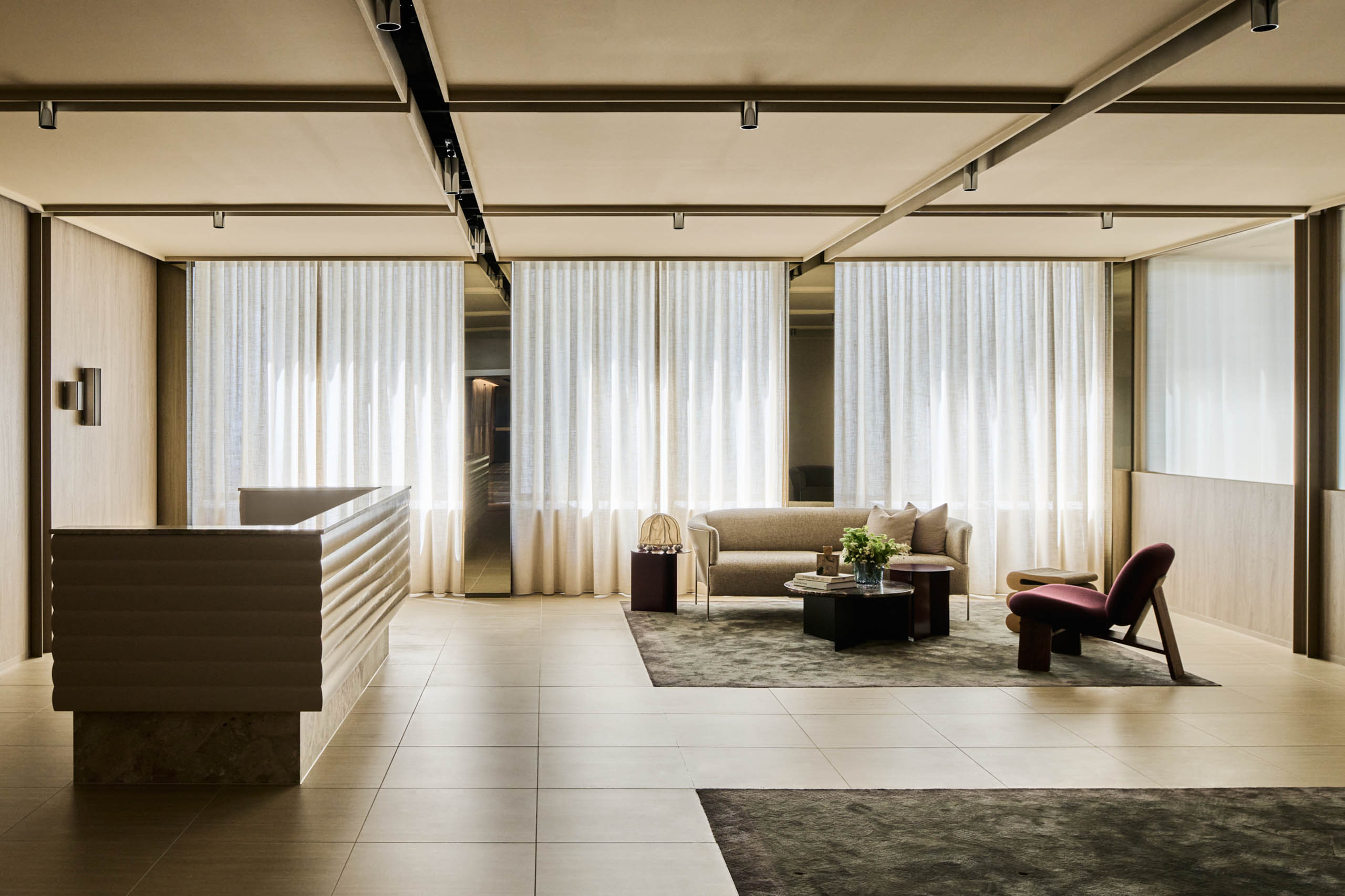
In the Auckland studio, every space is multi-faceted and flexible — no space does one thing. The design library doubles up as a meeting room and breakout spaces double as a work zone. With bespoke joinery, custom finishes, sustainable goat hair carpet, vacuum formed wall tiles, and v-groove paneling that transitions you through the space in a visual nod to the Unispace brand, the studio exemplifies Unispace’s interior design capabilities.
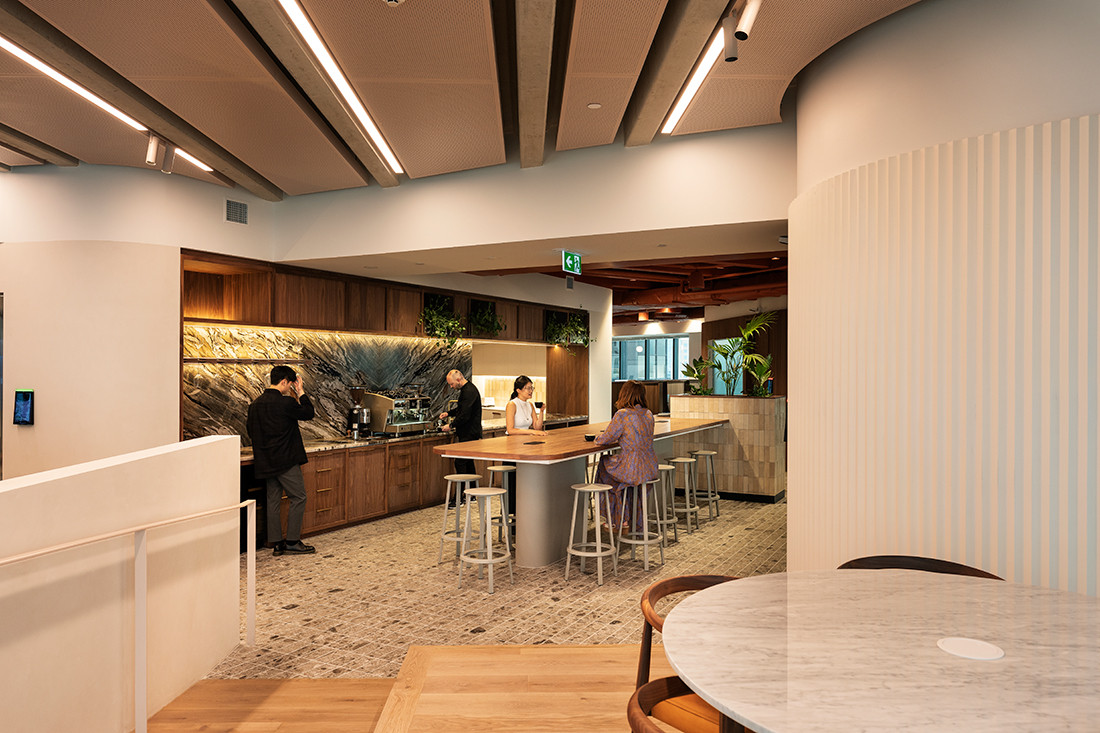
Of course, such cutting edge design always runs the risk that it will turn out to be better in theory than in practice. Having had some time to experience the living, breathing prototype of progressive workplace design himself, Rowntree can attest to its success.
“We have adapted rapidly to our new Propeller workplace, and are highly utilising every corner of the office,” he says. Though that’s not to say he wouldn’t change a thing. “We have yet to switch on our desk booking/utilisation system in full (Meeting Rooms are tracked), which would be good to visualise within our dashboard screens at each entry.”
As for what else is on the drawing board (or the testing lab) for Unispace, in regards to optimising the post-pandemic world, word is there’s plenty more innovative work to come from the studio yet.
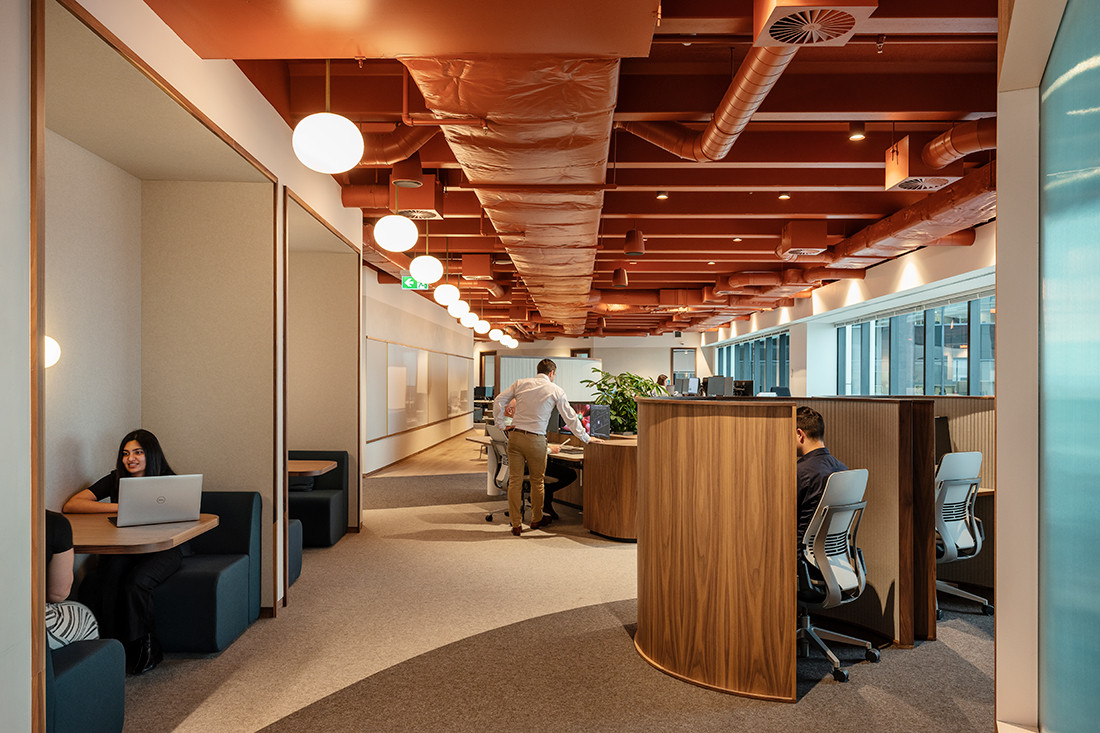
“COVID has thrown up a number of challenges and opportunities for new ways of working and customer interaction,” says Rowntree. “Traditional ideas, assumptions and nuances have all been thrown into the air, so we are enjoying wide open conversations with clients and now seeking inspiration and precedents from many different sectors and approaches.”
“We are engaged in some highly disruptive conversations spanning from retail to healthcare. It’s a very exciting time to be a designer.” Hear, hear!