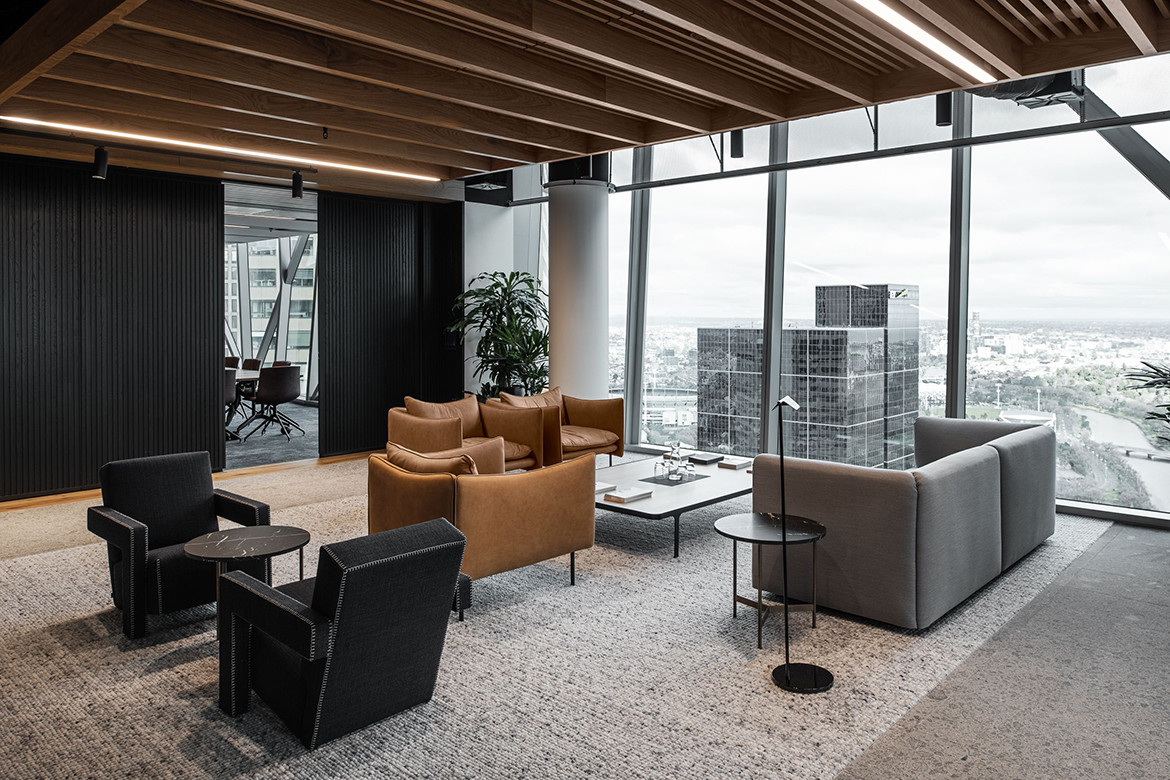
Techne has established a name for itself in the world of hospitality. Melbourne venues such as The Garden State Hotel (CBD) and the Espy Hotel (St Kilda), along with Brunetti (Flinders Lane), are all highly successful businesses and carry Techne’s signature.
So, it was with great surprise and delight that Techne was approached by a leading global professional services company to create a new headquarters in Melbourne. One that spoke of Melbourne rather than following in the footsteps of the company’s other offices, both in Australia and overseas.

“Our clients were looking for a distinct hospitality feel rather than a traditional workplace environment. Many staff may be working out of the office from Monday to Thursday, then all come together on a Friday,” says Gabriella Gulacsi, senior associate with Techne, who worked with her team and also closely with this client in developing the appropriate brief.
“It’s one of the first workplace projects we’ve completed in some time, but as you can see, it’s more of a ‘hybrid’ between an office and a hospitality offering,” she adds.

Techne’s client occupies two levels in a city high-rise. Techne inherited a ‘blank canvas’ in the vicinity of 2,700 square metres (approximately 1,350 square metres on each level) and joined the two with a blackened steel staircase.
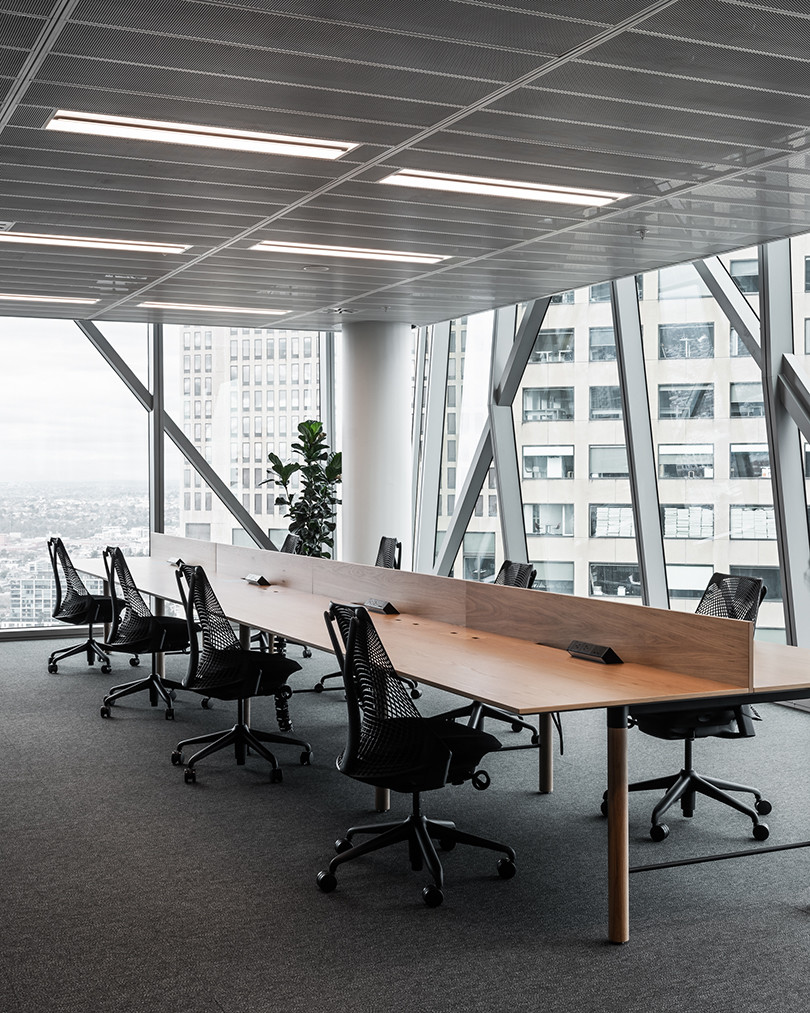
On the upper level are predominantly offices, while the lower level has the feel of walking into an informal café or restaurant.
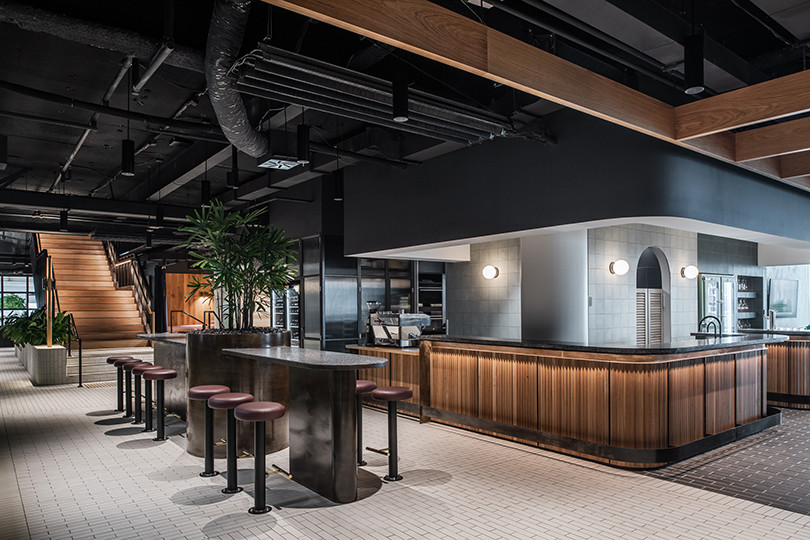
As with many of Techne’s hospitality venues, there’s a timber-clad bar with an espresso machine, together with a central bar that greets one upon arrival.
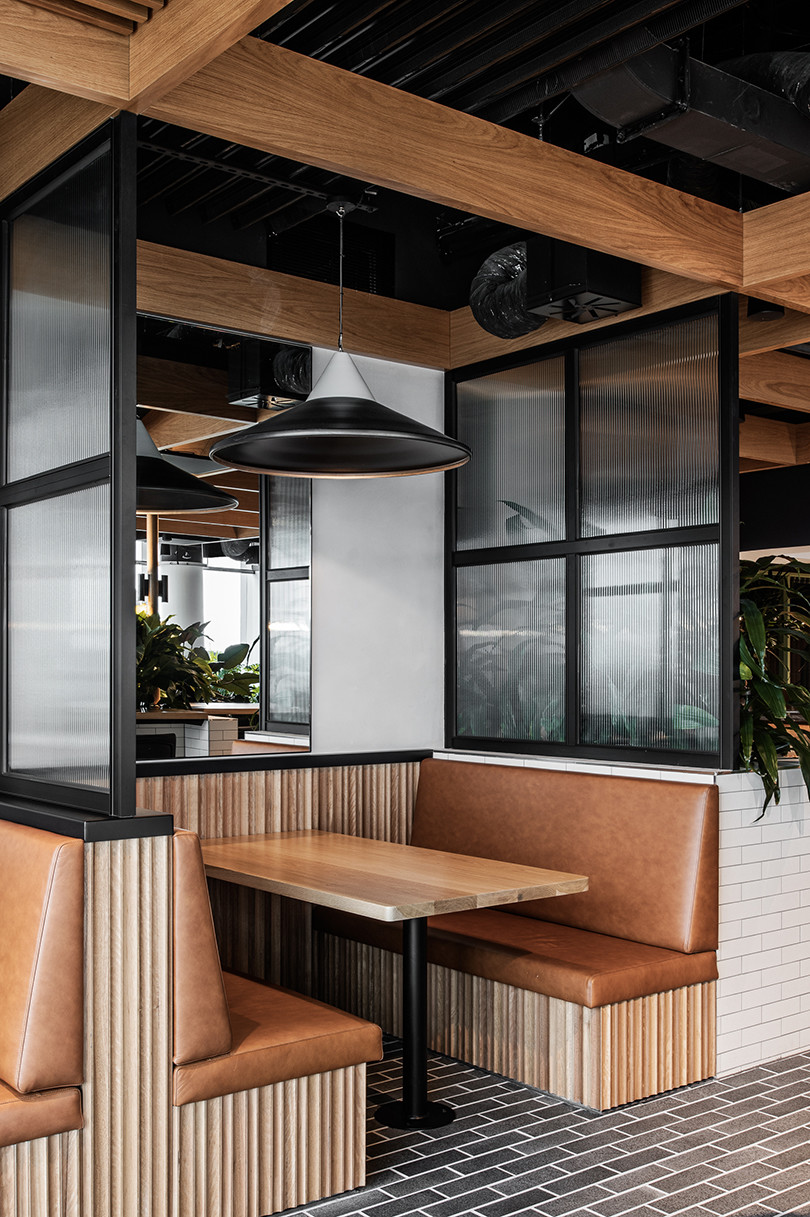
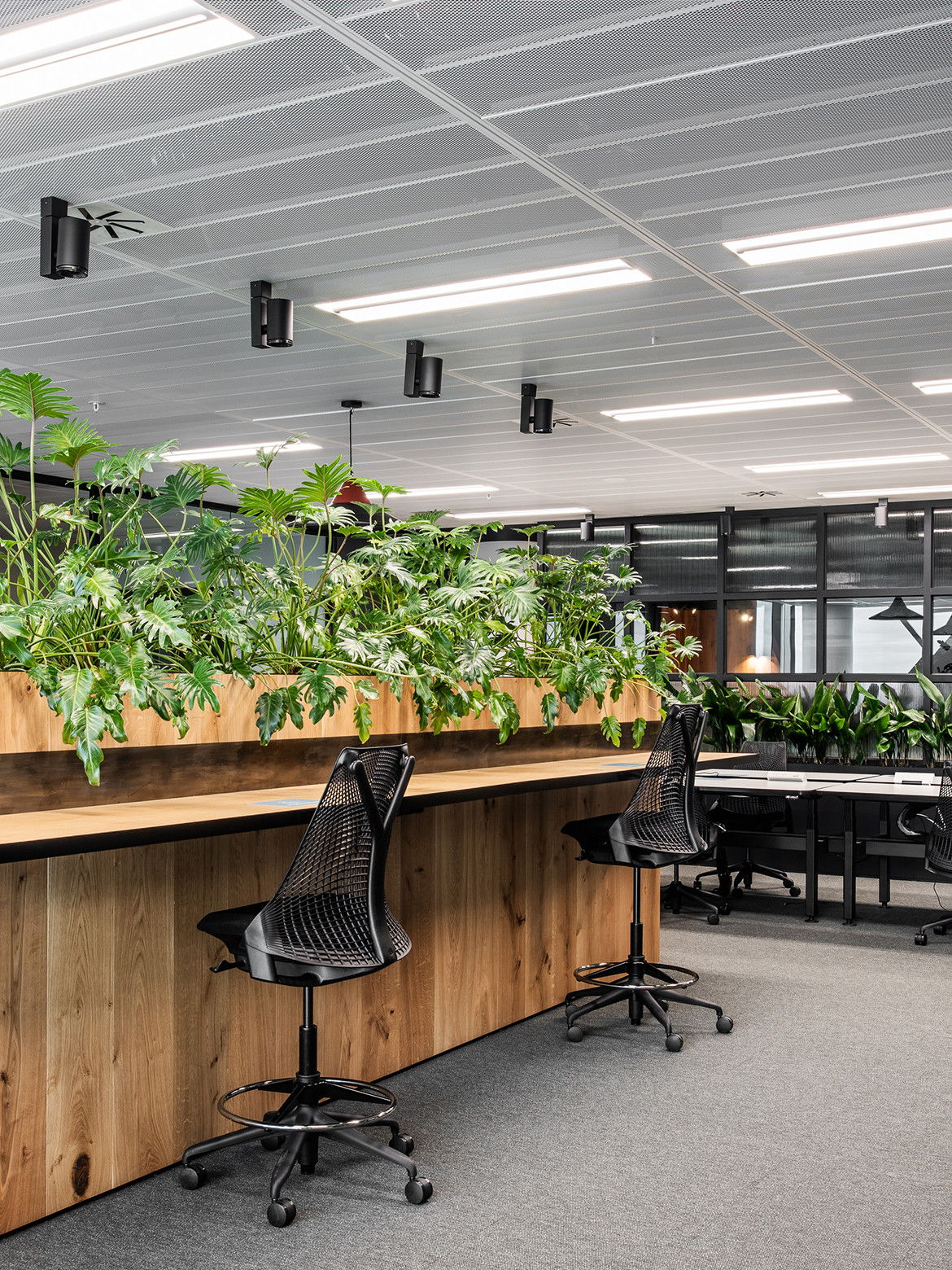
And as with many restaurants and bars, there’s banquette-style seating, lounge areas for staff to meet informally and bench seats that allow staff to enjoy the views over the CBD.
However, unlike a restaurant or bar, the main thoroughfare on the lower level was treated like a laneway unique to Melbourne. Rather than shops lining the pavement, there are a series of offices and meeting areas, some of which are enclosed and feature their own unique façade.
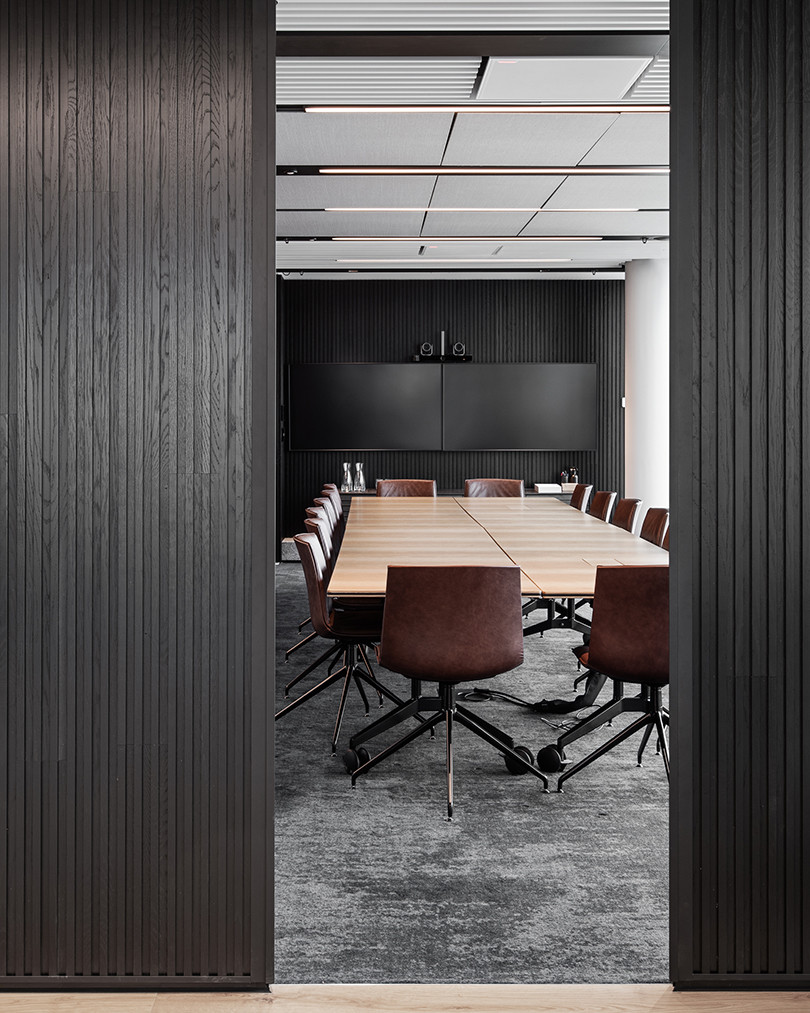
One office space, for example, features ‘veiled’ arched windows, while another, has reeded glass to allow staff a level of privacy for meetings or taking calls.
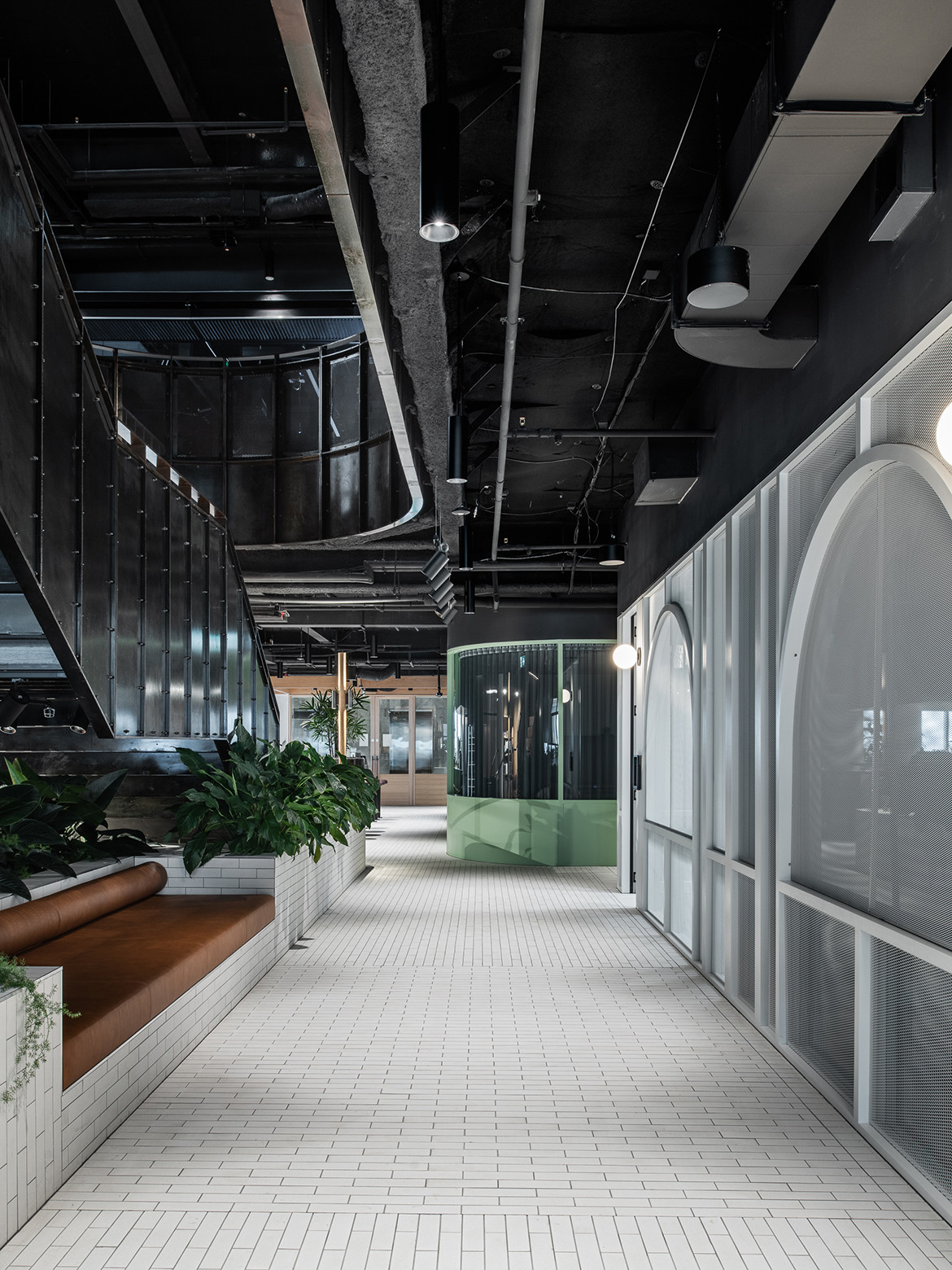
While Techne didn’t want to be too literal about creating a laneway, the brick-patterned tiled floors and extensive pot plants and garden beds add to the sense of the outdoors.
However, while there are plenty of seating options, there are features one would also encounter in more traditional office settings.
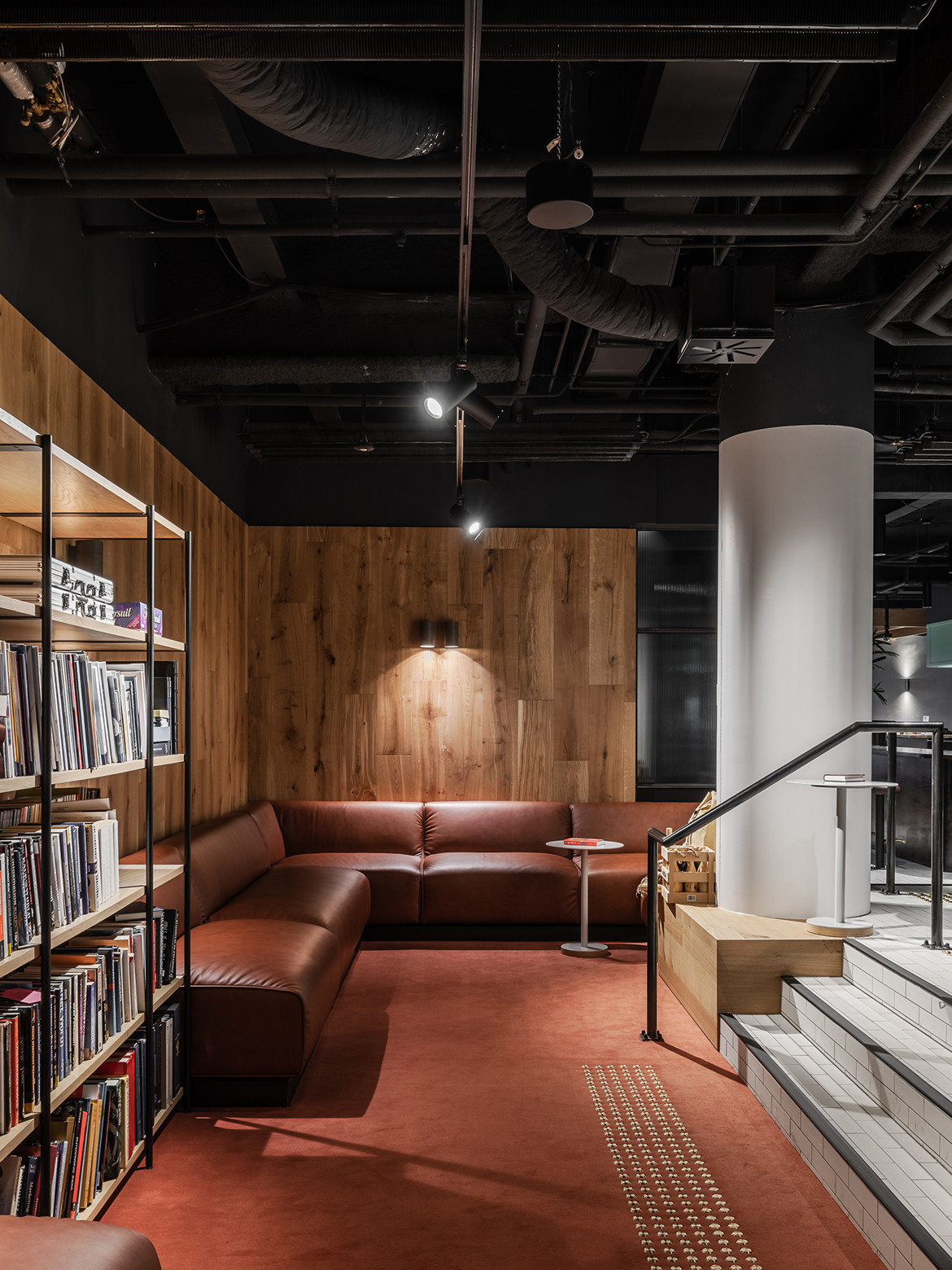
A library with sumptuous leather lounges also doubles as a favourite place for Friday evening drinks and other events, and a service counter at the core allows staff to receive assistance in areas such as IT or administration.
And as with the mix in seating styles, Techne also used the ceiling to create certain environments. The timber ceiling over the lounge area adds a more domestic feel to this space while the central thoroughfare, for example, with exposed ceiling ducts, celebrates Melbourne’s slightly industrial aesthetic.

And just to provide a bit more softness, there’s a few subtle curves in the mix. “We wanted staff to feel comfortable and, importantly, excited to come into the office,” adds Gulacsi.
Techne – Architecture + Interior Design
techne.com.au
Photography
Tom Blachford

We think you might like this article exploring the future of work with SLAB and Herman Miller.