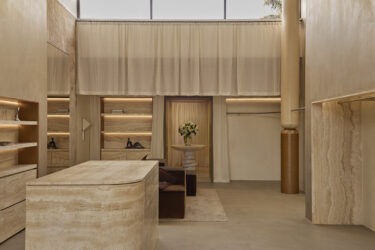
At Dissh Armadale, Brahman Perera channels a retail renaissance, with a richly layered interior that balances feminine softness and urban edge.
Brick-and-mortar retail has been undergoing a quiet but significant reinvention. After years of online outlets promoting ease, a successful store is no longer just a place to transact, it is a spatial extension and signifier of the brand. In this context, retail offers a chance to foster belonging, invite pause and heighten connection.
Story continues below advertisement
For interior designer Brahman Perera, these evolving expectations shaped every decision for the fit-out of Dissh Armadale – the first Melbourne standalone flagship for the Australian fashion label.
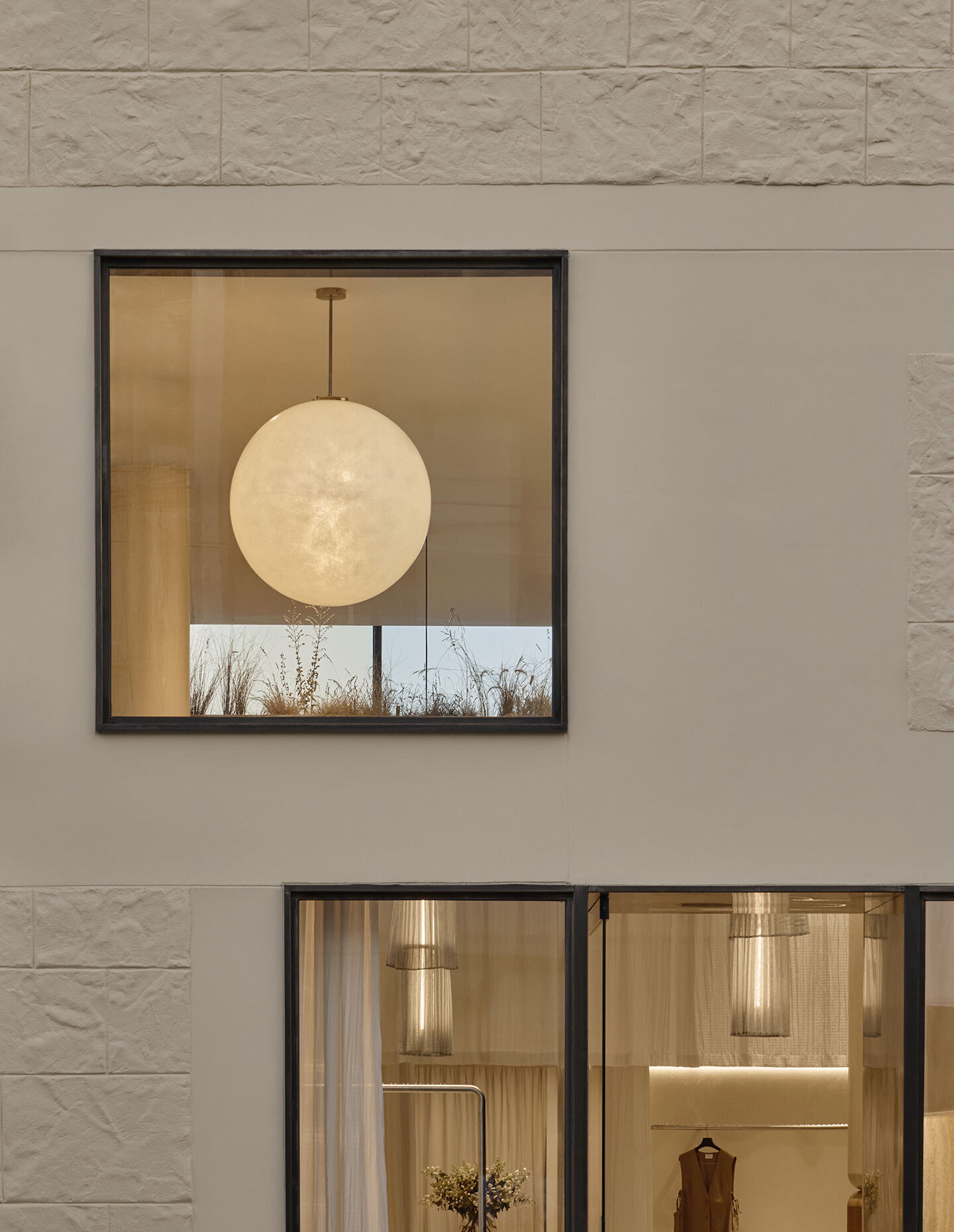
The original site was rich in character but worn down by time. “It was an old, dilapidated dry cleaner with equipment, clothing, even vintage sewing machines left behind,” Perera says, noting that, “The place had spirit.” With plenty of history and a sartorial backstory, Perera confirms the original building felt just right for Dissh, where a curious geometry and A-frame form helped to define the new spatial language. Located on High Street in Melbourne’s Armadale, the precinct sees heritage façades and contemporary storefronts collide.
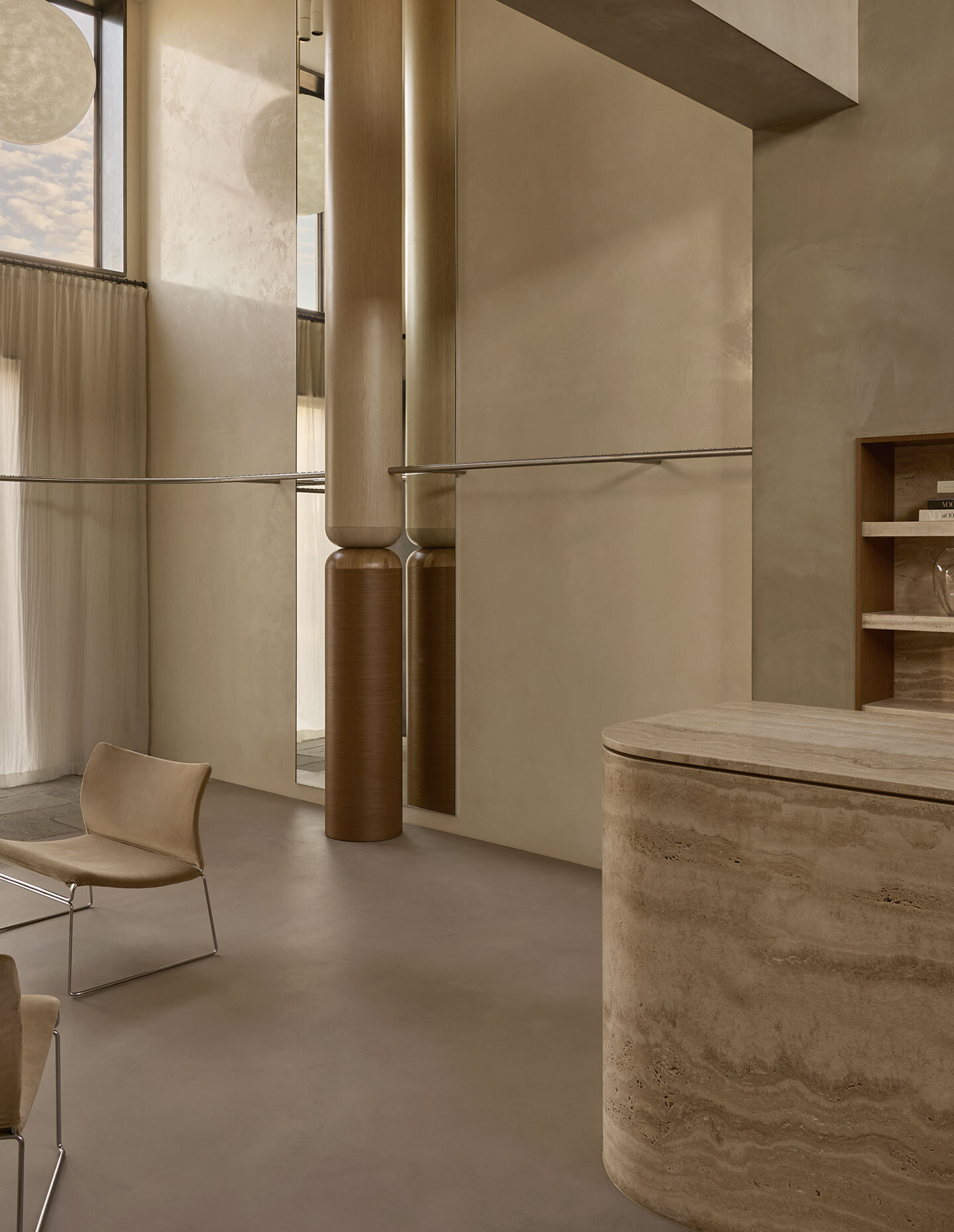
Before any design could take shape, the space needed to be gutted. Years of industrial residue and oversized equipment meant there was a lot of work required to defit. “The bones were there though, these double-height moments and highlight windows celebrating light. We leaned into that,” Perera says.
Story continues below advertisement
In parallel with the architectural challenge was the more nuanced task of expressing Dissh’s brand DNA – accessible luxury grounded in authenticity – in built form. “A strong brand doesn’t sell stuff,” Perera reflects. “It invites people to be part of something. It’s about culture, belonging. You feel like you’re part of the club.” That ethos underpinned the entire design journey.
The new store is layered and spatially articulated, reflecting the tempo and tactility of modern retail. Perera’s approach combines soft, feminine gestures with robust, sculptural elements, creating a design that is at once inviting and intentional. “We didn’t want to just cram in product. It’s about generosity – giving people space to sit in a garment and see how something feels on the body, how it moves.”
Story continues below advertisement
Related: RADS mediates street and lobby at Reno’s Bistro
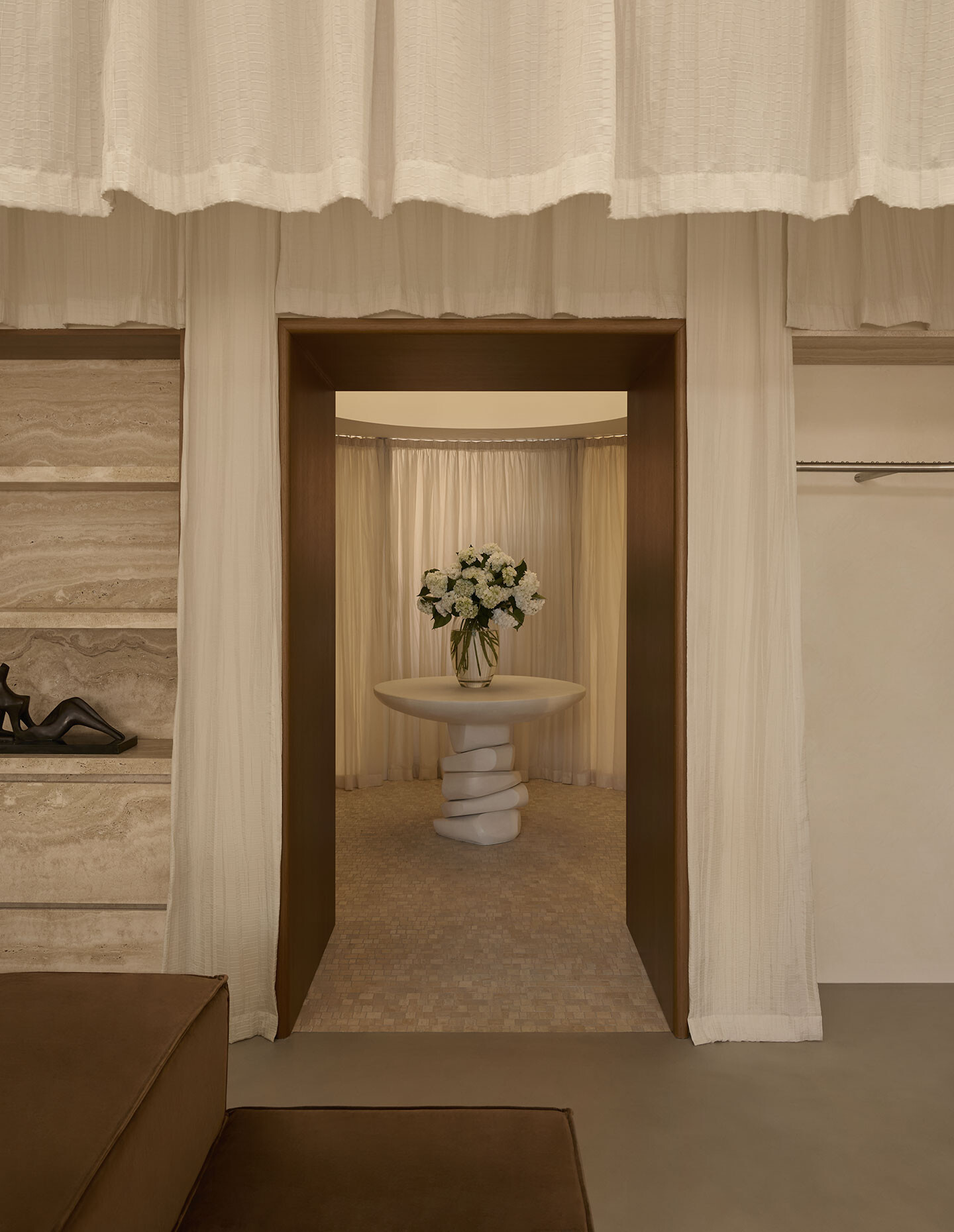
The store layout is broken into a series of rooms rather than a continuous retail floor. Movement is choreographed through deliberate spatial transitions – from entry portals wrapped in deep timber to softly curtained changerooms where fabric drapes like ballet tulle. “There’s a cocooning quality,” Perera says, musing on how the space needed to offer breathing room when people stepped in from the cacophony of the street.
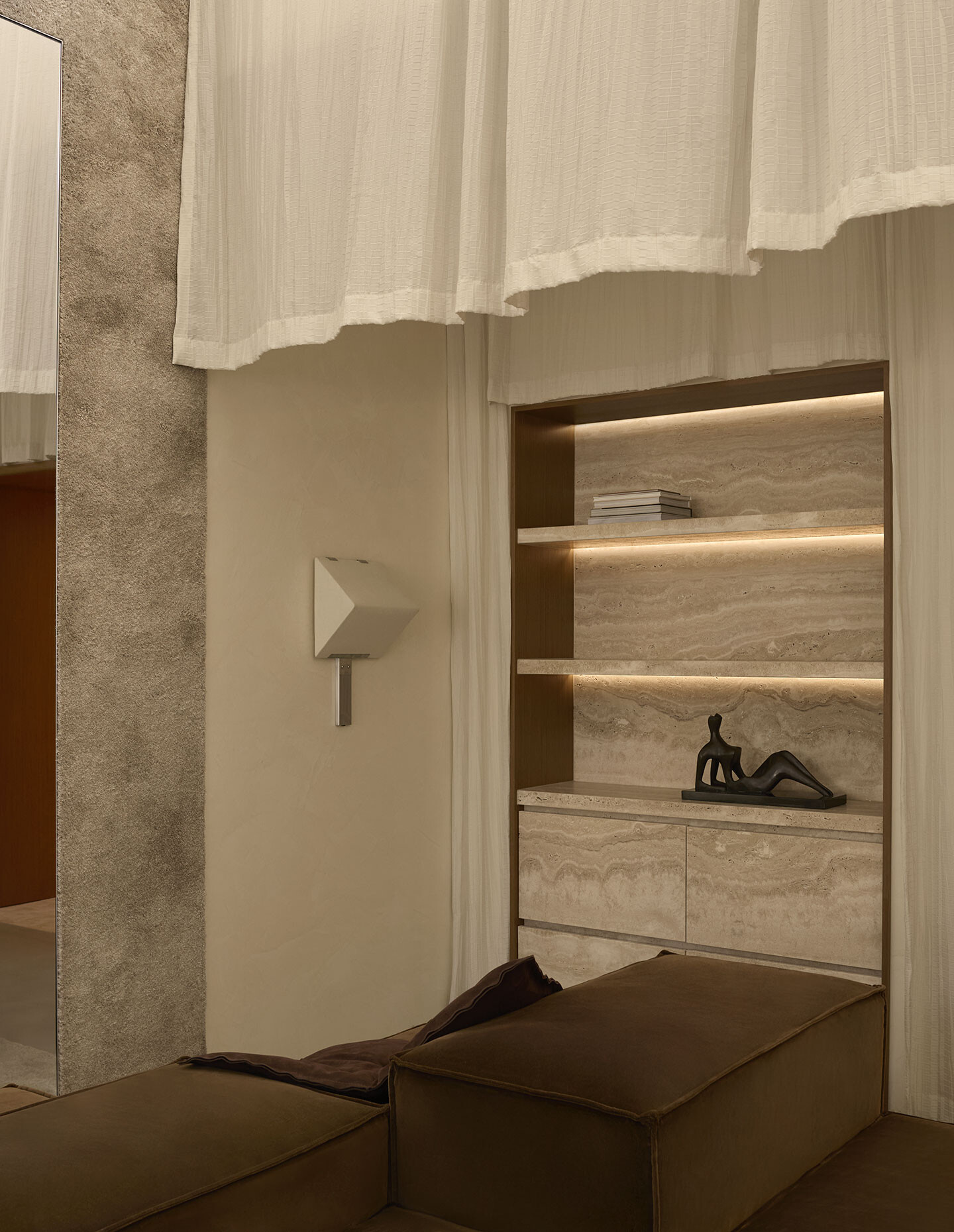
Materiality is restrained but rich. Neutral but textured carpets climb the walls in enveloping gestures, while microcement and mirrors interplay with crushed silk and natural stone. A standout feature is the custom pendant by artist Amy Vidler – a glowing form inspired by a child’s sketch of a dollhouse, which sits suspended like a beacon in the centre of the space.
“We worked hard to make this feel right for Melbourne,” he notes. “While the brand has coastal roots, that wouldn’t have translated. It needed a slight urban grittiness.” The finishes reflect this, with stone-paved floors in the fitting rooms, timber threshold trims and sculptural totems that feel architectural but don’t touch the ceiling. These art-like additions draw the eye up and extend the space.
While the aesthetic is refined, practical demands are never sidelined. “Retail needs to function,” Perera notes, speaking to the ever-present end user. “There are set amounts of lineal metres of racking required, changing room flows, storage areas. But it can still feel elevated.” This striking duality is perhaps best captured in the balance between showpiece gestures – such as the finely detailed travertine counter or the crushed silk linings – and the workhorse elements discreetly integrated throughout the fit-out.
This project also marks a maturing of the Dissh brand, which Perera has worked with on stores from Brisbane to Perth. But Armadale is different. “It’s the first standalone. We wanted it to feel flagship – more sculptural, more spatially adventurous, but still recognisably Dissh.” And this is where the translation of the brand’s essence can be read: in the details, the palette, the ambience of the space.
What Perera achieves in Armadale is a quiet rebuttal to retail’s race to the bottom. By framing the store as a place to linger, to experience and to be part of something, the interior reclaims physical space as a site of meaning. “There’s only so many tones of cream you can do,” he says with a smile. “It’s about what you layer with it – the fabric, the feeling, the sense of care.”
In that layering, Dissh Armadale becomes more than a store. It is a subtle theatre and a compelling argument for why retail, at its best, still matters.
Brahman Perera
brahmanperera.com.au
Photography
Lillie Thompson