For a long time, health facilities such as hospitals and aged care homes were anything but hospitable. They were not welcoming and not places where anyone wanted to be. But things have been changing in recent years. Hospitals have led the way with a new emphasis on wellness, in recognition that life-affirming contexts – warm internal finishes and external connections to sunshine, natural light and nature – help drive faster recovery rates.
Traditionally, aged care homes — with their drab internal palettes, crusty furnishings and inward-focused planning — sent a message that life was in the past and residential care was just another utilitarian waiting room before moving on to the inevitable. Apart from there being no future, there wasn’t even a present.
This model is now being challenged. An excellent example is the newly refurbished Eva Tilley Memorial Home in Melbourne’s Balwyn North, where designers Studio Tate and Eva Tilley CEO Sharelle Rowe set out to offer something different by “contemporising” aged residential living.
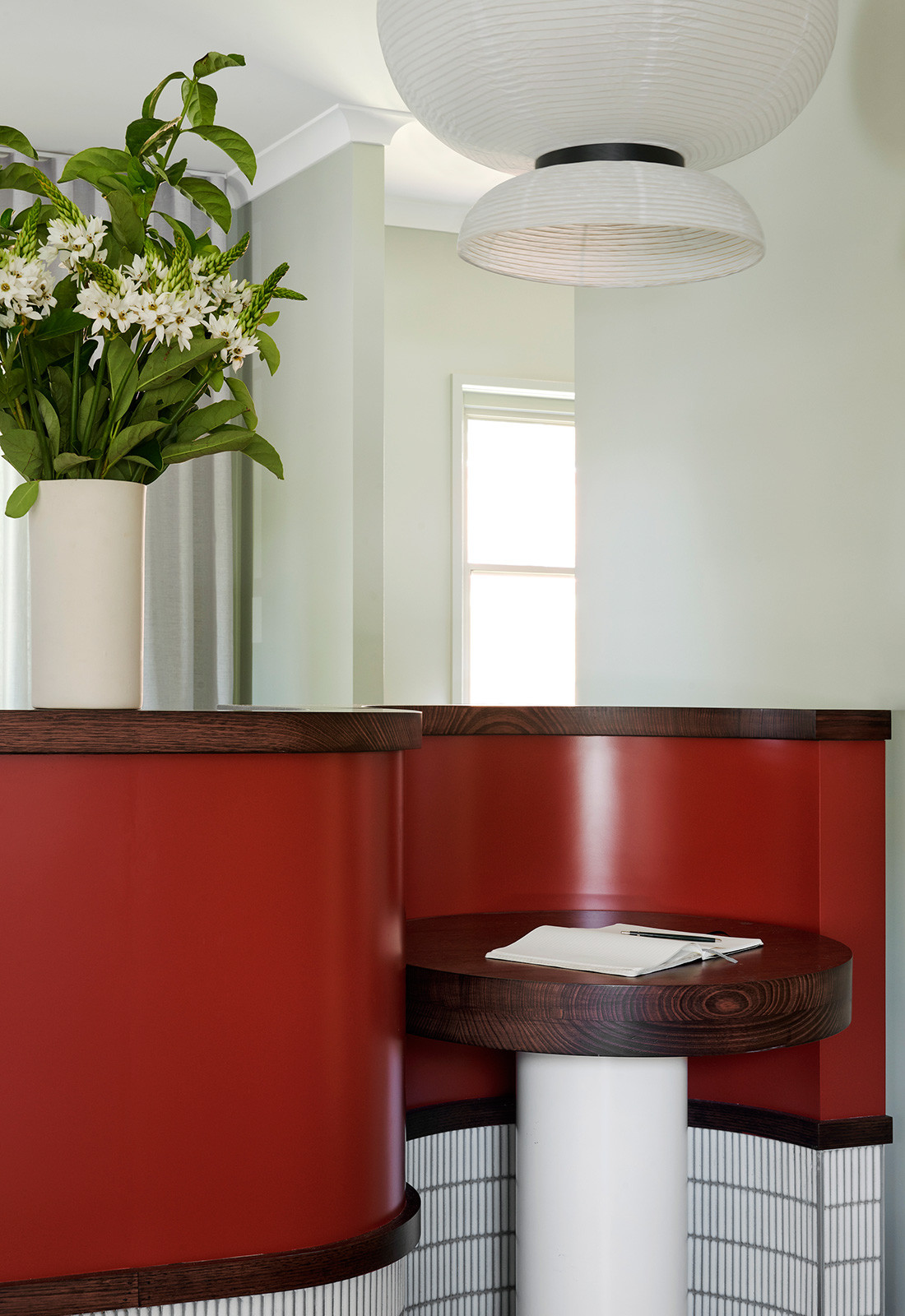
“We at Tate are particularly passionate about re-imagining what aged care could look like,” says project leader, Alex Hopkins. “People are exposed to fabulous design all the time. So why should an aged care facility be any different? Why shouldn’t an aged care facility be a fabulous place to go and have your hair done? Why can’t it be like what you’d find on the High Street? Something fun and fabulous.”
Given that Studio Tate works across a number of sectors, from retail to hospitality to residential design (expressed by them as Live, Work and Play) they were well-placed to “cross-pollinate” and drive a new vision for residential aged care.
The project was initiated as far back as 2016, when Rowe decided the facility had seen better days. In Hopkins’ words: “It wasn’t hitting the mark in terms of its look or feel or its offer in terms of quality.” Rowe encouraged the designers to think outside the box and come up with something “truly unique”, especially in regard to the colour palette. Philosophically, the project was based on three principles: dignity, community and independence.
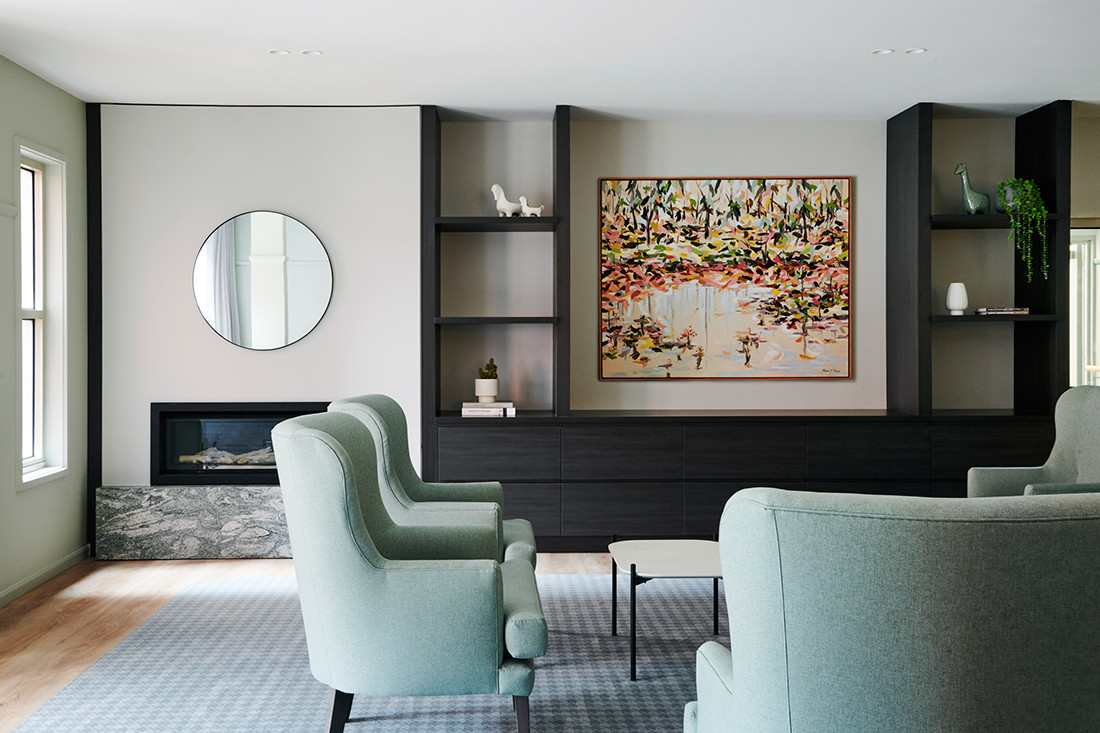

To serve these three principles, residents needed to feel as though they were living in the real, contemporary world. According to Hopkins, there needed to be “the sense of an outing” every time they left their room. “The guys and gals who are living at Eva Tilley could be down at the local shopping village,” he muses. Whether they are off to the dining room, or to the kiosk to buy a card, or to the bar to have a coffee, or making a visit to the hair and nail salon, there is the sense that they are participating in the contemporary, everyday world.
The strategy was to work against any sense that the residents were locked away from the broader community and to establish a feeling of ownership, as though it were really their own home, furnished and finished with the quality they would invest in their own personal space.
The designers consulted closely with the staff – many of whom have been at Eva Tilley for a long time – and the residents. One important result was a re-think of the loose furnishings, which had previously been dominated by sofas. As many residents are single and prefer arm chairs, there was a shift from sofa seating to more individual seating.

Colour palette and textural materials are always important for Studio Tate for how they inject personality into spaces, but it was especially important in this project.
“We were conscious,” says Hopkins, “to make sure we selected colours that felt contemporary but were ultimately calming. Also energising, which may sound contradictory. But some spaces are more energising. The warmer tones of the nail bath, for instance. Whereas in the dining room there’s a soft palette because you’re there for a longer period of time.”
On the upper level — the ‘memory support wing’ for residents with dementia issues — colour is also used as a form of wayfinding, such as with the beautiful, blue fish tank. This is a calming element, but also a point of orientation. “It is about giving personality to areas, which helps people orient themselves.”

Far from the utilitarian experience we are used to in residential aged care, the finishes, loose furnishings and bespoke shelving at Eva Tilley have a deliberate sophistication. “In re-imagining aged care we didn’t want it to feel like a playground,” explains Hopkins. “We wanted it to feel sophisticated; we wanted it to feel like your home – it’s your pride and joy. People should feel a sense of pride and ownership over their space and want to be there and enjoy it.”
Eva Tilley brings a mood of hospitality to residential aged care, its amenity and presentation offering a sophisticated experience of living in the design-conscious contemporary world.
Photography by Thomas Brooke