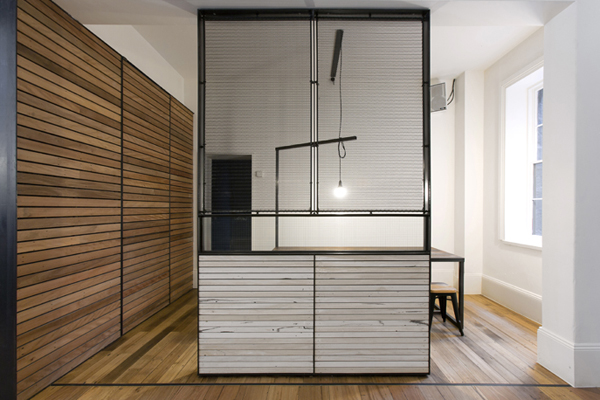
Breathe Architecture has once again lent its incredibly appealing raw aesthetic to another of Melbourne’s inner city hotels, Mac’s in Franklin Street. Rebranded as Captain Melville the renovation involved the conversion of Miss Libertine nightclub into a restaurant and bar. And the venue’s colourful history as one of Victoria’s first licensed hotels built in 1853 during the Australian Gold Rush, provided architect Linda Valentic with an endless source of inspiration.
“The influence of the rebel spirit was strong during the Gold Rush and it can be seen in the story of Captain Melville, the ‘Gentleman Bushranger’,” explains Valentic. “We’ve taken that renegade sentiment and translated it into a type of design chaos that manifests as asymmetry and raw materiality.”
Captain Melville’s casual front bar features two large communal dining tables and its perimeter is lined with seating intended for intimate conversation. Black steel framework borders pale messmate timber walls and partitions, making for an elegant study in colour and material. The overall effect is one of calm respite, which deliberately contrasts with the moodiness of the rear dining hall space.
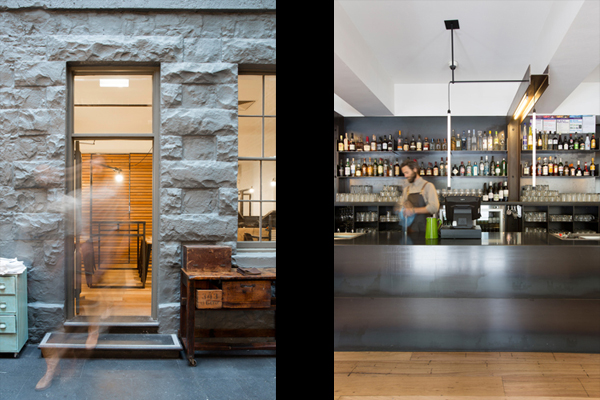
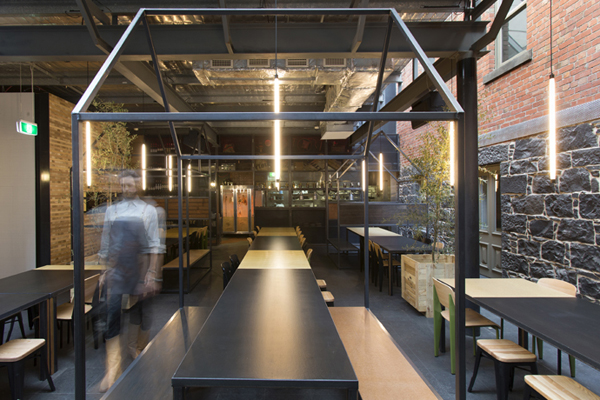
This dining hall operates as both interior and exterior and is defined by a robust material palette of existing stone and brick, steel and recycled messmate timber. It finds its most compelling design expression in the form of three 3 metre-high steel tent structures, each with a slightly different profile.
“During the early 1850s Melbourne had grown overnight from a tiny village into a gridded tent city,” says Valentic. “The tents’ peaked forms became the conceptual framework for the project’s design and material palette.” Originally conceived in timber, steel was eventually chosen to give the tent structures added strength. This was also reinforced with the introduction of ingeniously integrated benches, which were customised in the Breathe Architecture workshop.
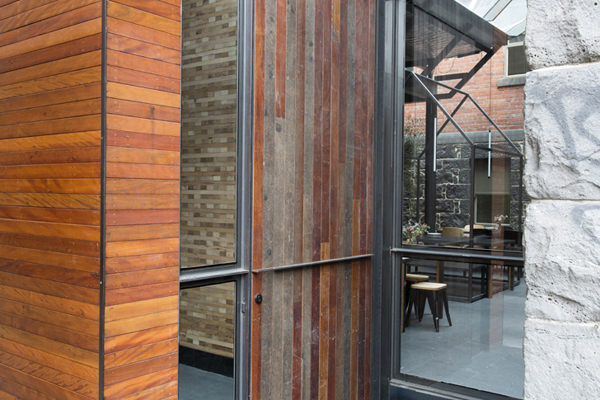
Valentic concedes that the renovation’s major challenge was its heritage listing. But Breathe Architecture is well versed in knowing how to carefully and sensitively strip back and repurpose existing interiors. They also know how to have fun, and Captain Melville displays elements of playfulness, not only in the tent forms, but also in the dining hall’s lighting. These bold vertical forms by Mance Design provide a lively counterpart to the vertical lines of the steel tent structures.
The dining hall’s new entry from an adjacent laneway is a gentle nod to Melbourne’s culture of small hidden-away venues and it succeeds in highlighting Captain Melville’s wonderfully raw, urban aesthetic. This is, after all, what Breathe Architecture does best.
Breathe Architecture