The home of architecture and design in the Asia-Pacific
Get the latest design news direct to your inbox!

Get the latest design news direct to your inbox!
Lucy Bullivant explores the wine regions of Spain and discovers a winery that works with its topography and environment to create an award-winning drop.
January 13th, 2011
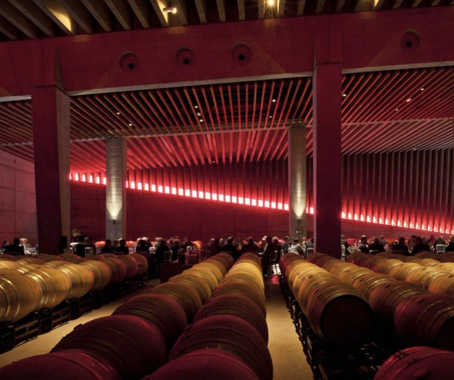
The new low-lying Bodegas Portia 150km north of Madrid designed by Foster & Partners has a unique feature: it uses the slope of the land to assist in the winemaking process.
Trailers drive up the slope of the building onto the roof, and directly unload the grapes into the harvesting tubs taken below into cold storage rooms.
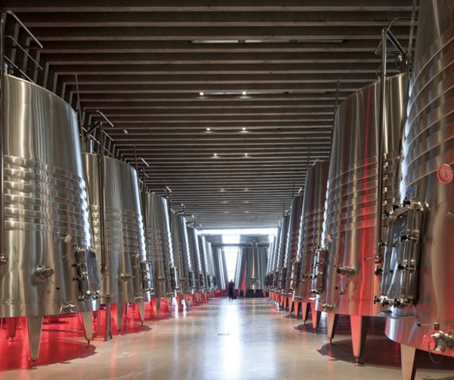
The fruits of the Tinta Fina del País (Tempranillo) on the 14.5 hectare site are a new initiative for Faustino SL in the Ribera del Duero, where some of Spain’s finest wines are produced.
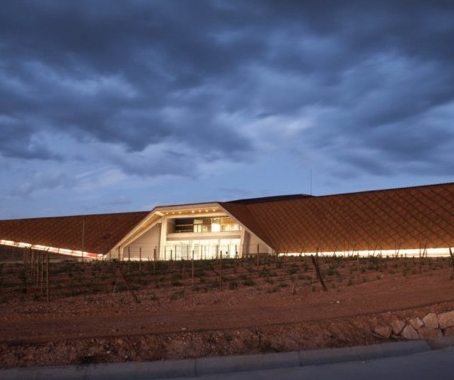
Portia’s have only been on the market for a short time but have already won international awards. Foster won the competition for the new bodegas in 2004 for his ‘practicality and functionality’, say Faustino’s directors, essential for a €25m, 21st century winery practicing ground-breaking oenology which also respects the environment.
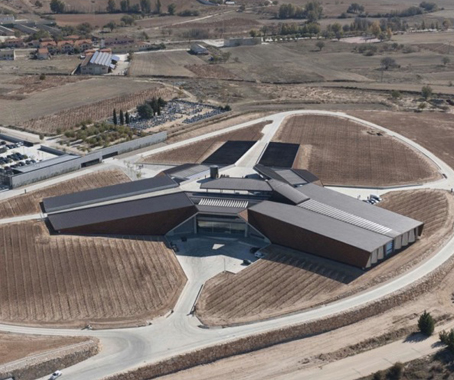
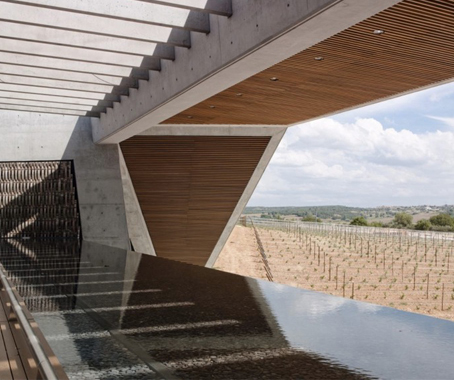
A striking trefoil structure in concrete with a deep overhanging roof, its wings patinated Corten steel shingles (they have photovoltaics to capture energy), the 14.5m high winery is partially embedded into the landscape, visible from the restaurant.
The wings are based on the three stages of wine making: fermentation, ageing and bottle ageing, all visible from and controlled by the operations centre at its heart, which efficiently uses gravity to advance production.
Steel, oak and glass are used, but also old wine barrel slats on the walls of the public areas, reception, gallery and restaurant. To get hands-on insight, Foster’s team took part in two harvests.
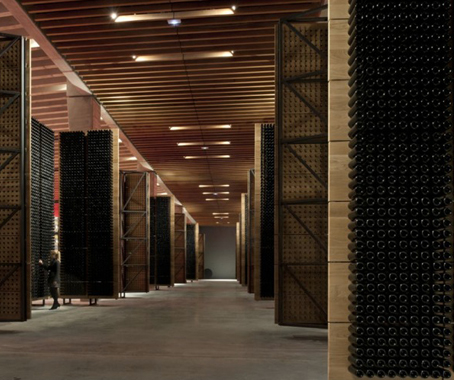
Faustino’s ‘new star’ is literally part of the terroir.
Foster & Partners
fosterandpartners.com
INDESIGN is on instagram
Follow @indesignlive
A searchable and comprehensive guide for specifying leading products and their suppliers
Keep up to date with the latest and greatest from our industry BFF's!
The internet never sleeps! Here's the stuff you might have missed