The friendly, yet never-ending rivalry between Sydney and Melbourne’s coffee scene is a topic that these city-dwellers know all too well. In Sydney, we’re spoilt for choice with our waterfront cafés and a fusion of flavour-driven brunch spots. But, as much as we love the coastline gems, we just can’t get past Melbourne’s speciality in soulful, heritage-filled cafés spread across the artful city.
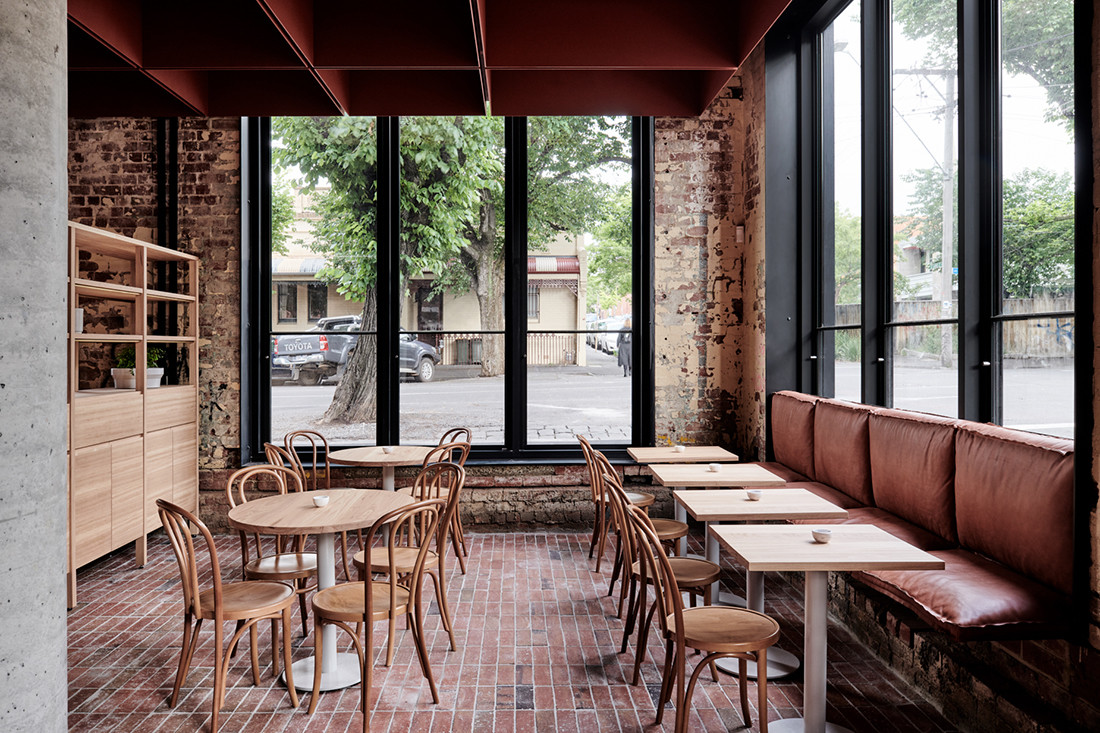
Sitting on Napier Street in Melbourne’s vibrant suburb of Fitzroy is an all-time, game-changing crowd favourite – one that withholds a design that’s just as exquisite as it’s coffee blend.
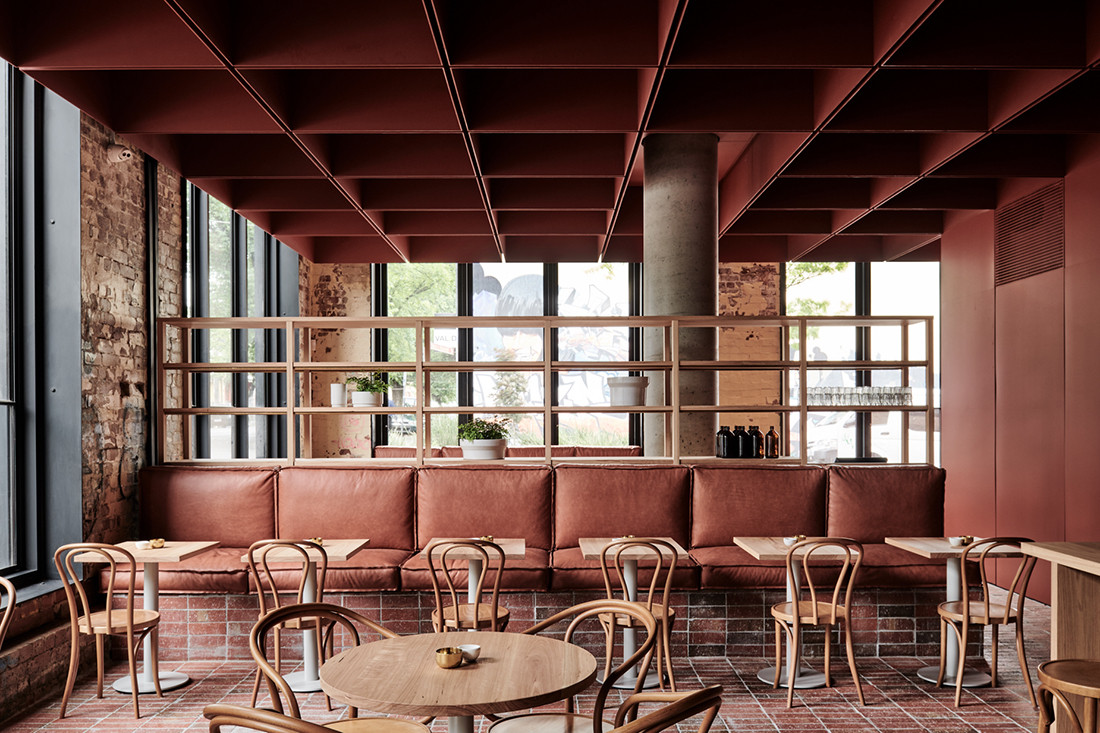
Designed by the Melbourne-based creative powerhouse RITZ&GHOUGASSIAN, the celebrated Bentwood Café pays homage to the sites historic archetype; from a furniture workshop under the name of CF Rojo & Sons and later, the Thonet furniture showroom.
Taking home the title of Best Café Design at the 2018 Eat Drink Design Awards, RITZ&GHOUGASSIAN breathed new life into the 190-square metre space, by embracing heritage and a distinct, old world charm unique to this Melbourne hub.
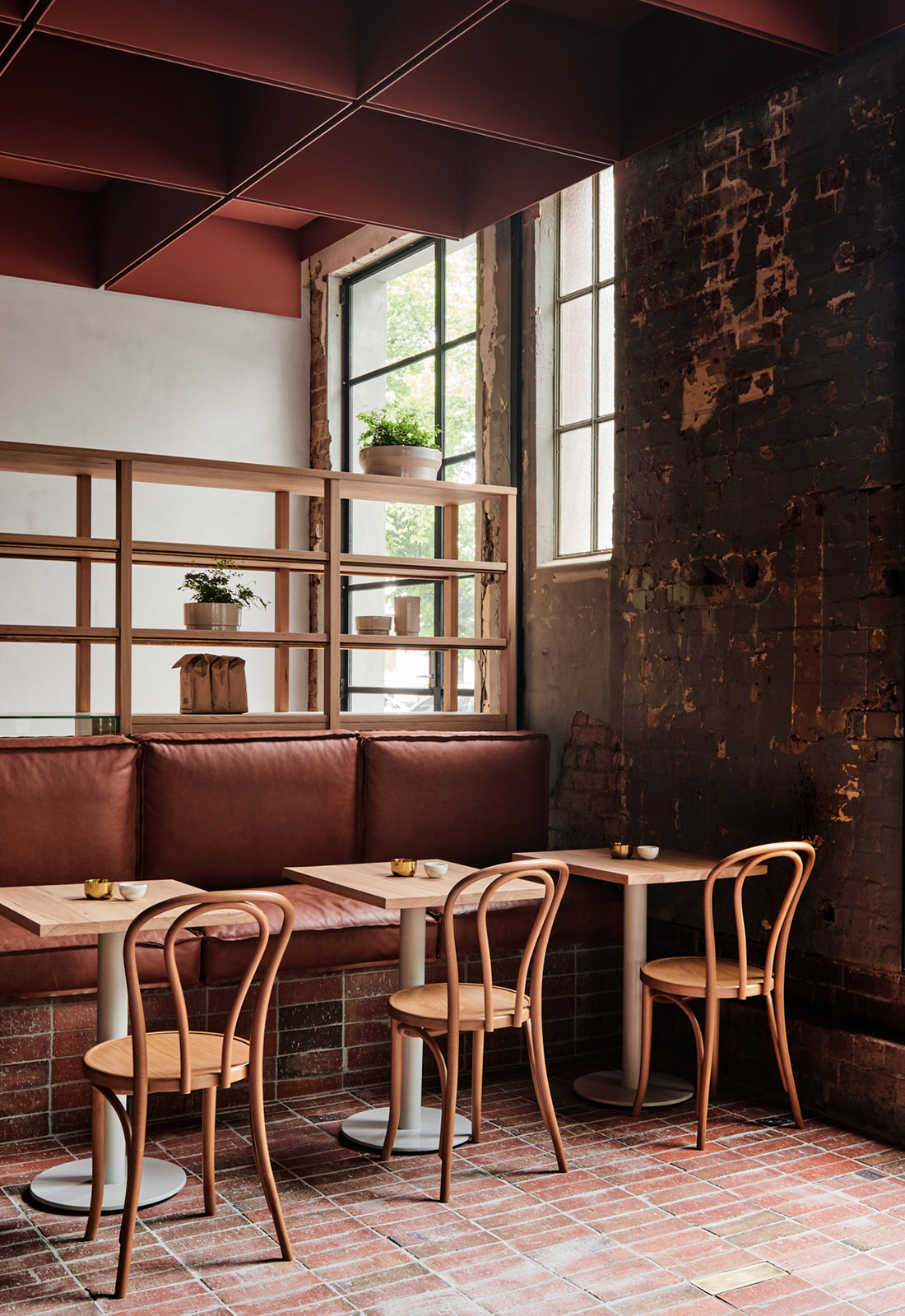
Bentwood is charmingly confident; evocative of times past; and it’s no secret that it’s designed to take your breath away the second you walk in. Designers RITZ&GHOUGASSIAN approached the existing site with sensitivity and intrigue – taking inspiration from the surrounding streetscape and the distinct personality of the neighbourhood and its locality.
Set behind an expansive street-facing façade, the striking design draws a sense of curiosity from passers-by. A paved laneway in layered brickwork runs underfoot, while the joinery throughout the space is adorned in red oxide. For the designers, the choice of red spoke of honesty and truth – a colour embedded within the original fabric of the historic space.
“The tones within this space are in sequence – this was intentional,” expresses Gilad Ritz of RITZ&GHOUGASSIAN. “We began with the existing façade and its semi-exposed red pressed brickwork; we then left all the layers of peeling paint on its surface. We saw these layers as a reference to time.”
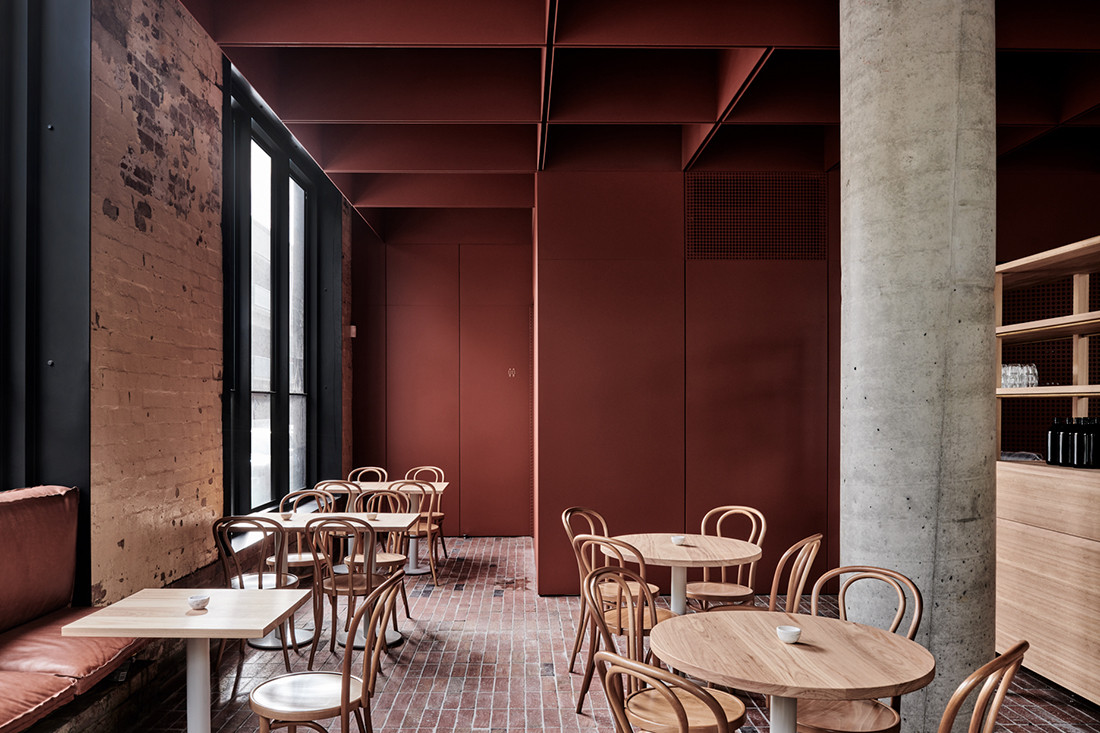
Soft textures decorate Bentwood; with Blackbutt-timber tables, Thonet’s iconic Bentwood chairs; skeletal shelving units to divide and organise the space; and a sumptuous leather banquet in a natural clay-tone that compliments the space, yet providing a sense of release and layering to the overall volume.
Monolithic concrete columns rise up to a ceiling grid primed in red oxide. The floating structure is rectilinear, strong and significant in balancing comfort and order throughout the space. Against the delicate and giving touches of the furniture, the ceiling grid “compartmentalises the space’s creative pockets of light and shade, volume and intimacy,” Gilad notes – inviting the patrons to look up and admire the gridded beauty and design innovation.

“The positive feedback we have received from this project enforces all the right things we did,” Gilad says. “In particular the composition of space in this project worked very well – for example, where joinery divides the large eatery into parts allowing users an intimate spot in the window or in a loud, energetic place in the middle of the café.”
Echoing back to the sites past, RITZ&GHOUGASSIAN depicts Fitzroy’s industrial nature through a meticulous symphony of bold textures and raw tonality. Perfectly balanced in all of its intricate details, timeless elegance and powerful story, this is more than just a simple café.
Bentwood takes you on a journey of bygone eras; honouring its original custodians all the way through to the 21st century with a refreshed, new persona that celebrates the past, present and future community of Fitzroy.

Photography by Tom Blachford.
If you liked this article, we think you’d enjoy an article on the micro cafe, Grace Espresso in Singapore. Stay in the loop, join our weekly newsletter.