ARM’s recent University of Adelaide refurbishments are unlike anything you’ve ever seen. These dynamic upgrades across two buildings at the main campus on North Terrace are proof that creating effective learning environments isn’t just about providing practical outcomes for students. While clear sight lines, efficient lighting, reliable acoustics and intelligent temperature control are important, so too are interiors that are accommodating, flexible and inspirational.
And in bringing elements of genuine wonder and curiosity to one of the country’s oldest universities, ARM is also advancing current pedagogical discourse surrounding student-centred learning.

“It’s not passive design,” says Amber Stewart, ARM’s associate and the project’s interior architect. “University should be a time and place where you’re not afraid to test out new ideas and our interiors reflect that. They’re definitely not spaces you can say nothing about.”

Indeed, the refurbished Engineering South building’s lecture theatres take experiential design to the next level. The larger tiered room is themed ‘atmosphere’ and the smaller one themed ‘earth’; both are uncompromising in presenting immersive environments that seem a world away from the actual campus they inhabit.

‘Atmosphere’ theatre room.
Stewart and the project team skilfully worked within a modest budget to utilise low-cost finishes for maximum impact. Printed carpet, bold wallpaper, bright paint applications and coloured upholstery give the outdated rooms a much-needed facelift, as well as imparting a sense of ownership to the students who use them. Interestingly, distraction isn’t an issue with all the patterning underfoot, behind the seats or to the side, as the front of each lecture theatre has been left deliberately unadorned.
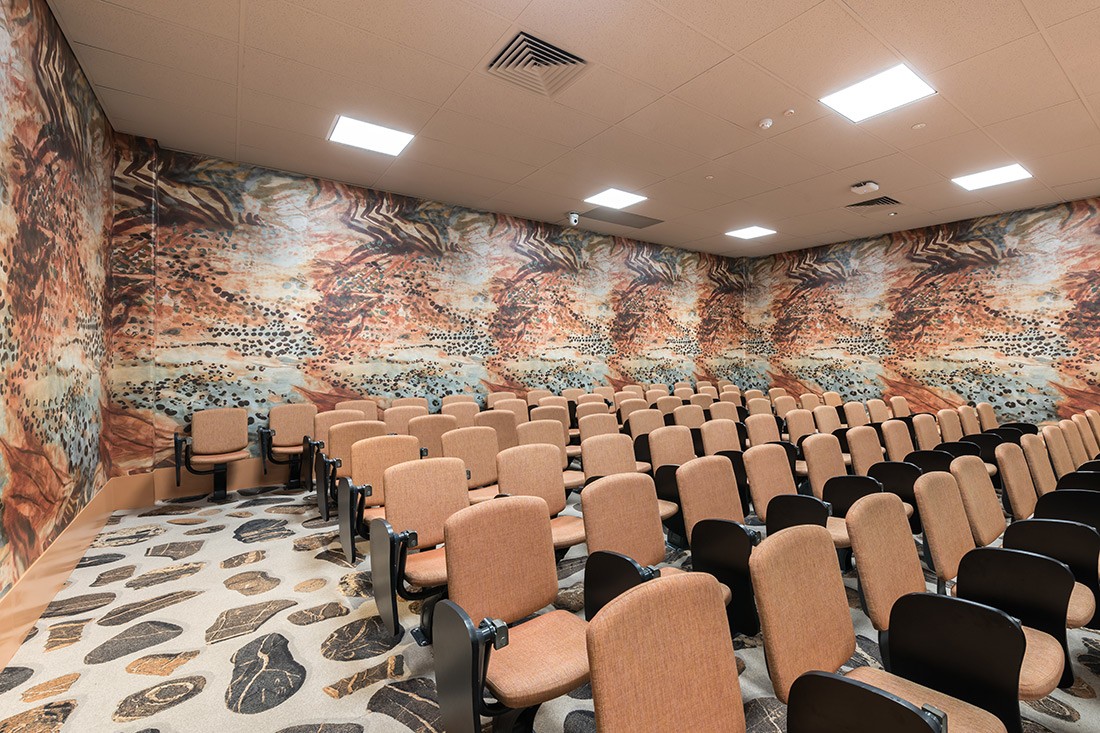
The ‘Earth’ theatre room.
In the Barr Smith South spaces (accessed via the subterranean Horace Lamb entry beneath the Barr Smith Library), the same decorative devices are used to even greater effect. Step inside and the foyer is all dramatic angles, harlequin flooring and wallpaper featuring Ionic and Corinthian columns intermingled with statues of ancient Roman gods and guards. Beyond that, the six break-out study booths each have their own distinct identity, heightened by the wrapping of wallpaper on each alcove’s suspended ceiling. Yes, it’s over the top and that’s the intention. But this is a basement with very low ceilings and no windows; it was always going to take a lot to activate it.
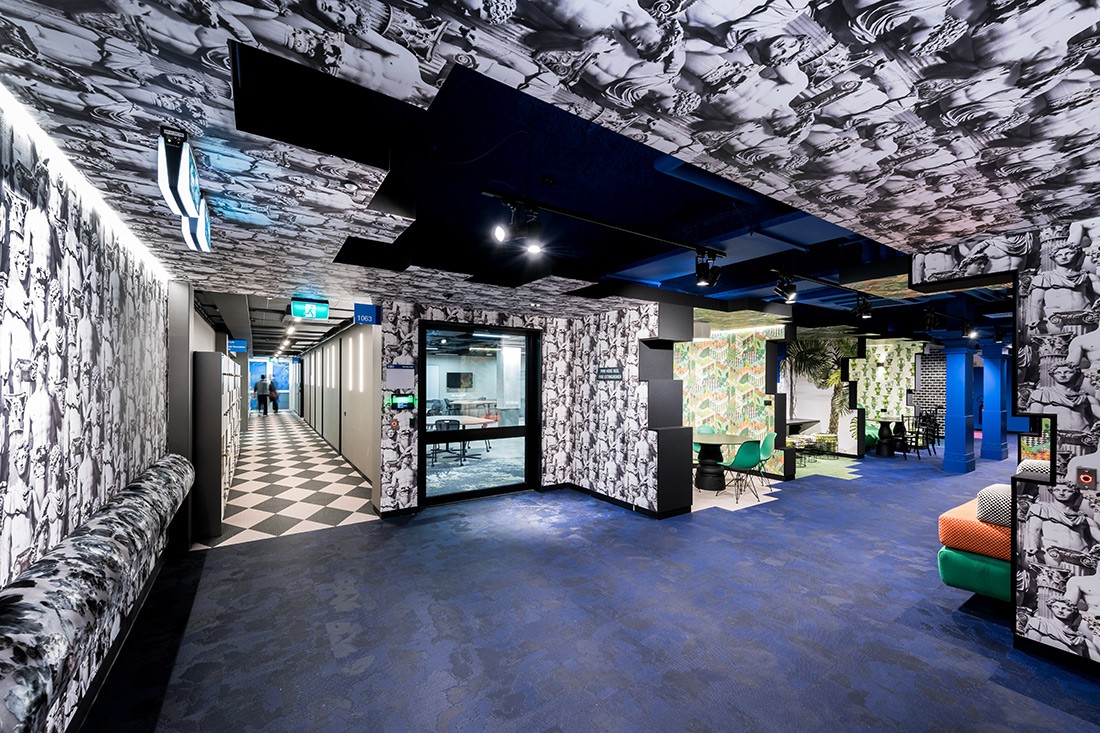
The architects’ embrace of maximalism is equal parts ingenious and necessary, and works to engage students in areas previously avoided. “We played on the idea of discovery and so like Alice’s Adventures In Wonderland, you go down the rabbit hole and end up somewhere interesting and unexpected,” she explains.
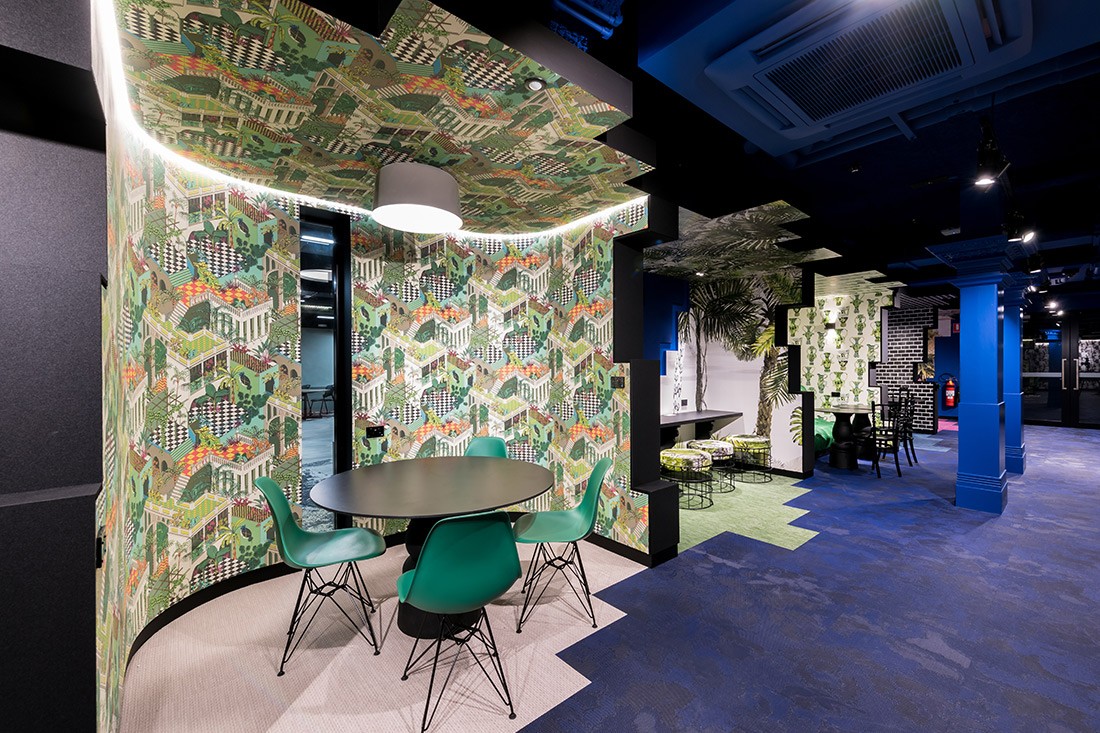
The breakout zone has been treated as an ancient ruin of the heritage listed Barr Smith Library’s Reading Room, with the design’s narrative gradually revealing itself as you move through the different ‘rooms’, from grand staircase to conservatory. International Klein Blue applied as ‘sky’ and ‘windows’ provides ‘views’ among the heavily patterned wallpaper, further adding depth and vibrancy. It’s also used to highlight the structural columns and seamlessly integrate them into the design.

.
“We played on the idea of discovery and so like Alice’s Adventures In Wonderland, you go down the rabbit hole and end up somewhere interesting and unexpected.” – Amber Stewart, ARM associate
.
This area’s strong immersive qualities are what makes it so welcoming and its contrast with the adjacent teaching rooms, each with a 70-person capacity, lends the overall scheme a sense of carefully considered nuance. The interior design is relatively pared back in these two spaces, with printed carpet the only decorative flourish.

However, all emphasis is on the custom desks, which are able to be configured to three different modes, depending on students’ needs. They exemplify the latest pedagogical approach by promoting adaptability within the classroom. As Stewart explains, “These spaces need to be future-focused, so they have the flexibility to support different teaching and learning styles. It’s all about the students and this allows them to learn in ways that suit them, whether independently, in small groups or as a whole class.”
The success of ARM’s refurbishments not only lies in its futureproofing but in its reactivation of under-utilised pockets of the university – keeping students on campus and making their learning experience all the more exciting.
Photography by Lyndon Stacy.
This article originally appeared in issue #75 of Indesign magazine, the ‘Healthcare & Wellbeing’ issue. Discover the best in design, sign up for our newsletter here. And find out what was specified here.