The home of architecture and design in the Asia-Pacific
Get the latest design news direct to your inbox!

Get the latest design news direct to your inbox!
Revolutionising the way we work, Herman Miller’s World of Workstations caters to different users and an array of functional possibilities.

Atlas Office Landscape

Ratio
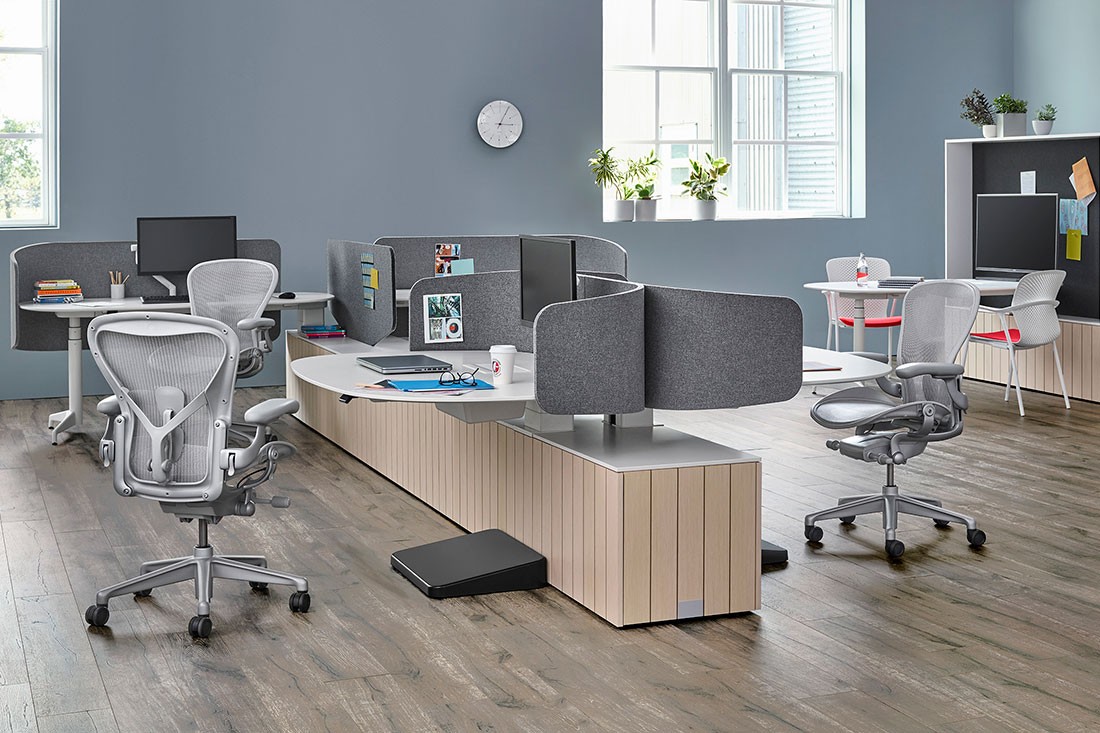
Locale

Imagine Desking System

Optimis Desking System

Arras Spine
“Man’s physical machine,” said Robert Propst in 1968, “has evolved to do many things well, but no one thing continuously.” This insight into the capacity for individuals to master an array of tasks and behavioural modes – but, crucially, aver fatigue in actioning any particular one, ad nauseam – constitutes a turning point in the history of office design. As the crux upon which Propst was able to develop the concept of the Active Office in partnership with Herman Miller in the late 1950s, this recognition underwrites much of the brand’s ongoing efforts in revolutionising the way we work. In fact, as Propst puts it himself, it was the recognition in the commercial futurity where “the office would be a kinetic, active, alert and vigorous environment.”
Such an office is the reality many of us know today: a working environment in which we are constantly stimulated, mobile, and sourcing ways to maximise efficiency, productivity, collective empowerment, health and personal satisfaction. Yes, the ways we work have changed – and indeed, will continue to do so. But where, in previous generations, designers sought to introduce uniformity in the commercial environment to this end, today we recognise the value of difference and diversity in all its forms.
In a way, “one size fits nobody”, has never been truer. This is particularly the case of workstation design where the demands of different uses and users proliferate a broad array of functional possibilities. Navigating the workstation landscape – sit-to-stand, collaborative, individual focused work, and beyond (!) – can sometimes cause headaches for our commercial designers. How can we be sure that the workstations we specify can really deliver for everyone’s needs?
Throughout any office environment, sedentary behaviour is most often evident in the form of sitting at a desk and using a computer. As high levels of sedentary behaviour may lead to back problems and chronic diseases, sit-to-stand workstations promote mobility and improve blood circulation. In line with agile etiquettes and the increasing demand for workplaces to be flexible, sit-to-stand solutions prove to be an ideal system in today’s commercial landscape.
Ratio is Herman Miller’s clean, lightweight and uncluttered design that proves to be very amenable to most workplace environments and requirements. Ensuring an easy transition between sitting and standing, the system comes with a manual or electric adjustment mechanism that allows users to find the right neutral reach zone, improve comfortable posture and balance.

Ratio
The composition of Locale’s elements not only enables employees to transition seamlessly between working together and alone, but also in seated or standing postures. By removing visual and physical obstacles and condensing the Workbase to incorporate mechanical and power cables, Locale ultimately helps employees stay better connected to their work and each other.

Locale
Atlas is a sit-to-stand solution that features a connected leg that allows people to join other desks together in endless configurations. The beam-free design adds extra appeal to the system to ensure that it looks less like a piece of machinery and more like furniture.

Atlas Office Landscape
As research shows that there is a strong positive correlation between collaboration and innovation, it is increasingly unavoidable in commercial settings. The need for workplace solutions to be flexible and adaptable is more apparent than ever. Fostering communication and exchange of ideas, today’s collaborative workstations support creative teamwork and productive processes amongst employees.
Acting as a backbone for desks and tools, the system support multiple platforms allowing people to create any setting they require. The 160 lay-in CAT cables run the entire length of the easily accessible communal channel and is engineered to offer robust stability.

Arras Spine
As reported in 2017, a majority of Australian’s spend 90 percent of their time at work. In this regard, it is imperative for these environments to foster day-to-day tasks in the best way possible, directly informed by individual employee needs and work zone requirements. With the option of customising and personalising workstations to suit each person’s needs, personalised desk solutions offer a range of configurations without compromising on style, performance or function.
A comprehensive workplace solution that boosts creativity and focus for private work while addressing the growing need for collaboration, Imagine is a flexible and high-quality desking system. Completed with interchangeable components that add architectural flair to wherever it is required, Imagine is not only designed for maximum versatility but also diverse style variations. The desking system is essentially a kit-of-parts allowing multiple configurations and prolonging product life span. Options available include benching, desks, 90-degree and 120-degree workstations as well as meeting tables.

Imagine Desking System
Differing from the rest, Optimis is an origami inspired, beautiful and simple design. The raised toolbar keeps tools and accessories clutter-free and organised. The collection of contemporary desks and meeting tables are made from bent-sheet metal and is both versatile and environmentally friendly.

Optimis Desking System
INDESIGN is on instagram
Follow @indesignlive
A searchable and comprehensive guide for specifying leading products and their suppliers
Keep up to date with the latest and greatest from our industry BFF's!
The internet never sleeps! Here's the stuff you might have missed