Caribbean heritage meets mod-British culture in Mac Collins’ furniture
Published

Emerging British furniture designer Mac Collins explores his own Caribbean heritage and its place in contemporary British society through finely crafted timber.
Good design is about more than beautiful objects, and the best design combines a strong message with aesthetic beauty. Take the work of emerging British furniture designer Mac Collins, which explores his own Caribbean heritage and its place in contemporary British society through finely crafted timber. It’s an approach which is proving to be a winning one.
Collins may only have graduated four years ago, but he has already amassed an impressive collection of accolades. Most recently, he was announced as the winner of the inaugural Ralph Saltzman Prize.
The annual prize is held by the Design Museum in London and was founded to honour the memory of Ralph Saltzman, the late co-founder and president of DesignTex, and a celebrated textile designer.

Collins graduated from Three-Dimensional Design at Northumbria University in 2018, and since then, the Nottingham-based designer has become known for his Afrofuturistic timber pieces.
His best-known piece is perhaps the throne-like ‘Iklwa’ chair, which was designed while he was still a student and was later put into production by British furniture brand Benchmark.

Collins describes his approach as “narrative driven”. He is particularly interested in exploring his Caribbean lineage and the relationship between his heritage and the current sociocultural structure of British society. “As a direct result of centuries of empire, the nation is particularly diverse,” he explains. “This history is complicated and continues to impact contemporary society.”
Currently, for example, Collins is working on a project commissioned by the Harewood House Trust that will explore dominoes – a popular game in Jamaica and amongst the Caribbean community in the UK.

And, it’s this opportunity to explore ideas that are important both personally and culturally that he finds so rewarding about his creative work.
Given this narrative-driven approach, it’s little surprise to learn that the starting point for each of Collins’ collections is a body of written work that consolidates ideas and defines his vision.

From here, he moves onto drawing, scale model making, full-scale prototyping, and the creation of rigs and sample components.
Collins’ material of choice to communicate ideas is timber, which he works with due to its versatility and practicality. In the early stages of his career, he intended to be both designer and maker, but soon realised this wasn’t practical or sustainable when producing large bodies of work.

While he still intends to be involved in the making process and will continue to craft some pieces himself, he has a growing appreciation of the talents and experience of other makers and artisans.
“I’ve been fortunate to work with companies like Benchmark and makers, such as Daniel Bradley, to bring projects to fruition,” he reveals.
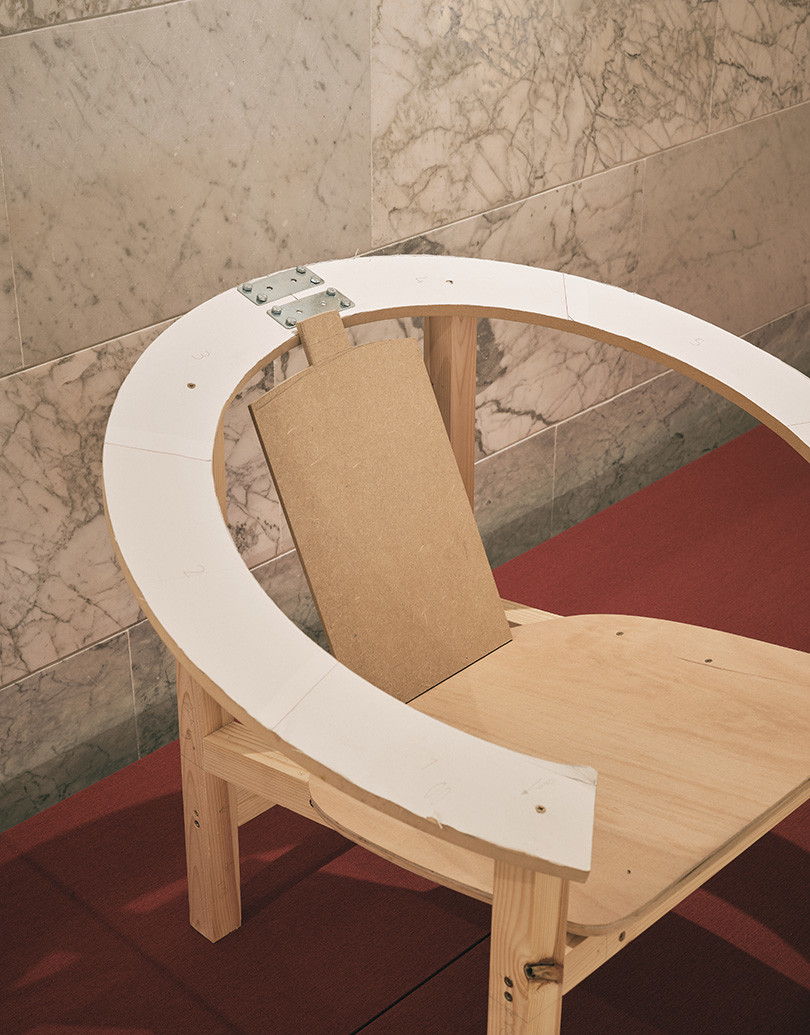
Collins is already well on the road to becoming a significant voice in the UK’s design scene. In September 2021, he won the Emerging Design Medal for the London Design Festival; and the same month, ‘Concur’ – a cherrywood chair inspired by the isolation of lockdown and designed for the Discovered project run by the American Hardwood Export Council (AHEC) and Wallpaper* – was acquired for the permanent collection of the Design Museum.
His most recent accomplishment, however, is an important one in the young designer’s journey. As winner of the Ralph Saltzman Prize, Collins will receive a £5,000 (approximately AUD$9,400) honorarium and the opportunity to present a solo retrospective of his work at the prestigious Design Museum.
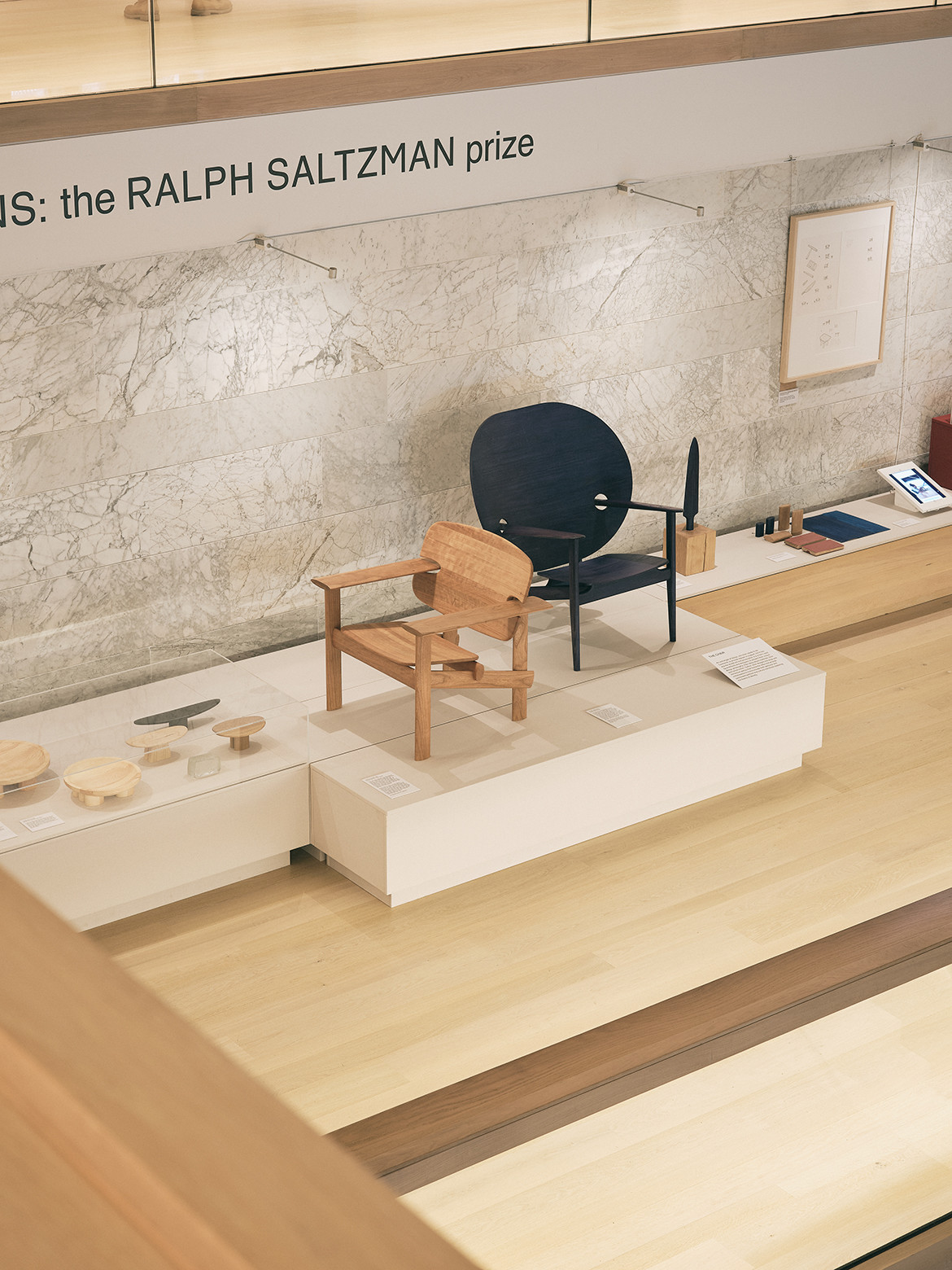
“It’s an honour to receive the inaugural Ralph Saltzman Price at the Design Museum,” he says. “With the creative freedom afforded to me, I intend to create work that is more conceptual and speculative, more politically and socially critical.”
Mac Collins
maccollins.com
Design Museum
designmuseum.org
Photography
Felix Speller
We think you might like this story about the upcoming Melbourne Design Fair.
Related Articles
Events
“I’m not trying to design a shape, I’m trying to shape a feeling”: Eugeni Quitllet & Pedrali in Milan
At Salone del Mobile 2026, Catalan designer Eugeni Quitllet launched Libre, a new seating collection with Pedrali that focuses on form, function and ergonomics.
Articles
Embracing elegance
On the occasion of Salone del Mobile 2026, the Opale collection designed by Patrick Jouin for Pedrali expands with two new iterations: a chair and a barstool with armrests.
Articles
The sofa as landscape: How Groundpiece rewrote the rules
In 2001, Antonio Citterio designed a sofa that threw out the rulebook. A quarter-century later, Groundpiece remains Flexform’s longest-running bestseller – and it still looks like the future.
Articles
Design tricks for using carpets to create balance and depth
Good looks count, but function completes the space.