The home of architecture and design in the Asia-Pacific
Get the latest design news direct to your inbox!

Get the latest design news direct to your inbox!
Tim Fleming and Flatland OK give us 101 reasons to admire the recent work of this talented designer.
November 26th, 2010
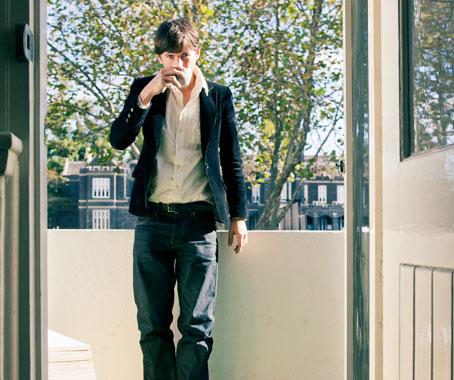
Among the 99 reasons for his recent collection of the same name, Melbourne-based designer Tim Fleming lists ‘off-tangent’, ‘on the money’ and ‘witty’ – all words that can be used to describe Fleming himself and his body of work.
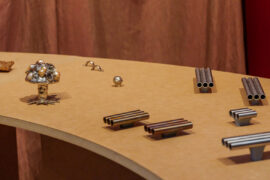
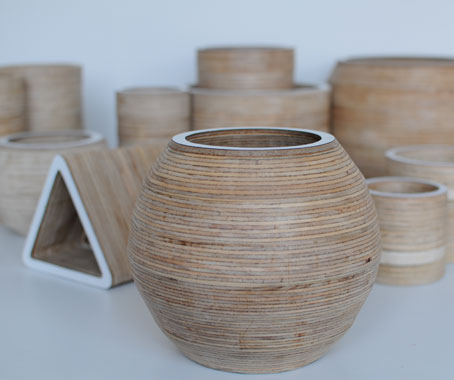
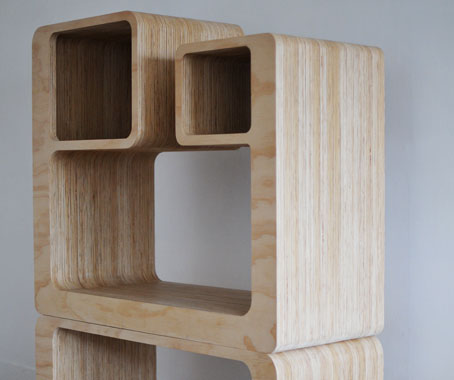
The past 12 months have been a busy time for Fleming and his business Flatland OK. He followed up his 99 Reasons and 100 Reasons projects with a storage unit called – funnily enough – 101 Reasons. His new line Flatware is less functional, a series of hollow vessels in which the designer uses his signature technique to create new forms.
There is also a series of Flatland OK comics, which work both as a mock advertising campaign for the ‘Reasons’ pieces and allow Fleming to explore ideas for imaginary concepts that aren’t meant to be built.
A collaboration with a particularly cooperative manufacturer has been key to this output. “It’s not always easy to get people to listen to your offbeat ideas,” says Fleming. “You want to have a relationship with someone who’s on the same page.” The partnership is allowing Fleming to experiment with new joinery techniques and other 3D techniques that he otherwise wouldn’t be able to do.
Next on the cards is a hanging cluster of vessels, a continuation of the Flatware line, to be built in Melbourne in the next week, and in Sydney in early 2011. Fleming will also be displaying a giant back-illuminated mirror in the shape of a hand as part of the new Pieces of Eight gallery in Melbourne’s Little Hero 2 building.
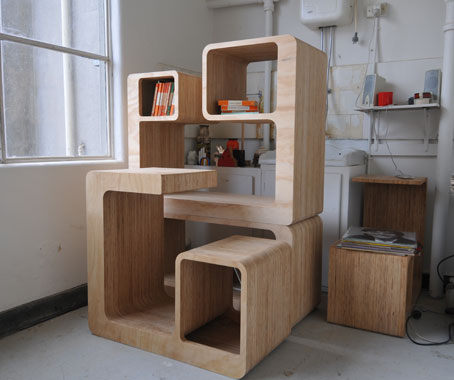
Fleming will continue his exploration of the hypothetical by developing a book for the Mis-design exhibition at the Ian Potter Museum next September. “It’s a development of an imaginary or literary story of a design practice process,” says Fleming. The book will show how possibilities can be explored through a series of designs for things that are unmade.
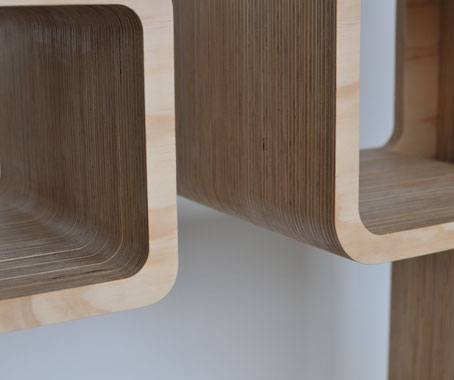
In Fleming’s varied range of work, one thing is common. “My objects need to have some sense of purpose,” he says. “I think it’s a complete waste of resources and energy just making another lamp or another stool.”
Top image by James Geer
INDESIGN is on instagram
Follow @indesignlive
A searchable and comprehensive guide for specifying leading products and their suppliers
Keep up to date with the latest and greatest from our industry BFF's!
The internet never sleeps! Here's the stuff you might have missed